In the summer of 2004, a comedian’s sketch on a late-night show introduced a new generation to the phrase “cocaine is a hell of a drug. ” The line, delivered as part of a wildly exaggerated retelling of the wild stories of funk musician Rick James, turned the aging star into a pop culture sensation once again. For millions of young viewers, it was their first introduction to the man behind hits like “Super Freak. ” Rick James himself embraced the moment, even appearing on the show to laugh along.
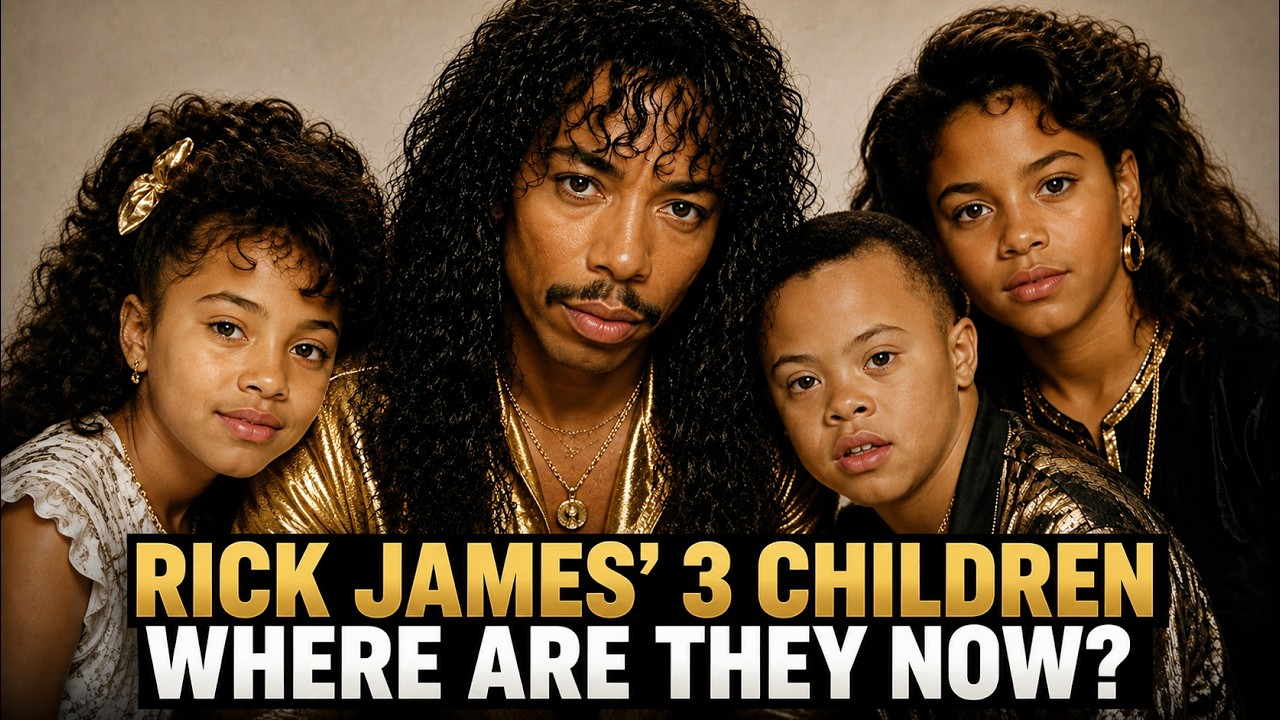
Just a few months later, on August 6, 2004, he was dead at the age of fifty-six, felled by heart and lung failure with multiple drugs found in his system. The world mourned a pioneer of funk. His children, however, mourned a father they each knew in strikingly different ways. Before there was Rick James, there was James Ambrose Johnson Jr.
, born February 1, 1948, in Buffalo, New York, the third of eight children. His father abandoned the family when Rick was still young, leaving his mother, Mabel Sims, as the sole provider. She cleaned houses by day, sang and danced in clubs by night, and ran numbers for the city’s underground lottery to make ends meet. Despite the financial hardships, she kept music at the center of the household.
Gospel filled the home on Sundays, while jazz, blues, and rhythm and blues records played throughout the week. Rick later credited his mother with introducing him to the music of Mahalia Jackson, Sarah Vaughan, and Ella Fitzgerald. He learned piano as a child, but school never held his attention. He skipped classes, spent his teenage years in the streets, and later admitted he had always been a rebel who wanted to do things his own way.
At fifteen, hoping the military would offer an escape, he lied about his age and enlisted in the United States Navy. The discipline did not suit him, and he soon went absent without leave. Facing the consequences, he fled to Toronto, Canada, rather than return. It was a risky decision, but it unexpectedly launched his music career.
Toronto in the mid-1960s had a thriving music scene, and Rick immersed himself in it. He connected with young musicians who would later become rock legends, including Neil Young and Bruce Palmer. Together they formed a band called the Mynah Birds, with Rick as lead vocalist. In 1965, they signed a recording contract with Motown Records, one of the most successful labels in America.
Sessions began in Detroit, but before the album could be released, the Navy caught up with the young sailor. He was arrested during the recording sessions, and Motown shelved the project. For most young musicians, that would have been a devastating setback. Rick later said he thought his career was over before it began.
Instead, it became another turning point. He resolved his legal troubles and returned to music with greater determination. Through the late 1960s and early 1970s, he worked with several bands, wrote songs, and developed a sound that blended funk, rock, soul, and heavy guitar in a way that sounded like nothing else on the radio. He also reinvented himself with a new stage name: Rick James.
His performances became louder, his clothes more extravagant, and his persona bolder. Success did not come overnight. There were failed projects and years of uncertainty, but by 1978 everything changed. His debut album, Come Get It, was an instant success, selling over a million copies and producing hit songs like “You and I” and “Mary Jane.
” Almost overnight, Rick James went from a respected industry musician to one of America’s biggest stars. A string of successful albums followed, including Street Songs with hits like “Give It to Me Baby,” “Super Freak,” and “Fire and Desire. ” He wrote and produced for other artists, helping launch the careers of musicians like Teena Marie and the Mary Jane Girls, and worked with everyone from the Temptations to Eddie Murphy. His influence extended far beyond funk.
Artists such as Prince, MC Hammer, and countless hip-hop producers would later cite him as an inspiration. With success came money, mansions, luxury cars, and private jets, but it also brought a kind of freedom Rick admitted he was never fully prepared for. He never married during the peak of his career, but he had several long-term relationships that shaped his family. His first significant relationship was with singer and songwriter Sailvyn Morgan.
She knew him before he became a star, and together they had two children: Tyenza, known as Ty James, and Rick James Jr. Although the relationship eventually ended, they remained connected through their children. Ty later noted that despite her father’s growing success, life at home did not always match the public image. She once joked, “This man is a millionaire and we’re living in the ghetto.
” Money came quickly and went just as fast. Rick admitted he enjoyed spending it and never thought about saving. The cost of success was absence. He spent much of the late 1970s and early 1980s on the road, with tours lasting months and recording sessions that ran all night.
His children described a father who loved them but was often gone, consumed by fame, constant touring, and addiction. Rick himself admitted there were times he was not the father he should have been. Yet his children consistently described another side of him: a fun, creative, generous man who loved making people laugh. Ty James, the eldest daughter, lived a version of Rick that none of her younger siblings knew.
Born in the early 1970s, she knew him as an aspiring musician trying to break into the industry, not as a legendary star. She watched his life change overnight. As an adult, she came to understand that her father had grown up without a stable father of his own, learning about parenting by watching his mother raise eight children alone. Rather than focusing on what Rick lacked, she chose to understand the circumstances that shaped him.
In the documentary Bitchin’, she argued that people often reduce her father to headlines about drugs and legal troubles, missing the complexity of the man she knew: deeply creative, endlessly funny, and naturally charismatic. Today, she is the family’s public representative, overseeing the Rick James estate, managing licenses, documentaries, and new projects, with the goal of telling the full story of the man she knew before the world turned him into a legend. Rick James Jr. chose a different path.
Born during the early years of his father’s career, he grew up watching his father become one of the biggest names in funk. Recording studios were familiar places, and musicians and producers were a natural part of his life. Unlike his sister, he rarely spoke publicly about his childhood. He pursued a career as a musician, occasionally performing at tribute concerts and events celebrating his father’s career, keeping the musical style alive while developing his own identity as an artist.
He never sought the kind of fame his father experienced, maintaining a more reserved public presence, always focused on continuing the musical side of the family legacy. The youngest son, Tassman James, was born in 1993 during Rick’s relationship with actress and dancer Tanya Hijazi. By then, Rick was no longer the dominant force he had been in the early 1980s. His career had slowed, and the public conversation had shifted from his music to his personal struggles.
His addiction had become harder to hide, and legal problems would eventually lead to prison for both Rick and Tanya. Tassman’s childhood looked completely different from his older siblings’. He was not born amid the rise to fame but after it. Little was published about his early life, a deliberate choice by his family.
He rarely appeared in interviews or documentaries. His parents had a turbulent relationship marked by drug use, and in 1991 Rick and Tanya became involved in assault incidents that led to criminal charges. Both eventually pleaded guilty and served prison time. By the early 2000s, Rick’s health began to decline.
For Tassman, childhood was shaped by recovery, court appearances, and a father trying to rebuild his life. As an adult, Tassman remained entirely out of the public eye, avoiding social media, television appearances, and interviews, a stark contrast to the father who spent decades drawing attention wherever he went. By the late 1990s, Rick James was no longer topping the charts. Hip-hop had become the dominant force in popular music, and while younger artists continued to sample his songs and cite him as a mentor, Rick was struggling with more private battles.
Years of cocaine addiction had taken a severe toll on his health and career. After his release from prison in 1996, he tried to rebuild his life. He continued recording and touring, and he began speaking more openly about addiction and the decisions that had damaged his relationships. He admitted he wished he had spent more time with his children, acknowledging that success often came before family.
People close to him said that in his final years, he made genuine efforts to reconnect with his children whenever possible. Then, in 2004, a younger generation discovered Rick James through the Chappelle’s Show sketch by comedian Dave Chappelle, based on stories told by Rick’s old friend Charlie Murphy. Overnight, Rick became part of pop culture again. He welcomed the renewed attention, appearing on the show and laughing at the exaggerated stories, showing a willingness to mock his own reputation.
A few months later, he was dead. The Los Angeles County coroner ruled the death accidental. Musicians from multiple generations paid tribute, describing him not only as one of the greatest funk performers but also as one of its most innovative writers and producers. For his children, the loss was personal.
Ty spoke about the difficulty of separating the public reaction from her private grief, and his death marked the beginning of a new responsibility for the family. More than twenty years later, Rick James’s music remains influential. “Super Freak” is still sampled by contemporary artists, and his production work is still studied by musicians. Documentaries continue to explore his extraordinary talent and complex personal life.
For his children, preserving that legacy has meant different things. Ty became its public guardian. Rick James Jr. chose to honor it through music.
Tassman chose a quieter path, far from the public eye. Three children, three different lives, and three very different memories of the same father, depending on when they knew him: the struggling dreamer, the unstoppable global superstar, and the older man trying to make peace with his past. Perhaps that is why no single biography can fully explain who Rick James really was.
It depends on who is telling the story.