Standing on the fields where the Battle of Antietam or the Battle of Gettysburg once raged, the first thing that strikes a visitor is the silence. Open fields stretch into the distance, trees bend gently in the wind, and rolling hills rest peacefully under wide skies. It is difficult to reconcile that stillness with what happened there: tens of thousands of men gathered in those same places, knowing that within minutes the ground beneath them could become a battlefield. They stood in long lines, rifles in hand, waiting for the command to advance.
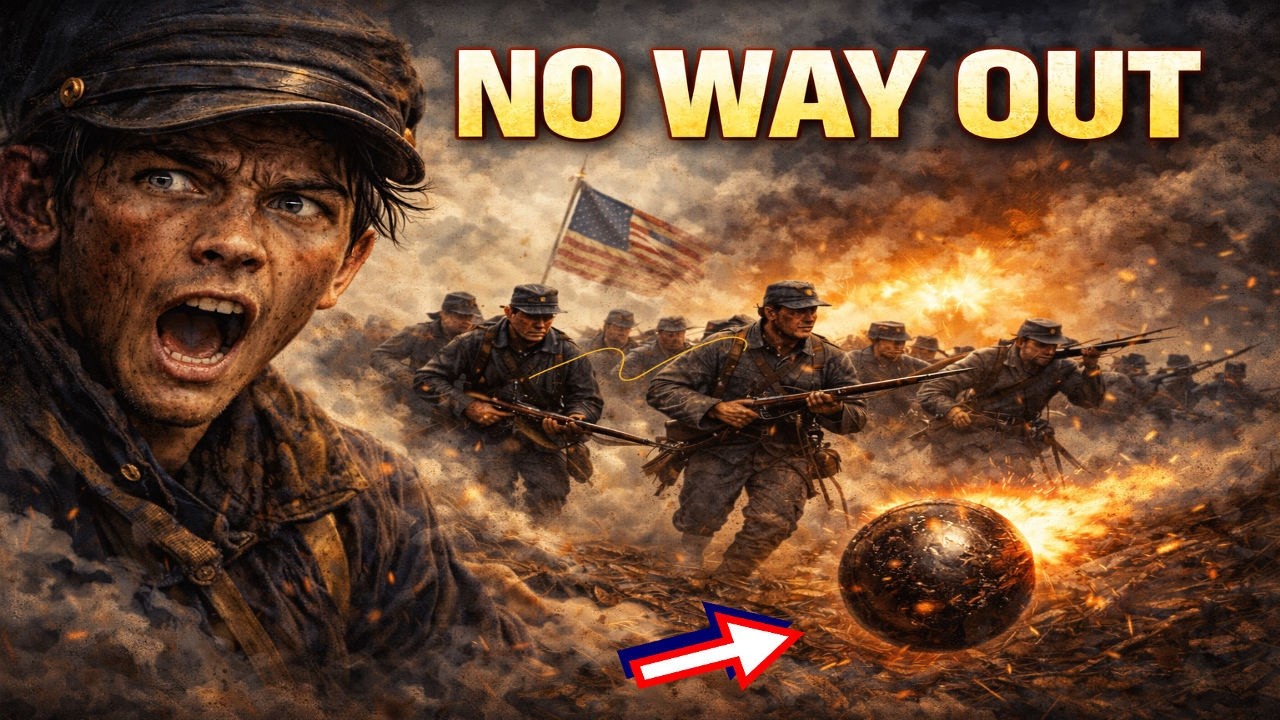
When the order finally came, they stepped forward not toward safety, but directly into gunfire. For generations, historians and visitors have asked the same question: why would soldiers march into a storm of bullets? Were they simply courageous beyond imagination, or were they caught inside a system that left them little choice? The truth is more complicated than most people realize, and understanding it requires stepping into the world of the soldiers who fought the American Civil War.
When the war began in 1861, most men filling the armies were not professional soldiers. They were farmers, teachers, blacksmiths, shopkeepers, and clerks, ordinary young men who had rarely traveled far from home. Many had never held a rifle before enlisting. Some joined out of patriotism, others because their friends did, and a great many believed the war would be short.
The widespread assumption was that the conflict might last only a few months, and some even imagined it would feel like an adventure. Few could anticipate the brutal reality about to unfold. Training camps quickly filled with volunteers, who spent long hours learning discipline and coordination. They practiced marching, loading, and firing rifles, and above all, moving together.
Soldiers stood shoulder to shoulder in long, organized lines, every movement synchronized. When the line advanced, everyone advanced. When it stopped, everyone stopped. To modern eyes, this seems strange, tight formations made soldiers easy targets, but in the chaos of battle, those formations were meant to create order.
Once fighting began, confusion took hold quickly. Black powder smoke from thousands of rifles drifted across the battlefield, turning the air thick and gray. Visibility dropped dramatically. Cannons thundered, horses panicked, and shouted commands were swallowed by the noise.
In that environment, staying together in formation helped prevent total chaos. The line gave soldiers something to follow, and when it moved, every man moved with it. By the 1860s, however, warfare had begun changing faster than military tactics. For centuries, armies had fought in similar formations because weapons were inaccurate and short-ranged.
But technology had advanced. Rifled muskets replaced older smoothbore guns and could hit targets hundreds of yards away. Artillery became more powerful, firing explosive shells that tore through formations. Defending soldiers could hide behind stone walls and earthworks.
The battlefield had become far deadlier than before, yet many generals still relied on tactics developed decades earlier. One of the most tragic examples came during the Battle of Fredericksburg. Union soldiers were ordered to cross a wide open field toward Confederate troops protected behind a stone wall on higher ground. The defenders had a clear view of the entire battlefield.
As Union soldiers advanced, they were exposed the whole way. Wave after wave moved forward while rifle fire and artillery shredded their ranks. Many never reached the wall. By the end of the assault, thousands lay wounded or dead.
It seems almost impossible to imagine commanders ordering such attacks, but at the time, military leaders feared panic even more than enemy fire. Panic could spread faster than bullets. If soldiers scattered or fled in different directions, the entire army could collapse, and once a line broke, defeat often followed. Officers believed that maintaining formation, even under deadly fire, was the best way to prevent disaster.
Discipline was only part of the story. There was also a powerful human factor. Many Civil War regiments were formed from the same towns and communities. Friends enlisted together, brothers stood side by side, and neighbors shared tents, meals, and long months of camp life.
These men became deeply close. They drilled together, marched together, and endured hunger, boredom, and homesickness together. When fighting began, soldiers were often not thinking about politics or strategy, but about the men beside them. If your best friend stepped forward, you stepped forward too.
Few wanted to be the first to turn and run. Letters from soldiers reveal how terrified many of them were, describing shaking hands and racing hearts as battle began. Yet they also wrote about loyalty to their comrades. Military discipline reinforced this pressure, as officers expected orders to be followed immediately, often delivered through shouted commands, bugles, or messengers on horseback.
Sometimes advancing was simply the only option. Remaining in place under artillery fire meant casualties would keep rising, and capturing important terrain like ridges or hills could decide the outcome of battles such as Gettysburg. Training helped soldiers act even when fear took over. Over time, armies adapted, digging trenches and spreading out their formations, changes that would later influence conflicts like World War I.
But one truth remained. In the chaos of battle, structure felt like safety. That is why soldiers kept moving forward, not because they did not value their lives, but because in that moment, standing still could feel even more dangerous.
Once that is understood, those famous Civil War charges stop looking like madness and start looking painfully human.