Lewis Wetzel stood in the cornfield beside his brother Jacob when the Wyandot warriors emerged from the treeline. It was 1778, and the frontier of West Virginia offered no safe ground. The brothers were seized before they could reach their rifles. A bullet grazed Lewis’s chest during the struggle, a wound that might have killed him had his captors not stopped the bleeding.
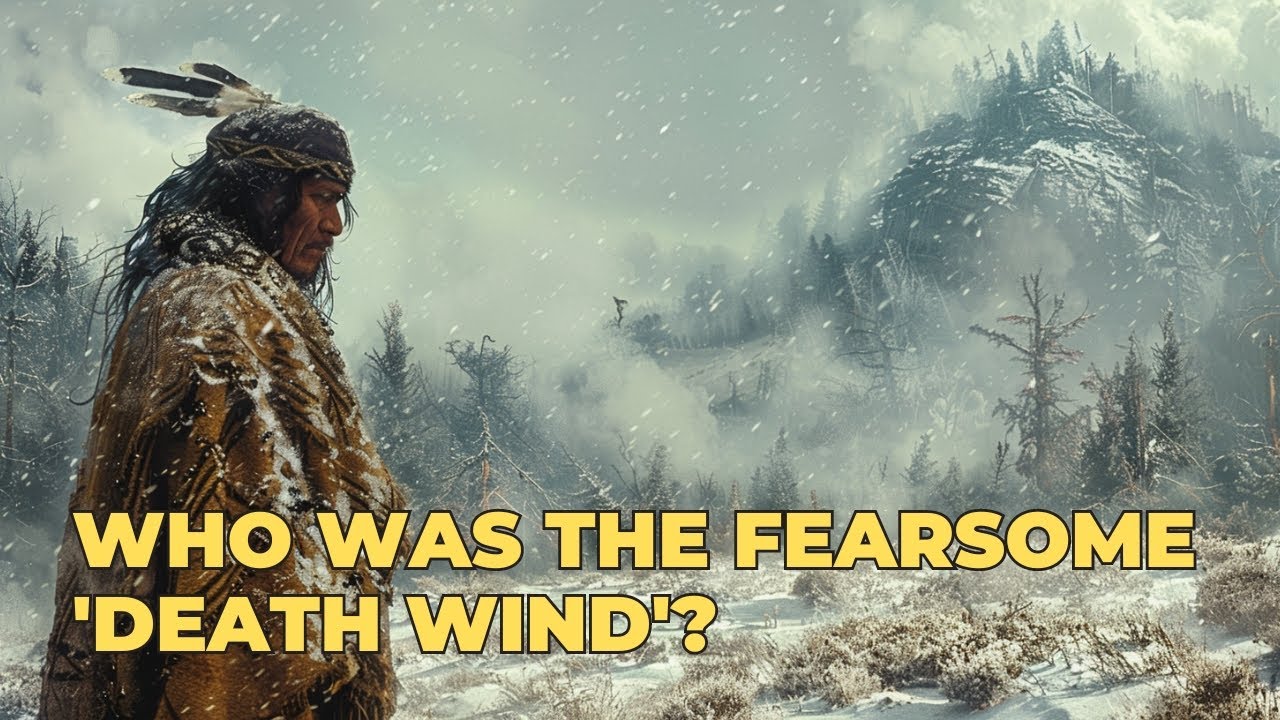
For two days they were marched deep into enemy territory, uncertain whether they would ever see their family again. Then, when the warriors let their guard down, the brothers bolted. The details of that escape have faded with time, but the courage behind it became the foundation of a legend. Lewis Wetzel returned home, and the native peoples of the Ohio River Valley would come to know him by another name: Death Wind.
Wetzel was born in 1763 in the Northern Panhandle of West Virginia, into a settler family living under the constant shadow of native raids. The frontier was a battleground where settlers and native tribes clashed over land and resources, and Wetzel’s own family suffered losses that shaped the course of his life. He grew up in a world where violence was never far away, where homesteads stood vulnerable and the threat of attack lingered on the horizon. But even amid that instability, the tight-knit settler community formed bonds of loyalty that lasted a lifetime.
As a boy, Wetzel mastered the arts of hunting, tracking, and trapping, developing a fierce independence and self-reliance that would become his trademark. These skills would later make him one of the most formidable men on the frontier, a figure capable of outsmarting even the most cunning foes. The American frontier during Wetzel’s lifetime was a land caught between survival and constant conflict. The Ohio River Valley became a flash point where rival groups vied for control of valuable territory, and settler communities lived under the perpetual menace of raids that left devastation in their wake.
For those bold enough to face the dangers, the wilderness promised a fresh start, luring settlers westward in search of opportunity. But the battle for the frontier was not merely a fight for land; it was a struggle for survival, with both sides defending their way of life. Every individual—man, woman, and child—had to be ready to face the dangers that prowled just beyond their homes. The capture and escape of 1778 left an everlasting impression on Wetzel.
During his time in captivity, he sharpened his survival skills and gained insight into the ways of his captors. Upon his return, he became known as a fierce warrior, mastering both the tomahawk and the rifle. His extraordinary ability to navigate the wilderness and anticipate the movements of his enemies earned him a fearsome reputation among settlers, who looked to him for guidance and protection. But it was Wetzel’s relentless thirst for vengeance that truly solidified his place in frontier legend.
Determined to avenge the deaths of his family and friends, he embarked on a personal campaign of retribution, becoming a one-man army driven by a desire for justice. As tensions between settlers and native tribes intensified, Wetzel found himself increasingly drawn into the conflict. His transformation into Death Wind came swiftly and inevitably, fueled by anger, fear, and a deep loyalty to his kin. His encounters with native warriors often ended with a chilling signature: after a kill, Wetzel would throw his head back and let out a blood-curdling scream that echoed through the hills.
That sound became as much a part of frontier legend as Wetzel himself, a grim reminder of the harsh realities of life on the edge of civilization. Wetzel witnessed the brutal realities of frontier warfare early in his life. On October 10, 1774, he was present for the Battle of Point Pleasant, part of Lord Dunmore’s War. That battle pitted the Virginia militia against Shawnee and Mingo warriors along the Ohio River near what is now Point Pleasant, West Virginia.
Wetzel’s elder brother Martin served among the Virginia troops under Colonel Andrew Lewis. These forces clashed with the powerful Shawnee chief Cornstalk, who sought to prevent the colonists’ march into the Ohio Valley. After a fierce and grueling battle, the Virginians emerged victorious, opening the way for further colonial expansion in the region. Years later, Wetzel played a crucial role in the defense of Fort Henry, near present-day Wheeling, West Virginia.
The fort became a symbol of colonial resilience during the late 1700s, withstanding numerous native raids. In September 1782, as the Revolutionary War neared its end, the fort faced a fierce attack by British and native forces. Wetzel, along with his father and brothers, took part in the fort’s defense. His ability to reload his rifle while running allowed him to take accurate shots even under intense pressure.
The defense of Fort Henry became not just a fight for survival but a testament to the settlers’ determination to hold their ground against overwhelming odds. Over time, the stories of Lewis Wetzel transcended historical fact, weaving together a rich tapestry of myth and legend. His exploits grew to legendary proportions, with tales of heroism and adventure passed down through generations. Legends spoke of his sharp shooting, unmatched tracking abilities, and an almost mystical connection to the wilderness.
One of the most enduring tales describes a fierce duel between Wetzel and a native warrior known as Bigfoot, from which Wetzel emerged victorious after a long and grueling fight. Another popular legend claimed that Wetzel’s extraordinary marksmanship came from a pact with dark forces, an agreement made in exchange for supernatural abilities with a rifle. Some believed his skills were too extraordinary to be explained any other way. Wetzel’s legacy was a complex one.
On one hand, he was regarded as a brave protector and skillful fighter, a defender of settlers from native raids who played a crucial role in the fight for control of the frontier. On the other hand, his relentless pursuit of native peoples often turned into a deeply personal quest for vengeance, embodying the broader conflict and tragedy that marked the American frontier. His reputation as a fearsome adversary struck fear into the hearts of those who saw him as an enemy capable of striking without warning and with lethal precision. His unyielding commitment to frontier justice earned him admiration from his community, even as some questioned the source of his power and courage.
Despite the legends that grew around Wetzel, there remains a core of truth to his story, a testament to the real struggles and victories of a man who lived and died on the frontier. His influence extended far beyond the battlefield. His legend inspired novels, ballads, folktales, paintings, and films, keeping his memory alive for generations. As settlers pushed further west, carving a new nation from the wilderness, Wetzel’s story endured as a symbol of the indomitable frontier spirit, embodying the values of self-reliance, bravery, and persistence that were highly valued by those who dared to tame the untamed wilderness.
Lewis Wetzel, the Death Wind, remains a figure of fascination and controversy. His methods were often brutal, and the violence that filled much of his life was not without consequence. But his role in shaping the destiny of the Ohio River Valley is undeniable. His exploits became the stuff of legend, evoking awe among settlers and fear among native warriors.
His story is woven into the larger tapestry of American history, a reminder of a time when the line between civilization and wilderness was blurred, and survival often depended on the edge of a blade or the barrel of a rifle. His memory continues to stir the imagination and provoke thought about the complex history of America’s frontier days.