On the ninth of March, 1993, Doris Duke, one of the richest women in America, lay in a hospital bed unable to lift a pen. So a lawyer named William Doyle closed his hand over hers and guided it across a page, making her butler the sole executor of 1. 2 billion dollars. She had inherited a fortune from her father and spent a lifetime growing it on his one rule: trust no one.
And now she could not sign her own name or know for certain what the page said. This is not a story about money vanishing. Almost every lost fortune story is. Hers is different.
Her fortune never disappeared. It was worth more on the day she died than at any moment in her life. What vanished was her grip on it. Across her last five years, not a single dollar drained away.
What drained away was her say over her own life, her own household, her own doctors, and, at the end, her own name on her own will. The money began with her father, James Buchanan Duke, who did something almost no one ever manages even once: he built one great fortune in tobacco, then built a second in electric power. By the time he died in 1925, he had assembled roughly a hundred million dollars. The newspapers had already given his only child a title before she was old enough to walk across a room: the richest little girl in the world.
She was twelve when he died and inherited the bulk of his wealth in careful installments as she came of age at twenty-one, twenty-five, and thirty. The inheritance came wrapped in more than money. According to her biographer, Sally Bingham, Duke’s father left her a single instruction that mattered more to him than any lesson about markets: trust no one. He had spent his life watching what a great fortune does to the people who gather around it.
He wanted his daughter armored against every one of them before he was gone. She listened and took it to heart. At fourteen, still a child, she walked into a courtroom against her own mother to stop the sale of her father’s assets. That was the shape of her, set hard from the very beginning.
For sixty years that armor held. She was not an heir who spent her inheritance down to nothing. She was a serious investor who read the markets herself, bought, held, and grew what she had been given. Her father left her close to a hundred million dollars; her mother’s estate added a great deal more.
By the time she died, the fortune stood at about 1. 2 billion, several times what she had been handed. She accomplished this with no husband managing her affairs, no board above her, and no father alive to tell her how. The money itself was close to the least interesting thing about her.
During the war she ran a canteen for sailors in Egypt on a salary of a dollar a year. In 1945 she worked as a foreign correspondent filing stories from overseas. She built one of the finest collections of Islamic art in the country and housed it in an estate she called Shangri-La. Through the Newport Restoration Foundation, she bought and saved eighty-four colonial buildings that would otherwise have been pulled down forever.
She paid for all of it out of a fortune she was still making larger. But there was one thing all that money could never buy her. In 1940 she had a daughter who came too early and lived a single day. She named her Arden.
The doctors told her she would never carry another child, and she never did. So one of the richest women in America entered her later years armored against everyone and alone. Five great houses stood empty of family, with more than two hundred servants moving through them, all paid to be there. What could not be arranged was a single face at the table that was there for her rather than for the estate.
Her father had made certain the fortune itself would be guarded long after he was gone. What he could never give her was the one guard that mattered most at the very end: a child of her own still standing in the room with the standing to say six plain words out loud, “That is not what my mother wanted. ”
Three weaknesses came together at the worst possible moment. First, the money sat outside any trust or structure, held in her own name and answerable to her own decisions.
Second, she was alone, with no heir, no husband, no living child, and no one bound by blood to ask hard questions about who was signing what and why. Third, somewhere in her late seventies, she began to fail, first in her body, then in her mind. Any one of those conditions on its own she could have carried. All three together left a great fortune sitting alone in a room with a dying woman.
The first person to step into that opening believed with everything in her that she was the dead daughter returned. In July of 1988, at seventy-five, Duke walked into a court and adopted a thirty-five-year-old woman named Charlene Heffner, who went by the name Chandi. They had met through a shared dance instructor, and somewhere in that friendship Duke became convinced that Chandi was her lost daughter Arden, the baby born in 1940 and dead at a day old, returned to her full grown. A woman of seventy-five does not adopt a stranger of thirty-five for tax reasons.
She does it because she has become certain she has found the single thing money never bought her. She wrote Chandi into her will. Then, almost as fast as it came together, it came apart. The record of what Duke did next is very clear.
She revoked the adoption, cut Chandi out of the will, and did it in language cold enough to read straight off the page, setting down that her father would not want Chandi Heffner to have any interest in such trusts, even if I had wanted her to have such an interest, which I do not. The reincarnated daughter lasted about two years. Erasing her took far longer. After Duke’s death, Heffner sued the estate, and in December of 1995 the estate paid her $65 million to drop every last claim.
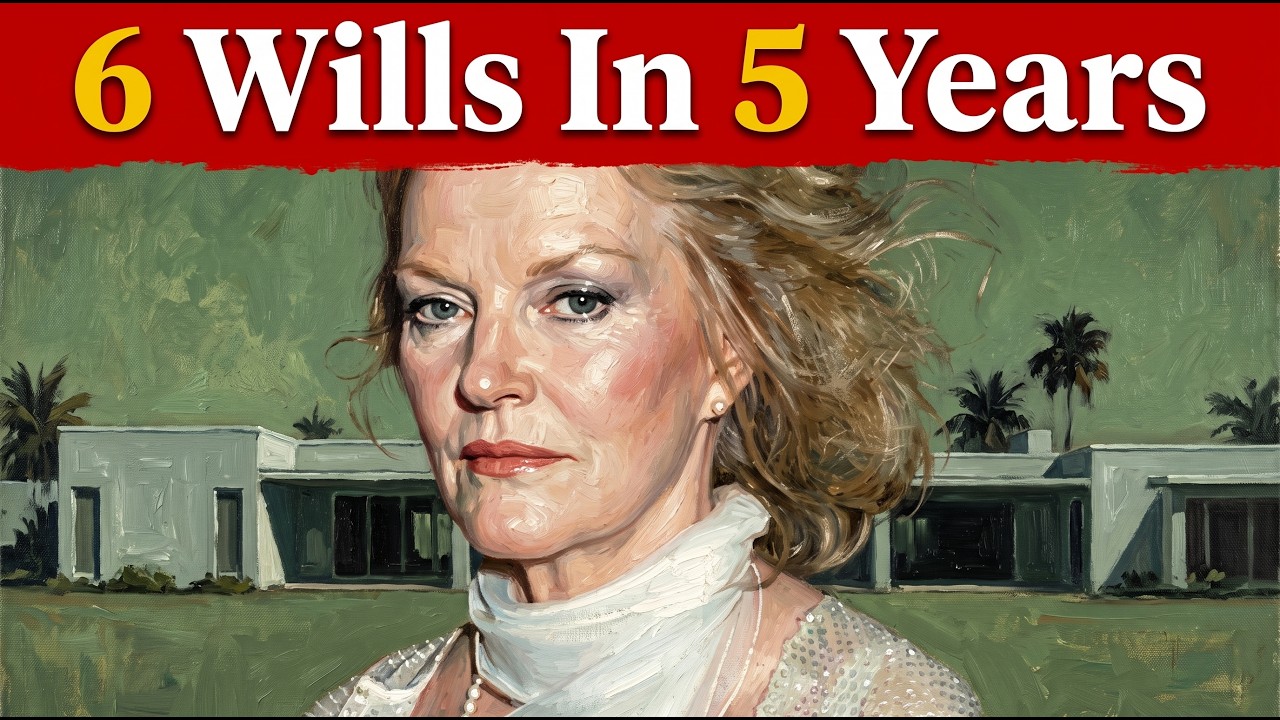
When Chandi was pushed out, the chair at the center of Duke’s world did not stay empty for a moment. Between 1988 and the spring of 1993, across just five years, Duke rewrote her will at least six times. Almost every new version handed the keys to a different person. First the adopted daughter.
Then a diet doctor, written in as executor with a fee of $25 million. After the doctor, an accountant. After the accountant, one of her own half-nephews. Each new favorite stood a little deeper inside the house and a little further from anyone who had known her when she was strong and clear-headed.
The last of them to take the seat and keep it was her butler, Bernard Lafferty. He had come into her service in the 1980s, pouring her drinks and running her many homes, and by the final years he had become the one fixed point in a house otherwise full of people who came and went. He decided who reached her and who did not, which calls were put through, which visitors were turned away at the door. The world outside the house lost its ability to reach the woman inside it.
The people close enough to help a failing woman sign her name were the same people who stood to gain the most from whatever she signed. Her body was failing alongside the will. She had a facelift at seventy-nine, a fall broke her hip, both knees were replaced, and then came a stroke. Her world narrowed from five great houses down to a handful of rooms, then to a single bed.
By the final months, she was no longer directing her own treatment in any real way. According to affidavits later filed by people inside that house, she was on medications that, in the words of one court filing, might have interfered with her thinking. In that exact stretch of days, the will was still being rewritten. The codicil signed on the ninth of March, 1993, the one the lawyer had to guide her hand across, sealed it.
It made Lafferty the sole individual executor of the entire estate. The man who had once served her at the table would now decide what became of 1. 2 billion dollars. Seven months later it was over.
She died on the twenty-eighth of October, 1993, at eighty years old, in her own home, heavily medicated. The cause was given as pulmonary edema and cardiac arrest. Her body was cremated within a single day. The Los Angeles District Attorney investigated questions raised about her death and found no credible evidence of foul play.
No charges were ever brought against anyone. What had been taken from her, one signature at a time, was every last decision about her own life, her own body, her own care, and at the very last, her own name on her own will. But the fortune did not die when she did. Within weeks, Lafferty began spending the estate’s money on himself, charging more than $100,000 in clothing and jewelry, a Cadillac, and a $2.
5 million mansion. A New York surrogate removed him as executor. But on appeal, the New York Court of Appeals reversed, ruling he was owed a full evidentiary hearing and calling the investigation woefully inadequate. That hearing never happened.
Instead he settled, agreeing to step down for $4. 5 million plus $500,000 every year for the rest of his life. That life lasted six months. He died of a heart attack at fifty-one.
When the fighting was over, the estate went where Doris had always said it should go. Her entire personal fortune, all 1. 2 billion, was meant for charity, and in the end it reached charity, after shedding more than ten million dollars in legal fees along the way. The story could end there, with the butler who got lucky.
But it stops one full step short of the thing that explains the whole affair. Lafferty never had the power to take anything from her. Nothing stood between Duke’s personal fortune and the people standing at her bed. There was no trust holding that money in place, no independent trustee standing above it.
The butler was not the cause. The missing wall was. There was one more signature in the story, written almost seventy years before the one drawn in that hospital room. On the eleventh of December, 1924, the year before he died, Doris’s father signed a very different document.
He took forty million dollars, but he did not hand it to his daughter to guard. He put it inside a trust and wrote out careful instructions for every dollar, so much to the university that would one day carry his name, so much to the hospitals, so much to the colleges and churches. Then he locked it inside a structure no single living person could ever redirect. That forty million dollars has grown to about five billion.
It has given away more than 3. 7 billion, still flowing to where he wrote it should flow a full century after the hand that signed it went still. That wall held for a hundred years. His daughter’s fortune had no wall anywhere.
She held it in her own two hands with all of her brilliance, and it was carried off while she lay there watching, signature after signature. The whole story comes down in the end to two signatures from one family. Her father signed his in 1924 and built a wall that no one could ever get through. His daughter’s signature was drawn for her in a hospital bed by a hand that was not her own, and it handed a billion dollars to the man who had poured her drinks.
By the time it counted the most, the pen was no longer hers to hold.