On the night of October 30, 2008, millions of Americans watched an 82-year-old woman in sequins and heels attempt the paso doble on live television. She was not a curiosity act, and she was not there to be gently applauded for showing up. She competed. She rehearsed for hours.
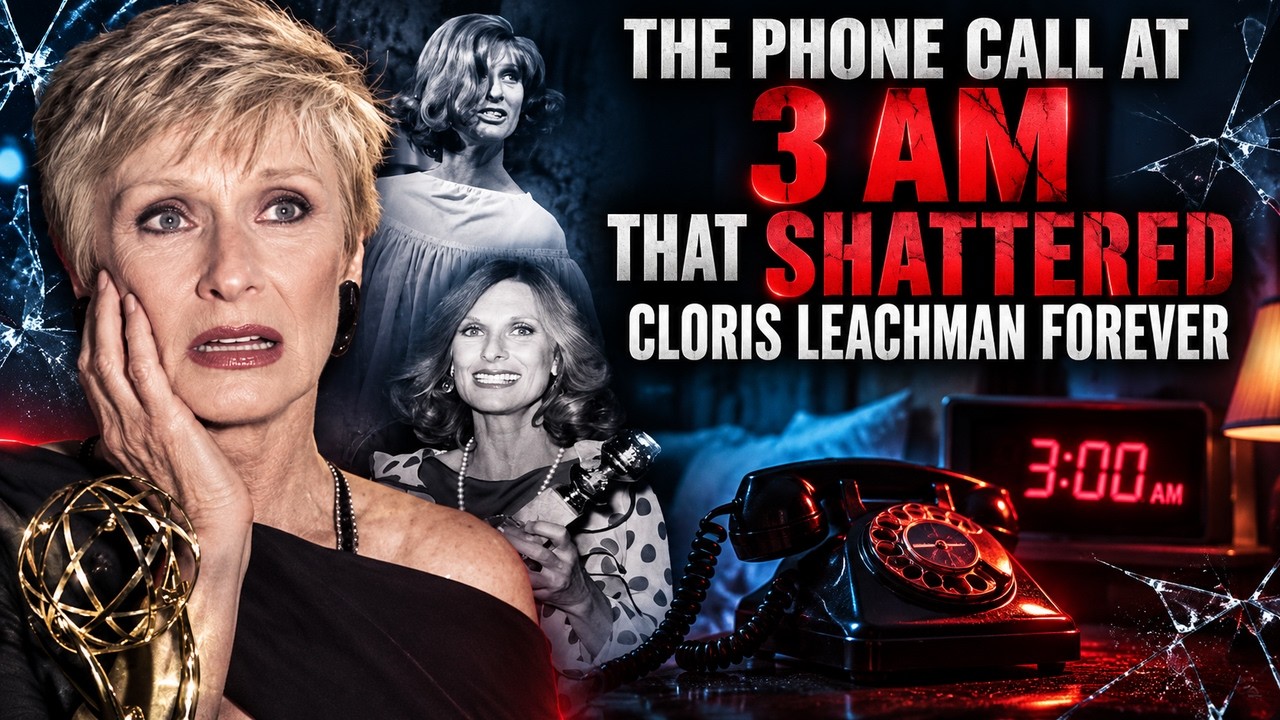
She took the judges’ scores, some of them harsh, and she kept going for seven weeks before elimination. The woman was Cloris Leachman, and the fact that she was doing this at all, at that age, in front of a national audience, was only the latest chapter in a career that had already refused every rule Hollywood had ever written about aging women. By then, she had been in the business for more than fifty years. She had won an Academy Award for a devastating dramatic performance in a black-and-white film about a dying Texas town.
She had built one of the most decorated television careers any performer had ever assembled, including eight Prime Time Emmy Awards spread across four decades. She had played a gothic housekeeper in a Mel Brooks horror comedy and made the mere mention of her character’s name send horses into hysterics. Most actresses of her generation had long since faded from the screen by their sixties. Leachman was just getting started.
She was born in Des Moines, Iowa, in 1926, the oldest of three sisters. Her mother pushed her toward the piano and the stage, and she absorbed that training early. She studied at Northwestern University, where she moved through the same theatrical world as Paul Lynde and Charlotte Rae. She won the Miss Chicago title in 1946 and advanced among the finalists at the Miss America pageant, earning a scholarship that helped her move to New York and continue her training.
She joined the Actors Studio in the early group selected by Elia Kazan, studying in a world that prized emotional truth, concentration, and the inner life of a character. She carried that seriousness into everything she did, including comedy, which she treated with the same commitment and willingness to embarrass herself that other performers reserved for tragedy. In 1971, that approach produced the performance that changed everything. Peter Bogdanovich cast her in The Last Picture Show as Ruth Popper, a middle-aged housewife in a dying Texas town who has been treated badly by life and has just discovered exactly how badly.
In a four-minute kitchen scene, she talks to a young man who has left her for a younger girl and returned expecting to be forgiven. She plays the moment without protection, letting humiliation, rage, need, and dignity occupy the same face without smoothing any of them away. The performance won her the Academy Award for Best Supporting Actress, and more than half a century later, the scene remains one of the most cited examples of unadorned screen acting from the 1970s. The critical question was how a woman known primarily as a comedic actress, a former beauty queen, could deliver one of the most devastating dramatic performances of her decade.
The answer lay in how she defined her work. She did not think in terms of comedy versus drama. She thought in terms of truth versus falseness. She refused to be dishonest, even when honesty made her look foolish, unattractive, or old.
That refusal shaped everything that followed. In 1970, she was cast as Phyllis Lindström on The Mary Tyler Moore Show. Phyllis was vain, self-absorbed, socially clueless, and completely convinced of her own superiority. Leachman played her with such committed, wide-eyed sincerity that the character became one of the defining comic figures of the show and earned her two Emmy Awards.
The role was spun off into her own series in 1975. In 1974, she played Frau Blücher in Young Frankenstein. She never played the character as a joke. She played a gothic housekeeper with a mysterious romantic past, menacing and sad, still emotionally bound to the dead Victor Frankenstein, as if she were in a serious horror film.
That is precisely why the running gag of horses neighing in terror at her name worked so well. The audience laughed at the collision between her deadly serious performance and the ridiculous world around her. Between 1970 and 1977, in a span of just seven years, she delivered one of the greatest dramatic performances of the decade, two of the most quoted comedic performances of the decade, and a lead role on network television that made her a household name. She did it while raising five children and navigating a marriage that lasted nearly thirty years before ending in divorce in the late 1970s.
By the 1980s, she was in her mid-fifties. In Hollywood terms, that was supposed to be the end. The phone was supposed to stop ringing, and the roles were supposed to shrink to mothers and grandmothers, two scenes with no character arc. Leachman refused.
She kept working through the decade in television movies and guest appearances. In 1986, she joined The Facts of Life as Beverly Ann Stickle, keeping herself visible to a generation too young to have watched her in the 1970s. That same year, she lost her son Brian, who was thirty years old, and the loss remained part of the family story for the rest of her life. She kept going.
In the early 2000s, something happened that almost never happens to an actress in her seventies. She got hot again. She was cast as Ida on Malcolm in the Middle, one of the most horrifying, aggressively unpleasant characters ever seen on network television. Ida drank, stole, insulted everyone she met, and had opinions so cruel they could only exist safely inside a comedy.
Leachman played her with total commitment, pouring every ounce of her craft into making Ida real and completely believable. She won two more Emmy Awards for the role, one in her seventies and one after she turned eighty. Her final reinvention came in 2008 with Dancing with the Stars. She was partnered with professional dancer Corky Ballas.
She did the cha-cha, the tango, and the paso doble across seven weeks of a competition built around stamina, memory, coordination, and live performance. The judges did not always love her dancing. The audience loved her nerve. At eighty-two, she had managed yet another career reinvention.
And she still did not stop. She appeared in Raising Hope in her mid-eighties, playing another awful grandmother. She continued working into her nineties, filming an independent drama at ninety-three and lending her voice to a feature released when she was ninety-four. Cloris Leachman died on January 27, 2021, at her home in Encinitas, California, with her daughter Dinah beside her.
She was ninety-four. A later death certificate listed a stroke as the immediate cause, with COVID-19 as a significant contributing condition. Tributes came in from every generation. Mel Brooks mourned her publicly, calling her irreplaceable.
Colleagues remembered her not as a diva or a monument, but as a working actress, serious about the work, prepared, on time, respectful of the crew, and generous to younger performers. What she left behind was more than a body of work spanning more than seven decades. She helped make it normal to see a woman in her seventies or eighties in a real part, not a decorative one. She kept taking the strange, ugly, ridiculous, risky roles when every rule of the industry said she should have quietly retired.
She refused to hide her age, her ambition, or her willingness to look foolish. And she kept showing up, which is the one thing that made all the rest possible. The message she left coded into her work was simple.
The interesting part of a life is over when you decide it is over, not when the industry decides, not when the calendar decides, and not one second before.