The German command’s early policy toward Soviet women in uniform was not a policy at all, but an open license. In the summer of 1941, as the Wehrmacht pushed deep into Soviet territory, German officers found themselves facing something they had not anticipated: female soldiers, surgeons, and officers fighting and dying alongside the men. The Germans did not initially know what to do with them. Their hesitation did not last long.
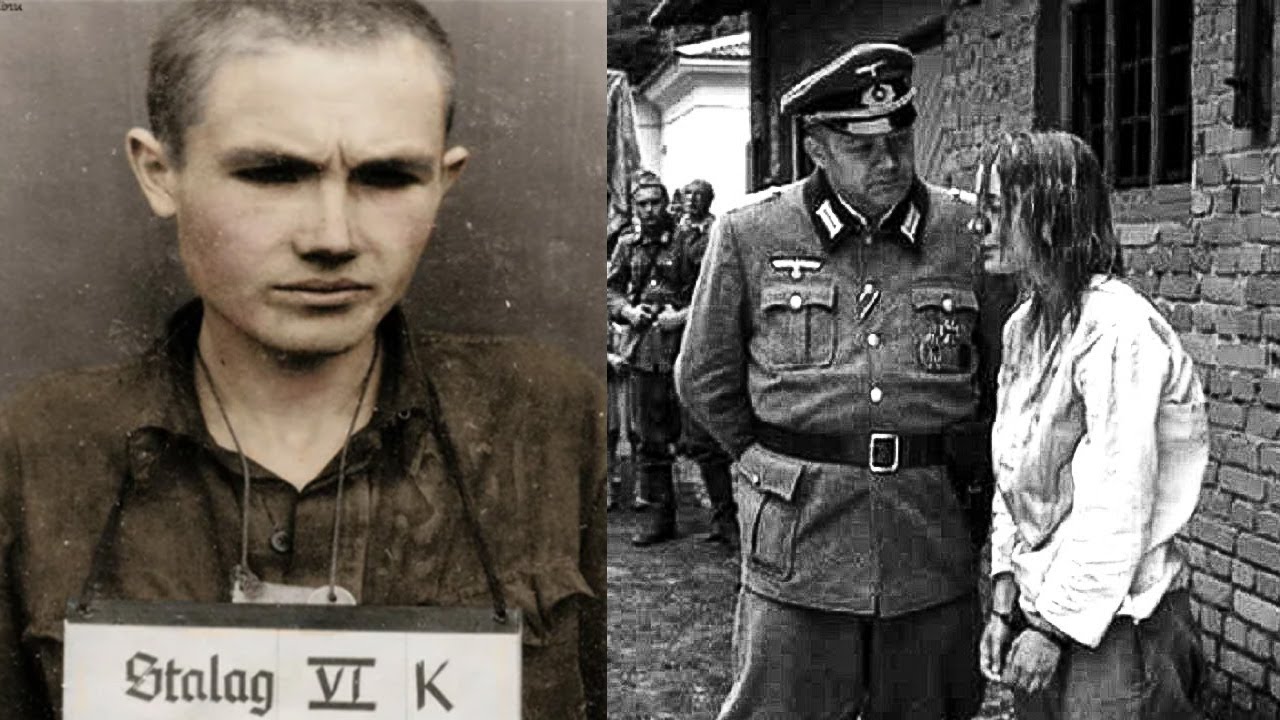
The High Command left the matter to local army, corps, and division commanders, who passed it still further down the chain, in effect giving officers and soldiers a free hand to act with complete arbitrariness and cruelty. Some senior commanders issued explicit orders. General Hans Günther von Kluge, commander of the Fourth Field Army, decreed that women in uniform were to be shot on sight rather than taken prisoner. Whatever the intent, that order became a kind of salvation for many women, because captivity under German hands was, for them, worse than a quick death.
Soviet women had entered the war largely as volunteers. In the Soviet Union, women could choose any profession, including military service, though for most it was voluntary. Only certain fields, such as medicine, communications, translation, and cryptography, carried formal obligations. Among the young especially, patriotic enthusiasm ran high.
Girls dreamed of becoming pilots, scouts, snipers, anti-aircraft gunners, and holders of other combat specialties. They mastered those specialties and proved they could be as courageous as men, sometimes more so. From the start, they faced conditions men did not. The Nazis did not recognize them as legitimate military personnel.
They treated them as bandits, partisans, and underground fighters, and the consequences were brutal. German soldiers, in their own notes, recorded what they did. One entry describes clearing a camp and finding a beautiful woman among the captured. He and a comrade took her to the operating room.
She beat and howled. Forty minutes later they shot her. Another soldier wrote that he had learned to do it more simply, putting a gun to their head, because a Russian girl had recently blown up herself and a lieutenant with a grenade. Now, he said, they strip them naked, search them, and then they disappear.
These men, whether in the Wehrmacht or the SS, did not consider Soviet citizens fully human, and they allowed themselves everything. Before shooting, soldiers often raped women, humiliated them, and only then killed them. Hans Rudloff, a soldier of the 11th Wehrmacht Panzer Division, recalled nurses lying on the roads, shot and thrown onto the roadside, naked, their bodies cut with obscene inscriptions in their own blood. Residents of the village of Smya Kirki District described a wounded female lieutenant dragged naked onto the road in 1941, her face slashed with knives, her arms twisted, her breasts cut off.
Another account from the memoirs of Soviet soldiers describes a nurse who had been captured. A day later the unit recaptured the village. Dead horses lay everywhere, motorcycles were overturned, armored personnel carriers were damaged. They found her there.
Her eyes had been gouged out, her chest cut off, and she had been impaled. It was frosty, and she was completely white, her hair gray. She was only twenty years old. In the fall of 1941, the German command issued a new order: women should be captured and sent to prison camps rather than killed on the spot.
The order was not followed everywhere or always, and even where it was obeyed, it did not ease the fate of the girls in uniform. The Israeli historian Arno Lustiger, in his book on captivity, described the mandatory gynecological examinations that all captured women underwent. German doctors were surprised that nine out of ten unmarried girls were virgins. For the unfortunate ones, that finding was a death sentence.
Camp policemen, officers, and guards all wanted to deprive them of their honor. Many surviving female prisoners came to envy their dead friends. Sophia List, a former prisoner, later recalled the moment of selection. An SS officer approached her immediately and asked if she was Jewish.
No, she answered. He asked her last name. She gave the name of a classmate. Where were you born?
In Bissi. Several more questions followed. He spoke Russian without the slightest accent, and although half a century had passed, she said she still saw him before her as if it had happened yesterday. She never understood how those answers and that name came into her head.
With a blow of his hand, the officer pushed her not to the right, where she was afraid to even look, and not to the left, where everyone was being driven away, but straight ahead. Rising to her feet, she found two other female prisoners of war. By the end of the selection there were six of them, standing pressed closely against each other. She said it was scary to look at what was happening around them.
Elsewhere the Germans were identifying and killing Jews. When the selection ended, the prisoners were driven back into the buildings, the SS men and soldiers left, and only the corpses remained in the courtyard. The six of them stood in the middle of empty space, in complete uncertainty. Life in the concentration camps meant hard labor every day and almost daily humiliation from guards and supervisors.
Germaine Tillion, a French former prisoner of Ravensbrück, wrote that Soviet women occupied a special position among the prisoners. Their cohesion, she believed, came from having gone through army school before capture. They were young, physically strong, neat, and honest. Among them were intellectuals, teachers, and doctors, friendly and attentive.
And the Germans disliked their rebellion, their unwillingness to obey. In Ravensbrück, reveille came at four in the morning. Roll call could last two hours. Then the women were taken to work that lasted twelve to fourteen hours a day.
Prisoners received a bowl of soup made with potato peelings and two hundred grams of bread. For the slightest disobedience they were beaten, shot, or gassed. One Soviet woman, a major, was burned alive in the crematorium because she spat in the face of a Nazi. Another punishment, inflicted on a naked woman tied up, involved inserting a red pepper pod inside her while she was beaten with a whip for every scream.
The guards called it the red fireman. In February 1944, sixty Soviet girls arrived at the Hanel aviation plant from the concentration camp in the city of Bart. They refused to work, to make weapons for the Germans. The half-naked prisoners were lined up in the courtyard and stood there for many hours in sub-zero temperatures.
Every hour a female warden came out and offered them hot coffee, warm clothes, and a clean bed. Whoever agreed would go to work. No one gave in to persuasion. The Nazis then threw several girls considered the instigators into a cold punishment cell and put the rest in cells.
Two girls soon died of pneumonia. The Germans were finally forced to transfer the survivors to other jobs not connected to military production. Surviving the camps left most of the women permanently damaged. Many female prisoners were subjected to sterilization, and those who survived were often unable to have children.
The exact number of Soviet women captured by the Germans remains unknown. Estimates range from thirty thousand to a hundred and fifty thousand people.