Shortly before midnight on March 18, 1882, shots rang through the rear entrance of Campbell and Hatch’s Saloon and Billiard Parlor in Tombstone, Arizona Territory. Morgan Earp, who had been playing pool nearby, was struck down. His brother Wyatt, seated close by, narrowly escaped harm. Morgan was carried into an adjoining room where friends and family gathered, but the wound was fatal.
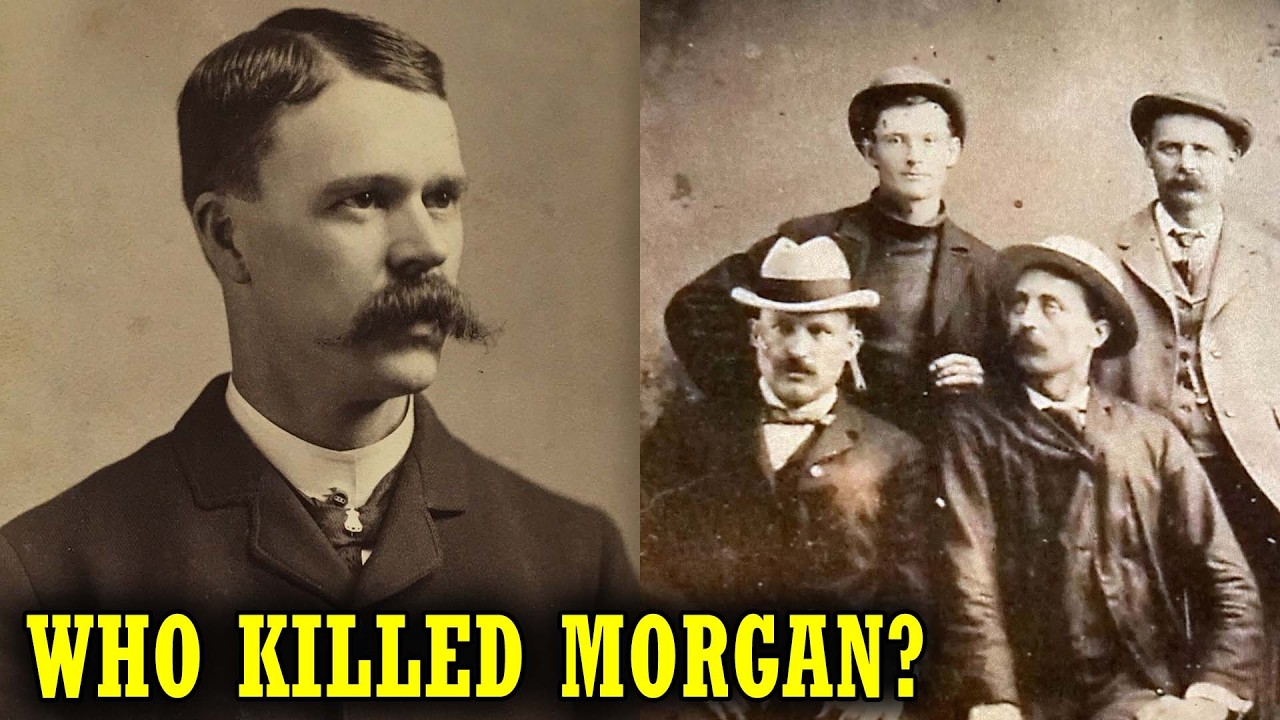
He died shortly after midnight on March 19, 1882, the same day Wyatt Earp turned thirty-four. Years later, stories attributed final words to Morgan about his vision fading, though historians continue to debate the details recorded in later retellings. Morgan Seth Earp had spent his life in the shadow of his older brother Wyatt, and he left behind a far smaller historical record. He was born in Pella, Iowa, on April 24, 1851, one of the younger sons of Nicholas Earp, a farmer and occasional officeholder known for his strict, demanding nature.
During Morgan’s childhood, the family moved frequently. In 1864, when Morgan was a young teenager, the Earps traveled by wagon from Iowa to California, a journey that fellow travelers later remembered as difficult and tightly disciplined. Historians often suggest that Nicholas’s emphasis on family loyalty, discipline, and resilience left a lasting mark on his sons. By 1868, Nicholas moved the family again, this time to Lamar, Missouri.
There, Wyatt took work as a constable and married Urilla Sutherland, whose unexpected death in 1870, along with the loss of their unborn child, became a major turning point in Wyatt’s life. In the years that followed, Wyatt and Morgan drifted through the frontier, working as buffalo hunters in the Texas Panhandle during the early 1870s. Their sister Adelia later recalled that the two returned with earnings reflecting the opportunities available at the time. Not all of the brothers’ early frontier activities were respectable.
Newspaper notices from the Peoria Daily Transcript in 1872 reported that Wyatt and Morgan were each fined after being found in a house of ill fame in Peoria, Illinois. Additional notices described further fines, temporary jail time, and an arrest connected to a floating establishment associated with prostitution. Historians debate exactly what role the brothers played in these incidents. Some argue they were simply passing through between hunting trips, while others suggest they may have had connections to the local vice economy, an industry that existed openly in many frontier communities.
The brothers’ names appeared in the Peoria city directory that same year, indicating they spent a meaningful amount of time there. Morgan’s trail through the 1870s is marked by incomplete records. In September 1875, he was fined for a minor ordinance violation in Wichita, Kansas, where Wyatt was serving as a city policeman. Stories later suggested Morgan may also have worked as an officer in Wichita, but historians have found no official records confirming it.
By winter 1876–77, according to biographer Stuart Lake and notes from interviews with Wyatt decades later, Morgan had followed his brother to the gold region of Deadwood in Dakota Territory. He later traveled to Montana, spending time in Miles City and Butte. During this period, Morgan became associated with Louisa Houston, whom many accounts referred to as his wife, though no definitive marriage record has been found. In the summer of 1878, gold discoveries in the Bear Paw Mountains drew a wave of prospectors north into contested territory within the Blackfeet Reservation.
Newspaper items from the period suggest Morgan was among those who joined the rush. A July 25 report in the Black Hills Daily Pioneer stated that Morgan had recently arrived from the Tongue River region and estimated that hundreds of people were making the trip, many carrying limited supplies and lacking proper preparation. Exactly how far Morgan traveled or whether he reached the gold fields remains unclear, but the account portrays him as a young man willing to pursue opportunity under demanding conditions. By late 1879, Morgan’s life took a new direction.
Records from Butte, Montana, show he was appointed a city policeman on December 16, with his employment ending around March 1880. Meanwhile, the rest of the Earp family was gathering in Tombstone, Arizona Territory, a rapidly growing silver boomtown. Letters from Lou Houston offer a rare personal glimpse into this period. In July 1880, she wrote that Morgan planned to leave for Arizona the following morning.
According to research collected by historian Glenn Boyer, Morgan arrived in Tombstone in late July 1880, placing him at the beginning of the tensions that would define his fate. Tombstone in the early 1880s was a town divided. Silver mining and cattle operations drove rapid growth, but the open range also attracted cattle thieves, and the term cowboy was often used locally to describe groups accused of rustling. Virgil Earp served as deputy US Marshal and spent time as town marshal and chief of police.
Wyatt worked as a Pima County deputy sheriff, later performed investigative work for Wells Fargo, and eventually became a deputy US Marshal. In February 1881, Cochise County was created, and Johnny Behan became its first sheriff. Behan and the Earps were political rivals with different approaches toward local enforcement and the Cowboys. Because many residents benefited economically from low-cost cattle, public opinion was divided, and the Earps did not always receive widespread support.
Morgan’s role in Tombstone was steady but rarely public. He assisted his brothers in routine deputy work, escorted prisoners, and served as a Wells Fargo stage messenger. Payroll records show he received compensation during late 1880 and early 1881 for messenger services. Bishop Glenn Boyer, in his study Morgan Earp, Brother in the Shadow, argued that Morgan’s contributions have often been overlooked because he rarely became the focus of newspaper coverage.
One early episode illustrated Morgan’s involvement. On July 25, 1880, several US Army mules went missing from Camp Rucker east of Tombstone. Lieutenant J. H.
Hurst organized a search party that included Virgil, Wyatt, and Morgan. The group followed the trail to the McLaury ranch, where negotiations reportedly developed over recovering the animals. According to later accounts, conditions were proposed that led the Earps to withdraw before the matter was resolved. Historians often view this as one of the earliest moments of tension between the Earps and groups later associated with the Cowboys.
Morgan’s duties expanded through 1880. In August, Wyatt temporarily appointed Virgil and Morgan to assist in pursuing a group of suspected criminals traveling toward Mexico. Days later, Wyatt and Morgan arrested teamster George McKinney after an altercation, and Morgan escorted the prisoner to Tucson. In September, while accompanying a Wells Fargo stage to Benson, Morgan noticed that two silver bars had fallen from the rear compartment, and he and the driver recovered the shipment.
Later critics of the Earps would use such episodes to support accusations about connections to stage robberies, claims that remain debated and are not supported by definitive evidence. On October 28, 1880, Tombstone Marshal Fred White was critically wounded while attempting to disarm Curly Bill Brocius, who had been firing into the night sky. Wyatt became involved during the encounter, and a firearm discharged in the confusion. Curly Bill was taken into custody, and Morgan and Wells Fargo operative Fred Dodge helped maintain order.
When Curly Bill was transported to Tucson, Virgil and Morgan accompanied part of the journey because of concerns that emotions could lead to unrest. The court concluded the shooting had been accidental, in part because Fred White reportedly described it that way before his death. As 1881 progressed, cattle theft and stagecoach robberies became more frequent. On March 15, an attempted robbery of a stage between Tombstone and Benson ended in the deaths of driver Bud Philpot and passenger Peter Rourke.
A search party was organized that included Virgil, Wyatt, Morgan, Bat Masterson, and messenger Bob Paul. The group detained a man named Luther King, who provided information pointing toward additional suspects, but the long pursuit across difficult terrain eventually ended without the outcome authorities hoped for. Members of the Cowboy faction began spreading accusations that Doc Holliday had been connected to the robbery, claims never conclusively proven. In September, a posse including Virgil, Wyatt, and Morgan arrested Pete Spence and Frank Stillwell in connection with the Bisbee stage robbery.
Because Stillwell also served as a deputy under Sheriff Behan, the arrests added political friction. Not long afterward, Morgan reportedly had a tense conversation with Frank McLaury outside the Alhambra Saloon. Contemporary accounts suggest McLaury warned Morgan not to pursue him in the future, and Morgan answered that if circumstances required official action, he would carry out his duties. Whether every quoted statement was recorded exactly as later retellings described remains uncertain, but historians generally agree that by late 1881, relations between the Earps and the Cowboys had become deeply strained.
Even during this period, broader concerns sometimes pushed rivalries aside. In October, reports of increased Apache activity under Geronimo shifted attention toward regional security. On October 6, a group of seventeen men associated with the Earps, including Morgan, traveled into the Sulphur Springs Valley and encountered Curly Bill Brocius at the McLaury ranch. The meeting remained calm.
Observer George Parsons later noted that Wyatt and Curly Bill acknowledged one another briefly and cautiously, while Virgil spent time speaking with Brocius before the group moved on. But the calm did not last. On October 25, Ike Clanton, after drinking heavily, became involved in a heated exchange with Doc Holliday at the Alhambra Saloon. Wyatt and Morgan stepped in to separate the two, and Virgil warned that further disruption could lead to arrests.
The next morning, witnesses described Ike moving through town while openly expressing frustration and carrying firearms despite local ordinances. Virgil confronted him, and Morgan assisted in bringing Ike before the court. Judge A. O.
Wallace fined Ike for violating the city’s weapon ordinance and ordered his firearms confiscated. After court adjourned, another confrontation between Wyatt and Tom McLaury became physical, further increasing resentment. At approximately 2:30 in the afternoon on October 26, 1881, Virgil Earp led a small group that included Wyatt, Morgan, and Doc Holliday to a narrow vacant lot off Fremont Street near the OK Corral. Their stated purpose was to enforce the town ordinance restricting the carrying of firearms and to disarm individuals believed to be carrying weapons illegally.
Historical evidence suggests neither side may have expected the encounter to become one of the most famous moments in Old West history. Within less than a minute, the confrontation turned into a rapid exchange of gunfire. Witness testimony and later investigations produced conflicting accounts, and historians still debate who fired the first shot. When it ended, Tom McLaury, Frank McLaury, and Billy Clanton were dead.
Virgil was seriously wounded in the leg, Doc Holliday suffered a minor injury, and Morgan was struck across the shoulders. A letter written by Lou in January 1882 described his injuries, stating both shoulder blades had been affected with concern about damage near the spine. Despite the seriousness of the wound, Morgan eventually recovered and returned to active duty. After recovering, Morgan resumed assisting his brothers even as threats continued.
On December 28, 1881, Virgil Earp was seriously injured in an attack that left lasting damage to one of his arms. The following day, US Marshal Crawley Dake appointed Wyatt as a deputy US Marshal, and Morgan continued assisting under Wyatt’s authority in the months that followed. He remained active in those duties until the evening of March 18, 1882, when he was fatally wounded in Tombstone. The next day, James Earp transported Morgan’s remains to Colton, California, for burial.
Contemporary reports described a solemn funeral procession departing Tombstone. Letters written afterward revealed the emotional impact on those closest to him. Lou expressed hope that justice would eventually follow, while Virgil and his wife soon departed Tombstone as well, leaving Wyatt and Warren behind. Morgan’s death became one of the defining moments that led Wyatt to begin the campaign later remembered as the Vendetta Ride, joined by allies including Doc Holliday and Warren Earp.
Even after his burial, Morgan’s story did not settle into certainty. In 1892, construction projects affected Colton’s Slover Mountain Cemetery, and Morgan’s remains, along with others, were relocated to nearby Hermosa Gardens Cemetery. Stories later circulated suggesting confusion during the reburial process, though cemetery officials have maintained confidence in identifying his grave. Years later, historian Truman Fisher replaced an inaccurate marker that incorrectly identified Morgan as a US Marshal.
Morgan never held that office; he served in deputy roles under federal and local authority. Popular culture has often portrayed Morgan as the quieter or less capable Earp brother, but many historical accounts suggest a dependable figure who repeatedly stood beside his family during difficult periods. He never achieved the legendary status of Wyatt, yet he stood at the center of some of the Old West’s most defining moments. Because he left behind so few personal records, many questions about who he truly was and what drove him may never be fully answered.
More than a century later, that mystery continues to fascinate historians.