On the night of May 11, 2019, in Los Angeles, Margaret Ann Lipton died quietly in a room filled only with her daughters and nieces. There were no cameras, no press, and no public spectacle—just a 72-year-old woman at the end of a 15-year battle with colon cancer, surrounded by the people who loved her. She had once been among the most recognizable faces on American television, a Golden Globe-winning actress and fashion icon who, at 24, embodied the counterculture for a generation. Yet for nearly 15 years in the middle of her life, she had vanished from public view, hidden away by her own choice and her husband’s request.
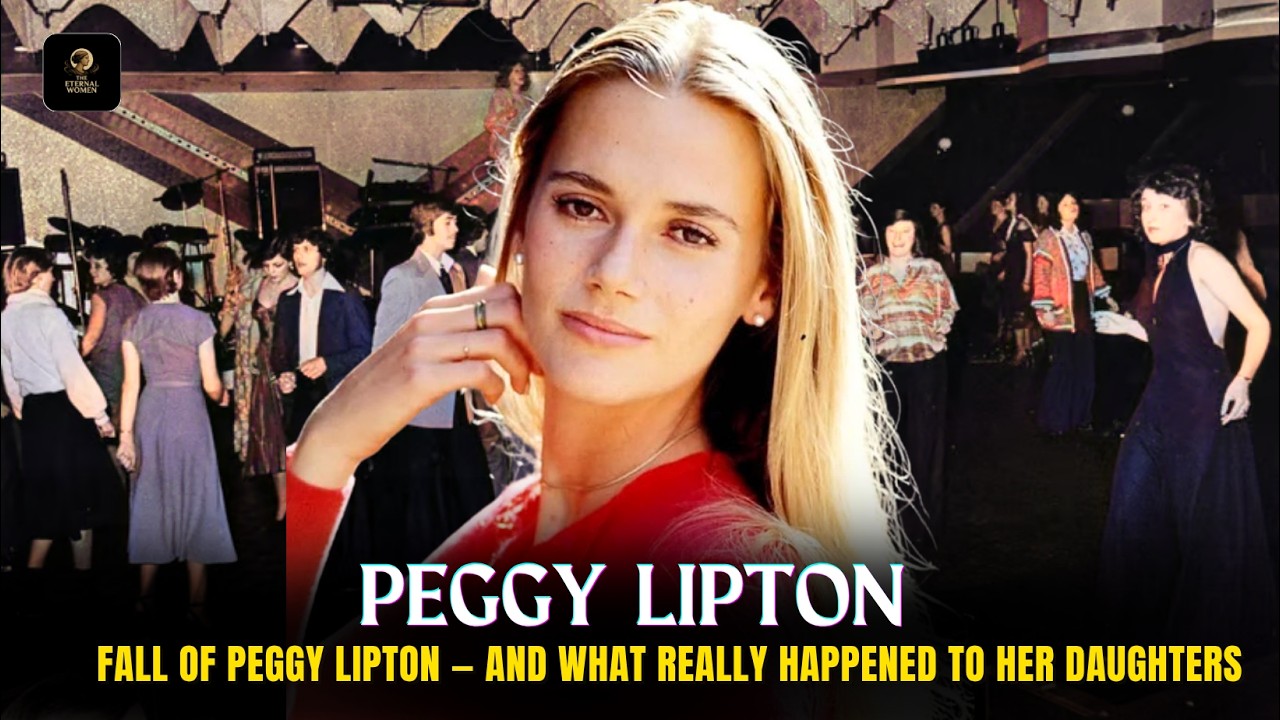
This is the story of how Peggy Lipton became a symbol of an era, why she stepped away from it all, and what she built in the silence that followed. Born in 1946 in New York and raised in Lawrence, Long Island, Lipton grew up in an upper-middle-class Jewish household. But beneath the surface of suburban stability, her childhood was marked by hidden pain. Around the age of seven, she developed a severe stutter so crippling that at 13, at summer camp, she could not even say her own name.
In her 2005 memoir, *Breathing Out*, she wrote of lying awake at night, terrified of having to pronounce certain consonants. She also disclosed, carefully and without sensationalism, that she had been sexually abused by a relative at around the same age. This combination of trauma and speech impediment shaped a deeply introverted, anxious interior life that would follow her for decades. At 15, she signed with the Eileen Ford modeling agency, and by her late teens, she was using cocaine and peyote to manage the depression and anxiety that had become her constant companions.
After moving to California with her family at 19, she signed with Universal Studios, and the public persona of Peggy Lipton began to take shape. In 1968, ABC launched *The Mod Squad*, a drama about three young people in trouble with the law who work undercover for the Los Angeles Police Department. It was revolutionary for its time: one of the first network dramas with an interracial main cast, directly addressing the Vietnam War, drug addiction, domestic violence, and racism. As Julie Barnes, Peggy Lipton became the show’s face.
With her straight ash-blonde hair, serious eyes, and effortless style, she became a fashion icon and cultural touchstone simultaneously. The show ran for five seasons, earned her four Emmy nominations, and in 1971, she won the Golden Globe for Best Actress in a Television Series Drama. But the fame that millions envied was, for her, a kind of prison. She later told the *Los Angeles Times*, “Fame really drove me into my house.
I was very paranoid. I didn’t like going out. I had no idea how to be comfortable with the press. It was really hard for me.
” The enormous gap between the confident public figure and the anxious private woman consumed energy she could not spare. She attempted a singing career alongside acting, releasing an album in 1968 and scoring minor hits, but the celebrity that accompanied success only deepened her withdrawal. When *The Mod Squad* was canceled in 1973, she was 26 years old—celebrated, iconic, and exhausted. The next chapter of her life began with Quincy Jones.
Fourteen years her senior, he was one of the most consequential musical figures of the 20th century, having arranged for Frank Sinatra, Miles Davis, and Ray Charles, and produced Michael Jackson’s *Off the Wall*, *Thriller*, and *Bad*. They met in the early 1970s and married in 1974, when Lipton was 27. Their interracial marriage in mid-1970s America drew immediate, sustained racist backlash, including devastatingly, from Lipton’s own mother. Lipton did not apologize or capitulate; she married him and built a life with him in Bel Air, stepping away from her career at his request to raise their family.
For nearly 15 years, she remained out of the spotlight, raising her two daughters, Kidada, born in 1974, and Rashida, born in 1976. The marriage was passionate but complicated. It produced two remarkable women: Rashida, who studied philosophy and religion at Harvard and went on to star in *Parks and Recreation* and *The Social Network*; and Kidada, who became a successful fashion designer. When the couple separated in 1986 and divorced in 1990, the household split: 12-year-old Kidada went to live with her father, and 10-year-old Rashida with her mother.
Kidada’s life in the 1990s became intertwined with tragedy. After Tupac Shakur criticized Quincy Jones in an interview for having children with white women, he later apologized—first to Kidada, whom he met at a club, then to Rashida and to Quincy himself. Rashida later recalled that after a genuine conversation, “he was family. ” Kidada and Tupac fell into a real relationship, and by the summer of 1996, they were living together.
On September 7, 1996, Tupac went to Las Vegas for a Mike Tyson fight despite Kidada’s premonition that something was wrong. He left her at the Luxor Hotel, saying the situation wasn’t safe. Hours later, he was shot four times in a drive-by shooting on Flamingo Road. Kidada rushed to the hospital, leaned in, and asked, “Do you know I love you?
Do you know we all love you? ” Tupac nodded, then convulsed and fell into a coma. He died six days later, on September 13, 1996, at age 25. Kidada was 22.
She got a tattoo of his face three days after his death and carried the loss privately for years. Peggy Lipton’s comeback came in an unexpected form. In 1990, David Lynch cast her on the spot as Norma Jennings, the warm, grounded owner of the Double R Diner in *Twin Peaks*. The role was her favorite—more than the one that had made her famous.
She later said Norma Jennings was the most fun she had ever had acting. The show’s cult following gave her a second career and a place to belong. In 2004, at 57, Lipton was diagnosed with colon cancer. She wrote about it with characteristic directness in *Breathing Out*, published the following year, and became an advocate for screening.
The cancer went into remission, then returned. For 15 years, she managed the disease, continuing to work when she could. She reprised Norma Jennings in *Twin Peaks: The Return* in 2017, and that same year appeared alongside Rashida on her daughter’s comedy series *Angie Tribeca*. Quincy Jones remained a close friend, and after her death, he posted simply, “Love is eternal.
”
She died on May 11, 2019, with her daughters at her side. Their statement read in part, “She made her journey peacefully with her daughters and nieces by her side. Peggy was and will always be our beacon of light. ” She was not remembered as the It Girl or the ex-wife or the cancer patient.
She was remembered as Peggy—a woman who survived a childhood of hidden pain through adulthood of public exposure and a long illness, and who emerged from it all with her daughters intact and her sense of self still her own. That is everything.