William Patrick Hitler spent the first decades of his life as a largely unremarkable man with one extraordinary burden: his last name. Born in Liverpool in 1911, he was the son of Alois Hitler Jr. , the half-brother of Adolf Hitler, and an Irish mother. His father abandoned the family when William was just three years old, and the boy was raised in England as a proper British subject.
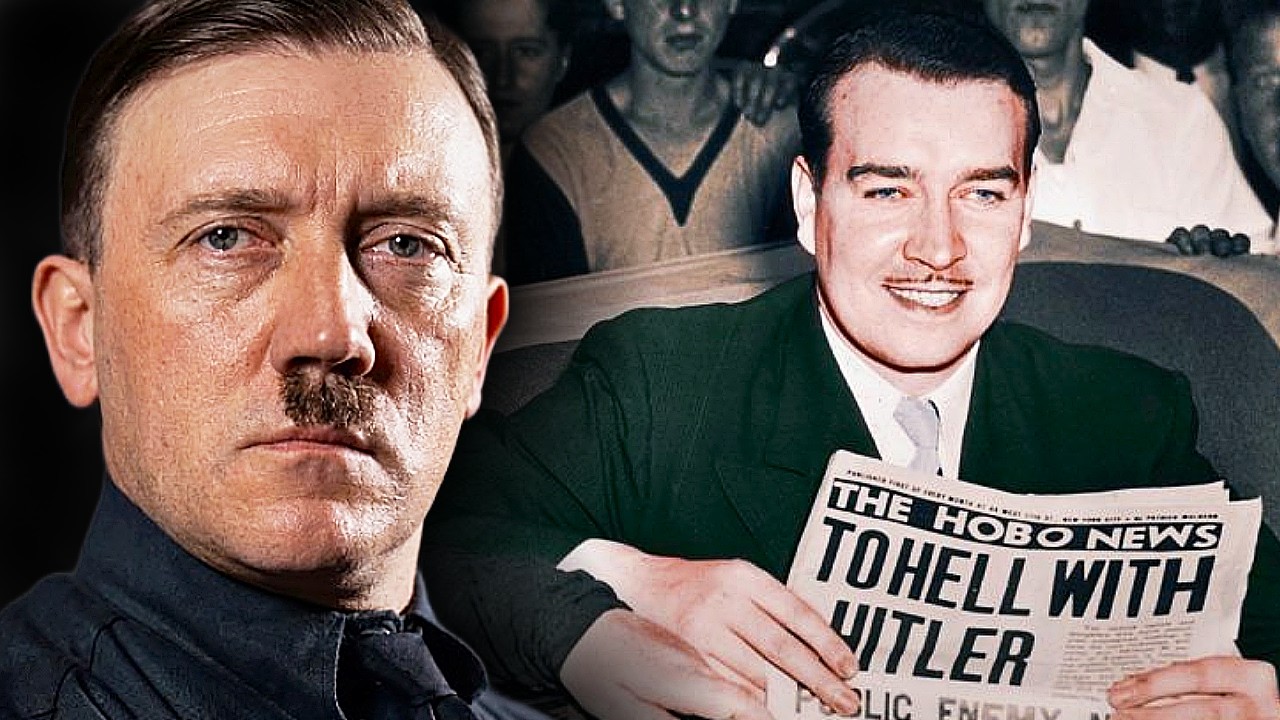
For years, he kept his famous surname quietly, aware of its weight but never using it to his advantage. That restraint ended in 1933, when his uncle rose to become Chancellor of Germany and William saw an opportunity. At twenty-two, William moved to Nazi Germany, hoping to profit from his connection to the most powerful man in the country. Adolf, for his part, found him work, first at the Reichsbank in Berlin and later at the Opel automobile factory.
But William was not content with a modest job. He pushed his way into meetings, dropped the Hitler name at every opportunity, and maneuvered constantly for advancement. His behavior quickly wore thin. Adolf began referring to him privately as his loathsome nephew and eventually rebuked him publicly, declaring that he had not become chancellor to give his family a free ride.
Adolf’s distrust deepened as William carried on a pattern of womanizing and shameless exploitation of the family name in public. By 1938, the chancellor had had enough and ordered William’s arrest, intending to teach him a lesson. The same year, William was fired from Opel after police accused him of using the Hitler name to leverage car sales. With his job gone and tensions at a boiling point, William decided to fight back in the only way he knew how.
Angry that he was not being treated with the deference he believed a Hitler deserved, he threatened his uncle with blackmail, demanding a good position in exchange for silence. If he was refused, he warned, he would go to the media with shameful family secrets, including a rumor that Adolf was the illegitimate grandson of a Jewish man. The ultimatum backfired. Adolf had simply had enough.
He gave William a stark choice: give up his British citizenship, formally join the Reich, and accept a new life in Germany, or leave the country forever. William, intelligent enough to see the trap, understood that becoming a German citizen would mean surrendering his freedom entirely. He chose to flee. He returned to England and soon after made his way to the United States, where he began an open campaign against his uncle.
William turned his insider knowledge into a weapon. He published articles, gave interviews, and traveled the country on a lecture tour, revealing unflattering stories about Adolf and the Nazi regime. He described his uncle as strange, cruel, and hypocritical, and alleged that Adolf had a feminine demeanor. He also attacked the regime’s racial policies, pointing out the selective way Adolf decided who was and was not a Jew.
For Adolf, William had become a traitor and a propaganda threat. The chancellor called for him to be silenced, and he discussed the matter quietly with Heinrich Himmler, the leader of the SS. Kidnapping and even assassination were considered as options. In the end, Adolf rejected the idea of killing his nephew.
He reasoned that murder would only confirm the very claims William was making in public, making him look as monstrous as William said he was. Still, he wanted William shut up or made to disappear. Nazi operatives in America were tasked with tracking him, reporting his movements, and identifying any weaknesses that could be exploited. William’s life was in genuine danger.
He was saved by an unlikely ally: the United States government. Officials judged William a valuable propaganda asset, and the FBI placed him under round-the-clock protection. Agents guarded him from the Nazi operatives who were hunting him. Eventually, the FBI suggested a more permanent solution: he should change his name and disappear into obscurity.
From that point forward, William Patrick Hitler became William Patrick Stuart Houston. When the United States entered the war, William made his intentions clear. He enlisted in the US Navy, and in 1944 he shipped out for the Pacific Theater. He spoke openly about his reasons, saying he wanted to fight because of who his uncle was.
The service was a direct, personal rebuke to Adolf, delivered in the most public way possible. William served on a hospital ship as a pharmacist’s mate and performed his duties well enough to be promoted for excellent service. In 1946, he was discharged after being wounded in action and receiving a Purple Heart. The war settled the question of his safety.
With the SS threat officially deemed over, William retreated from public life. He settled in Long Island, New York, married in 1947, and built a successful medical laboratory business. He and his wife raised four sons. He lived quietly, avoiding the media and keeping the story of his infamous family firmly in the past.
William Patrick Hitler died in 1987 at the age of seventy-six. His death closed a long and strange chapter, but it did not end the Hitler line entirely. Three of his four sons were still alive at the time, and rumor held that they had made a pact not to have children, so that the Hitler bloodline would end with them. The eldest son denied the pact, but the fact remained that none of the brothers had children.
William, the nephew who had once tried to profit from his uncle’s power and then turned against him, left no descendants to carry the name forward.