In 1929, a photograph captured a ship crossing the Atlantic. On board were Joe Kennedy, his wife Rose, and Gloria Swanson, the most famous movie star in America and Joe’s mistress. Swanson later admitted she spent the voyage watching Rose, unable to decide if the woman was oblivious, a saint, or simply a brilliant actress. Rose said nothing.
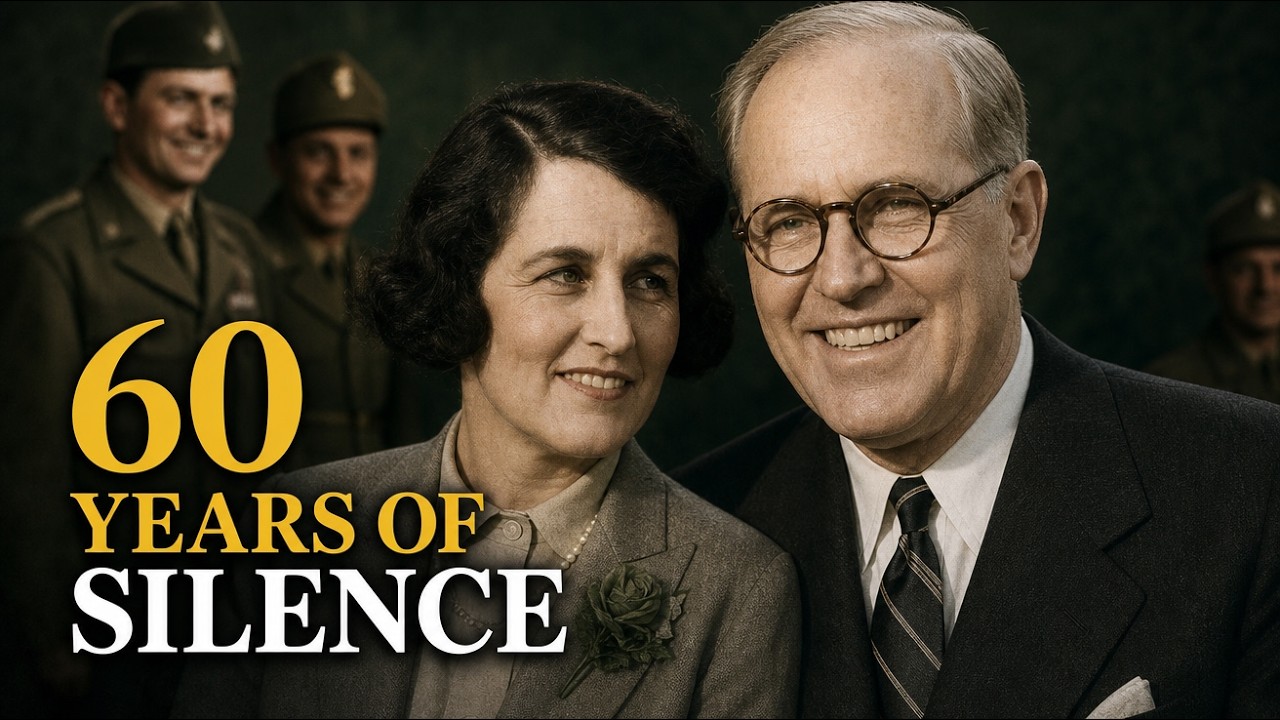
She remained married to Joe for another forty years, then outlived him by twenty-six. Near the end of her life, she left behind interview tapes that researchers would not hear for years. On those tapes, she said something her carefully published memoirs never did: Rose Kennedy was not the last to know. She was the one who decided.
Long before Joe Kennedy, Rose was Rose Fitzgerald, born in 1890 into the closest thing Boston’s Irish Catholics had to royalty. Her father, John “Honey Fitz” Fitzgerald, was a congressman and mayor, a tireless performer who sang “Sweet Adeline” at every opportunity. Rose was his favorite and his instrument. By her late teens, she stood beside him at official events, greeted dignitaries, and traveled with his delegations to Europe.
She founded and ran a club for Catholic girls excluded from Protestant society. She learned French and German, mastered the mechanics of public image, and was accepted to Wellesley College. Her father refused to let her go, sending her to convent schools in Boston and Holland instead, largely to keep her away from a young man he considered a rival’s son: Joe Kennedy. Rose described that refusal as the greatest regret of her life, not her marriage, not the deaths of her children.
Wellesley. The first time a man she loved took her ambition away, everyone told her it was for her own good. The pattern repeated. In 1914, her father’s political career collapsed after a scandal involving a woman named Toodles Ryan.
Eight months later, Rose married Joe Kennedy in a small, quiet ceremony in a cardinal’s private chapel. No cathedral, no crowds. It was a strange, defensive beginning for two of Boston’s loudest families. The first decade of marriage was an assembly line: nine children in seventeen years.
Meanwhile, Joe became Joe—bank president at twenty-five, shipyard manager, stock speculator, Hollywood financier—gone for weeks, then months. Rose ran Brooklyn, then Bronxville, then Hyannis Port and Palm Beach, managing four homes and nine children with an index-card system for each child’s illnesses, vaccinations, weights, and shoe sizes. People call that cold. It was logistics.
It was what a person does when she realizes she is the only permanent element in the system. In 1920, Rose packed her bags and moved back to her father’s house in Dorchester with four children. She stayed about three weeks. Honey Fitz came to her and told her, essentially, that she had made a vow and must keep it.
The children needed her. Go home. She went. But she did not disappear like her mother had.
Five more children followed, and so did something else: a version of marriage in which Rose began setting her own rules about where she would go and what she would tolerate. Joe’s absences became the structure, not the exception. He brought parts of his other life into their homes. Gloria Swanson was not hidden.
She came to Hyannis Port, flew in by small plane with the Kennedy children running to greet her, sat at the family table, swam at the family beach. Rose received her. No document records Rose saying, “I know this is important. ” What exists is a woman trained from childhood to read rooms full of politicians, standing on a ship deck with her husband’s business partner and lover.
Swanson herself could not understand it. The marriage was not a romance. It was a ledger. Joe had his freedom, entire and extended into the homes themselves.
Rose had permanence: the houses, the children’s religious formation, the public face of the family, money structured into trusts so he could not reclaim it, her own travel, her own name on her own door. The financial arrangement made it very difficult to dissolve the partnership. When Joe made himself unusable to the family’s future—publicly destroying his career with one pro-appeasement interview in 1940—Rose did not leave. She stayed attached to a man who had made himself radioactive, then stepped onto the stage he had vacated.
She became the family’s public asset. Her reputation grew as his shrank. The hardest evidence of how she lived with it comes from 1948, when Joe hired Jeanette DeRosier as his secretary. She lived in the Kennedy homes for nine years, traveled with him, styled his hair, sat with him.
In 1960, she was on the family plane serving the presidential candidate and his staff. Everyone on the campaign knew who she was. It was not a secret affair. It was an administrative arrangement.
Rose never confirmed it in writing, but those around her—staff, children, friends, biographers—described a woman who was neither blind nor stupid. She traveled constantly herself, for weeks at a time, to Europe, to Paris for couture fittings, to religious retreats. She left when she wanted and returned on her own schedule. She never confronted the other women, never made a scene, never issued an ultimatum.
She maintained her position. She was the wife. Why stay? Religion was real: Rose attended daily Mass for most of her adult life and was made a papal countess.
But she applied that same faith brutally against her own daughter. In 1944, when Kick Kennedy married a Protestant English aristocrat, Rose fought it fiercely, refused to attend the registry-office wedding, and claimed illness. When Kick died in a plane crash four years later, Rose did not go to the funeral. The rule had two faces.
Money and status were real too, but they do not explain why she stayed engaged and active in the marriage for decades after the last child left home. Then there is the truth that refutes any claim that she secretly controlled everything. In November 1941, Joe Kennedy authorized a lobotomy for their twenty-three-year-old daughter Rosemary, whose slow development and increasingly erratic behavior had become an unmanageable problem. Rosemary was destroyed.
She could no longer walk properly or speak intelligently. She was institutionalized. According to multiple accounts, Rose learned what had been done after the fact. She did not see her daughter for nearly twenty years.
Whatever authority Rose had in the home, she had none over that decision, and it cost her a daughter. Joe Kennedy’s stroke in December 1961 silenced the man who had made every family decision. Rose was seventy-one and suddenly the last active adult in the institution. By then she had buried two children and would bury two more.
Joe died on November 18, 1969, at Hyannis Port, with the family around him. Rose was seventy-nine. She lived twenty-six more years. In 1966, while Joe was still alive and incapacitated, Rose bought back 83 Beals Street in Brookline.
The small, ordinary three-bedroom house where her marriage began, where four children were born, the house they had outgrown before Jack turned ten. She restored it herself from memory, placed the furniture in its original positions, found or recreated the wallpaper, the crib, the sofa. Then she gave it to the American people as a historic site and recorded the audio tour in her own voice, walking visitors through the rooms. She controlled the version of her marriage that was preserved.
She built her own museum. She died at Hyannis Port on January 22, 1995, at 104. Her papers went to the Kennedy Library. The Coughlin tapes became available.
What emerged was not a scandal. It was a gap. The memoir she published was composed. The recordings beneath it are sharper, drier, more realistic—a woman with an exact inventory of what her husband was, what her marriage cost, and what she got from it.
The affairs were never mentioned. But the atmosphere was entirely different. The final chapter of Rose Kennedy’s public life was an editorial decision. She had the material.
She chose the version that went out under her name. Back on that ship in 1929, Gloria Swanson could not decide if Rose was a fool, a saint, or an actress. She never considered a fourth option: that Rose had assessed the situation, decided what she was willing to trade, and concluded that Gloria Swanson was temporary. Swanson got the films, the money, the destructive partnership, and a memoir still trying to understand Rose.
The secretary got nine years and a seat on the campaign plane. Rose got sixty-five years, the title, the archive, and the last word. She is buried in Holyhood Cemetery in Brookline, minutes from where it all began, next to Joe, next to the father who refused her Wellesley and sent her back to her husband. Four miles away, the front door of 83 Beals Street opens daily to strangers who walk through the small rooms she rebuilt from memory, past the crib she chose and the sofa she placed exactly where she remembered it.
A recorded voice tells them what happened there. It is her voice, still running the house.