On the sixth of October, 1789, a vast, rain-soaked crowd of Parisians marched twelve miles from the capital to the gates of Versailles. Driven by the soaring price of bread, they were not a court of admirers come to see the king rise, but a mob come to take him away. Guards were overwhelmed and killed at their posts. The royal family, the queen, and their children were forced from the palace that had been built to make them untouchable, and brought back to Paris in a jeering procession, never to return.
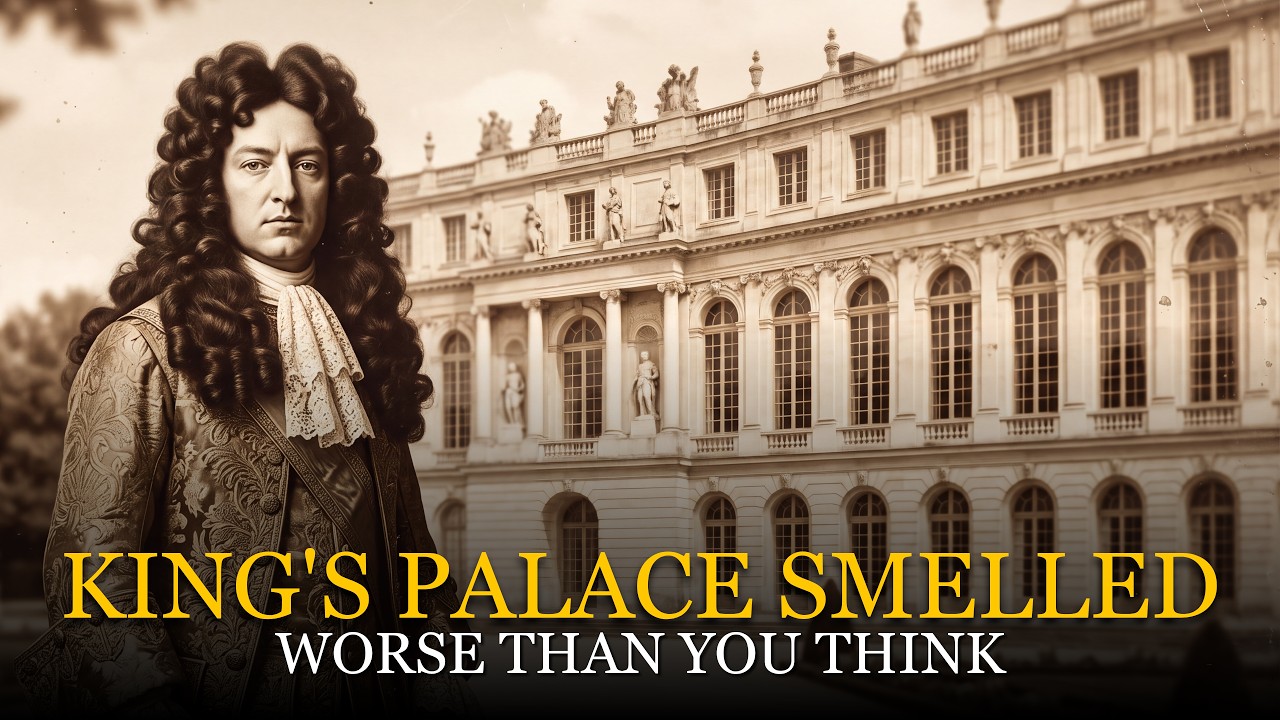
The most magnificent house in Europe was emptied in a single gray day. The fall was sudden, but the trap that made it possible had been laid across a century. It began with a frightened child. Before he was the Sun King, Louis XIV had been a boy king watching the great families of France and the courts of Paris rise against the crown in the revolts known as the Fronde.
Twice, the royal family had fled their own capital in fear, and the boy learned a lesson that never left him: a king could be cornered, frightened, and made to run by men who were supposed to kneel. When he finally grew into his full power, he decided he would not break those men with armies, but with something far more patient. He would gather the dangerous nobility of France into one place, under his own eye, and keep them so busy competing for his favor that they would never again find the time to raise a rebellion. His chosen ground was a marshy patch a few miles southwest of Paris where his father had built a modest brick hunting lodge.
He looked at the small, cold house and saw a paradise and a cage. In campaign after campaign of building lasting decades, he wrapped the lodge inside the largest and most famous house in the world. The finest talents in France were set to work for the rest of their lives. A great architect raised wing after wing.
The most celebrated painter of the age covered the ceilings with gods and victories that were, in the end, all portraits of the king himself. The master of gardens carved the surrounding marsh into vast green geometry, avenues and pools running to the horizon. The greatest engineering struggle was water. The fountains demanded enormous quantities, far more than the marshy ground could supply.
The king’s engineers built dams, reservoirs, and canals, and raised one of the largest machines in the world to pump water uphill toward the palace, but it was never enough to run every fountain at once. So a small, quiet fraud was arranged for the king’s walks. As he strolled, the fountains were switched on in sequence just ahead of him and off again once he had passed. He never saw a dry basin and never knew the water was chasing him through the park.
The centerpiece, begun in the later 1670s, was a gallery of 357 mirrors set into 17 arches, facing 17 windows, so that the garden poured into the room in an ocean of light. It ran about 73 meters, and in an age when a single good mirror was a luxury, nearly four hundred were gathered in one room. The palace around it grew to an estimated 2,300 rooms with roughly 2,000 windows and well over a thousand fireplaces that could not, in the end, keep it warm. On the sixth of May, 1682, the king moved the court and the central government of France out of Paris and into Versailles.
The building was not finished, and would not be for decades, but the decision was made. From that day forward, to hold power in France, a man had to be present in the king’s sight. To be absent was to be forgotten, and to be forgotten was to lose everything. The pensions, offices, and advantageous marriages that a noble family lived on all flowed from being seen.
A nobleman who retired to his estates slid quietly out of the story of France. When such a man later came to court to ask a favor, the king was said to turn to a companion and remark coldly that he did not know him. Those three words ended a career. On a busy day, between 3,000 and 10,000 people lived inside the palace, more than lived in most towns of France.
Nearly all of them wanted the same thing: a set of rooms under the king’s own roof, however cramped. The great families took the grand garden-front apartments. The lesser courtiers were pushed into attics, where a duke with an ancient name might climb sixty steps to a freezing garret with a single small window and a sloping ceiling he could not stand up straight beneath. He would guard that attic with all his heart, because the only thing worse than the attic was to be lodged nowhere at all.
Rooms were never truly owned; they were borrowed from the king’s pleasure, and could vanish with a single change in his humor. When a courtier died or fell into disgrace, the vultures gathered at his door almost before it stood empty. The daily machinery that governed this world was the rising itself. Each morning at about eight, the king woke to a ceremony of near a hundred of the highest people in the kingdom.
The first servant of the chamber, who slept on a cot at the foot of the great bed, leaned in and spoke the words that started the day. Then the doors opened, and the waves began. The most intimate entered first, then a wider circle, then a wider still, each group admitted in an order everyone understood to the inch. At the heart of the sequence sat the small sacred tasks: the basin of holy water, the comb, the razor.
And the greatest honor of all was the shirt. The highest-ranking noble in the room would take the folded linen and hand it to the king and consider the morning a triumph. The men who did this were the descendants of warlords who had once raised private armies against the crown. Now they jostled at dawn for the chance to hand a folded shirt to a man perfectly able to dress himself.
It was all by design. The king had learned as a boy that free nobles were dangerous, and he had built a world in which their standing depended on being seen in the right place in the line. He had turned attendance into currency and proximity into power. He made himself the sun, an emblem he had chosen as a young dancer in the court ballets, and stamped across every gilded surface of Versailles.
The psychology ran straight from the frightened child in the dark to the king on the throne, and he executed it with cold, brilliant patience. Nowhere was the strange logic of the place more visible than in the endless question of sitting. An armchair with padded arms was reserved for the king and queen alone. A chair with a back but no arms was permitted to a tiny circle of the royal family.
And the padded backless stool was the jealously guarded privilege of the duchesses. Wives of the marshals who won the king’s wars campaigned for years to be granted the same right and were refused and carried the refusal like a scar. Everyone else stood for as long as the occasion lasted, however many hours that turned out to be. Old men of seventy stood, pregnant women stood, the sick stood, and people fainted in the crush and were carried out, and the ceremony went on without them.
Comfort did not enter the reckoning. Rank did. The court even reached into the clothes on their backs. Everyone was ordered to dress in the height of fashion, which was ruinously expensive by careful design.
A special mark of favor was a red heel on the shoes, permitted only to a chosen few, so that a single glance at a man’s feet told the court whether the sun was shining on him. To sit without the right, or to wear a blade when one should not, marked a person at once as an outsider. The obsession reached into every corner because precedence was the visible measure of a family’s standing. A quarrel over who entered a room first, or who walked nearer the king, could run for years and reach the king himself for judgment, and he was often glad to let it run, because a nobility consumed by such quarrels had turned its fighting spirit inward onto itself and away from the throne.
The cost of all this was ruinous on purpose. The king had built a machine for converting the independent wealth of his nobles into total dependence on himself. To live at court was to spend endlessly: on clothes that changed every season, on gambling at the king’s tables where refusing to play was itself a failure, on great offices that cost a fortune and returned a modest salary because their real value lay in nearness. A nobleman pouring his income into silk and cards at Versailles was a nobleman who was emphatically not raising a private army in his province.
The king bled them slowly and elegantly of the very wealth that had once made them a threat. Beneath the splendor, the building was almost unlivable. The grandeur itself made it cold: high ceilings that sent warmth rising away, tall windows that let the heat out, marble floors that pulled warmth from the soles of the feet. In the great frost around 1709, the coldest winter Europe had known for five hundred years, the wine froze solid and bottles cracked even when stored close beside the fires.
The king’s own sister-in-law wrote that she sat close by a roaring fire with a screen against the door, bundled against the weather, and was still shivering. Beyond the walls, that same winter killed by the hundreds of thousands across Europe. The palace also could not manage its own waste. For a resident population in the thousands, only a small number of proper latrines existed.
The solution was the close stool, a chair with a chamber pot beneath the seat, emptied in theory by servants. In practice, the system fell constantly behind, and pots were tipped into corridors, down back staircases, and out of windows. The king’s sister-in-law complained that in the mornings the air carried the unmistakable smell of emptied night chairs. The court’s answer to the smell was perfume, and the doctors of the age had decided that a bath could kill you, because warm water was thought to open the pores and let disease in.
So cleanliness was performed not by washing the body but by changing the linen shirt against it, often several times a day, and the dazzling whiteness of that linen was judged as closely as any mark of rank. The magnificence and the misery were never two separate things. They were one single thing seen from two different sides. The high ceilings and tall windows that made the rooms heartbreakingly beautiful were the same features that made them impossible to heat.
The vast crowds drawn by the king’s presence were the same crowds that made the corridors filthy. The scale that made the palace the wonder of the world was the same scale that made a hot dinner impossible and a quiet hour a luxury not even a queen could command. The king himself needed an escape, and in his later years he married quietly in secret, and in her private rooms he found the one place in the palace where the crowd did not follow. Even that he kept hidden.
It worked, for over a hundred years. No great noble of France raised an army against his king. The revolts that had twice driven the boy out of Paris simply stopped happening. The king had defeated his most dangerous subjects without ever once fighting them, by making them want above all else to stand near him and to spend themselves gladly for the privilege.
But the machine also blinded them. A court that spent all its energy staring at itself, obsessed with stools and shirts and red heels, had stopped looking outward. While the nobility competed for the honor of handing the king his shirt, the monarchy grew steadily more detached from the France beyond the gates. The end came quickly when it came.
In the spring of 1789, drowning in war debt, the king summoned the representatives of the whole nation to Versailles. The representatives of the common people broke away, and in an indoor tennis court in the town swore a famous oath not to disband until France had a new constitution. Then, in October, the people came on foot from Paris. They forced their way into the palace, overwhelmed the guards, and took the royal family away.
The court did not fall in a great battle or a long siege. It evaporated. The crowd of dukes and princes that had pressed each morning into the bed chamber dispersed at once. There would be no more waking of a king before a worshiping crowd, no more waves of nobles admitted by careful rank, no more highest-ranking gentlemen stepping forward for the honor of handing the king his shirt.
The palace itself was stripped of much of its furniture and treasure, and for a time its future hung in genuine doubt. It might have been pulled down. It was saved in the end by a decision to turn it into a museum. In the years that followed, the gallery of mirrors held moments that shaped the modern age: an empire was proclaimed within its walls, and the treaty that ended the First World War was signed there in 1919.
Millions now walk through its rooms every year. On his deathbed, after seventy-two years upon the throne, the old king spoke to the small child of five who would follow him. He warned the boy not to imitate him. He had loved war too much, he said.
He urged the child to care for his people, to lighten their burdens, to do in so many things the very opposite of what he himself had done. It was the confession of a man who had glimpsed, too late to change any of it, exactly what the machine he built had cost. Stand in the empty bed chamber now, and there is only the roped-off bed and the cold thin light sliding off the mirrors. No servant waits any longer to whisper that it is time.
No great lord steps forward for the honor of handing the king his shirt. The most beautiful trap ever built stands open and quiet, and all of its grandeur has become a single question: whether it was ever, for anyone, truly worth what it cost to live inside.