Marguerite “Peggy” Guggenheim was born into one of the most powerful industrial families in America, yet she spent her life rebelling against its expectations. She was the middle daughter of Benjamin Guggenheim, one of seven brothers who controlled a copper and silver empire worth hundreds of millions. When the Titanic sank in April 1912, Peggy was 13 years old.
Her father, who had been returning from Paris, went down with the ship. The story the family told was that he had dressed in evening clothes and sat in a deck chair, waiting to die like a gentleman. The truth was that he had been returning from an apartment he kept with a French singer, Léontine Aubart, who survived in a lifeboat.
Peggy kept the image of her father’s dignified death for the rest of her life, but she also learned early that families were performances and that money was the only thing that bought the right to misbehave.
Benjamin’s estate was shockingly small compared to his brothers’ fortunes, leaving his three daughters about $250,000 each in trust. By Guggenheim standards, this was an embarrassment. By the standards of an average American, it was a fortune.
Peggy’s cousins lived in marble palaces on Fifth Avenue; she lived in a brownstone. She was considered the plain daughter, with a hooked nose and thin hair, and she was told constantly by aunts, governesses, and her own mother that she would have to be clever because she would never be beautiful.
At 21, she gained access to her trust, which gave her an annual income of roughly $22,500, the equivalent of about $400,000 today. It was enough to live anywhere in Europe in great comfort. In late 1920, with her nose still healing from a botched cosmetic surgery, she booked passage to Paris.
She left her mother and sisters behind without a clear plan. She only knew she did not want to live inside the cage of her family’s expectations.
In Paris, she moved into a small flat on the Left Bank and began to spend her money on drinks for artists and writers who were poorer than she was. Within months, she was in the same rooms as Marcel Duchamp, who would become her lifelong friend and adviser. She also met Laurence Vail, an American sculptor and Dada provocateur known as the unofficial king of Bohemia in Montparnasse.
He was charming, handsome, and violent when drunk. They married in March 1922, against her mother’s wishes. Peggy was happy for about three years, but the violence began early.
Vail hit her, dragged her face into an ashtray, threw her clothes out of windows, and once stubbed a cigarette out on her arm. She stayed because divorce would have meant returning to New York as a cautionary tale, and because she believed he was a genius whose rage was the rage of a thwarted artist.
They had two children: a son, Michael Cedric Sinbad Vail, born in 1923, and a daughter, Pegeen, born in 1925. The children grew up in chaos, shuttled between hotels, governesses, and family villas. By the age of seven, Pegeen had lived in 17 different addresses.
The marriage drained Peggy’s trust at a rate that would have left her with nothing by 50. In 1927, her elder sister Benita died in childbirth, and Peggy decided she would leave Vail when the right escape presented itself.
The escape came in the form of John Ferrar Holmes, a former cavalry officer and war hero with a stalled writing career and a drinking problem that equaled Vail’s. He was the most charismatic conversationalist in Bohemia, and Peggy believed he was the smarter man. She moved out of the flat she shared with Vail in 1929.
Vail broke in with an axe and demolished a door. Peggy and Holmes settled at Hayford Hall, a damp 30-room country house in Devon, England. For four years, she had the closest thing to a settled life she had ever known.
Holmes took her ideas seriously, and she loved him for it. But he could not finish a novel, and he drank constantly. In December 1934, he went into a London clinic for a minor procedure on his wrist.
He had drunk a bottle of red wine at lunch. His heart stopped under the chloroform. He was 37 years old.
The grief was unlike anything Peggy had experienced. She had lost the only person who had loved her with conditions and chosen her anyway. She moved back to France, drank more, and began an affair with an English communist writer named Douglas Garman.
It lasted three years and left her with nothing. At 36, she had no profession, no settled home, and two children being raised in shifts. It was Vail’s sister Clotilde who suggested she open a gallery.
The advice lodged. In the autumn of 1937, Peggy rented a small space at 30 Cork Street in London, painted the walls white, and named it Guggenheim Jeune. The first show, a retrospective of Jean Cocteau, opened in January 1938.
The gallery was a critical success but a financial failure. More importantly, it gave her a direction.
On Boxing Day 1939, at a Paris dinner party held by James Joyce, Peggy met Samuel Beckett. He was 33, quiet, and almost completely unknown. She was 41.
They left the table together and stayed in her hotel room for almost 48 hours. The affair lasted 12 nights. During those nights, Peggy described her plan to build a museum collection.
Beckett listened and then said the sentence that changed her life: “Buy the living ones. The old ones can take care of themselves. The new ones cannot.”
She acted on his advice immediately.
By February 1940, Peggy had relocated to Paris and set a target of buying one major work a day. The war was collapsing the French currency, and artists were fleeing. She was almost the only buyer with cash who was still buying.
She paid $400 for paintings that had cost $2,000 a year earlier. She bought Brancusi, Léger, Mondrian, Tanguy, Magritte, Dalí, Ernst, and Klee. She walked into Picasso’s studio twice and bought a study he had been planning to sell elsewhere.
By May 10, 1940, when the Germans invaded the Low Countries, she had spent approximately $40,000 and acquired more than 100 works. The collection would later be valued at between $200 million and $1 billion.
When she asked the Louvre to pack her collection alongside its own masterpieces, the curators declined in writing, saying her works were not of sufficient artistic importance to merit protection. Peggy kept that letter for the rest of her life and framed it. She packed the paintings as household goods, lampshades, bed linen, and pots, and shipped them through Marseille to Lisbon and then to New York.
She fled Paris herself in June 1940, driving south with a group of 16 adults and children, including her children, her ex-husband Vail and his new wife, and the painter Max Ernst, who was on the Nazi list of degenerate artists. She agreed to marry Ernst on arrival in America so he could obtain a visa. They arrived in New York on July 14, 1941, and were married on December 30 of that year.
Ernst was 12 years older than Peggy, already in love with the painter Dorothea Tanning, and he treated the marriage as a transaction. Peggy knew it was a humiliation, but she stayed for four years.

While the marriage disintegrated, Peggy built the most important commercial gallery of the era. She hired the architect Frederick Kiesler to design a surrealist space at 30 West 57th Street, with curved walls, paintings on swinging arms, and viewing devices that required cranking. It opened in October 1942 as Art of This Century.
The opening was the social event of the New York art world. Peggy stood in the middle in butterfly-shaped sunglasses and a green dress, wearing one earring shaped like a Calder and one shaped like a Tanguy.
Over the next four years, she showed the European modernists she had rescued, but her most consequential discovery was Jackson Pollock. She organized his first one-man show in November 1943 and then offered him a contract: $150 a month in exchange for the right to all the paintings he produced over five years. The stipend freed Pollock from odd jobs and allowed him to paint full-time.
The paintings he produced under that contract included the first drip paintings of 1947. Peggy paid roughly $9,000 for works now valued at between $50 million and $200 million. She also gave first one-man shows to Mark Rothko, Robert Motherwell, Clyfford Still, and William Baziotes.
The four founding figures of abstract expressionism all had their first solo shows at the same gallery within 24 months.
The Ernst marriage ended legally in 1946. Ernst married Dorothea Tanning the same year. Peggy bought a small Citroen and named it “the Ernst” as a private joke.
By the spring of 1947, she was tired and fundamentally not at home in America. She closed Art of This Century in May, packed her collection, and boarded a passenger ship for Genoa. She had decided to go to Venice.
In 1949, she bought the Palazzo Venier dei Leoni, a single-story unfinished white palace on the Grand Canal, for $60,000. It had been begun in 1749 by the Venier family, who had run out of money after the ground floor. Peggy moved in permanently and brought her collection, her Pollocks, and eventually 14 Lhasa Apsos.
The Palazzo became the most photographed private home in Venice. She entertained Truman Capote, Tennessee Williams, John Cage, and Yoko Ono. She kept the last privately owned gondola in the city and was rowed up and down the canal with two dogs at her feet.
The collection was open to the public three afternoons a week, free of charge. Visitors were sometimes greeted by Peggy herself in a caftan eating an orange, leading them through the rooms and telling stories about each painting.
The dogs were buried in the garden as they died, each with a small stone marker. By the time of her own death, there were 14 graves. She visited them every afternoon.
She told friends her plot was reserved next to the dogs.
Her daughter Pegeen had grown into a beautiful, depressed woman who married badly twice. She married the painter Jean Hélion in 1946 and had three sons with him. The marriage lasted 12 years.
She then married the British painter Ralph Rumney, who was 25 and unstable. They had a son, Sandro, in 1958. The marriage collapsed in early 1967.
On March 1, 1967, Pegeen was found dead in her Paris apartment, surrounded by empty bottles. The official cause of death was accidental barbiturate intoxication. She was 41 years old.

Peggy received the telegram in Venice and did not fly to Paris. She could not bear the city. She blamed Rumney for the death and fought a ferocious custody battle for her grandson Sandro, which she lost.
She moved a framed photograph of Pegeen from a private drawer to the mantelpiece in the salon. She stopped buying art in 1967. The collection was complete.
The daughter was gone.
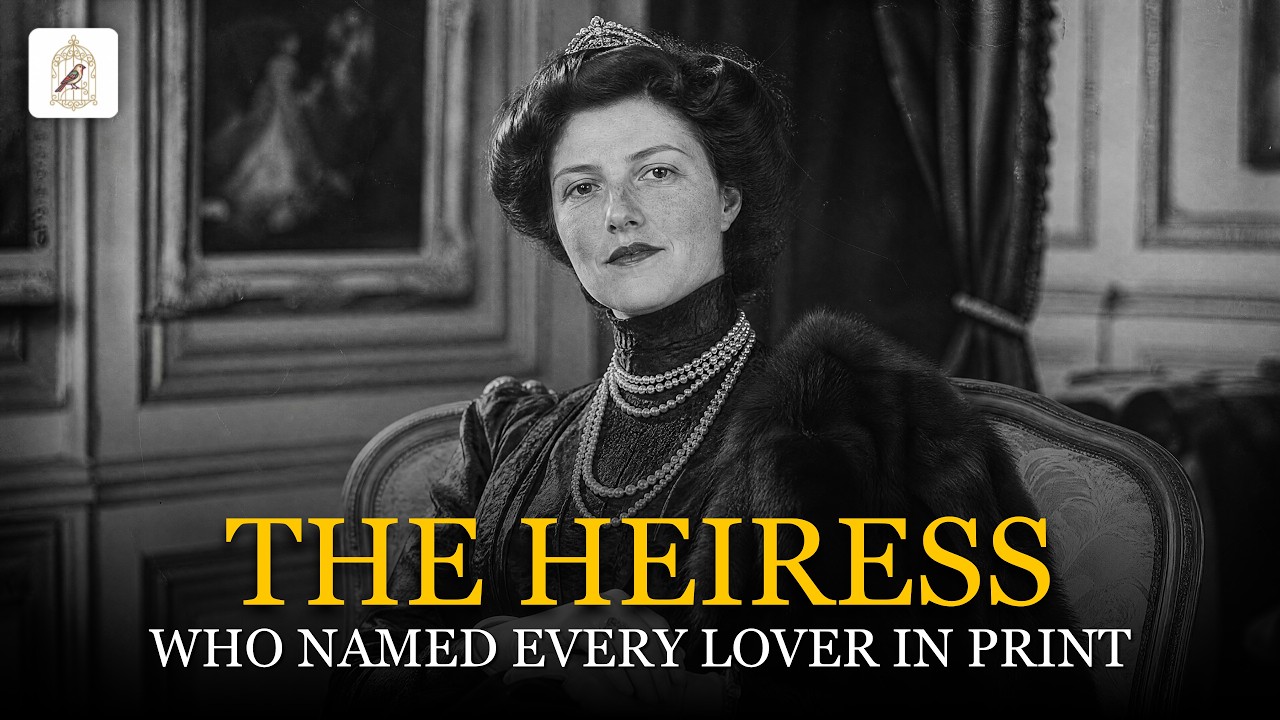
In 1946, Peggy had published a memoir called Out of This Century. It named her father’s mistress, her first husband’s violence, her affair with Samuel Beckett, and an estimated 27 other lovers in cryptic initials. It told the family how it had felt to be the ugly one.
The Guggenheim family was furious. Her cousin Harry Guggenheim reportedly authorized the purchase of every copy that could be found in New York bookshops to suppress it. The result was the opposite: the book became legendary and impossible to find.
The New York Times called it vulgar but readable. Edmund Wilson called it more honest than most of what he had reviewed that year. The book was reissued in 1979 as Confessions of an Art Addict and became a feminist canonical text.
In her last decades, Peggy negotiated with the Solomon R. Guggenheim Foundation for the eventual transfer of her collection. She demanded that the collection remain permanently in Venice, that the museum carry her name, and that her ashes be buried in the garden.
The foundation agreed to all of it. The agreement was signed in 1976.
Peggy died on December 23, 1979, in a hospital in Padua, of congestive heart failure. She was 81. The funeral was held at the Palazzo on December 27.
Approximately 140 people attended, including her son Sinbad, her grandsons, and a small contingent of New York Guggenheim cousins who arrived as the service was ending. Her ashes were buried in the garden at the end of the row of dog graves. The marker read simply: Peggy Guggenheim, 1898 to 1979.
The Peggy Guggenheim Collection opened as a permanent museum in 1980. It now receives approximately 400,000 visitors annually. The total insured value of the works on the walls has been estimated at between $500 million and $1 billion.
Peggy bought across her lifetime approximately 326 major works of art for the equivalent of between $3 and $5 million in current dollars.
The Guggenheim brothers built their fortune by extracting metal from the earth. Peggy did the opposite work. She used the smallest portion of that extracted wealth that landed in her hands and put it back into the world.
She bought paintings the institutions did not want to save. She paid stipends to artists no one else would pay. She married a man whose passport was the only thing she could give him.
She moved art across an ocean while empires fell. She did not extract anything. She preserved, she showed, she gave away.
The most scandalous heiress of the 20th century was not the woman of the thousand lovers. She was the woman of the 326 paintings. She had spent the lovers.
She had kept the paintings. The math at the end was that simple.