The coroner wrote a single word on the death certificate: accident. A gun had discharged during a private hunt on a frosted November morning in 1899. The victim was a railroad heir worth nearly $20 million, found face down in the leaves beside his own estate.
His widow wore black silk and told reporters it was a tragic misfire. Servants whispered about an argument the night before. The newspapers printed condolences and moved on.
Within a decade, three more deaths would orbit the same drawing rooms, each sealed with money, silence, and influence. The question was never who pulled the trigger. It was who paid to make it disappear.
Before the first body fell, the family fortune had already purchased judges, senators, and entire blocks of Manhattan real estate. Between 1870 and 1900, a handful of American families accumulated wealth that defied comprehension. By 1890, Cornelius Vanderbilt’s estate approached $100 million, more than the entire federal budget of 1830.
A factory worker in Pittsburgh earned roughly $400 per year. Meanwhile, William K. Vanderbilt spent $5 million constructing a single summer cottage in Newport.
These families did not merely inhabit wealth. They weaponized it. In the 1880 election, railroad magnates contributed over $2 million to candidates who promised favorable legislation.
The Pennsylvania Railroad alone employed more than 20 sitting legislators as paid advisers. Newspapers operated under similar influence. Advertising revenue flowed from businesses owned by the same elite families.
Editors understood that scandal sold papers, but severed business relationships sold nothing.
The estates themselves stood as monuments to concentrated power. A typical mansion required 20 to 50 staff members, each signing contracts with strict confidentiality clauses. Gossip meant immediate dismissal without references.
Testimony in legal matters triggered social exile and unemployability. Silence became a job requirement. The hunting preserves stretched across hundreds of acres of private woodland.
No public roads crossed these lands. No local sheriffs patrolled them. What happened within those boundaries remained invisible to outside authority.
By 1895, the wealthiest 1% of Americans controlled nearly half the nation’s total wealth. Elite attorneys charged retainers exceeding $20,000 per year, ensuring the best legal minds could never represent opponents. A working-class plaintiff might wait five years for a trial date while legal fees consumed any potential settlement.
Justice belonged to those who could afford to wait.
Society operated as a closed system, a fortress constructed from shared interest and mutual protection. Mrs. Caroline Astor controlled access to New York’s highest circles.
Her ballroom held exactly 400 people, a number that became synonymous with social legitimacy. When one family faced scandal, the others formed a wall. Private investigators worked for prominent families long before police departments existed.
They gathered leverage, manufactured evidence, and kept tools locked away until needed.
Settlements occurred in mahogany-paneled offices far from courtrooms. A young woman who claimed assault by a railroad heir received $5,000 and a train ticket to California. She signed documents promising eternal silence.
Those who refused faced coordinated destruction. Newspapers published accusations about their character. Employers received anonymous letters.
Bank loans disappeared.
Club membership provided another layer of protection. The Metropolitan Club, the Union League, the Knickerbocker—these institutions functioned as fortresses of influence. Members included judges, prosecutors, and police commissioners.
When legal trouble touched one member, others intervened quietly. Marriages formed strategic alliances more than romantic unions. The Duke of Marlborough received $2.
5 million to marry Consuelo Vanderbilt. Love remained optional. Bloodline preservation and capital protection were mandatory.
Medical examiners and coroners operated within this system too. Many held their positions through political appointment, and political appointments flowed from campaign contributions. A ruling of natural causes or accidental death closed the matter instantly.
Grand juries drew members from property-holding voters, meaning the wealthy and their dependents. A jury of peers in practical terms meant a jury of social equals.
The mansion where the first death occurred rose with 100 rooms, imported marble, and corridors long enough to swallow a scream. Construction began in 1892 and consumed four years. The final cost reached $6 million.
The property sprawled across 800 acres. Fifty-two servants maintained this monument. The hunting preserve occupied 500 acres of dense woodland at the property’s northern edge.
Two gamekeepers patrolled daily, armed and authorized to remove intruders immediately. Local sheriffs respected property lines. Jurisdiction ended at the gates unless explicitly invited inside.
On November 17, 1899, two men entered the woods at 7:15 in the morning. One was the family heir, 29 years old, worth an estimated $20 million. The other was a business associate, younger by five years, less wealthy by orders of magnitude.
He managed a lumber company that supplied railroad ties. At 9:30, a single gunshot echoed from the woods. Estate workers noted it but felt no concern.
At 11:15, the business associate emerged from the trees running. He said there had been an accident. He said the heir was dead.
The body lay face down in a small clearing, rifle five feet away, blood pooling beneath the chest. The shot had entered the back between the shoulder blades and exited through the sternum. The business associate claimed the heir had been walking ahead, that his rifle discharged when he stumbled.
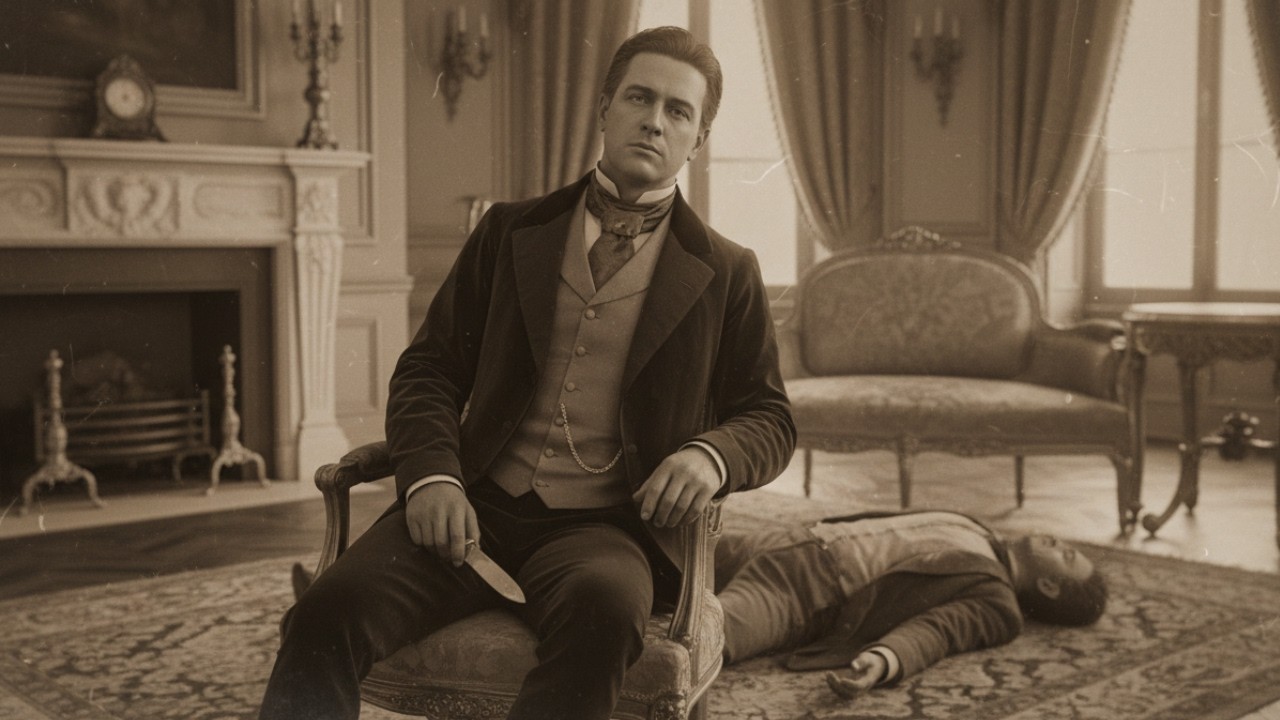
The doctor recorded the wound trajectory slightly downward, consistent with a shot from someone standing while the victim walked ahead. Powder burn suggested a distance of 10 to 15 feet. No defensive wounds marked the hands.
The victim had not seen the shot coming.
The coroner arrived the following morning. He worked part-time, splitting duties between death investigations and his private medical practice. The family’s attorney attended the examination.
So did the business associate’s attorney. The coroner signed the certificate within three hours of beginning his examination. No formal investigation followed.
The county sheriff reviewed the report and determined no crime had occurred. The case closed the same day it opened.
Yet inconsistencies existed for those interested in finding them. A stumble typically causes a rifle to discharge downward or upward depending on how it falls. A horizontal shot into another person’s back requires the weapon to be level and aimed.
The distance also raised questions. Professional hunters kept at least 20 feet between themselves for safety. The men were experienced.
They knew the rules. Why walk so near?
The business associate explained they had been discussing a contract quietly. Plausible. Unverifiable.
The two men entered alone. One left alive. His account became the only account.
Within a week, the business associate departed for California. He sold his lumber company and left no forwarding address.
The second death arrived two years later, in the spring of 1901. The setting was the estate’s conservatory, a glass-enclosed room where afternoon tea had become a daily ritual. On April 12, six people attended.
The widow presided at the head of the table. Her late husband’s younger brother sat to her right, now the family’s senior male and heir apparent. The heir’s brother lifted his cup at 4:07.
He sipped, paused, sipped again. He mentioned a bitter taste. Within 90 seconds of the first sip, he collapsed sideways in his chair.
The family doctor arrived in 23 minutes. The patient was unconscious, breathing shallow, pulse thready. At 4:47, the heart stopped.
Poisoning seemed obvious. The doctor suspected arsenic immediately. The toxicology analysis took two weeks.
Results came back positive. Significant arsenic content in stomach tissue, liver, and intestines. The amount exceeded any plausible accidental exposure.
The coroner’s report noted this but stopped short of declaring homicide. The manner of death was listed as poisoning, undetermined circumstances.
Police interviewed everyone present at tea. All told identical stories. No one had touched the deceased’s cup except the man himself.
The remaining tea in the pot was tested. No arsenic. The cup itself was examined.
Residue suggested possible contamination, but the sample had been washed immediately after the collapse, destroying potential evidence. Whether this was panicked cleaning or deliberate destruction remained unknowable.
Motive became the investigation’s focus. The deceased brother was heir to the widow’s estate under the terms of her late husband’s will. His death shifted inheritance to a more distant relative.
The widow herself raised some suspicion among investigators, though they approached this carefully. She stood to maintain control of the estate without a male relative claiming patriarchal authority. Yet evidence supporting this theory was absent.
The widow appeared genuinely shocked by the death. Suspicion alone was insufficient, especially suspicion directed at a grieving woman of impeccable social standing.
The grand jury reviewed evidence and declined to indict anyone. The coroner’s final report used careful language: death by arsenic poisoning, circumstances undetermined, insufficient evidence to establish criminal intent. The second funeral was smaller than the first.
Fewer than 100 mourners attended. Servants talked more freely after the second death. Two deaths in two years, both unexplained, both touching the same family.
Coincidence stretched credibility.
By 1903, pressure had built beyond casual dismissal. Two deaths had become three. A distant cousin visiting the estate in September 1902 had fallen from a second-story window in circumstances that defied plausible accident.
The fall occurred at night. No witnesses observed it. The window opened onto a flat roof, easily accessible without risk of falling unless pushed.
The victim’s skull fractured on flagstones below. Death was instantaneous.
The county prosecutor convened a grand jury to review all three deaths collectively. The jury heard testimony from 47 witnesses across three days. The cost of the proceeding exceeded $40,000.

The family’s legal response dwarfed the prosecution’s resources. Four law firms coordinated their defense. Total legal fees exceeded $200,000.
Forty character witnesses appeared for the widow and remaining family members. A bishop spoke on their behalf. Business leaders praised their integrity.
The jury composition favored the defense by design. Of 23 jurors, 18 were property owners with assets exceeding $10,000. The jury included a bank president, three merchants, seven farmers who sold produce to the estate, a lawyer, and a minister whose church received annual donations from the family.
After three days of deliberation, the foreman announced no indictments would be issued. The evidence, while troubling, did not meet the standard required for trial.
Newspaper reactions split predictably. Publications dependent on advertising from family-controlled businesses praised the outcome as justice served. Independent newspapers took harsher stances.
A Syracuse paper ran a front-page editorial titled “Justice Deferred.” The prosecutor who brought the case faced backlash within months. His funding was cut.
When he ran for reelection two years later, he lost to a candidate backed by business interests.
A young investigative reporter named Thomas Brennan decided the story was worth more than the advertising contracts. He was 26 years old, employed by the New York Herald at $40 per week. His first article appeared in May 1903.
The headline read, “Three Deaths, No Answers.” Within 24 hours, three major advertisers withdrew contracts from the Herald. But the article had already sparked something that pressure could not easily extinguish.
Other newspapers picked up the story. The Herald sales increased by 12% the week Brennan’s article ran.
Brennan published six more articles over 18 months. He documented labor disputes at their factories, revealed political donations followed by favorable legislation, and tracked property acquisitions where sellers later claimed coercion. The family filed five libel suits seeking a combined total of $1 million in damages.
The trials became public spectacles. Testimony under oath revealed contradictions between official statements and private knowledge. A servant admitted seeing the business associate return from the hunt with the victim’s rifle in his hands.
Another described finding arsenic powder in a pantry where it had not previously been stored.
The family won three libel suits and lost two. But the damage to their reputation exceeded any monetary judgments. Newspapers that covered the scandal aggressively saw readership climb 20 to 30%.
The math was becoming clear. Scandal sold better than discretion. The press had discovered it could challenge wealth successfully.
Readers rewarded courage, and courage became profitable.
Between 1903 and 1907, the family fortune contracted by 40%. Legal battles cost nearly $300,000 across four years. The panic of 1907 struck with devastating force.
Stock values collapsed. Railroads, the source of the family’s original wealth, saw revenues plummet. The estate’s value declined in parallel.
Property assessments dropped by half. Land that had cost $6 million to develop would not sell for $3 million.
Internal disputes worsened the situation. Lawsuits erupted between family branches. Cousins sued cousins.
Trust fund disagreements landed in court. Each dispute exposed private financial details previously hidden. The widow’s correspondence showed particular pain.
She wrote to friends about isolation, canceled social engagements, and the impossibility of normal life. One letter described walking through empty mansion rooms, haunted not by ghosts but by memory of what had been.
Staff turnover accelerated. Servants left positions they would have kept for life. The estate contracted like a dying organism.
By 1907, the family fortune had fallen from approximately $28 million to $17 million. Annual income from investments dropped from $800,000 to $400,000. The family borrowed against property equity to cover legal fees and maintenance.
Banks that had once competed for the family’s business now charged premium interest rates or refused loans entirely.
The emotional toll exceeded financial damage. Family gatherings ceased almost entirely. Younger generation members faced unique burdens.
Invitations to prestigious schools were withdrawn. Potential marriage prospects evaporated. One grandson aged 19 in 1906 wrote in his diary about contemplating suicide.
His identity had been consumed by family history.
The final public appearance occurred in 1908. A charity gala ostensibly honoring philanthropic contributions practically served as the family’s last attempt at social rehabilitation. The widow arrived wearing black velvet and pearls worth $10,000.
She was 63 years old, dignified, and utterly alone. Conversations quieted as she entered. Those seated at her table engaged in polite minimum interaction.
She departed before dessert. That night marked the last time she attended a major social event. By 1909, invitations stopped entirely.

Business relationships dissolved with similar completeness. Corporate boards that once sought the family name as legitimizing presence now requested resignations. Club memberships faced quiet cancellation.
Political influence evaporated completely. Candidates returned donations rather than accept money tainted by scandal.
The estate sale became inevitable. In 1909, the widow accepted an offer of $2. 8 million, less than half the original construction cost.
The buyer was a hotel company planning to convert the property into a resort. They believed the scandal might actually attract tourists interested in notorious history. The widow moved to a brownstone in Manhattan.
Staff reduced to three. Former friends passed her on the street without acknowledgement.
The family served as a cautionary tale repeated in business schools, legal seminars, and reform advocacy. Progressive politicians used them as examples of Gilded Age excess demanding correction. They lost control of their own story.
Newspaper articles, lectures, eventually academic papers all defined them without input. Silence became mandatory, but silence meant accepting whatever characterization others imposed.
The hotel company operated the estate as a resort from 1910 through 1925. The Great Depression destroyed the luxury travel market. The hotel closed in 1932, and the estate sat vacant for eight years.
A historical preservation society acquired the property in 1940 for $400,000. Restoration began in 1947. It opened as a museum in 1959, 60 years after the first death.
The museum curators faced immediate dilemmas about historical interpretation. Visitor surveys conducted in 1962 revealed that 87% came specifically because of the deaths. The scandal was the attraction.
Current exhibitions balance architectural significance with frank discussion of suspicious circumstances. The hunting preserve features interpretive signs explaining late 19th-century gun safety protocols and forensic limitations. The conservatory, restored but left empty of furniture, includes wall text describing the poisoning without declaring conclusions.
Annual visitor numbers average 65,000, generating $1. 2 million in revenue. The estate has become financially self-sustaining as a museum in ways it never was as a private home.
The historical society commissioned a comprehensive study in 1976 that analyzed all available evidence regarding the three deaths. The published report concluded that reasonable suspicion existed for all three, but definitive proof existed for none. That ambiguity remains the estate’s fundamental truth.
Some visitors claim they feel watched in the hunting gallery, though historians offer simpler explanations. The paranormal reputation began early. Within months of the first death, servants reported strange occurrences: footsteps in empty corridors, doors opening without human cause, cold spots in rooms that should have been heated.
A paranormal investigation team visited in 1998 and documented several anomalies. Subsequent studies by skeptical researchers offered alternative explanations for each finding. Every supposedly paranormal event could be explained through environmental factors.
Yet the feelings persist. Multiple visitors independently report identical sensations in identical locations without prior knowledge of others’ experiences. The hunting gallery and conservatory rank highest for reported activity.
These are also the locations most directly connected to violent death. The museum neither promotes nor dismisses paranormal claims. Staff are trained to acknowledge visitor experiences without validating supernatural interpretations.
The fortune lasted three generations, but the silence did not. Archives opened. Newspapers were digitized.
Historians researched freely without fear of libel suits from people long dead. In 1976, a Columbia University history professor published the first comprehensive academic study of the case. Her book concluded that evidence strongly suggested homicide in at least two of the three deaths, though proof remained insufficient for retroactive prosecution.
Consensus emerged that the business associate probably murdered the railroad heir during the hunt, possibly with encouragement from other family members. But consensus is not certainty. The estate murders, as they became known, despite never being legally classified as such, entered the canon of American historical mysteries.
The contrast between past immunity and modern accountability revealed how much American justice had changed. Grand jury reforms made proceedings more transparent. Coroner systems were professionalized with medical requirements.
Public defender offices gave poor defendants better representation. Muckraking journalism evolved into investigative reporting with institutional support. Wealth still grants advantages in the legal system, but the absolute immunity the Gilded Age provided has diminished.
Financial records eventually revealed the fortune’s full trajectory. From $28 million in 1898, the family wealth declined to $8 million by 1940. By 2000, remaining descendants had assets totaling approximately $3 million, divided among dozens of people.
The mansion as museum generated more economic value than it ever had as a private residence.
The three deaths remain technically unsolved. No one was convicted. No one confessed.
But the verdict of history is clear, even if imperfect. Wealth bent justice. Influence shaped outcomes.
And when that machinery failed under sustained scrutiny, the family collapsed into exile more complete than any prison sentence could impose.
The question was never who pulled the trigger. It was who paid to make it disappear. And the answer, documented across ledgers, legal files, and newspaper archives, was the family itself.
They paid with money initially. They paid with reputation ultimately. And they paid with legacy permanently.
The fortune lasted three generations. The estate became a museum. And the silence, which they valued more than the millions themselves, dissolved completely into history’s endless conversation about power, justice, and the price of both.
What survives is not the family as they wish to be remembered. What survives is the story of what they could not control. And in that survival lies a different kind of justice than courts could deliver.
Slower but more complete. The kind that comes when time itself becomes the jury and makes a verdict that no appeal can overturn.