The first survivor was found sitting in the middle of an old logging road that had not been used since the Eisenhower years. He was barefoot, wrapped in a flower sack stitched shut with rusted wire. When the search team approached, he did not speak or look up. He only traced a circle in the dirt with one finger, over and over, as if stopping would allow something else to begin.
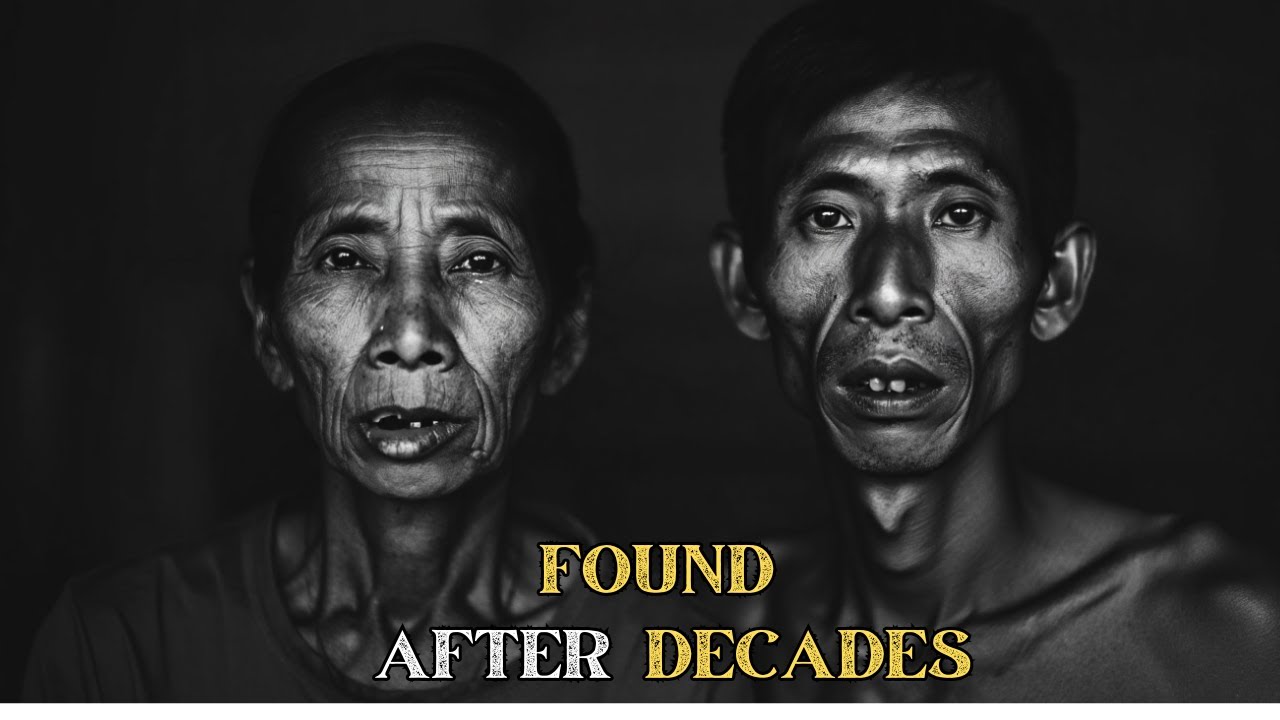
They had come looking for bones. Hollow Colony was supposed to be a clerical error, a rumor left behind by cold dust and bad maps. Census data placed it in the mountains for three consecutive decades, then erased it entirely, as though the land itself had swallowed the ink. No deeds, no graves, no church records.
Locals spoke the name only when pressed, and even then they spoke it sideways, like it might hear them. When the survivor finally spoke, his voice was worn thin, like fabric rubbed down to threads. He asked what year it was. When told, he shut his eyes and began to cry, but there was no relief in it, only confirmation.
More were found over the following days. Three women in a cave system blackened by old fires. A teenage boy hiding beneath a collapsed barn that did not appear on any satellite image. All of them malnourished.
All of them marked in the same places: wrists, ankles, along the jaw, as if they had once been held together by something patient and deliberate. They shared the same fear of nightfall. As dusk approached, they grew frantic, begging to be restrained, sedated, locked away from windows. One woman clawed her own face bloody when the sun slipped behind the ridge, screaming that the hollow would notice the dark had returned.
Their testimonies were recorded separately, yet the details aligned with a precision that made the interviewers uneasy. They spoke of the ground breathing, of houses that grew lighter each year, as though losing weight, of a sound beneath their floors that learned their names. Hollow Colony, they said, had not been destroyed. It had been opened.
They said the hollow was never a place you could leave. It was only a place that sometimes let you go. For decades, Hollow Colony had existed only as a smudge between official certainty and whispered memory. Early census documents listed it among the Appalachian settlements that fed coal towns and logging camps, a place with families, children, livestock, and a modest population that held steady for nearly thirty years.
Then, without explanation, the name stopped appearing. No record of relocation. No disaster report. No mention of decline.
It was as if an entire community had stepped out of the ledger at the same moment. Archivists first noticed the anomaly while digitizing rural county records. Property deeds referenced land transfers from residents who did not exist anywhere else in the system. Birth certificates named a midwife tied exclusively to Hollow Colony, yet no death certificates bore her name.
Church registries listed baptisms but no burials. Maps contradicted one another. Survey lines overlapped empty forest. A post office code was assigned and then reassigned without explanation, leaving behind a paper ghost that led nowhere.
Local historians interviewed older residents of nearby towns. The reactions were consistent and unsettling. Some claimed never to have heard the name at all. Others remembered it vaguely, like a childhood nightmare whose details had been deliberately forgotten.
A few refused to speak, insisting that Hollow Colony was never meant to be written down, and that bringing it back into conversation was a kind of invitation. The responses were dismissed as folklore, the kind of superstition that flourishes in isolated regions where history is passed mouth to mouth. Eventually, an academic consensus formed. Hollow Colony was classified as a clerical myth, likely born from duplicated entries, misspellings, or the merging of multiple transient camps into a single false location.
The settlement was removed from updated databases. What could not be proven was quietly buried beneath explanations that favored human error over human absence. But the land where Hollow Colony was supposed to have stood remained conspicuously untouched. No development followed.
Trails skirted the area without reason. Satellite imagery showed tree growth that did not match surrounding regions, as though the forest itself had been disturbed and left to heal unevenly. Still, no official interest returned. Myths do not require investigation once they have been properly labeled.
The discovery of the survivors did not come from a targeted rescue, but from a routine environmental survey meant to assess soil stability in a remote stretch of the Appalachian range. The team was small and unarmed, composed of geologists and forestry contractors. Their instruments began to register anomalies almost immediately. Ground temperatures shifted without explanation.
Pockets of earth collapsed inward despite solid rock beneath. The first sign of human presence was a fire pit still warm beneath a layer of damp leaves. Bootprints led nowhere, vanishing abruptly as if the ground itself had closed behind them. Deeper into the trees, the forest grew unnaturally dense.
Branches knitted together overhead, dimming the daylight. Radios crackled and failed. GPS units froze. One surveyor reported hearing breathing that did not belong to any of them, slow and rhythmic, rising from below the forest floor.
They found the first survivor at the edge of a ravine that did not appear on any map. He stood perfectly still, half hidden by ferns, his skin gray with ash and age. He did not react to their voices. Only when one of the team members touched his shoulder did he flinch violently, dropping to his knees and pressing his forehead into the soil, as if asking forgiveness from the ground itself.
More survivors emerged as the day wore on. They appeared from caves, from beneath fallen trees, from gaps in the rock face that should not have been wide enough to conceal a body. There were fewer than expected considering the population records, yet more than anyone was prepared to explain. Some were elderly, their bodies twisted by years of malnutrition.
Others were children whose ages were impossible to guess, their faces both young and ancient in ways that defied categorization. None of them spoke freely. They avoided direct sunlight. They recoiled from metal tools and modern fabrics.
When offered water from plastic bottles, several refused, insisting it was wrong and would wake something that had learned to sleep. As night approached, panic spread among the survivors. They clung to one another, begging the team to leave before dark, before the mountains noticed that strangers had arrived. One woman, no older than thirty by appearance, whispered that they were not survivors at all, only the ones the hollow had finished with, the ones it no longer needed to keep close.
Finding them had not been an act of rescue, she said, but a sign that something buried and patient had decided to loosen its grip just enough to let the world see what it had been holding all this time. Once the survivors were transported out of the mountains, their behavior troubled the medical teams more than their physical condition. Hospital lights triggered immediate distress, prompting screams and frantic attempts to crawl beneath beds. Sunlight proved especially unbearable.
When curtains were drawn back, the survivors reacted as though burned, shielding their eyes and pleading for darkness. Mirrors were worse. At the sight of their own reflections, some turned away in horror. Others stared too long, their breathing slowing until monitors registered alarming drops in heart rate.
A young woman shattered a bathroom mirror with her fists, screaming that it was learning her face. Clocks produced a quieter, more unsettling response. The ticking of a wall clock caused visible nausea in several survivors. Digital displays led to confusion bordering on panic.
Time, they explained haltingly, was not supposed to move that way. It was meant to stretch, to fold, to stop altogether when it had served its purpose. They refused to sleep in separate rooms, insisting they had to remain close enough to hear one another breathe. They covered vents and drains, whispering that the hollow listened through open spaces.
When asked why such things were dangerous, they gave the same answer in different words, spoken with calm resignation rather than hysteria. The hollow learned people by watching them, they said. The things that reflected, measured, or revealed made that learning easier. And once the hollow learned you completely, it never let you leave yourself behind.
When investigators began formal interviews, they expected a single catastrophic event to explain the disappearance of Hollow Colony. What emerged instead was a slow erosion, a drawn-out unraveling that took years to complete. The survivors spoke of no fire, no flood, no massacre. They described a long season of wrongness, subtle at first, almost polite in how it introduced itself.
The land changed before the people did. Crops grew but tasted thin, as if the soil had forgotten what nourishment was supposed to be. Wells never dried, yet the water left a film on the tongue that lingered longer each year. Houses began to creak at odd hours, not with the familiar sounds of settling wood, but with slow, deliberate groans that seemed to answer one another across the settlement.
Families withdrew inward. Doors stayed closed longer. Conversations shortened. Children stopped wandering beyond sight of their homes, not because they were forbidden, but because they no longer wanted to.
The colony did not fracture all at once. It hollowed itself from the inside, each household becoming a sealed room filled with quiet fear. Church attendance dwindled, then ceased altogether, not due to disbelief, but because the sermons no longer felt addressed to anyone present. Time behaved strangely.
Days seemed to pass normally when measured by routine, yet memory failed to keep pace. Weeks collapsed into moments when recalled later. Seasons arrived without warning, as if skipping ahead. One survivor admitted they could not remember when their spouse had died, only that the house had felt lighter afterward, as if something had been removed without permission.
Attempts to leave were rare and unsuccessful. Those who packed their belongings found themselves delayed by minor obstacles that compounded until night fell. A broken wagon wheel, a sick child, a sudden storm that appeared without clouds. When they returned home, the decision to leave felt foolish, even embarrassing.
Over time, the idea of departure lost its urgency, then its meaning altogether. The survivors struggled most when asked how the hollow first made itself known, because what they described did not resemble discovery so much as recognition. They said it began beneath the soil, not as a sound or a shape, but as a presence that responded. When crops failed and livestock sickened, people prayed as they always had, asking the land for mercy.
At first, the answers felt like relief. A barren field produced a single perfect harvest. A dying child recovered overnight. A collapsed mine sealed itself without crushing those inside.
The colony learned quickly that asking worked. Doubt entered slowly. The hollow responded to doubt differently. Tools went missing.
Wells soured. The same precise attention that had once granted miracles now corrected hesitation. Punishment was not violent but instructional, designed to reinforce understanding rather than inflict pain. People learned what could be asked and what could not.
They learned that the hollow disliked waste, disliked excess, disliked anything abandoned without purpose. The colony adapted by narrowing itself, trimming away curiosity, ambition, and eventually memory. What none of them admitted openly at first was that the hollow demanded participation. It required to be included in decisions, acknowledged in silence, consulted through ritual that grew more complex with each generation.
Those who resisted were not struck down but slowly unmade. Their presence faded. Their voices grew faint. Their absence became normal.
The children were the first to show that something fundamental had shifted. At birth they appeared normal, but as they grew, time did not move through them evenly. Some children remained small for far too long, their bones refusing to lengthen. Others matured too quickly, their bodies advancing while their voices and movements lagged behind.
Attempts to measure age became meaningless. Birthdays were abandoned because no one could agree on when a year had truly passed. The hollow, the survivors believed, was practicing through them, learning how to keep what it wanted unchanged and accelerate what it did not need to linger. The children who never grew old were not blessed or cursed so much as they were kept, preserved at the exact moment they became something the ground beneath the houses decided it did not want to let go of.
The ritual to seal the hollow was not born from faith but from exhaustion. Preparation took years. The colony stripped itself down to what the hollow tolerated. Names were shortened.
Houses were rearranged so their foundations aligned with the slope of the land. On the chosen night, the entire colony gathered in the open ground where the soil breathed the strongest. No fire was lit. No prayers were spoken.
Each person was instructed to recall the first time they had asked the hollow for help and to withdraw that request, not with regret or anger, but with indifference. The survivors said this was the hardest part. Wanting nothing required a kind of emptiness most of them had never practiced. Something went wrong when a child cried out.
The sound broke the silence, sharp and alive, and the hollow responded immediately. The earth shifted, not violently, but with precision, rearranging itself in ways that defied geometry. The ritual did not fail so much as it completed itself incorrectly, sealing not the hollow, but the people around it. When dawn came, Hollow Colony was changed.
Those who remained found they could no longer leave the central ground without effort that left them breathless and disoriented. Time stalled. The hollow no longer answered prayers because it no longer needed to. The survivors believed they had trapped themselves in a state neither alive nor dead.
The colony did not end. It looped. They described nights that never ended, hours that repeated themselves, hollowed out and empty, yet weighted with consequence. Doors opened to the same hallways.
Fields lay unchanged beneath the moon. Time became both their captor and teacher. A child might fall asleep and wake to the same meal, the same chores, the same muted sunlight filtering through leaves that never rustled differently. Adults remembered conversations that had not yet occurred, or that had occurred hundreds of times before.
They learned to move carefully, because the hollow observed more closely when routine faltered. It was not pain that punished them, but erasure. Forgetting. Being quietly removed from the flow of events without warning.
Even after rescue, the survivors carried the memory of the loop. Outside the mountains, the world felt too fast, too disjointed, too untrustworthy. Clocks moved. Sunlight shifted.
People acted unpredictably. Hollow Colony, they insisted, had not ended. It had merely begun to operate in a mode beyond human comprehension, and its reach, they warned, was extending outward. Those who had left the mountains spoke of dreams they could not shake, faint rhythmic pulses under the floorboards of their new homes, whispers that came through the walls when no one else was near, and the uncanny sensation of being observed even in crowded streets.
The hollow, they said, was learning again, and this time it was learning from them. It was selective, patient, methodical. Resistance was less meaningful than awareness. Simply knowing it existed or remembering its rhythms made someone a candidate.
Their words left investigators unsettled. It was no longer a question of geography or history. Hollow Colony was something that transcended boundaries. Wherever the survivors went, part of it followed, mapping the world in subtle ways, teaching itself, waiting for openings.
In this way, the colony was neither past nor present. It was a persistent, patient force, one that had begun to expand, and whose expansion promised consequences that were in every sense impossible to predict.