On the morning of October 1, 1925, the Donahue family woke to a crime that would make headlines across New York. Jessie Woolworth Donahue’s jewelry drawer had been emptied. Nearly seven hundred thousand dollars’ worth of gems vanished without a trace. The New York Times called it the largest jewel robbery in the city’s history.
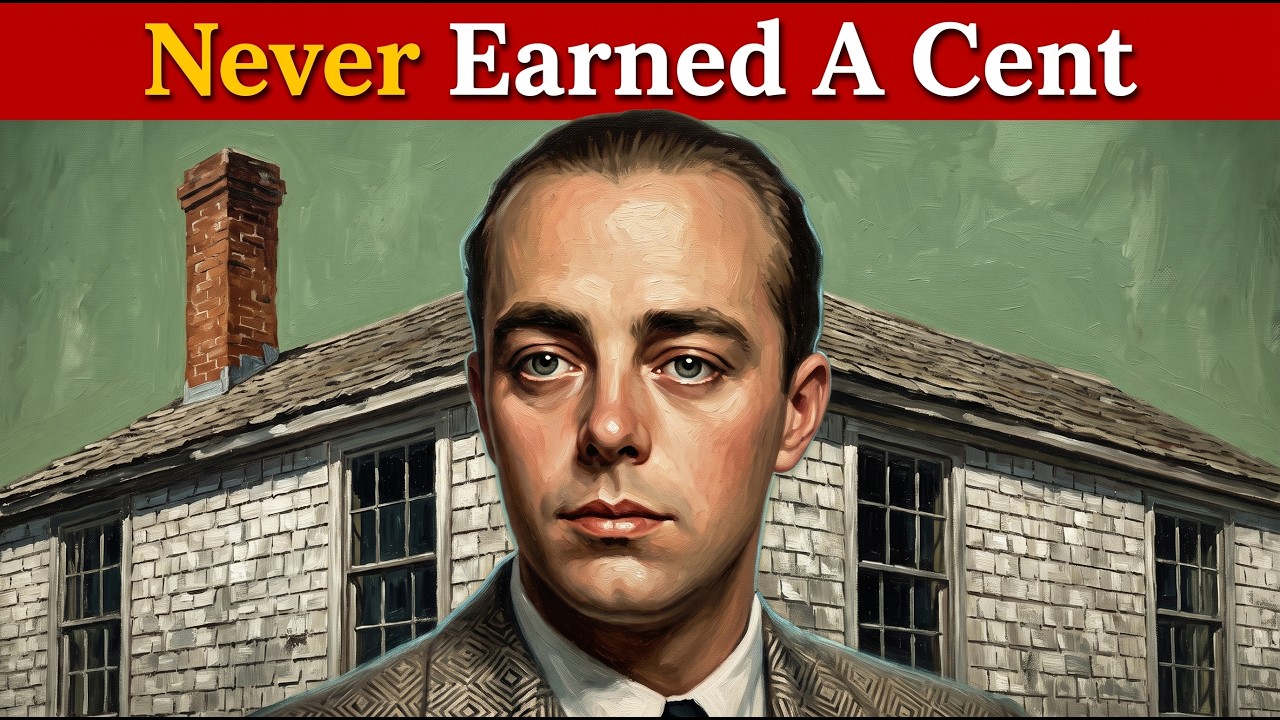
Police arrived, reporters followed, and for months the investigation churned on. No culprit was ever identified. The case went cold and stayed cold. The loss was staggering, but for a woman of Jessie’s wealth, even seven hundred thousand dollars could be absorbed.
She absorbed it. What she could not absorb was the strangeness of the whole affair. The largest jewel heist the city had ever seen, committed inside her own home, with no answer ever found. It was, as people would later say, a very peculiar robbery.
The answer, when it finally came, did not come from any detective. It came from within the family, decades later, when the trails had long gone cold. The Donahues’ own son would say there had been no outside thief at all. According to that account, James Donahue had staged the entire robbery himself.
The story went that he emptied his wife’s jewelry drawer to convert her seven hundred thousand dollars’ worth of gems into cash and cover his gambling losses. None of it was ever proven in court. It rested on a single thread of family testimony given years after the event. But it fit.
It fit everything the people who knew the man had already understood about him. The appetite for money that never stopped. Consider what that would mean. Jessie Woolworth had given this man five million dollars on their wedding day.
If the account was true, he had then robbed her in her own home and stood by as she grieved the loss while he quietly paid his debts. Nearly anyone would have left. Jessie did not. She stayed.
She kept funding him. Within a few years, she helped him build a residence grander than anything they had ever owned. The wedding had taken place on February 1, 1912, inside her father’s mansion on Fifth Avenue. Jessie May Woolworth was the youngest daughter of F.
W. Woolworth, the man who had built a retail empire on an idea his predecessors had dismissed with contempt: that a store selling small goods for a nickel and a dime could grow rich through sheer volume. He had been right. Across the country, on the main streets of countless towns, customers who would never spend a hundred dollars at once gladly handed over a nickel a hundred times.
Those nickels built one of the greatest fortunes in American retail. By the time Jessie grew up, the Woolworth name and the five-and-dime had become the same thing in the public mind. The man she married on that February day was James Paul Donahue. He came from an Irish-American family that had made its money in the tallow-rendering business.
A genuine fortune, but modest by Fifth Avenue standards, and new. He was marrying up, and everyone in that room knew it. On the day of the wedding, the bride handed her groom five million dollars as a wedding gift, placed entirely in his name, to keep and spend as he pleased. It was an expression of love, trust, and a simplicity about money that only the very rich can feel.
Jessie had never once needed to ask where money came from or whether it could run out. Money was as much a fact of life as the weather. So she never asked the question that mattered most: what a man like James Donahue would do with five million dollars and no one to answer to. The problem was that James Donahue had an appetite no fortune could satisfy.
He gambled, and not the polite parlor gambling of gentlemen. He sat at high-society card tables and lost sums that would have frightened a bank. Within a few years, New York’s newspapers had taken his measure and given him a name that would follow him for the rest of his life. They called him the greatest gambler in society.
It was not flattery. Beneath the phrase lay a hard truth the social columns kept reporting. His need for money was constant. It never diminished, never stopped.
And the wife who loved him and could not say no had made herself the source of that need. In the early years, it did not look like ruin. The Donahues were wealthy, admired, welcomed everywhere. However large the losses at the card table, Woolworth money could absorb them.
But wealth is not a solid thing that stays in place. It is like a river, drawn off from the edges a little at a time. The drawing off had begun the moment Jessie signed over the first five million. The question was only how fast the water would drop and who would be standing in the dry riverbed when it was gone.
In 1924, the full weight of the fortune reached Jessie. Her father had died, and the money had passed to his widow, Jennie. When Jennie died that same year, the Woolworth estate was divided among the daughters. Jessie received her third.
It ran into the tens of millions of dollars, and for every practical purpose, it was now within her husband’s reach. She did not see it that way. She saw a wife helping her husband through hard times, as a loving wife does. The practical effect was as if she had carried the money to the card table herself.
Newspaper accounts of the era put his losses at roughly one and a half million dollars in a single year. One report claimed his wife had given him a standing credit limit of fifty thousand dollars a night at the tables. Whether those exact figures were precise matters less than the picture they describe. A man losing money year after year at a pace that would have seemed impossible even to a man of immense wealth, and the wife behind him continually replenishing the account.
The Donahues also built houses the way the ultra-rich of that era built them, to be seen and envied. They began work on a vast residence on a long stretch of waterfront in Southampton. Soon they would acquire land in Palm Beach and build something even grander. Every new season piled new expenses on the last, and not one dollar of it ever came back.
At night the money went across the tables. By day it went into the ground. The only source was Jessie’s third of the Woolworth fortune. It was a single account being drawn on from every direction at once, with no one in the family putting anything back.
That Palm Beach house was called Cielito Lindo. Built in 1928, three years after the unsolved robbery. It had 122 bedrooms. It was erected in under a year while the gambling continued and the fortune continued to drain away beneath it.
There are expenses made for pleasure, and there are expenses that look like a man running from something coming toward him. By the time the doors of Cielito Lindo opened, the Donahues were deep into the second kind, and the ground beneath everything they owned had already begun to shift. In the spring of 1931, the gambler’s own story came to an end. That April, Jessie was admitted to Harbor Sanatorium in New York, and within about a week James Paul Donahue was dead.
He took a mercury pill and killed himself. A man in his forties who had consumed another family’s two decades of wealth and apparently saw no way forward. The newspapers that had once crowned him the greatest gambler in society now printed a few dry lines about his death. He left no fortune of his own, because he had never made one.
He left a widow, two small sons, and a borrowed grandeur no one in the family knew how to pay for. Jessie was now in her forties and a widow. For the first time in her life, the money had a bottom. Her husband had spent twenty years teaching that enormous fortune how to leave, and it had learned the lesson well.
The great houses built to impress a conscious society now stood as enormous bills arriving at the door each month, and there was no Woolworth counter behind her to fill the account again. The man who built the empire was long in his grave, and the share she had been given was all she would ever have. Nothing more was coming, ever. There were the two sons to think of.
The family called them Wooly and Jimmy, born in 1913 and 1915. They had grown up in the fullness of that great wealth, in a world of shore houses, winter palaces, and a servant for every conceivable task. They were raised with one rule above all others. In that world, working for a wage, earning money by one’s own labor, was an unspeakable vulgarity.
Money was something one was born to and then spent. It was not something one made. That single inherited idea would prove as important to the fate of the fortune as any card table. So the widow held on to what remained.
The largest thing she had to hold was the house in Southampton. Its name was Woolworth Manor, the two family names joined as if to carve the union of the houses in stone for all time. It was a 26-room mansion on sixteen acres of open oceanfront land. By 1927, the Donahues had put three million dollars into it.
Three million dollars in the currency of the 1920s, poured into a single summer house. It was built to stand for a hundred years as the seat of a dynasty. What happened to it instead became the truest measure of what one family had done with their share of Woolworth money. In 1937, the oceanfront house went to auction.
The 26-room mansion that had swallowed three million dollars was put up for sale, and the bidding never came close to what it had cost to build. When the hammer fell, Woolworth Manor sold for one hundred thirty-seven thousand dollars. Compare that to the three million dollars spent on construction and furnishing. The house had changed hands for roughly five cents on every dollar that went into it.
The house built to announce a dynasty to all of American society sold in an afternoon to whoever raised a hand. Each of its 26 rooms, every window facing the sea, had been paid for in abundance. The whole of it now sold for a sum that was little more than pocket change to the family that built it. The house meant to carry the family name for generations had become one of the worst bargains that family ever made.
And the story of Woolworth Manor did not end with the bad sale. The people who bought the long stretch of oceanfront had no interest in the house. They wanted the land beneath it. So in 1941, just four years after the auction, Woolworth Manor was demolished.
Every part of the 26 rooms and everything built around them for the use of one vast family was torn down and carried away, until nothing remained on that spot but the empty Southampton land where a three-million-dollar mansion had once stood. Three million dollars, reduced to a stretch of grass by the sea. Trace the course of the money from beginning to end. It started as nickels and dimes laid on counters across the country, gathered under a single name into one of America’s great fortunes.
One daughter received a third of it, tens of millions of dollars, and over two decades it dispersed in every direction. Some went across the card tables. A vast fortune went into the house in Southampton. More went into the palace with 122 bedrooms.
More went into a robbery that was never solved. The money did not vanish in a single event that someone could point to, and it did not end as a single figure at the bottom of a page. It was drained from every side at once, year after year, until the day came when there was nothing left to spend. Every step of that depletion was a decision made by people who had never once feared the money could run out.
But it ran out. And here was the final cruelty, which no one in the family had foreseen. The fortune had not dissolved only into houses and card debts. It had dissolved into two adult men who had never once been taught how to replace a single dollar of it.
The two sons inherited a vast world of spending and not an ounce of earning instinct. The younger, Jimmy, spent his life traveling the world with a servant and chauffeur, staying in the most expensive hotels money could buy. He was, by all accounts of the family, a man who never once in his life needed to earn a living. The older son had no record of any steady employment either.
They were raised to believe that working was beneath their dignity, and they lived exactly that way, spending what remained until it was gone. In the early 1970s, the last two of that branch, these two men, died having exhausted everything left to them. But there had been another daughter. When the Woolworth estate was divided, Jessie was not the only one who received a third.
Her older sister had taken an equal share from the same fortune at the same time. Her name was Helena Woolworth McCann. And what happened to Helena’s third is what turns this entire story from a private tragedy into a lesson. Because Helena started from exactly the same place Jessie did.
The same pile of Woolworth money in hand and the same freedom to do whatever she wished with it. The only difference between the two sisters was the man they handed it to. Helena married a man named Charles E. McCann.
He was a lawyer. Where Jessie had married a gambler, Helena married a man whose entire career was the careful management of money. He handled the legal and financial affairs of the Woolworth family’s vast estate. To Donahue, money was fuel to be burned for the pleasure of the fire.
To McCann, it was something to be guarded, preserved, and grown. The same fortune, the same starting capital, placed in the hands of two men with opposite ideas about what money was for. That difference showed in what each sister’s share became. Helena did not gamble away her portion.
She did not build houses that would eventually be torn down. Among other things, she built a collection of fine china, a quiet and enduring thing that a keeper of money could spend a lifetime assembling. After her death, the collection was given to a museum in Buffalo through the family’s Winfield Foundation. The institution is now known as the Buffalo AKG Art Museum, and there it survives as the Helena Woolworth McCann Collection, still cared for and catalogued to this day.
Helena’s third of the Woolworth fortune did not end as rubble or an empty lot. It became something that outlasted her and outlasted the money itself. It was never the size of the fortune that determined which sister kept it, for the portions were exactly equal. What determined it was the hands into which the money was placed.
However vast a fortune may be, it cannot protect itself. It waits either to be tended or to be spent, and the two sisters had handed theirs to opposite kinds of men. Jessie Woolworth outlived nearly all of it. She survived her husband by forty years.
She survived the auction that sold Woolworth Manor for one hundred thirty-seven thousand dollars. She survived the year the demolition crew came and cleared the Southampton property down to the ground. Jessie lived until 1971. In the final three decades of her long life, the three-million-dollar house built on her fortune by the sea was neither a ruin nor a museum piece.
It was simply gone. In its place, where the mansion had once stood, was an empty rectangle of grass. The barest and plainest monument possible to what a third of the Woolworth fortune had become. The woman who began her married life by giving away five million dollars ended her days with a strip of grass by the ocean and the memory of everything that had once stood on it.
The two sons left exactly as they had been raised. Neither built anything to replace what their parents had spent. They were given a world in which money seemed to rise from the air and work was something other people did. They lived inside that world until the money behind it ran out.
In the early 1970s, both men died, and with them went the last of the Donahue branch of the Woolworth family. The branch that began with one of America’s great fortunes and a five-million-dollar wedding gift ended with two men who, according to the record, between them never worked a single day. The fortune had been built by a man who worked relentlessly. Two generations later, it passed to grandsons who never worked at all.
Two sisters were given equal fortunes on the same day. One handed hers to a man who spent it, and her third became an empty field. The other handed hers to a man who kept it, and her third became a collection of porcelain that you can still stand before in a museum in Buffalo. Whether one sister was kinder, happier, or more loving than the other is not something the money itself ever concerned itself with.
In the end, it only listened to the hands it was given to. A great fortune, however vast it may seem, is never more than an appetite that one generation, one failed marriage, and one empty stretch of land by the sea could not satisfy.