The last lap of the 2001 Daytona 500 ended in a way that left millions in shock. Dale Earnhardt, the most famous driver in NASCAR, was dead. Kelly Earnhardt Miller lost her father that day. But as she later put it, that was only the beginning of what the family lost.
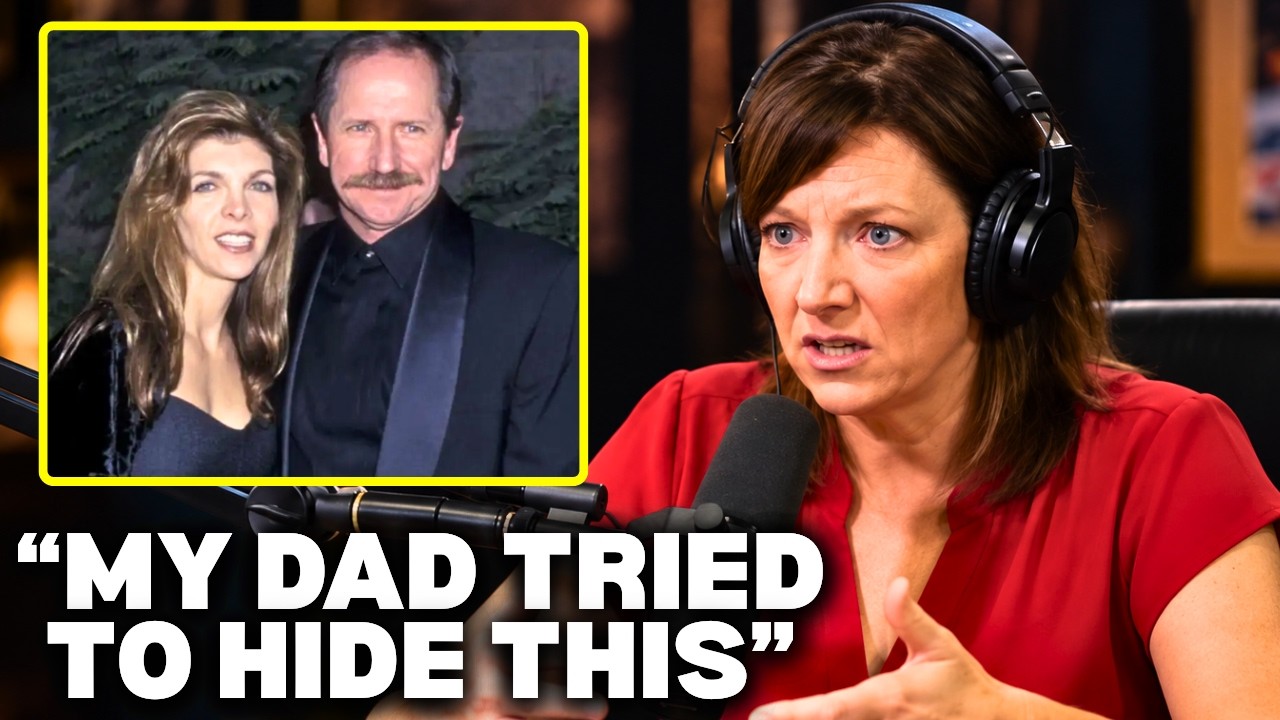
In the years that followed, Dale Earnhardt’s children found themselves separated from his company, his property, and even his grave, ending up in legal disputes over whether one of them could use the Earnhardt name for business. More than two decades later, Kelly finally explained what that did to them. The family lost Dale once, then began losing pieces of his world. Dale Earnhardt died on February 18, 2001.
The public saw a tragedy, but inside the Earnhardt family, another shift was taking place almost immediately. Unlike the crash itself, its consequences stretched out for years. Dale had four children from three marriages. Kerry, the oldest, was born during Dale’s first marriage to Latane Brown.
Kelly and Dale Junior came from his marriage to Brenda Gee. His youngest daughter, Taylor, was born after Dale married Teresa Houston in 1982. By the height of his NASCAR career, the family around him had already been shaped by divorce, remarriage, half-siblings, adoption, and children raised in very different conditions. Kelly and Dale Junior’s childhood was especially complicated.
After their parents split, they first lived with Brenda until a fire destroyed the house in 1980, making that arrangement impossible. They moved to their father’s home, where Teresa was part of Dale’s life. Dale Junior later described the adjustment as difficult for everyone, because two children suddenly entered a home Teresa had not expected to raise. This history matters because the rift after 2001 did not come from a perfect family.
Both Kelly and Dale Junior described a childhood dominated by their father’s racing career. Their emotional relationship with him was unstable, and their relationship with Teresa was never easy. That is exactly why Dale’s death removed the one person holding the family’s already divided branches together. Then the legal machinery took over.
The will gave Teresa control over almost everything. Dale Earnhardt had signed his will in December 1992, about nine years before his death, long before Dale Earnhardt Incorporated, or DEI, became the massive NASCAR operation people remember from the early 2000s. When the will went through probate, it left Dale’s estate to Teresa, including his interests in DEI, vehicles, real estate, and control over valuable parts of the Earnhardt business identity. Contemporary reports confirmed that Teresa inherited the racing team and became executor of the will, while DEI continued operating under her management.
Legally, there was no ambiguity. Teresa was Dale’s wife, and she had spent years helping build the business side of his career. DEI’s own history credits her with helping build the company from a modest shop, playing a central role in licensing, branding, merchandise, and protecting Dale’s image. Even today, DEI describes Teresa as actively overseeing the company’s business entities and continuing the legacy she built with Dale.
That makes the family conflict more complicated than simply saying Teresa appeared after Dale’s death and took something that was never hers. She was deeply involved in the business before the crash, and the will gave her legal control afterward. The emotional problem was that Dale’s older children did not see his legacy only as a company. For Kelly, Kerry, and Dale Junior, DEI held their father’s cars, property, employees, history, images, and memories, plus a name they had carried since birth.
A legal document could determine company ownership, but it could not determine what the children emotionally considered family property. According to Kelly, that distinction became painful immediately after the funeral. Kelly said the children were excluded from parts of the grieving process. In the 2025 documentary about Earnhardt and the discussions that followed, Kelly and Dale Junior described details from the immediate aftermath of their father’s death that had rarely been explained publicly.
Kelly said the children were not called in to go through Dale’s property, and they had little say in decisions about the funeral and his final resting place. Dale was buried in a private mausoleum on land belonging to the family estate in Mooresville, North Carolina, which remained under Teresa’s control after his death. What followed became one of the most painful details in the entire family story. Kelly stated that she and Dale Junior did not feel free to visit their father’s grave.
She described Teresa’s stance as so strict that she feared an uninvited visit would be treated as trespassing. Dale Junior said separately that he returned alone once after the funeral, but the grave was never a normal family place they could visit whenever they wanted. Teresa did not publicly provide a detailed account disputing these claims, so they should be understood as Kelly and Dale Junior’s description of the relationship rather than a settled legal ruling. Still, the emotional weight is hard to ignore.
The man millions of fans could access through museums, footage, and merchandise became strangely unreachable to some of his own children. Dale Junior recalled another conversation shortly after the crash that stayed with him for years. Teresa told him that missing a dead person could be considered selfish, because the living person wants them back for themselves. Dale Junior later said he understood the philosophical idea, but he also admitted he still desperately wanted his father present, wanting to talk to him, hug him, and have him there during the years his life became harder without him.
The family had little time to process these feelings, because the racing team kept moving, and DEI was about to become the next battlefield. Dale Junior was driving for his father’s company without owning any part of it. For several years after Dale Sr. ’s death, Dale Junior remained the public face of DEI even though Teresa owned the company.
This arrangement initially allowed the organization to keep one of NASCAR’s most attractive stars inside the company, carrying his father’s name. But the longer it lasted, the harder it became to ignore the question of ownership. Dale Junior was generating enormous commercial value for DEI while knowing he did not control the company his father had founded. By 2007, contract negotiations reached a point where Dale Junior made clear what he wanted.
He announced his desire to own a majority of DEI, specifically more than 50 percent, because the dispute was not mainly about a pay increase or a change in his driving contract. He wanted control of the company’s management, and Kelly was already deeply involved in those negotiations as his business representative. The negotiations turned years of family tension into a business environment where every disagreement had financial consequences. Teresa would not give Dale Junior the majority stake he wanted, and the negotiations ultimately failed.
Dale Junior left DEI after the 2007 season and moved to Hendrick Motorsports, removing NASCAR’s most popular driver from the company built around the Earnhardt identity. From Teresa’s perspective, giving up a majority stake meant surrendering control of a company she had legally inherited and spent decades building. From Dale Junior and Kelly’s perspective, the strongest link between the company and its founder left because the founder’s son could not gain enough control over its future. The consequences came quickly.
DEI struggled after Dale Junior left, eventually merging its NASCAR operations with Chip Ganassi’s team, while the once-famous independent NASCAR Cup organization gradually disappeared from the track. DEI still exists today and continues licensing, charitable, and commercial activities related to Dale’s legacy, but the racing team Dale Sr. had imagined as a lasting NASCAR operation no longer exists in the form his children remembered. Years later, Kelly said watching that happen affected her far more deeply than fans realized.
She said she needed intensive therapy to get through not only the loss of her father but also what she described as a lack of family support, her relationship with Teresa, and the experience of watching the things her father worked for fall apart after his death. She described having to heal the younger Kelly so she could move forward as an adult, making the entire conflict seem far less like a corporate dispute and more like old childhood wounds reopened by everything that followed. Then the conflict moved from company ownership to something more personal, reaching the family name itself. Kerry Earnhardt had to defend his right to build a business around the Earnhardt name.
His relationship with his father began from a very different starting point than Kelly’s or Dale Junior’s. After Dale’s first marriage ended, Kerry was adopted by his mother’s second husband and grew up using the last name Key, spending most of his childhood without a close relationship with Dale. In his teenage years, Kerry finally reconnected with his biological father, and he later said Dale encouraged him to take back the Earnhardt name, because Kerry felt he was born with that identity even though he had not grown up carrying it daily. Years later, Kerry and his wife Renee developed a home design and lifestyle project with Schumacher Homes called the Earnhardt Collection, using Kerry’s surname as part of the brand.
Teresa objected to the trademark application. Her legal position was more specific than how the dispute was often presented online. She did not claim Kerry was literally forbidden from using his surname. She owned trademark registrations and claimed rights connected to Dale Earnhardt, arguing that the Earnhardt Collection could cause confusion by suggesting sponsorship or association with Dale’s estate and licensed merchandise.
The Trademark Trial and Appeal Board initially rejected her argument about likelihood of confusion, and the dispute later reached the United States Court of Appeals for the Federal Circuit on a separate issue about whether the proposed mark was primarily a surname. Inside the family, though, the technical distinction did little to soften the case. Kerry testified that his father supported his decision to carry the Earnhardt name, and by the time the trademark dispute became public, he said he had no relationship with Teresa. He also testified that he had been fired from DEI around the time he began developing the Schumacher Homes project, although the case did not establish a legal connection between the two events.
For Kelly, the trademark dispute appears to have been the point where personal frustration became hard to contain. On May 6, 2016, after years of litigation, Kelly published a public letter supporting her brother. She said she hated that Kerry and his family had to deal with the dispute for more than four years, then made clear what mattered to her. Earnhardt was their name too, and they were born with it.
The letter was short, but it carried weight because Kelly had generally avoided turning the family conflict into a matter of public opinion. She had also testified during the trademark proceedings, telling the board she was not aware of any consumers confusing Kerry’s residential project with Dale Junior’s company, DEI, or other businesses associated with the Earnhardt name. Her public statement was not an emotional reaction to a case she barely understood; she was directly involved and knew its details. What made the moment so striking was how closely it connected to everything after 2001.
First, Dale’s will separated ownership of DEI from the children. Then Dale Junior left after failing to gain a majority stake. Now Kerry was defending a business using the family name while Teresa argued that his use of the Earnhardt trademark created legal problems. The conflict was no longer only about owning a company.
It had become a question about the difference between holding intellectual property rights connected to Dale Earnhardt and belonging to the Earnhardt family. The trademark board could answer the first question, but it could not answer the second. For a long time, Kelly’s most visible response was practical rather than emotional. Instead of spending every interview attacking Teresa, she focused on building something else.
She became a central figure at JR Motorsports, serving as chief executive officer and helping turn the team into one of the strongest organizations in NASCAR’s second-tier national series. Her role went beyond being Dale Earnhardt Jr. ’s sister; those in the industry credited Kelly with driving the team’s commercial and strategic success. Dirty Mo Media and JRM’s broader business network developed alongside that, creating an Earnhardt-centered environment entirely outside DEI’s control.
That success could obscure what happened later, making things look better than Kelly described. When the Earnhardt documentary aired on Prime Video in 2025, she and Dale Junior were finally able to tell more of the family story in their own voices. Kelly later said her participation mattered because others had told Dale Earnhardt’s story for years without asking the children about what happened inside the home. Her later comments about therapy added another layer to the anger.
It was not only about Teresa or a single legal battle. Kelly described struggling with childhood feelings that existed before her father died, then becoming caught up in everything that followed. The lack of family support, broken relationships, and watching Dale Earnhardt’s racing team disappear became tied in her mind to a younger version of herself, the one who had once moved into a complicated household and learned independence before she was ready. That changed the weight of her 2016 defense of Kerry.
It was not just a sister supporting a brother in a trademark case. It was one of Dale Earnhardt’s children finally declaring that legal control over the legacy did not erase her place in it. Teresa’s account complicates the story rather than simplifying it. There is a simplified version that casts Teresa as a villain who inherited everything and then tried to push Dale’s children away.
But the documented history does not fit that stereotype. Teresa helped Dale build an entire business around his career long before 2001, understood the importance of licensing at a time when NASCAR merchandise was booming, and played a central role in protecting his name and image as valuable intellectual property. DEI credits both Dale and Teresa for building the company from a modest garage project into a major racing organization. While Teresa remains involved in the commercial entities that preserve and invest in Dale’s legacy today, she also lost her husband in the same crash that killed Kelly and Dale Junior’s father, then inherited the responsibility of managing a complex organization under grief almost no one can prepare for.
Dale Junior himself acknowledged this part of the story, saying years later that returning to the race tracks repeatedly after Dale’s death must have been very difficult for Teresa, because the place where the company was run was the same place where she lost her husband. That does not erase the children’s accounts of what happened afterward, but it makes the central conflict more human. Teresa appears to have treated Dale’s legacy as something requiring tight legal and commercial control. The children lived that same legacy as part of family history, believing they had a right to remain part of it.
Those two ideas clashed repeatedly, because every car number, image, building, trademark, souvenir, and piece of land could be at once a commercial asset and a personal memory. In the end, the children built the legacy outside the company. More remarkably, the Earnhardt legacy remained enormous even after the family stopped running a single institution. Dale Junior became a driver, broadcaster, team owner, and historian, a NASCAR Hall of Famer, while Kelly built the business operations supporting that work.
JR Motorsports grew into a major racing organization, and Dirty Mo Media gave Dale Junior and those around him what DEI could no longer provide after the relationship collapsed: control over how their own version of the family story was told. Kerry built a life independent of DEI, established his own ventures, and later appeared with Dale Junior in lengthy conversations about how he initially felt disconnected from his family before reconnecting with his father and siblings. That may be the most important shift in the story. Teresa legally inherited the company most closely tied to Dale Earnhardt, but Dale’s older children carried much of his identity in the NASCAR world somewhere else.
The racing team disappeared from NASCAR Cup competition, but the family name remained. Kelly, Kerry, and Dale Junior rebuilt their lives around that name without relying on DEI, turning what had caused years of conflict into the foundation of their independence. When Kelly speaks about therapy, her difficult relationship with Teresa, or watching her father’s business change after his death, she is not revealing a single secret that suddenly explains 25 years of conflict. She is describing an accumulation of events.
Her father died without the surrounding family relationships fully resolved, while an old will placed control of his estate in the hands of one branch of that already complicated family. Emotionally valuable property, the grave, the racing organization, ownership negotiations, trademark rights, and the Earnhardt surname became separate fronts in a conflict that never reached a single decisive confrontation. Kelly ultimately built enough distance from all of it to explain that recovery required therapy, parenthood, self-reflection, and creating something independent of the family structure that caused so much pain. Kelly Earnhardt Miller did not simply lose her father on February 18, 2001.
In the years that followed, she watched control of his company, his property, his final resting place, and his commercial legacy move away from the children who carried his name. Teresa had the legal authority to make many of those decisions, but the law never resolved what the family believed it had lost. That is why, more than 25 years later, Kelly is still explaining the difference between inheriting Dale Earnhardt’s estate and inheriting Dale Earnhardt himself.