The mountains of Madison County, North Carolina, held their people close in 1916. Deep valleys and thick forests cut the communities off from the wider world, and the roads were little more than mud and rock. News traveled on horseback, if it traveled at all. The telephone was a rumor from the city, and a doctor was a full day’s ride away.
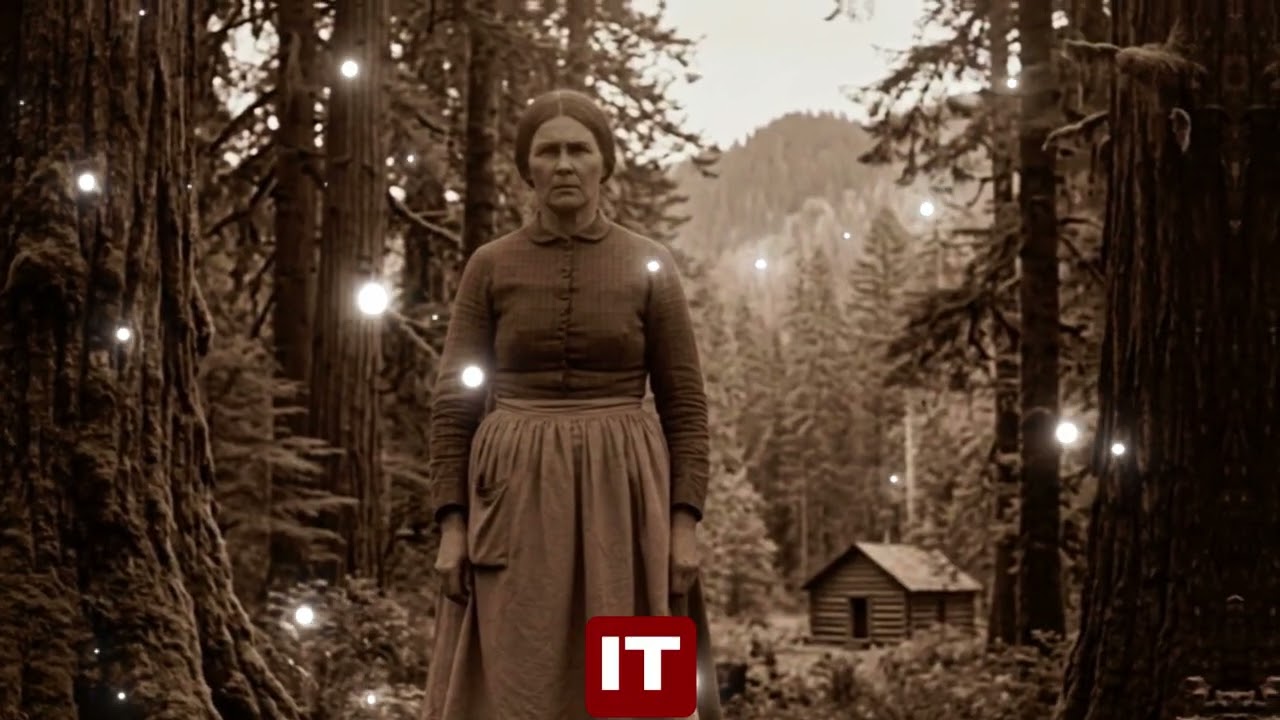
People lived as their grandfathers had, depending on family and neighbors for everything. That closeness kept them safe and fed, but it also kept their secrets buried. Martha Ellison was twenty-three years old, living with her parents and her fifteen-year-old sister, Elizabeth, on a small farm. They grew corn and beans and raised a few pigs.
Martha was known as a good girl, hardworking and quiet, her dark hair always tied back. Her life followed a steady rhythm: planting in spring, tending in summer, harvest in fall, sewing by the fire in winter. She seemed to accept it all without complaint. Some folks later wondered whether that quiet acceptance was really just waiting for something to happen.
In the fall of 1916, right after the harvest, something did happen. Martha changed slowly at first. Her mother, Sarah, noticed that Martha would stop mid-task, standing motionless while churning butter or feeding the chickens. She would stare out the cabin window for hours at the trail winding down the mountain.
She barely ate and spoke even less. When asked a question, she seemed to have to pull herself back from somewhere far away. Sarah told herself it was just the harvest exhausting her girl. But a mother knows, and deep down, Sarah was terrified.
Then the nights began. Martha started leaving the house after everyone was asleep. Elizabeth woke one night and saw her sister grab her shawl and vanish into the darkness. When Elizabeth asked about it the next morning, Martha turned and gave her a look that was cold and hard, not her sister’s look.
“You tell no one,” she said. Elizabeth, frightened, obeyed. The fear grew thick in that little house, like the valley fog. Even the neighbors, the Coopers, who lived two miles down the trail, noticed something off about Martha.
At the village market she would look right through them and quicken her pace, trying to vanish. Mrs. Cooper told her husband something was wrong with that Ellison girl. He told her to mind her own business.
That was what the mountains taught: mind your own, don’t go poking at another man’s secrets. But Martha’s secret was getting too big to hide. In late September, she disappeared for an entire night. Sarah woke before dawn to start the fire and found Martha’s bed empty and cold.
She screamed for her husband, Thomas, and the whole house turned upside down. They searched the property, calling her name until their throats were raw. Thomas grabbed his shotgun, not because he planned to shoot, but because in those mountains you never knew what the darkness held. He stalked the trails, checked the creek, checked the woodshed.
Nothing. As the sun bled over the ridge, Martha appeared, walking slow up the main trail as if returning from a stroll. Her shawl was ripped and caked with mud and dry leaves. Her hair hung down, tangled with burrs.
The look on her face held exhaustion, but underneath it, Sarah would later say, was a bone-deep terror, and something else that looked like determination. Thomas ran to her, shaking with rage and relief. “Where were you? Where in God’s name did you spend the night, girl?
”
Martha looked at him, said nothing, and walked past him, past her crying mother, up the stairs to her room. They heard the wooden latch fall into place. She locked the door. That was the moment Thomas and Sarah knew this was serious.
But in 1916, you did not call the law or air your family’s shame. Shame stuck to you forever. So they made the worst decision of their lives: they decided to wait and watch. They thought they were protecting their family.
They had no idea they were giving the darkness time to dig its claws in deeper. The days that followed were a nightmare. Martha moved through her chores like a ghost. She fed the pigs, kneaded the bread, but her eyes were empty and her movements were like a puppet’s.
Sarah begged her to talk, to say what was wrong. Martha would just shake her head. “I’m fine, Ma, just tired. ” The word sounded like a lie.
It sounded like an epitaph. Thomas, a hard and quiet man carved from the mountain itself, was broken by it. He wanted to shake her, to demand answers, to forbid her from leaving the house again. But he was scared that if he pushed too hard, she would shatter.
So only Elizabeth really saw what was happening. Sharing a room with the thing her sister had become, she lay in her cot night after night, holding her breath, pretending to sleep. She watched Martha sit on the edge of the bed for hours, staring out the window at the black, unmoving trees. Sometimes Elizabeth saw moonlight catch the tears rolling down her sister’s face, silent tears.
Other times, worst of all, Martha’s lips would move without sound, as if she were talking to someone who was not there. In mid-October, something new entered the household. A traveling salesman named Henry Whitfield arrived with a wagon pulled by a half-dead mule. These peddlers were the closest thing the mountains had to a newspaper, carrying fabric, tools, and news.
Sarah bought kerosene, and as Henry packed up, he mentioned something that made her blood turn to ice. Folks up near Yancey County were talking strange rumors. Nocturnal gatherings deep in the woods. Young people vanishing for a few hours and coming back wrong, transformed.
A bad feeling was spreading, and people were locking their doors and keeping their children inside after dark. Sarah pressed him for details. Henry just shook his head and looked around as if afraid of being overheard. “Just stories, ma’am.
Superstitious nonsense, most like. ” But his eyes said he believed every word. Before he snapped the reins, he leaned in close. “You keep your family safe.
Do you hear me? Especially the young women. ” Then he was gone, leaving Sarah standing in the yard, shaken. That night she told Thomas.
He grunted. “Superstitious nonsense,” he said, echoing the salesman. But Sarah would not let it go. “Thomas, it’s Martha.
It’s what she’s been doing. What if she’s involved? ”
Thomas stared into the fireplace for a long time. The only sound was the crackling wood.
Finally he stood up. “Tomorrow I’m riding to Shelton Creek. I’m getting the sheriff. ”
Shelton Creek was the nearest town, eight miles of bad trail away.
It had two hundred people, a general store, a church, and a sheriff’s office. Thomas left before dawn. Sheriff Robert Daugherty was young for the job, just thirty-two, but he was tough and honest. Thomas felt the shame burning his throat, but he told his story, stumbling through it, leaving out the worst parts, making it clear his daughter was in some kind of trouble.
Daugherty listened, his face growing grim. When Thomas finished, the sheriff leaned forward and said words that stopped Thomas’s heart. “I’ve heard the rumors, Thomas. You ain’t the first.
Other families have come to me. Same story. Young folks acting strange. Going missing at night.
A bad feeling in the air. ”
Daugherty said he was looking into it, but it was like trying to catch smoke. People were too scared to talk. Then he suggested something that made Thomas angry: Martha should see a doctor.
“Maybe she’s sick, Thomas, in her mind. These things can make people not themselves. ”
“She ain’t sick, Sheriff. She’s scared.
”
But the sheriff insisted. “Rule it out first. ”
Thomas, feeling beaten down and lost, finally agreed to consider it. He rode home, his mind spinning with doctors, rumors, and his daughter’s empty eyes.
It was late afternoon when he got back. He did not even have to dismount to know something was wrong. Sarah was on the porch, her face white as a sheet. “Thomas, thank God.
It’s Martha. She had some kind of breakdown. ”
Elizabeth told him what happened. They had been in the kitchen putting up preserves.
Martha was holding a paring knife. And she just froze. The knife clattered to the floor.
Her eyes went wide, staring at something no one else could see.