The image of the Viking as a fair-haired, pure-blooded warrior has long dominated popular imagination, but the genetic reality is far stranger and far older. When scientists analyzed ancient DNA from Scandinavian burial sites, they uncovered a truth that upends the entire narrative: some of the most honored Viking warriors, buried with full ceremony, carried no Scandinavian ancestry at all. Beneath the surface of the northern gene pool, researchers also found traces of a catastrophic population bottleneck so severe it nearly erased the Nordic peoples entirely. The true story of the North is not one of purity, but of survival in one of the harshest environments on Earth, isolation that forged distinction, and constant contact that created astonishing diversity.
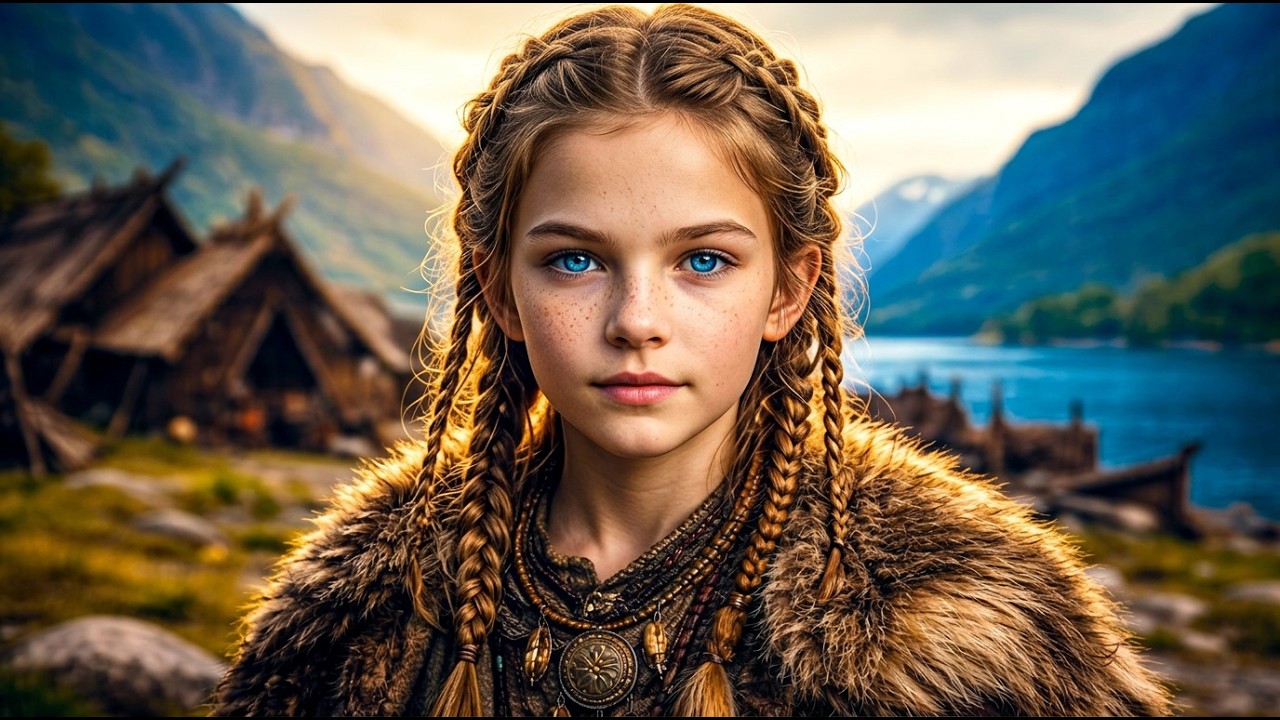
To understand northern genetics, one must begin with the land itself. Norway, Sweden, Denmark, Finland, and Iceland, home to roughly 27 million people, sit on the very edge of habitable Europe. For most of human history, this region was as far from civilization as survival allowed. Brutal winters, short growing seasons, mountains, fjords, and dense forests isolated communities from one another for generations.
That isolation mattered more than most people realize. When a population is divided into small pockets for centuries, strange things happen to its gene pool. Genetic traits that might fade away in a larger, more connected society become fixed and passed down with unusual persistence. The Nordic countries became a natural laboratory for this effect, and scientists have only recently begun to map exactly how it unfolded.
One of the first surprises is that the people of the North are not genetically homogeneous. Despite sharing similar languages, cultures, and a common Viking Age history, Norwegians, Swedes, Danes, and Finns are distinct in ways that confounded geneticists for years. The most striking puzzle involves Finland. Listen to Norwegian, Swedish, and Danish side by side, and they are practically the same language with different accents, a dialect continuum descended from Old Norse, the language the Vikings carried across the seas.
Finnish, however, resembles none of them. It belongs to the Uralic language family, distantly related to Estonian and Hungarian, and it arrived from an entirely different direction thousands of years ago. Geographically, Finland sits in the heart of Scandinavia, surrounded by Germanic-speaking neighbors, yet it retained a language with origins far to the east. This is not merely a linguistic curiosity.
It is a massive clue pointing to a genetic story that does not match the simple narrative that all Nordic peoples are Vikings. The genetic history begins long before the Viking Age, at the end of the last Ice Age. As the glaciers retreated roughly 11,000 years ago, small groups of hunter-gatherers moved north, following herds of reindeer into newly exposed land. They did not form a single migration.
Genetic and archaeological evidence reveals at least two separate paths. One moved through what is now Denmark and southern Sweden. Another pushed from the east along the Arctic coast, possibly descending from peoples far back toward Siberia. These early groups were few in number, scattered, and constantly fighting an environment that seemed determined to destroy them.
Then, around 4,000 years ago, everything changed again. A massive wave of migration from the Pontic steppe, the same peoples associated with the Yamnaya culture that reshaped the genetic map of most of Europe, swept through the region. They brought new technology, new burial rituals, and a new genetic signature that came to dominate much of the Nordic gene pool. By the beginning of the Viking Age around 800 CE, the population of Scandinavia was not unified at all.
It was a layered accumulation of Ice Age hunters, steppe migrants, and waves of farmers, spread across isolated valleys and fjords that barely communicated with one another. This fragmentation became the subject of decades of debate among historians and geneticists. For over a century, the idea of a pure and unified Nordic race had been exploited by the ugliest ideologies of modern history. Nineteenth-century racial theorists obsessed over blond hair and blue eyes, treating Scandinavians as a kind of superior people genetically untouched by the outside world.
That framework collapsed under its own weight, scientifically and morally, but the myth of Nordic genetic purity never fully disappeared from popular culture. The genuine historical debate among researchers was different. Some scholars argued that the Viking Age represented a unified Scandinavian expansion, with raiders and traders carrying a shared Nordic identity to Britain, Iceland, and beyond. Others countered that the Viking world was actually a mixture of competing, genetically distinct regional groups that shared only a language and certain cultural customs, not a cohesive ethnic unit.
And then there was Finland, standing awkwardly outside the entire discussion. Were the Finns always genetically separate from their neighbors, or did something specific drive them toward isolation? For decades, no one could answer with confidence. Ancient records and place names were not enough.
What finally settled the argument was not history, but genetics. Ancient DNA research over the past decade has rewritten the entire origin story of the North. Studies from institutions including the Eske Willerslev laboratory at the University of Copenhagen and the Max Planck Institute analyzed sequences from hundreds of ancient Scandinavian skeletons spanning thousands of years. One of the most significant findings concerns Finland.
Genetic analysis shows that Finnish populations experienced a severe population bottleneck over the past few thousand years, a sharp reduction in genetic diversity likely caused by the expansion of a small founder group across a vast, sparsely populated land. This bottleneck is why Finnish genes look so distinct from their neighbors today, despite Finland sitting in the heart of Scandinavia. Then came the Viking Age itself. A landmark study published in Nature analyzed ancient genomes from Viking-era burial sites across Scandinavia and the regions the Vikings raided and settled.
The results shattered the image of the Vikings as a genetically homogeneous band of blond conquerors. Some individuals buried with full Viking ceremonies in Scotland and other areas had no Scandinavian ancestry whatsoever. Local people had adopted Viking identity, culture, and burial customs without any blood connection. Even more surprisingly, the study found that Viking-era Scandinavia had far more genetic inflow from southern and eastern Europe than expected.
The Vikings were not a closed genetic club expanding outward. They were already a mixed population before they ever set foot on a ship. The steppe ancestry from thousands of years earlier never disappeared either. It remains detectable in the modern Nordic gene pool, settled beneath every subsequent wave of migration like bedrock.
This is where science collides directly with culture, and the collision was not smooth. For some, the idea that the Vikings were not a genetically pure Scandinavian lineage feels like an attack on national identity. The Nordic countries spent the last century building cultural pride around Viking heritage, from museums and festivals to tourism campaigns heavily centered on the warrior ancestor narrative. The discovery that some Vikings were local recruits who adopted the culture without any Scandinavian DNA complicates that story.
On the other side, the discovery of the Finnish genetic bottleneck has occasionally been misused in online spaces as evidence of a kind of isolation or even inferiority, rhetoric that echoes the pseudoscience that plagued the field a century ago. The geneticists who study this material have been explicit in rejecting that interpretation, repeatedly pointing out that a population bottleneck is a statistical event caused by founder effects and isolation, not an indicator of any kind of purity or superiority. The deeper researchers looked into Nordic DNA, the more surprising the findings became. They identified the genetic signature of a mysterious population known as Ancient North Eurasians.
This DNA is the shared genetic bridge between modern Scandinavians and Native Americans. Thousands of years before the Vikings sailed to Newfoundland, an ancient lineage connected the frozen steppes of Scandinavia to the Americas. Survival in the frozen North literally forced human DNA to mutate in real time. To endure months of near-total darkness, northern bodies shed melanin, evolving very pale skin and blue eyes to absorb every drop of ultraviolet light.
At the same time, harsh famine drove a genetic mutation that allowed adults to digest animal milk without falling fatally ill. What we call Nordic traits today are not badges of a superior race. They are literal scars of evolutionary desperation. Had one walked into a Scandinavian valley 10,000 years ago, the sight would have been shocking.
The first pioneers did not look like modern Swedes. Genetic maps show they were a striking mixture, many with dark, deeply tanned skin paired with piercing bright blue eyes, a genetic combination that barely exists anywhere on Earth today. The sudden infusion of European DNA during the Viking Age came from a grim source: the slave trade. The Vikings brought back not only gold but thousands of captive women from Ireland and Scotland.
Modern Iceland tells a haunting story through its DNA. Nearly all the founding fathers were Norse raiders, but the majority of founding mothers were Celtic captives. So where does this leave the story of Nordic origins? The honest picture is this: the Nordic peoples descend from at least two separate waves of Ice Age hunter-gatherers, profoundly reshaped by steppe migrations around 4,000 years ago, then further diversified through continuous genetic contact throughout the Viking Age.
Even as Viking culture and identity spread outward through conquest and trade, and in some cases simple cultural adoption by people with no Scandinavian blood at all, the gene pool itself was absorbing outsiders as readily as it conquered them. The distinctive genetic profile of Finland is not isolation for its own sake. It is the clear fingerprint of a population bottleneck, a specific demographic event layered on top of the same shared ancestry as its neighbors. This was never a story about purity.
It never could have been. It is a story about isolation creating distinction in some places while constant contact and mixing created astonishing diversity in others, often within the same culture. The Viking Age, the era most associated with a single fierce and unified Nordic identity, turns out to be one of the most genetically mixed periods in the entire history of the region. The raiders were not defending a pure lineage.
They were already living proof that identity and ancestry had stopped being the same thing long before anyone wrote it down. What survived was not a pristine Nordic gene pool. It was an adaptable society that absorbed strangers as easily as it raided them.