Private Samuel Huitt’s official service record states that he died of dysentery on April 23rd, 1865, two weeks after Lee’s surrender at Appomattox. That is what the army told his mother, and that is what was carved onto the stone marker placed in the veterans’ cemetery outside Knoxville. But his letters tell another story. They tell a story the army did not want anyone to know.
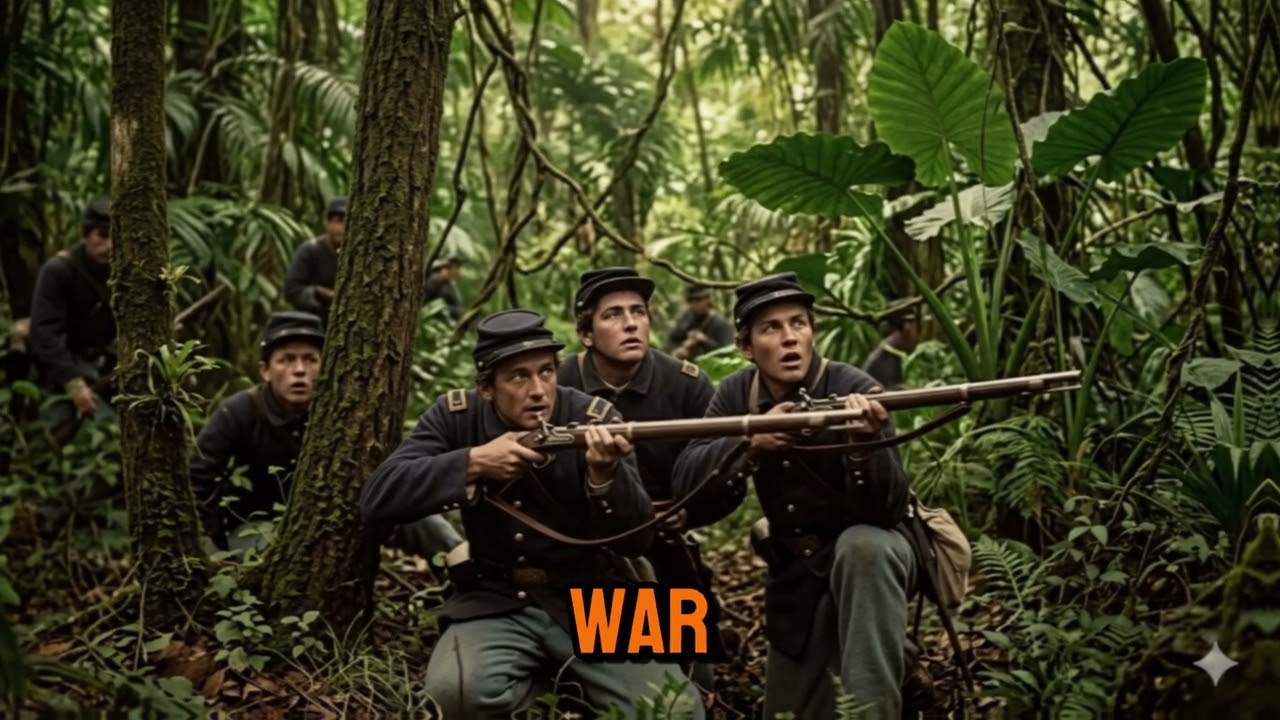
Samuel was twenty-three years old, a farmer’s son from outside Philadelphia who had enlisted in 1863. His letters home before March 1865 were typical soldier correspondence, complaints about food, descriptions of camp life, reassurances that he was safe. He wrote about once a week in neat handwriting with a cheerful tone. His final letter, dated March 15th, 1865, is nothing like the others.
The handwriting is shaky. The content is disturbing. He wrote to his mother that his company had been in the mountains for seven days, and that things had occurred which he could not explain with reason or sense. His captain had ordered the men to speak of nothing unusual, but Samuel felt he would go mad if he did not write it down.
Three nights before, the company had made camp in a valley beside a creek. It seemed a fine spot, good water, sheltered position. But as darkness came, the men grew uneasy, though none could say why. It was too quiet.
No insects, no birds, no sound at all, as if the world were holding its breath. Then they heard the singing. A woman’s voice came from up the ridge, singing a song none of the eighty men recognized. The words were English, but strange and old-fashioned, something about cold earth and waiting and hunger.
Captain Vance sent a squad of ten men under Sergeant Miller to investigate. The men watched their lanterns climb the ridge, then watched them stop. The singing continued. After an hour, the captain called for their return, but there was no answer.
The singing stopped. The lights went out one by one, like someone pinching out candles. At dawn, the company climbed the ridge and found nothing. No men, no blood, no signs of struggle.
Just marks in the dirt like something had been dragged, but the marks stopped at a rock face where nothing could go. The captain said deserters had attacked them and ordered the men to say nothing that would damage morale. But everyone knew that was not true. Two more men disappeared two days later.
They were walking at the rear of the column, not fifty yards behind the others. When the company went back to look, they were gone. Their packs were on the ground, their rifles laid carefully side by side, and there were no footprints leading away. Samuel wrote that he had seen things moving between the trees while on watch, things that were not men and not animals, shadows that had learned to walk.
He closed the letter with a plea. If he did not return, his mother should know that he loved her and had tried to be brave. She must not believe what the army told her about how he died. The truth was stranger and more terrible than dysentery or battle.
He believed the mountains wanted them. He believed they had been fools to come there. His letter ends mid-thought. According to his service record, he died eight days later.
Samuel’s letter was found in his pack when his body was recovered. His mother never received it. Instead, she received the official notice saying her son died of disease. That letter survived because his family kept it hidden in a trunk for three generations before donating it to a historical society.
Company K of the 15th Pennsylvania Infantry left Knoxville on March 8th, 1865, with about eighty men under Captain Richard Vance. Their orders were to march through the Smoky Mountains, clear out remaining Confederate holdouts, and establish federal authority in remote settlements. The war was effectively over, but scattered Confederate units still operated in parts of eastern Tennessee, western North Carolina, and southwestern Virginia, more like guerrilla fighters than soldiers. According to the official report, Company K returned on April 30th with forty-two men.
Thirty-eight were listed as killed in action, deserted, or dead from disease. Not a single death was reported in detail. No battle citations. No locations.
Just a list of names marked deceased. For a military that documented everything obsessively, this was unusual. The army’s response to this period is even stranger. Large portions of the official records from these specific units in the Appalachian wilderness were later reported lost or destroyed.
Surviving documents were heavily redacted, even after 150 years. One partially redacted memo from April 1865, written by a general whose name is blacked out, states that men’s reports from the Tennessee wilderness cannot be credited and must be suppressed for morale purposes. It warns that units should avoid certain valleys and maintain hilltop positions when possible. The memo closes with the phrase territorial claim.
Documents from other units operating in the same region describe similar incidents. A corporal from Ohio wrote about finding a settlement where everyone was gone, food still on tables, fires still burning, but not a soul anywhere. He described carved symbols on trees that hurt to look at. A lieutenant from New York described his men refusing to enter a valley where they could hear children laughing in the woods, though there were no children within miles, and the laughter sounded wrong.
A Confederate deserter who surrendered to Union forces in April 1865 rambled about hollow men who had taken half his unit one night, things that looked like soldiers until you looked at their faces and realized there was nothing behind their eyes. The story extends well before the war. The Cherokee spoke of these mountains as sacred and dangerous, home to spirit people who lived in hidden towns inside the peaks and sometimes took humans who wandered too far. They had specific valleys they would not enter and ridges they would not cross.
Early European settlers learned these rules, often the hard way. A surveyor named James Robertson wrote a journal in 1782 describing a valley his Cherokee guide refused to enter. Robertson went in alone and found ruins of an ancient settlement, far older than any Cherokee construction, built into the side of a mountain. He described buildings that seemed to shift when not looked at directly, doorways that led to spaces too large for the structures they were in, and walls covered in carved symbols that made him feel nauseated.
Robertson returned to camp after what he swore was only thirty minutes inside, but two hours had passed. His guide told him the place belonged to the old ones who were here before the Cherokee, before anyone, the ones who never left. Robertson wrote that he felt watched by something in those doorways and that the Cherokee were wise to avoid the valley. His description matches almost exactly the accounts written by Civil War soldiers eighty-three years later, soldiers who never could have read his journal.
In the pension application file for Private Daniel Marsh, another Company K soldier who officially died of fever, there is a letter from Corporal William Hayes, a survivor. Hayes described Marsh’s death as fever in the official affidavit, but in a private letter to Marsh’s mother he told the truth. On March 19th, Marsh volunteered for sentry duty. When his relief arrived at midnight, Marsh was gone.
His rifle and coat were there, but he had vanished. They found him half a mile from camp in the valley they had been ordered to avoid. He was alive but unresponsive, eyes open and breathing, yet looking at something that was not there. The next day he began to speak of cities inside the mountains, vast halls carved from living rock where old ones dwell in darkness waiting for the stars to align.
He said they had been sleeping but the war had woken them. The blood soaking into the soil, the hatred and violence, had fed them like rain feeds dormant seeds. He said the soldiers were being harvested. Then Marsh screamed for six hours until his voice gave out and blood came from his throat.
He died at dawn. Hayes ended his letter pleading that if Marsh’s mother had other sons, she should not let them serve in these mountains, because the rent was being collected in blood and souls. Three weeks later, Hayes also died. The official cause was dysentery.
But a military chaplain’s private journal records that Hayes walked out of camp during the night and hanged himself. The chaplain wrote that Hayes’s face bore an expression not of despair but of resignation, as if he had seen something approaching and chose death rather than face it. The chaplain was ordered by Captain Vance to record the death as disease. By early April, Company K had lost nearly half its men.
Survivors were on the verge of mutiny, refusing to patrol, camping together in large groups, keeping massive fires burning at night, singing hymns constantly. On April 12th, three days after Lee’s surrender, the company received orders to return to Knoxville. They abandoned their mission and marched out of the mountains as quickly as possible. Captain Vance reported mission success despite having accomplished none of his objectives.
Nobody questioned it. The army was demobilizing, and a company that had suffered heavy losses to disease and desertion was not unusual. The records were filed, the dead were listed, and everyone involved kept quiet. But not everyone stayed quiet completely.
Elderly veterans interviewed in the early 1900s would occasionally mention that the worst part of the war was not the battles but the mountains, the sense that the wilderness itself was alive and hostile. Interviewers dismissed these comments as old men rambling. The valley Robertson described in 1782 still exists in what is now North Carolina near the Tennessee border. It remained remote, accessible only by hiking trails.
The area was closed to hiking in 1998 after a family of four was found alive but catatonic in one of the ruined buildings. They never spoke of what happened. The father killed himself two months later. The valley has seen seven documented disappearances in fifty years.
The stone ruins are still there, fitted together with impossible precision, no mortar, gaps too tight for a knife blade. The doorways are too tall and too narrow, built for something not quite human-shaped. The carved symbols remain, and looking at them causes physical nausea. Human bones are scattered around the ruins, some hundreds of years old, some considerably newer.
One skull bore a bullet wound consistent with Civil War era ammunition. Those who visit report the same sensation described by Robertson and the soldiers, the feeling of being watched by an intelligence that is vast, patient, and utterly inhuman. The Cherokee knew to avoid certain places. The early settlers learned to respect the warnings.
The Civil War soldiers discovered it the hard way when thousands of traumatized men flooded into the mountains at once, disturbing ruins that had been left alone for generations. The official records list them as killed, diseased, or deserted. But the personal letters and suppressed testimonies tell a story of an ancient presence that dwells in the deep valleys, that resents intrusion, and that responds by taking what wanders into its domain. The army suspected something, suppressed the reports, destroyed or redacted the records, and withdrew once the war ended.
The pattern continues today, even now, in marked trails and official explanations that never quite satisfy. The mountains remain ancient and patient, and something in them remains watching and waiting.