The bubonic plague that tore through 14th-century Europe killed as many as 50 million people, more than half the continent’s population. Yet even as the dead piled up in streets and mass graves, Europeans remained almost entirely blind to the true cause of the catastrophe. Fleas bit infected rats, then jumped to humans, transmitting the disease from animal to person. But no doctor of the era identified the flea as a carrier.
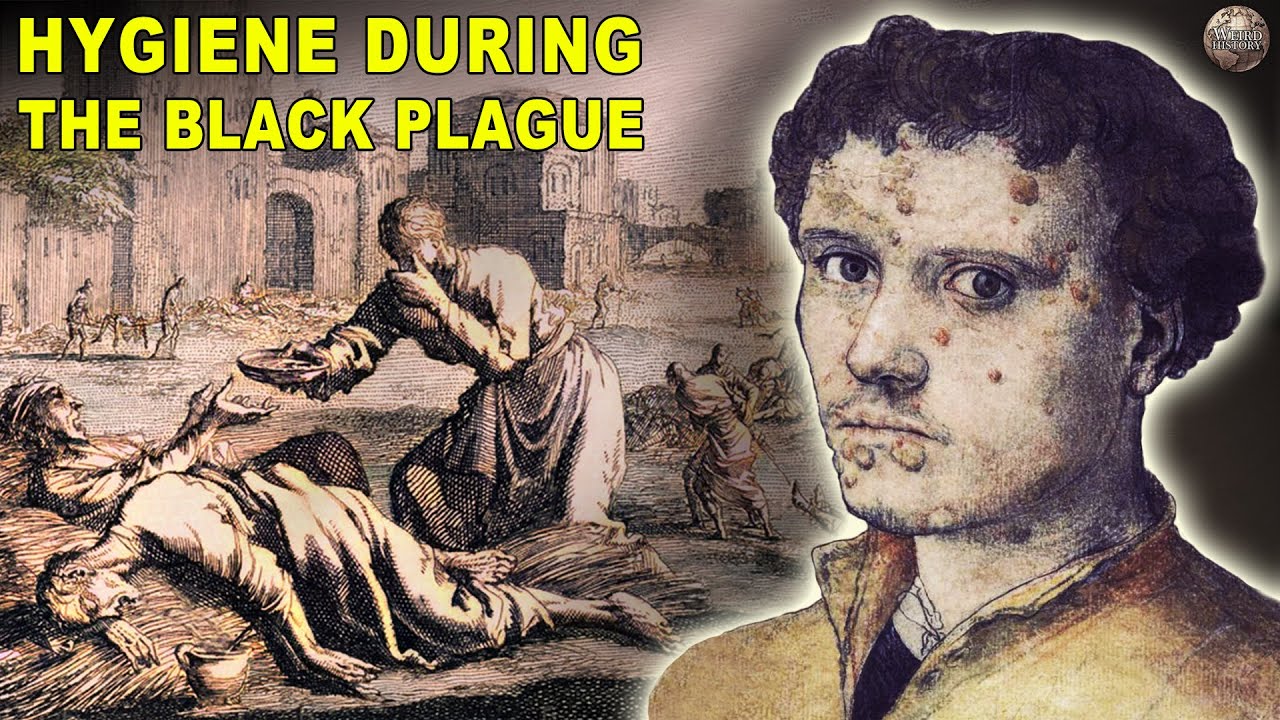
People slept on straw bedding crawling with vermin, bathed rarely, and emptied their chamber pots into the streets, never realizing that each habit fed the epidemic. Contrary to the popular image of filthy medieval peasants, Europeans of the 1300s did wash. Most commoners began their day by cleaning their hands and face. The wealthy bathed in private tubs, while everyone else made do with public baths or a dip in the local stream.
When the plague arrived, bathing was even recommended as a treatment—though not in water. Some advised soaking in vinegar and rosewater, since vinegar was already a standard medieval remedy. Plague doctors washed their hands in it and stuffed vinegar-soaked sponges into their beaked masks. For those seeking stronger measures, there was always the suggestion to bathe in one’s own urine.
That option may have sounded reasonable to people who had to make their own soap, a process requiring oak ashes, animal fat, quicklime, salt, flour, water, fire, and several days of careful work. Urine, at least, was free. Even superior hygiene offered no protection from the violence the plague unleashed. In some regions, Jewish communities had lower mortality rates than their Christian neighbors, most likely because Jewish sanitary traditions demanded more frequent hand washing.
Christians did not learn that simple lesson. Instead, some concluded that Jews were somehow immune to the plague, accused them of poisoning wells, and claimed the disease was divine punishment for allowing Jews to live openly in Christian communities. Despite repeated papal declarations that Jews had nothing to do with the outbreak, mobs set out to convert, exile, torture, and kill their Jewish neighbors. The Nuremberg Chronicle recorded that in 1348, all Jewish residents in Germany were burned, accused of poisoning the wells, with many confessing under duress.
The truth was far more mundane: hand washing, not poison or divine wrath, explained the lower infection rates. Doctors had no real understanding of the disease, and many of their treatments actually spread it. The plague caused swollen lymph nodes called buboes, and physicians recommended cutting them open and draining the pus to let the illness leave the body. The open wound was then dressed with a mixture of plant roots, resin, and dried feces.
Some went further, suggesting patients drink the drained pus—an almost certainly fatal piece of advice. The dead were everywhere. Towns and cities could not keep up with the corpses. The 14th-century Italian writer Giovanni Boccaccio noted that many perished daily or nightly in the public streets, and that for those who died at home, neighbors often noticed only when the smell announced the death.
A chronicler in Florence wrote that citizens did little else but carry the slain to burial. Authorities tried to establish sanitation policies, ordering mass graves dug outside town in deep pits. But the pits were rarely deep enough, and the body count never stopped. The chronicler Agnolo di Tura recorded that some burial sites were so poorly covered that dogs dragged corpses out and devoured them.
Human waste made everything worse. Without indoor plumbing, dozens of households might share a single toilet. Heavy rains and floods sent overflowing cesspits cascading into local water supplies. Those unwilling to make the trip simply emptied their chamber pots into the street.
Rats, not picky eaters, feasted on the refuse, bringing their fleas with them. The connection between filth and disease was beginning to dawn on some authorities. In 1388, England’s Parliament declared that so much dung, garbage, and entrails had been cast into ditches, rivers, and other waters that the air had grown corrupt and infected, causing many maladies and intolerable diseases. Europeans believed foul smells spread sickness, so they carried sweet flowers and scented pomanders to purify the air.
The iconic plague doctor costume emerged from this belief. The bird-like mask held dried roses, mint, and spices thought to ward off infection, while a full body covering shielded the wearer. The herbs did nothing, but the protective clothing may have helped—the doctors had unknowingly invented a medieval hazmat suit. The plague came in three forms.
Bubonic plague, spread by flea bites, infected the lymphatic system and had a survival rate between 25 and 75 percent. Pneumonic plague attacked the lungs after inhalation and was far deadlier, with a survival rate of just 5 to 10 percent. Septicemic plague infected the blood and was virtually unstoppable, killing 99 to 100 percent of its victims. Remarkably, even with centuries of medical progress, septicemic plague remains almost always fatal today, though it is difficult to catch.
Bloodletting, one of the most popular treatments of the century, proved especially dangerous. Doctors believed the plague infected the blood—partially correct—and recommended cutting open veins to let the disease escape. The procedure exposed physicians and bystanders directly to infected blood, increasing the odds of contracting septicemic plague. Inside homes, floors were often covered with straw or rushes that hid dirt and absorbed filth.
The top layer might be changed occasionally, but the bottom layers could remain for decades. The Dutch scholar Erasmus, writing in the 16th century, was horrified to find that these undisturbed layers harbored expectoration, vomit, the leakage of dogs and men, ale droppings, scraps of fish, and other abominations. The putrid rushes, he declared, exhaled a vapor harmful to health. They also attracted rodents and let bacteria thrive—an all-inclusive resort for the plague.
Europeans understood that the disease was contagious, even if they misjudged the mechanism. In 1348, Venice became the first city to enforce a 30-day isolation period for ships and travelers arriving from infected areas. In later outbreaks, the city extended the period to 40 days, giving birth to the term quarantine, from the Italian quaranta, meaning forty. Even these measures failed.
Tens of thousands still died in Venice. The physician to Pope Clement VI, Guy de Chauliac, admitted that the epidemic shamed Europe’s doctors. They dared not visit the sick for fear of infection, and when they did visit, they could do almost nothing. De Chauliac himself instructed the Pope to sit alone between two bonfires, claiming the flames would cleanse the air.
The fires may have had the unintended effect of keeping plague-ridden rats away, and combined with enforced isolation, they kept the Pope free of the disease. The Black Plague killed tens of millions, but for those who survived, it brought an unexpected benefit. Research by Dr. Sharon DeWitt found that survivors and their descendants enjoyed improved health and longer lifespans for 200 years afterward.
The smaller population meant higher wages and cheaper food, which explained the better diets. And those who lived through the epidemic may simply have been hardier, since the plague had eliminated so many of the weaker among them. The deadliest epidemic in European history left its mark not only in mass graves and broken families, but in the improved lives of the people who endured it.