Marcus Reno had already served his country through the fire of the American Civil War when he rode into the Montana Territory as a senior officer under George Armstrong Custer. His name would become permanently tied to one of the most controversial defeats in American military history, and his own conduct on that day would spark a bitter argument that followed him to the grave and beyond. The Seventh Cavalry had been sent to force the Sioux and Cheyenne onto reservations. On June 25, 1876, Custer divided his regiment near the Little Bighorn River and ordered Reno to charge the native village with three companies.
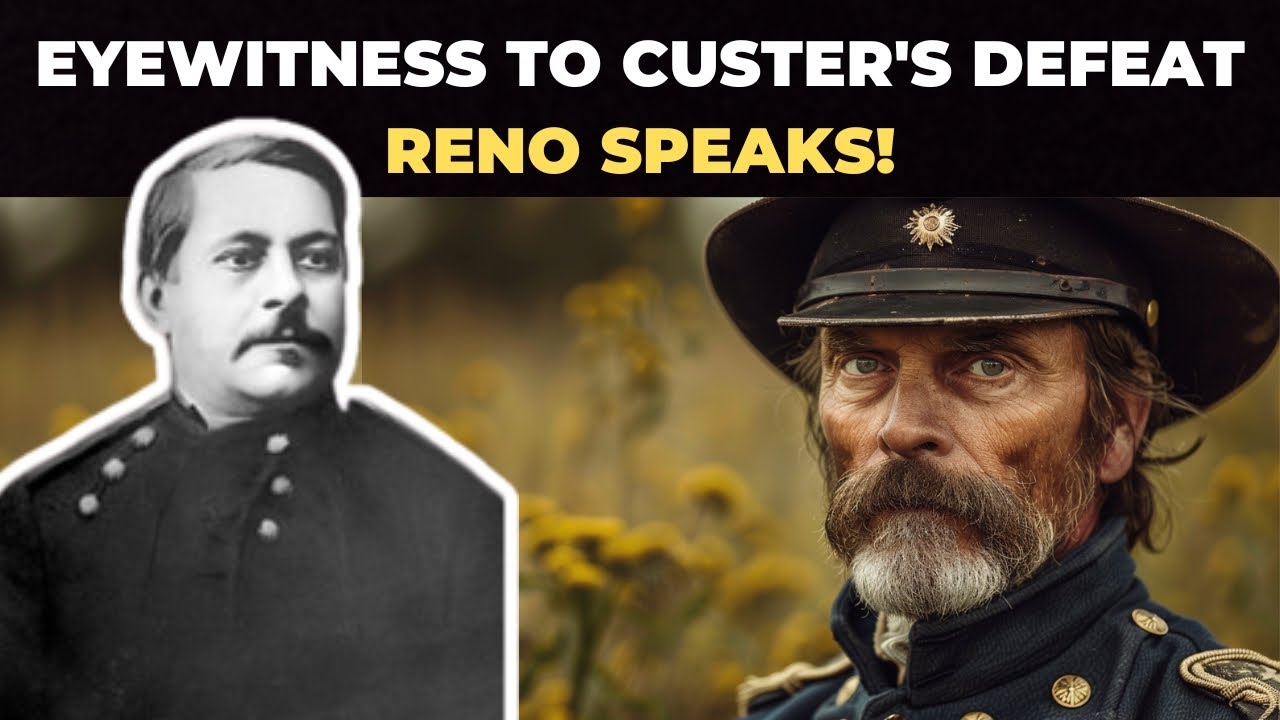
Reno advanced with his men for about a mile and a half before they began to hear gunfire. Coming under attack, they found themselves heavily outnumbered and dismounted to fight on foot. After a brief clash, they fell back to a hilltop where their horses and mules were stationed. The men took cover behind bushes and prepared to defend themselves.
At approximately 5:30 that evening, the natives launched a large-scale attack against Reno’s position. The fighting continued through the night until about nine o’clock, when the attackers pulled back. Reno’s men had no proper entrenching tools, so they used knives, plates, and canteens to scrape shallow trenches into the hillside for protection. At 2:30 in the morning on June 26, the natives renewed their assault.
This time they focused on the horse herd from a hill beyond the range of the soldiers’ carbines. The attack continued until 9:30 a. m. , with the sheer numbers of the enemy threatening to overwhelm the position.
Around eight o’clock that morning, the natives also targeted the position held by Colonel Benteen’s men, where one native was killed after getting too close to a fallen soldier in an attempt to count coup. The soldiers were dealing with numerous wounded and a critical lack of water. Colonel Benteen led a team to fetch water from a source about six hundred yards away while a skirmish line protected them. The mission cost them dearly: one volunteer was killed and six others were injured.
The water was brought back to the wounded, but the cost was heavy. Throughout the day, the natives continued to harass the soldiers but seemed to be gradually withdrawing from Reno’s position. Reno watched them start a large fire in the valley, sending up clouds of dust and smoke. Under this cover, they appeared to retreat in an organized military formation toward the Big Horn Mountains, some thirty miles away.
At the time, Reno suspected this could be Custer returning with his command. He did not know that the tragedy had already befallen Custer and his men. The next morning, General Terry arrived with grim news: Custer’s command had been defeated. Colonel Benteen’s company was dispatched to the battlefield, where they confirmed the loss and identified the bodies of the fallen officers.
Reno’s own account of the battle became a key historical document. He explained that he had been given command of Companies M and G with orders from Custer to charge quickly, assured that support would follow. Colonel Cook, the regiment’s adjutant, conveyed this last order Reno would receive from Custer. Both Cook and Captain Keogh accompanied Reno briefly, with Keogh saying they were all advancing and that Miles Keogh was coming too.
After crossing the ford, Reno never saw them again. Reno had sent a message to Custer warning him of the strong native presence, but he continued the charge assuming Custer was behind him. As he neared the village, the natives began to flank his column on the left. Realizing he was isolated, Reno ordered his men to dismount and take cover in a nearby wooded area.
After securing the horses, they advanced toward the village, coming within two hundred yards before facing overwhelming native forces. With no choice left, they broke for the bluffs to find a defensive position. Fortunately, Colonel Benteen and Captain McDougall later joined them with their companies. The soldiers stumbled upon a hidden ford that allowed them to reach the safety of the bluffs.
At the time, Reno had only two men and twenty-five scouts with him. He later insisted that had they not retreated to the bluffs, his command would have been wiped out just as Custer’s was. In his view, the most significant error of the entire engagement was underestimating the native forces, which numbered between two thousand and five thousand warriors. These Sioux and Cheyenne fighters, he said, were among the finest cavalry units he had ever encountered, rivaling any cavalry he had seen.
Captain Anson Mills, who had witnessed their capabilities after being defeated by Crazy Horse at the Battle of the Rosebud, shared his respect for their prowess. Reno also recorded an account of Lieutenant Cook’s bravery. According to Curley, a Crow scout and the only confirmed survivor of Custer’s command, Cook displayed exceptional courage, remaining mounted even after Custer had fallen. He led the remaining men in repeated charges against the natives.
His small group fought valiantly, even causing the Sioux warriors to temporarily retreat, before they were eventually overwhelmed by sheer numbers. After the Battle of the Little Bighorn, Marcus Reno was heavily criticized. He faced accusations of cowardice, incompetence, and drunkenness. Despite these accusations, Reno took command of what was left of the Seventh Cavalry, replacing George Custer.
An official inquiry eventually cleared Reno of wrongdoing in connection with the battle. But his troubles were not over. In 1877, he faced charges of improper conduct toward another officer’s wife, leading to a two-year suspension. In 1880, Reno was found guilty of assaulting a junior officer and being intoxicated on duty, resulting in his dismissal from the Army.
Despite efforts to clear his name, Reno died of cancer in Washington, D. C. , in 1889. Nearly eighty years later, in 1967, a military review board revisited his case, examining original records and testimonies.
As a result, Reno’s discharge status was changed to honorable. Initially buried in an unmarked grave at Washington’s Oak Hill Cemetery, his remains were reinterred at Custer National Cemetery within the Little Bighorn Battlefield, where he was buried with full honors. His letter detailing his firsthand account of the battle remains a key historical document, shedding light on one of the most fateful days in American military history.