To countless fans, the Hemphills were the smiling faces behind one of gospel music’s most beloved sing-alongs, He’s Still Working on Me. But behind the scenes, that song was a cheerful mask hiding a brutal reality. LaBreeska Hemphill, the matriarch whose voice built a dynasty, did not sing merely for her livelihood. She sang for her life.
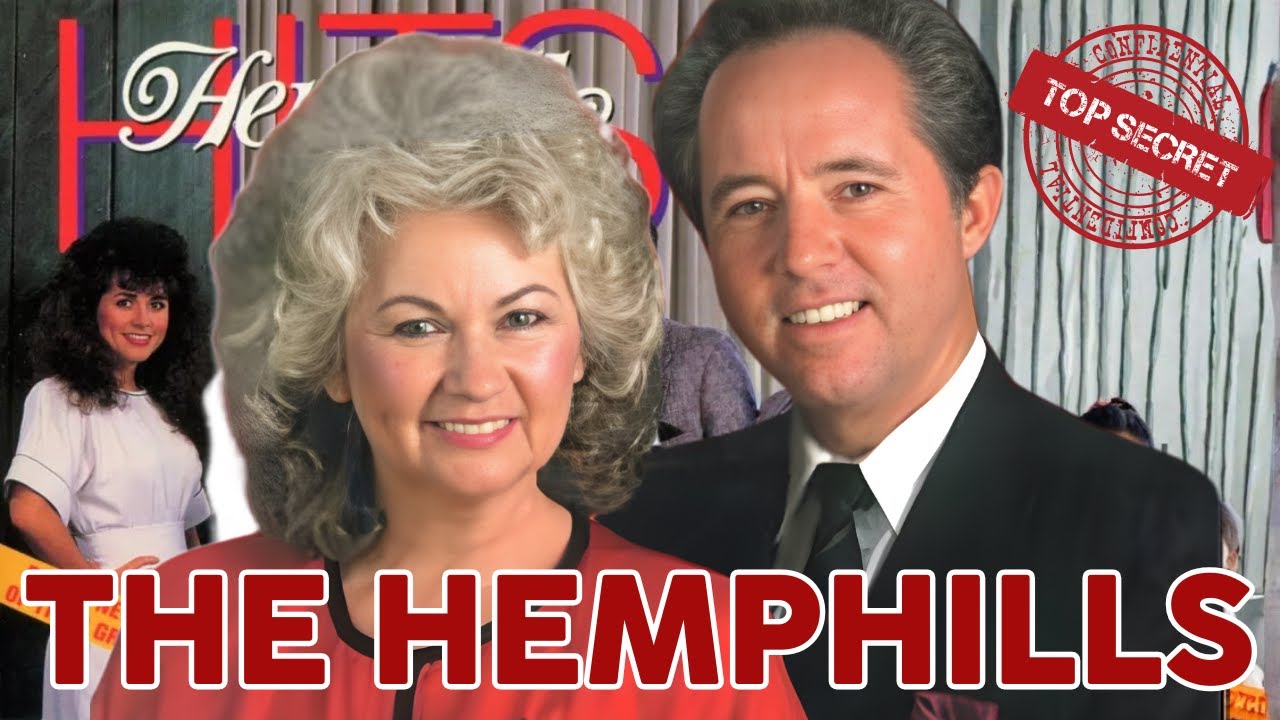
Through the years, she battled serious health problems, yet she kept performing far longer than most people ever expected. This is not a story about a song. It is the tragedy of a woman who gave pieces of her own physical heart to the public until there was nothing left to keep hers beating. The Hemphill story began not under the bright lights of Nashville, but in the dusty, humid atmosphere of northeast Louisiana in the late 1930s.
This was a working-class corner of the rural South where faith and music were woven into daily existence. In that world, religion was not a lifestyle choice. It was the only available medicine for the soul. The church was the epicenter of life, the only place where a man with dirt under his nails could stand and be called a king, and where a woman exhausted by childbirth and labor could close her eyes and sing about a mansion on a hilltop.
Joel Hemphill grew up in Louisiana as a preacher’s son, a label that carried a heavy psychological weight in the Bible Belt. His father was a bivocational pastor who preached fervently on Sundays and worked with his hands on Mondays. Raised in that shadow, Joel developed a restless, analytical mind that constantly tried to reconcile the harsh realities of the physical world with the radiant promises of the spiritual one. He was not naturally a singer.
He was an observer, fascinated by the architecture of words, seeing the world in meter and rhyme. But a poet in the rural South of the 1940s was useless unless that poetry could become a sermon or a song. So Joel filled his notebook, laying the foundation for a theology simpler and more human than the fire-and-brimstone he heard from the pulpit. The other half of the equation was formed three hundred miles away in the red clay hills bordering Alabama.
LaBreeska Rogers was born in 1940, and unlike Joel, she did not need to search for her identity. It was woven into her genetic code. She was a niece of the Happy Goodman family, the clan that would define the powerful, emotional energy of southern gospel. But LaBreeska was different from her flamboyant relatives.
She possessed an alto with surprising richness, a low, warm, enveloping sound that carried the texture of velvet and the weight of iron. When she sang, she wrapped the notes around the listener. She had the cry, that indefinable, lived-in quality that resonated with the suffering of the working class. The meeting of Joel Hemphill and LaBreeska Rogers seemed almost inevitable on the revival circuit of the mid-century South.
When Joel met LaBreeska, it was a collision of opposites that formed a perfect whole. Joel was the nervous energy, the intellect, the wordsmith with the plan. LaBreeska was the anchor, the soul, the voice. They married young and spent their early years pastoring small, struggling churches in Bastrop, Louisiana.
Being pastor of a small Pentecostal church in the 1960s meant living on the edge of the abyss, dependent on the tithes of farmers who sometimes paid in vegetables because they had no cash. It was in this crucible of pressure that Joel’s songwriting changed from a hobby into a lifeline. He wrote songs for his own congregation, narrative songs with a beginning, a middle, and an end that gave them hope. And when he finished a song, he gave it to LaBreeska.
When she opened her mouth to sing it, the song was transformed. She added the heaviness, the soul. In the mid-1960s, the southern gospel industry began to professionalize, and the husband-and-wife duo was often dismissed as amateurish. But Joel and LaBreeska had something the amateurs did not.
They had the songs. Joel wrote a number called Pity the Man, a complex lyrical exploration of spiritual blindness. In a bold move, they got the song to the Happy Goodmans, who recognized the genius in the lyrics and the talent of their niece LaBreeska, and recorded it. It became a hit.
Suddenly, Nashville was calling, not for Joel the singer, but for Joel the songwriter. This created the central conflict that would define the first half of their career: the tension between the pulpit and the stage. Joel felt God’s calling to shepherd a flock, but the music offered a wider pulpit and a way out of poverty. LaBreeska was content as a pastor’s wife and feared the road, sensing instinctively that it would steal her health and her peace.
But she believed in Joel and in his gift. So they packed their meager possessions, took their young children, and stepped onto the asphalt. They were no longer just a pastor and his wife. They were the Hemphills.
The early touring years were a brutal education. They traveled in a station wagon with the children sleeping on a mattress in the back, singing in school gymnasiums with terrible acoustics and in suffocating tents. But something happened in those small spaces. When Joel told the story behind a song and LaBreeska stood to sing it, the audience was deeply moved.
They connected. As the 1970s approached, the Hemphills signed a recording contract, and songs like Not in a Million Years and I’ll Soon Be Gone climbed the radio charts. But the success masked a growing crisis. LaBreeska was exhausted, not just from the fatigue of raising children on the road, but from a deep, systemic weariness.
Her health problems became harder to ignore. Joel, driven by ambition and creative passion, pressed the accelerator deeper. He wrote more, booked more concerts, and dreamed bigger. He envisioned his children, Joey, Trent, and Candy, growing into musical prodigies and a family band that could rival the Partridge Family or the Osmonds, but devoted to God.
He did not see that the engine of this machine, LaBreeska’s heart, was beginning to falter. By the mid-1970s, the station wagon was replaced by the Silver Eagle tour bus, the universal symbol of success in the southern gospel hierarchy. While Joel and LaBreeska’s children grew up, they were not merely spectators to their parents’ career; they were absorbed into it. Candy Hemphill, whose crystal-clear voice rose perfectly above her mother’s rich alto, became a crowd favorite.
Trent and Joey added the rhythm and the low notes. Joel now had his orchestra, no longer just a songwriter offering songs to other groups, but the conductor of a self-sufficient unit. This creative autonomy unleashed a golden period of songwriting. He produced one hit after another: Sing the Glory Down, I’m in This Church, Consider the Lilies.
And the centerpiece of the show remained LaBreeska. On stage, in sparkling gowns, she looked invincible, commanding the stage with a regal, effortless authority. But the golden cage was slowly closing around her. The relentless touring schedule meant sleeping in a bunk 250 nights a year, eating fried food at roadside restaurants, and enduring constant stress.
For LaBreeska, silently fighting a range of health issues, it was a slow-motion sentence. The most dangerous enemy was the one she could not see. Her heart, the muscle the public believed she sang from, was beginning to weaken. The valves were tired.
The rhythm was irregular. There is a tragic irony in the role of the healer in gospel music. LaBreeska’s task was to sing songs of healing night after night. People in the audience would weep and claim miracles, grabbing her hands after the show and telling her how her voice had saved their marriage or cured their depression.
She absorbed their pain. But who heals the healer? Joel, in his drive to build the ministry and secure the family’s future, faced a terrible dilemma. He loved his wife fiercely, but he was also the manager of a business that employed the whole family.
If they stopped touring, the income stopped. They developed a system of denial. LaBreeska learned to mask her pain, saving her energy all day so she could give everything in those ninety minutes on stage. It was during this period of shining success and hidden decline that the family reached its cultural peak.
In 1980, Joel wrote a cheerful melody called He’s Still Working on Me. The lyrics were a confession of imperfection: He is still working on me to make me what I ought to be. It took him only a week to make the moon and the stars, so how loving and patient He must be. The song became a massive hit, sung by children in Sunday school and choirs in cathedrals.
But for the Hemphills, the song had a darker double meaning. Even as they traveled the country singing about God’s patient work, the work on LaBreeska was a slow erosion of her physical ability. The song that brought them their greatest fame was a cheerful mask for a terrifying reality. By 1985, the Hemphills were no longer just a family group; they were an institution.
But the golden era had become an era of maintenance. LaBreeska was fighting a war on two fronts. Publicly, she was the impeccable matriarch, radiating unwavering strength. Privately, she was a woman whose body was slowly suffocating her spirit.
The heart condition that had been a whisper in the 1970s was now a conversation she could not ignore. There was the edema, the swelling in her ankles and legs that made standing in heels for ninety minutes a torture. There was the shortness of breath, a terrifying sensation for a singer. The show had to go on.
Canceling a performance was seen not only as a loss of income, but as a lack of faith. If you preach that God is a healer, how do you explain that you are too sick to sing about Him? A complex support structure was built around LaBreeska. Candy became a vocal insurance policy, subtly filling the gaps when her mother needed to breathe or could not reach the high notes.
For the audience, it sounded like an intricate family arrangement. For the family, it was a rescue operation in real time. The bus became a mobile first-aid station. Joel, the captain of the ship, watched his wife with a mixture of adoration and terror.
He saw the toll it exacted, but he was also the author of the songs that demanded she keep singing. In 1986, they released I’m in This Church, another huge hit that required intensive touring. Joel wrote songs about the vitality of the church while the heart of his own church, his wife, was failing. Through the late 1980s, there were anxious moments: visits to emergency rooms in strange cities, doctors shaking their heads at heart scans, telling her she must rest and stop touring.
They nodded, agreed, and then got back on the bus and drove to the next city. The road was their home, their bank account, and their identity. Stopping meant a different kind of death. But by the end of the decade, the cracks in the facade were undeniable.
The industry was changing, and the family group dynamic began to look outdated. The external pressure to stay relevant, combined with the internal pressure of illness, created a pressure cooker. The children, now adults with their own ambitions, felt the weight of golden handcuffs, trapped by love. The decision to disband the Hemphills as a touring group was the hardest argument Joel ever had to make.
Thirty years of their identity had been forged on the anvil of the road. Parking the bus was equivalent to admitting defeat. But the alternative was a funeral. In the early 1990s, the performances were canceled, the contracts were not renewed, and the bus was parked.
For the children, this marked a painful but necessary liberation. Candy eventually found her place with the Gaither Homecoming tour. But for LaBreeska, the transition was a psychological amputation. She settled near Nashville, trading the highway for a stationary life.
The rich, deep alto that could shake the rafters became softer, more fragile. She provided pastoral care from her living room instead of a stadium, offering the wisdom of the scar. But the physical decline was relentless. By the turn of the century, hospitalizations became more frequent, and the fear in Joel’s eyes was permanent.
LaBreeska’s fade-out lasted twenty-five years. The years of the 2000s and early 2010s were a period of quiet dignity. The Hemphill home in Nashville became a refuge. Joel, the relentless creative spirit, became the steadfast caretaker.
The world knew Joel and LaBreeska as the dynamic power couple of gospel, but the true depth of their covenant was proven in the dim light of a sickroom, where Joel sat by the bed, reading Scripture, holding a hand that was swollen and fragile, and whispering the lyrics of the songs they had sung a thousand times. On December 9, 2015, the silence finally took over from the sound. LaBreeska Hemphill, surrounded by the family she had raised on a tour bus, breathed her last breath. She was seventy-five years old.
The funeral was a gathering of the tribes of the golden age. But the true significance of the Hemphill story lies not in the funeral, but in what their lives meant. The Hemphills were the first to monetize imperfection and then sanctify it. Before He’s Still Working on Me, gospel music was largely a genre of triumphalism.
The Hemphills introduced the question mark, the idea that you could be a believer and still be a mess. By standing on stage and singing about imperfection, they gave the church permission to be human. And LaBreeska was the physical embodiment of that theology. She not only sang about suffering; she lived it in public.
In a culture that idolizes eternal youth, her visible weakness was a radical act of truth-telling. Today, when you listen to He’s Still Working on Me, it no longer sounds like a cheerful children’s song. It sounds like a prophecy. The bus is gone.
The gowns are packed away. The voice is silent. But in the great, chaotic harmony of history, the Hemphill chord still rings. A major triad with a lowered third, a sound of joy mixed with sorrow, echoing over the red clay hills of Louisiana and reminding us that even when the singer is gone, the song remains.
And the work, the beautiful, painful, necessary work of being human, goes on.