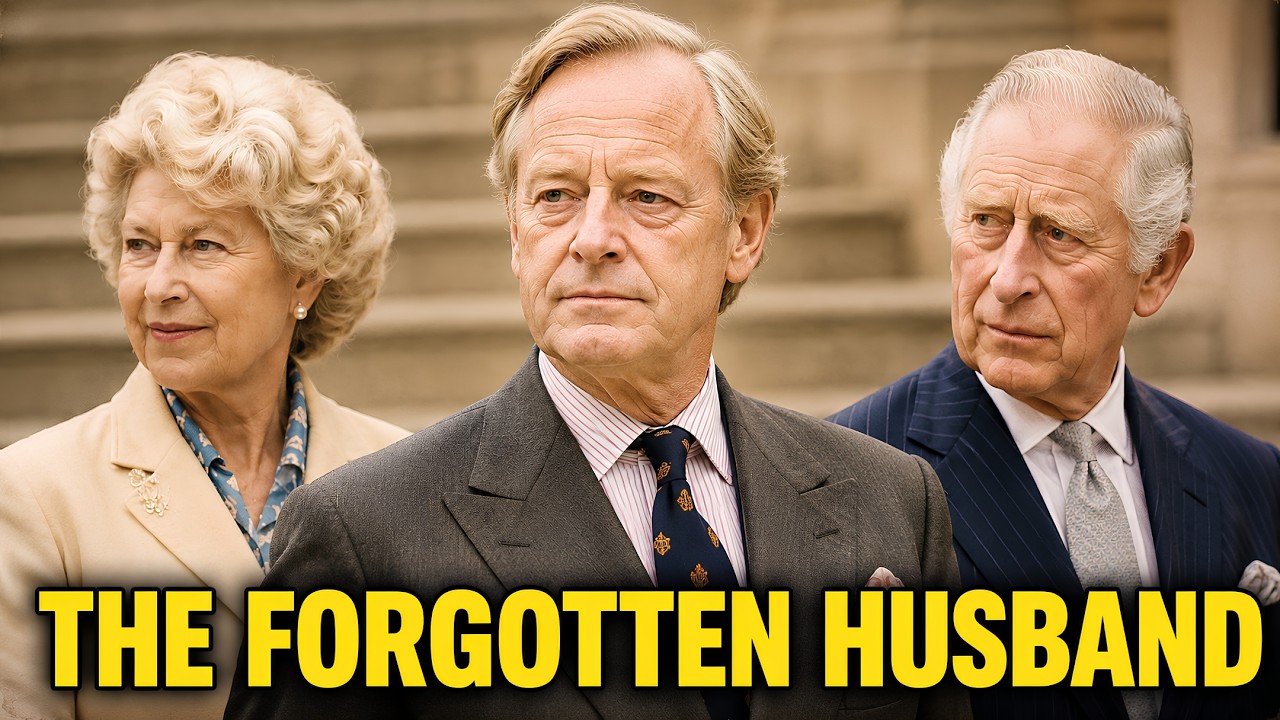
The most famous royal triangle of the late 20th century is usually shown with three faces: Charles, Diana, and Camilla. Yet for more than 20 years, Camilla had a husband. Andrew Parker Bowles shared a home, children, friends, and an entire social world with her, then remained connected to that world after their marriage ended.
For decades, the public has asked what he understood, how he responded, and why he said so little. Andrew has never supplied the complete personal account that many headlines now pretend he has given. His reserve has allowed competing portraits to take his place.
One presents a humiliated husband watching the future king enter his marriage. Another reduces him to an unfaithful aristocrat who had surrendered any right to feel injured. A third imagines that everyone involved followed a private arrangement understood within their class.
Each version turns a difficult marriage into a clean verdict. Andrew’s own public words do not fully confirm any of them.
What the public record gives us is less theatrical, but more revealing. Andrew and Camilla married in 1973. They had two children.
Their marriage lasted more than 20 years. By the time they announced their divorce in January 1995, they said they had already lived separately for two years, had grown apart, and retained little in common beyond their children and a lasting friendship.
The statement was controlled, mutual, and free of accusation. It is tempting to treat that language as a polite screen placed over a scandal everyone already understood. By 1995, the relationship between Charles and Camilla had become a matter of international attention.
An alleged private telephone conversation had been published. Charles had spoken publicly about his marital unfaithfulness.
Yet the official statement did not name Charles. It described distance, different interests, separate lives, children, and friendship. The restraint of that statement is the center of Andrew Parker Bowles’s story.
It shows a couple choosing to describe the end through separation rather than public accusation. It cannot tell us whether Andrew felt betrayed, resigned, relieved, or some mixture of all three.
To understand why the language was so controlled, we have to return to the world in which the marriage began. Andrew Parker Bowles did not enter royal society through Camilla. He was already part of a small interconnected establishment in which families, regiments, horses, country houses, and royal service repeatedly brought the same people together.
His father, Derek Parker Bowles, was close to royal circles. Andrew himself served in the army and moved comfortably among people connected to the Household Cavalry and the royal family. The monarchy was not a distant spectacle to him.
It was part of the social landscape in which he had grown up.
This matters because modern retellings often make Andrew look like an ordinary husband suddenly confronted by a prince. He was not ordinary in that sense, and Charles was not an unknown intruder. The men belonged to overlapping circles.
They shared interests, acquaintances, and institutions.
Andrew and Camilla Shand had known each other for years before marrying. Royal biographies generally describe the courtship as long and unsettled, with periods when the relationship appeared uncertain. Charles also became close to Camilla before the wedding, but later dramatizations often arrange these connections as if every choice had been planned in advance.
The record supports something less tidy. An established bond between Camilla and Andrew, interruptions and complications within it, and Charles becoming emotionally important during one of those unsettled periods. None of that proves Camilla married Andrew merely because Charles was unavailable, and it would be equally misleading to remove Charles from the background altogether.
On the 4th of July, 1973, Camilla Shand married Major Andrew Parker Bowles at the Guards Chapel in London. It was a large society wedding attended by members of the royal family and by many of the families who formed the couple’s world. In the photographs, Andrew stands in uniform beside Camilla.
Nothing in that public scene suggested that the marriage would one day be remembered mainly through her relationship with another man.
Their first child, Thomas Henry, known as Tom, was born in 1974. Their daughter, Laura Rose, followed in 1978. Those births are not incidental details.
They show Andrew and Camilla moving from courtship and ceremony into the ordinary commitments of parenthood. Tom and Laura were the center of a real family, not symbols placed inside a royal scandal.
When the marriage finally ended, Andrew and Camilla’s joint statement named their children as one of the bonds that remained. Romantic feeling could change, but parenthood could not be dissolved by a decree. Their relationship as husband and wife ended.
Their shared responsibility for Tom and Laura continued.
The family lived within a world shaped by Andrew’s military career, Camilla’s country interests, horses, hunting, friends, and social obligations. None of that proves the marriage was happy in a simple or continuous way. It does show that more than 20 years cannot honestly be described as nothing but a cover story.
Andrew’s own reported conduct complicates the easy image of a wholly innocent husband. Several royal biographies have alleged that he was unfaithful during the marriage, and some have portrayed those relationships as part of its wider emotional climate. Andrew has not offered a detailed public response to those accounts, so they should not be treated as a confession in his own words.
From there, another label often appears: open marriage. It is attractive because it seems to solve every contradiction at once. If Andrew and Camilla had an open marriage, his silence becomes permission.
Her relationship with Charles becomes part of an arrangement. And their later friendliness requires no explanation.
But neither Andrew nor Camilla publicly confirmed a formal agreement of that kind. The label converts inference into fact. Andrew’s reserve made the uncertainty easier to fill with assumption.
He never became the public narrator of the marriage, published a memoir about Camilla, or sat for a major interview describing his reaction to Charles.
In the absence of that account, observers treated his later conduct as evidence of his earlier feelings. His refusal to attack Camilla became proof that he approved. His continued friendship became proof that he had never been hurt.
His place within the same social circle became proof of a private agreement. None of those conclusions necessarily follows.
The question of when Charles returned to the center of Camilla’s emotional life is difficult because published accounts do not agree on every detail. Jonathan Dimbleby’s authorized biography of Charles placed the renewal of their affair in the middle of the 1980s, while other writers have argued for earlier periods. The exact private timeline has never been settled by a complete record from all four people whose marriages were affected.
For Andrew, this is where public curiosity becomes most intense. What did he know? By the early 1990s, complete ignorance had become increasingly difficult to imagine.
Charles and Camilla had a long-standing friendship, belonged to the same small network, and were the subject of growing rumor.
Yet even a reasonable assumption that Andrew knew something cannot tell us exactly what he knew, when he knew it, or how he understood it. Knowledge is not a single switch that moves from darkness to certainty. Andrew might have known of emotional closeness before knowing the full nature of the relationship.
He might have suspected, received reports, confronted Camilla privately, or chosen not to demand answers that would alter the lives of their children.
It also cannot tell us what Andrew believed he could realistically change. The man involved was the Prince of Wales, not an unknown rival who could simply be removed from the family’s world. Charles belonged to the same social network and occupied a position above Andrew in the national hierarchy.
That imbalance did not make Andrew powerless, but it made any confrontation unusually complicated.
The private telephone conversation between Charles and Camilla, recorded in 1989 and published in 1993, changed the scale of the story. What had circulated through rumor was suddenly presented to millions in intimate language. The recording appeared after the formal separation of Charles and Diana and intensified scrutiny of Camilla.
Andrew’s marriage was no longer being discussed only inside a private social circle. It had become part of an international scandal. Newspapers invited Andrew to occupy the role of the insulted man and to respond with anger, accusation, or revenge.
He supplied none of it. There was no televised denunciation, no memoir rushed into print, and no campaign to claim the public sympathy that might easily have been available to him.
By this stage, the Parker Bowles marriage had already changed in practical terms. Their later joint statement said they had lived apart for two years before seeking divorce, which places their separate lives around the period when the scandal surrounding the alleged tape reached its height. The timing invites interpretation, but it does not establish a single cause.
Then came Charles’s televised interview in 1994. Asked whether he had been faithful during his marriage, Charles replied that he had been until the marriage had become irretrievably broken down. In context, the answer was widely understood as an admission of adultery.
The authorized biography published around the same period identified Camilla as the central relationship renewed after the royal marriage had failed.
For Andrew, another fact mattered. The Prince of Wales had now spoken publicly about conduct involving a married woman widely understood to be Camilla. Still, Andrew did not step forward with his own version.
That continued silence explains why modern headlines so often promise that Andrew has at last revealed everything.
Viewers still want to hear whether he confronted Charles, whether Camilla asked for freedom, whether the children understood what was happening, and whether the marriage had already become a formality. A headline claiming that he has finally spoken appears to close every gap at once. The original interview required to support that promise does not exist.
What appears online is usually a reconstruction assembled from old biographies, newspaper reports, public events, and speculation. Those materials can help establish a timeline. They cannot be turned into Andrew’s personal testimony.
His missing account is not an inconvenience to be written around. It is one of the most important truths in the story.
What happened next is documented. On the 10th of January 1995, lawyers for Andrew and Camilla released a joint statement announcing that they intended to seek a divorce. The decision, they said, had been taken together and remained a private matter.
Throughout the marriage, they had followed rather different interests, and in recent years, they had led completely separate lives.
The most striking part came in the sentence that followed. Apart from their children and a lasting friendship, the couple said there was little of common interest between them. The words were restrained, but not empty.
They described a marriage whose shared daily center had disappeared, while two important bonds remained: parenthood and friendship.
The statement named no offender. It did not mention Charles, Diana, the published recording, adultery, humiliation, or betrayal. Nor did it claim that Andrew had forgiven Camilla or that Camilla had been abandoned by Andrew.
The language gave the public a description of the marriage at its end, not a moral verdict on every event that had brought it there.
The divorce was completed in 1995. Andrew remarried the following year, choosing a life with Rosemary Pitman that lasted until her death in 2010. That part of his story matters.
He was not frozen forever as the husband standing outside Charles and Camilla’s relationship. He built another marriage, continued his military and social life, and refused to let the royal scandal become his only identity.
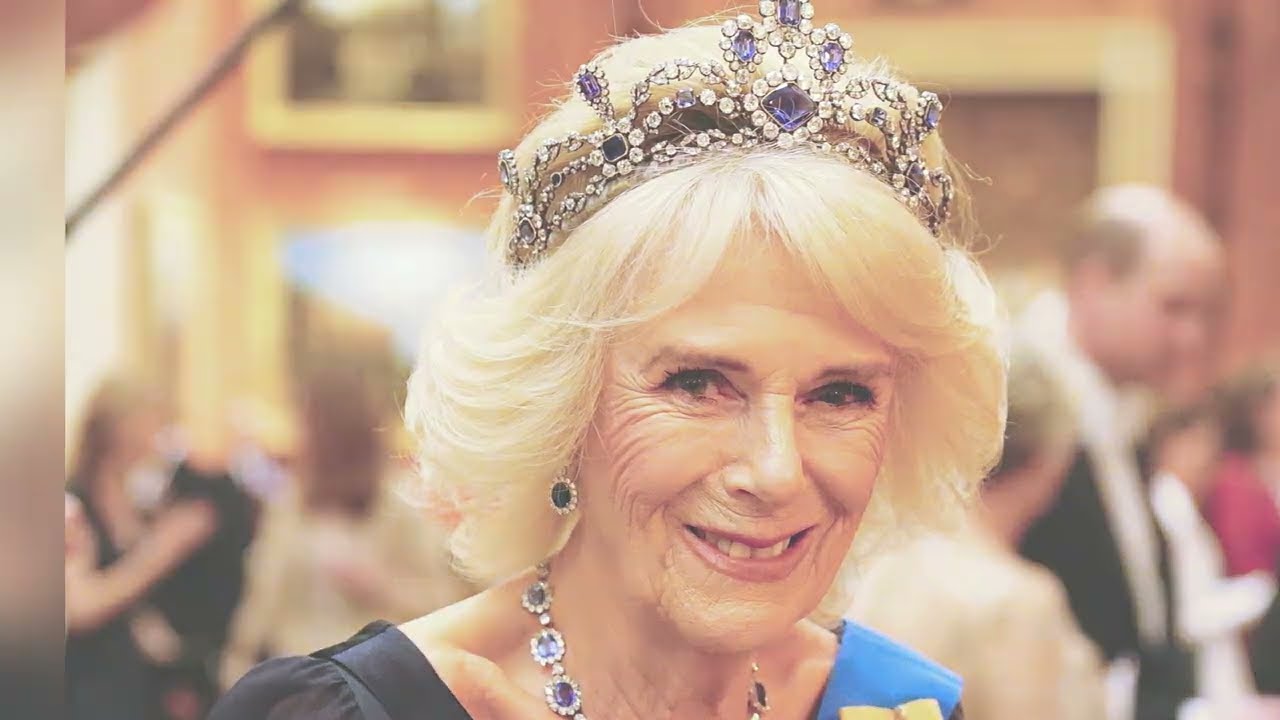
Ten years after the divorce, Andrew entered Windsor Guildhall for the civil wedding of Charles and Camilla, and later attended the service of blessing. The image was almost impossible to separate from the history behind it. Camilla’s former husband present as she married the man whose relationship with her had overshadowed both of their first marriages.
Yet Andrew arrived without staging a public drama. Once again, his behavior invited interpretation while his private reasoning remained his own. His attendance is sometimes presented as proof that everything had always been accepted.
It proves much less than that. A decade had passed. Andrew had remarried.
Tom and Laura were adults, and their mother was formalizing a relationship that had long shaped their families’ public life.
The same caution applies to later family events. Camilla attended a memorial service for Andrew’s second wife, Rosemary, and the former spouses continued to appear within overlapping family and social circles. Their ease in public is consistent with the lasting friendship named in the divorce statement.
It does not prove that the marriage had been painless or that an arrangement had existed from the beginning.
Andrew and Camilla shared more than a romantic history. They shared children, grandchildren, friends, equestrian interests, memories, and networks formed long before either divorce. To cut off one another completely would also have required cutting through many other relationships.
The Parker Bowles family also became linked to Charles in a way no divorce could undo. Charles was Tom Parker Bowles’s godfather long before he became his stepfather. Tom and Laura later stood within the blended family surrounding Charles and Camilla’s marriage, while Andrew remained their father.
The marriage ended. The network of relationships built around it survived. Andrew may have experienced injury, embarrassment, anger, or relief.
The record does not authorize us to choose one emotion and declare it complete.
The public exposure surrounding Charles and Camilla could hardly have been easy for any husband. At the same time, the allegations about Andrew’s own affairs prevent a simple portrait of a blameless man whose marriage was destroyed entirely from outside. He was not merely passive.
Andrew helped maintain the family structure for years, raised two children, agreed to a restrained divorce statement, remarried, and continued to take part in family occasions. Those were choices. They do not show that he approved Camilla’s relationship with Charles, but they do show a man making decisions about how much of his private life he was willing to surrender to the public.
His class and military background may also have shaped those decisions. The world around Andrew valued discretion, continuity, duty, and the management of embarrassment behind closed doors. That culture could encourage people to preserve appearances long after emotional intimacy had weakened.

It still cannot tell us whether Andrew’s composure came easily, followed painful confrontation, or simply represented the least damaging option available.
The fairest description is neither saint nor accomplice. Andrew had agency inside circumstances he did not fully control. He could choose silence, divorce, remarriage, and later civility.
He could not control the prince’s position, the appetite of the press, Camilla’s feelings, or the way future generations would turn his marriage into part of a royal legend.
Reducing Andrew to a victim turns Camilla into the single cause of every failure and ignores the more complicated accounts of his own behavior. Calling him complicit converts silence into consent. Calling him indifferent mistakes a controlled public manner for a complete emotional life.
Each label offers clarity at the cost of evidence.
The marriage deserves the same fairness. It was not merely a facade because more than 20 years of family life, two children, and a continuing bond cannot honestly be dismissed as theater. It may not have been conventionally faithful because several biographies describe relationships outside it.
It should not be called an open marriage as established fact because Andrew and Camilla never publicly confirmed such an agreement.
Sensational retellings often miss why a marriage may continue long after its emotional center has weakened. Children are young, lives are intertwined, routines are established, and separation would affect far more than two adults. Staying does not always mean happiness.
Leaving does not always mean hatred. Friendship after divorce does not prove that the years before it were painless.
The easier story offers an elderly Andrew finally naming the betrayal, the secret agreement, or the single reason he walked away. The documented story offers no such release. It shows a man who was present at the center of a famous scandal, but declined to perform his pain, guilt, or anger for strangers.
His silence forces us to read the marriage rather than invent the missing interview. We see a long courtship ending in a major wedding, two children, more than 20 years of family life, biographical accounts alleging relationships outside the marriage, and a bond between Charles and Camilla that eventually became impossible to keep outside public view.
The timing remains important. Charles’s public admission came in 1994. Andrew and Camilla announced their divorce in January 1995.
That sequence naturally encourages the belief that one event directly caused the other. It may have accelerated the formal ending or made continued marriage more difficult. Yet the couple placed their practical separation two years earlier, reminding us that the private breakdown and the public climax were not necessarily the same moment.
After the divorce, Andrew followed the same instinct he had shown during the scandal. He did not try to compete with Charles for sympathy or sell Camilla’s private life. That restraint protected his privacy, but it may also have protected Tom and Laura from being forced to choose between public versions of their parents.
Public victimhood can become a permanent identity. Had he spent decades retelling how Camilla and Charles affected him, every later appearance would have been measured against that grievance. By refusing the role, he remained a soldier, father, husband, friend, and equestrian figure, rather than only the discarded man in a royal triangle.
Camilla’s later rise makes the first marriage feel even more striking in retrospect. The woman who married Andrew at the Guards Chapel became Charles’s wife more than 30 years later and eventually queen. At the wedding in 2005, Andrew stood among the guests while the relationship that had cast a shadow over both first marriages became lawful and public.
Some viewers read that scene as extraordinary forgiveness. Others treated it as confirmation that everyone had accepted the situation from the beginning. The photograph cannot prove either conclusion.
It shows Andrew present, composed, and willing to take part in a day important to his former wife and their children. It cannot show the private road by which he reached that decision.
What the moment does reveal is Andrew’s refusal to let an old role dictate every later choice. Accepting a settled reality is not the same as approving every act that produced it. Camilla remained Tom and Laura’s mother.
Charles had become part of their family structure. Andrew had another marriage and another life.
The social network surrounding them made total separation unlikely. Royal and aristocratic Britain brought the same people together at family ceremonies, memorials, regimental occasions, equestrian events, and gatherings shaped by mutual friends. In a different world, former spouses might never meet again.
Andrew and Camilla belonged to a circle in which the past continually returned through other people.
To outsiders, that continuity can look cold, as though good manners replaced feeling. It may have been the means by which feeling was managed. Courtesy prevented every family gathering from becoming a battle.
Shared rituals allowed children and later grandchildren to belong to both sides. Silence stopped each encounter from re-opening the scandal before an audience.
There was a cost. Because Andrew withheld explanation, other people supplied it for him. He has been described as weak, calculating, tolerant, humiliated, liberated, indifferent, and complicit.
The labels reveal the public’s need for a simple answer more clearly than they reveal Andrew. A private life can contain contradictions that a headline cannot hold.
The divorce statement remains the closest thing to his public answer. Andrew and Camilla said they had followed different interests, grown apart, and led separate lives. They preserved their children and a lasting friendship as the bonds that remained.
The explanation was narrow by design. It described the condition of the marriage without naming one person as the cause of its collapse.
Long marriages rarely end because of one event alone. Infidelity may have mattered. Public humiliation may have mattered.
Separate interests, different temperaments, military absences, Camilla’s bond with Charles, Andrew’s reported relationships, and years of accumulated distance may all have shaped the ending. The joint statement refused to rank those forces, and no later interview from Andrew has done so.
Later friendliness should not be used to erase possible harm. Former spouses can choose peace because continued war would damage their children. They can forgive without approving, accept without forgetting, and move forward without reaching the same interpretation of the past.
Andrew’s later conduct tells us how he behaved after the divorce. It cannot reveal every feeling he carried before it.
Camilla should not be made solely responsible for every crack in the marriage. Andrew’s reported conduct belongs to the account, though it must remain attributed to biographies rather than presented as his confession. Charles’s choices belong to it.
The habits of their social world belong to it. The first marriage appears to have contained weaknesses before Charles became its most famous problem.
Diana’s marriage formed the other side of the story, but it should not swallow Andrew’s. Charles’s claim that his affair began only after his marriage had become irretrievably broken remains one of the most disputed parts of the royal narrative. Diana’s suffering deserves its own full account.
Here, it matters because Andrew was the husband on the other side of the same relationship, living through a scandal that history usually frames without him.
Seen from Andrew’s position, the familiar triangle becomes two marriages joined by one enduring bond. Four adults had public and private lives that overlapped, failed, and continued in different forms. Children stood inside both households.
Friends moved between them. The press turned intimate events into national evidence. No single person controlled the whole structure.
Andrew’s story asks a deeper question than who loved whom. What happens when love, marriage, duty, and family no longer point in the same direction? How long can a household continue after its emotional center is moved?
What does silence protect and what does it conceal? What survives when a divorce ends the legal bond but not the human network around it?
The public record gives firm answers only at the edges. Andrew and Camilla married in 1973, became parents to Tom and Laura, remained married for more than 20 years, and lived separately for two years before announcing divorce. Their statement acknowledged that little still united their daily lives beyond their children and friendship.
The marriage was dissolved in 1995, and Andrew remarried the following year. The record also shows that the family relationship survived. Andrew attended Charles and Camilla’s wedding.
Camilla attended a memorial service for Rosemary. The former spouses continue to appear within overlapping family and social circles. Those actions support the existence of continued friendship.
They do not reveal a secret pact or prove that no one had been hurt.
What Andrew knew remains partly hidden. By the time Charles spoke publicly in 1994, the affair had become part of the national conversation. That does not tell us when Andrew first understood its full nature, what Camilla told him, whether he confronted Charles, or how the family handled the matter privately.
Knowledge, acceptance, and permission are not interchangeable.
Why did he remain silent? The honest answer is that the public does not know. His background and later choices suggest a strong preference for discretion and continuity.
He may have believed confrontation would damage his children and achieve little. His own reported conduct may have made public accusation difficult. He may simply have believed that the failure of a marriage did not belong to strangers.
Why did they divorce? Their statements supplied the only joint answer they chose to give. Different interests, separate lives, distance, children, and friendship.
Charles’s admission formed part of the immediate public background, but the couple said their practical separation had begun earlier. Any claim to know one hidden reason must be presented as interpretation, not Andrew’s revelation.
Was the marriage real? Yes. It lasted more than two decades, produced two children, and created a family whose connections continued after divorce.
Real does not mean continuously happy or conventionally faithful. It means the marriage cannot be dismissed as an empty stage set simply because Camilla became queen beside another man.
Was Andrew innocent? The evidence does not support an uncomplicated verdict. Did he authorize Camilla’s affair or reach an agreement with Charles?
No reliable evidence establishes that. What his public life does show is adaptation. He ended one marriage, built another, preserved ties to his children and former wife, and refused to make a royal scandal the sole definition of his life.
The most revealing part of Andrew’s story may be that he did not disappear. Tom and Laura carried both parents into the future. Weddings, funerals, mutual friends, horses, military connections, and later grandchildren kept the old network alive.
Divorce changed Andrew and Camilla’s legal relationship. It could not divide the decades they had already shared.
Camilla left the marriage, but she did not leave the father of her children outside her life forever. Andrew left it, too, moving into a second marriage while remaining connected to the family he had formed with her. Both entered different futures and continued to share a past that could not be separated into clean opposing sides.
The public wanted Andrew to choose a recognizable role: accuser, victim, accomplice, or defender. He chose none of them. His silence denied the audience the confrontation it expected, but it also preserved something that scandal usually destroys.
The possibility that the family could continue without every private wound becoming public property.
That choice gave Andrew a limited form of control. The world could discuss his marriage, interpret his attendance at a wedding, and speculate about what he had known. It could not honestly quote the confession it wanted.
It could not prove a hidden agreement simply because he remained civil. And it could not turn a missing interview into evidence.
The story therefore ends with a boundary rather than a secret. Andrew and Camilla told the public that they had grown apart, lived separately, and retained children and friendship. Biographers can add context, journalists can reconstruct public events, and viewers can decide what seems plausible.
None can replace the private account Andrew never gave.
That is why he remains compelling. Charles and Diana both spoke publicly about their marriage. Camilla’s place was examined through biographies, recordings, headlines, and eventually a second royal wedding.
Andrew remained beside the story without becoming its narrator. He was visible at its edges, yet the emotional center of his experience remained closed.
He may have been hurt, pragmatic, relieved, angry, or all of those at different times. He may have understood more than he wished to acknowledge publicly. He may also have lived by rules that made open emotion seem more dangerous than private compromise.
The record permits those possibilities. It does not allow any one of them to be announced as his final confession.
What can be said with confidence is already powerful. Andrew Parker Bowles married Camilla in 1973. Together they raised Tom and Laura.
Their marriage lasted more than 20 years and had become physically separate before they sought divorce. They ended it without public accusation, preserved a lasting friendship in their statement, and continued to share a family network afterward.
The husband forgotten by the royal triangle was never fully erased by it. Andrew stood outside the center of the public story while remaining connected to almost everyone inside it. The marriage ended, but his relationship to the children, the social circle, and the history continued.
That is not proof of a secret arrangement. It is evidence that family ties can survive in forms the public finds difficult to classify.