Rosalyn Teresa Ooa was twenty-six years old, a paralegal at a small law firm in Santa Fe, New Mexico. On December 14, 1988, a Wednesday evening, she left her office and never arrived home. Three weeks earlier, she had written a man’s name in her blue hardcover diary. Not as an accusation.
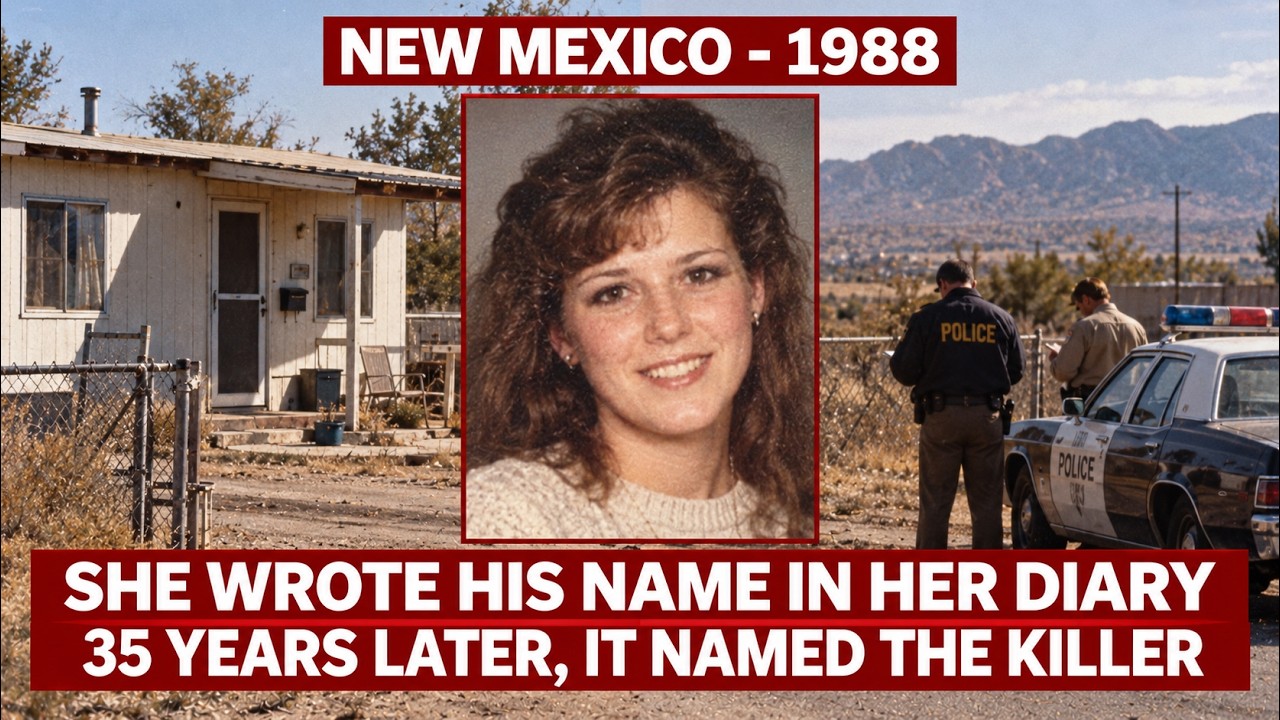
She wrote it the way people write names in diaries, embedded in the record of a Thursday evening that had felt wrong in a way she could not quite describe. He had come by her apartment again, unannounced, after she had asked him not to. He had stood in her doorway for a long time without saying why he was there. Something about the way he looked at her made her want to lock the door after he left.
She did lock it. Then she felt guilty, because maybe she was misreading the situation. Maybe she was being unfair. She was not being unfair.
Santa Fe in 1988 was a city of about fifty thousand people in the high desert of north-central New Mexico. The art galleries and adobe architecture sat alongside a working legal and government community as practical as any in the Mountain West. The firm where Rosalyn worked handled property disputes and estate matters for clients across the county. It was not a glamorous job, but it was a good one, and she was good at it, organized, thorough, and possessed of the kind of quiet authority that comes from knowing a body of knowledge well enough to navigate it for people who are frightened.
She had grown up in Albuquerque, the younger of two daughters in a family with four generations in New Mexico. Her father worked for the state transportation department. Her mother taught elementary school for thirty years. Rosalyn had studied political science at the University of New Mexico, discovered law as a vocation rather than a surprise, and taken the paralegal position in Santa Fe in 1986 while preparing her law school applications.
She was going to be a lawyer. She had been accepted to one program and was waiting to hear from two others. Her application essay was about land rights in Native American communities in the Southwest. Her mother kept a photocopy of it in the same box that held the diary.
The man whose name Rosalyn wrote in her diary was a client of the firm. He had come in for an estate consultation and then returned twice more on the stated pretext of additional questions. Both visits were brief and without clear purpose. He began appearing at places she frequented without obvious reason.
He came to her apartment twice without being invited. She asked him not to come again. He nodded and left and then came back. She wrote about the second unannounced visit three weeks before she disappeared, using the careful language of someone trying to talk herself out of a fear she could feel but could not name.
She wrote that she was probably overreacting. She wrote his name. The Santa Fe Police Department took her disappearance seriously from the first day. She had a regular life, a regular route, a consistent routine interrupted without explanation.
The people who knew her were categorical that she would not have gone anywhere without telling someone. The diary was read within days, and the entry was noted. The man named in it was interviewed within the first week. He stated that on the evening of December 14, he had been at dinner with three other people at a restaurant in the Guadalupe district of Santa Fe.
All three confirmed his presence. Restaurant records were consistent with the account. He was cooperative and visibly distressed at the news of her disappearance. He was eliminated from the active suspect list.
Other leads were pursued and exhausted over the next two years. In March of 1989, hikers found Rosalyn’s body in a dry arroyo north of the city, about eight miles from her apartment in a direction inconsistent with any route she would have taken voluntarily. She had been strangled. The discovery closed the missing person aspect and opened a homicide investigation.
The man whose name was in the diary was interviewed again. His alibi held. By 1995, the case was cold. The diary stayed in a box in a closet in Albuquerque, in Rosalyn’s mother’s house, for thirty-five years.
The family could not bring themselves to read it, and could not bring themselves to throw it away. In 2023, Rosalyn’s mother gave the box to investigators from the New Mexico Department of Public Safety’s cold case unit. Inside, along with the diary, were notes from conversations with detectives, clippings from the Santa Fe New Mexican, and a letter from the original investigating officer written in 1992 saying the case was still active and that they had not forgotten. The detective assigned to the file was Lieutenant Angela Rivas, who had spent twelve years in the cold case unit and had developed a specific methodology for cases where documentary evidence had been assessed in one investigative era and never reassessed when the surrounding picture changed.
In January 2023, she read the diary. She read the entry from three weeks before Rosalyn’s disappearance. She noted the name. She noted that the man had been interviewed twice and eliminated on the basis of alibi corroboration.
Then she cross-referenced the alibi against the records of the three corroborating individuals. Two were still living and accessible. In February 2023, one of the two living corroborators said something she had not expected. He said he had not actually been at dinner with the man on the evening of December 14, 1988.
He said he had told investigators that he had been because the man had called him before the police did, and asked him to confirm it. They had been friends. He had been twenty-four years old. He had not understood what he was being asked to cover for.
He had been frightened of saying no to someone asking with that much urgency in his voice. He had been carrying that lie for thirty-five years. Rivas assembled a new package from the recantation, the diary entry, forensic genealogy analysis of biological material recovered when Rosalyn’s body was found, and the full documentary record. The man named in the diary was arrested in April of 2023.
He was seventy-one years old. He denied everything. The recanted alibi testimony, the diary, and the forensic genealogy evidence went before a grand jury, which returned an indictment for first-degree murder. Rosalyn’s mother was eighty years old when Rivas called to explain what the investigation had found.
She sat with the information for a long time. Then she said she knew. She wrote it down. She knew.
She kept the box for thirty-five years without opening it, because she could not bring herself to read her daughter’s handwriting about the weeks before she died, and because she could not throw it away. She gave it to investigators because the time finally came to give it to someone who could do something with it. The most important piece of evidence in the case had been in a closet in Albuquerque the entire time, held by a grieving mother who understood without knowing why that it mattered. The corroborator who recanted has not been charged with any crime.
His testimony was accepted as a statement against a prior position, given voluntarily without an immunity arrangement. In a recorded interview, he said he had spent thirty-five years knowing that a woman had died, and that in one phone call before the police arrived, he had helped the person responsible avoid the immediate consequences of what he had done. He said he had not known she would be found dead in March. When she was, he understood what he had done, and did not know what to do about it, and decided to do nothing.
He made that decision again every year for thirty-five years. He is now seventy years old. He made that decision at twenty-four. Rivas has said in interviews that the case represents a type of cold case under-represented in discussions of forensic methodology, one where the documentary evidence was always present and always correct, but where the early closure of a suspect through alibi corroboration foreclosed any return to the record.
The diary had been read. The name had been noted. The man had been interviewed and eliminated. Every element of the documentary foundation had existed in 1988.
What changed in 2023 was not the availability of new evidence. What changed was that a detective with a methodology of revisiting alibi foundations decades later had been assigned to the file, and that one of the original corroborators was still alive and had been carrying the weight of a thirty-five-year-old lie long enough to be willing to put it down. The trial is pending. The diary has been entered into evidence.
Rosalyn’s handwriting is exhibit number one. The man who provided the false alibi has made a public statement through an attorney, saying he regrets his action and is cooperating fully with the prosecution. Rosalyn’s mother has attended every hearing. She says she has one thing to focus on, and that one thing is her daughter.
Rosalyn Teresa Ooa wrote the name herself, in her own hand, three weeks before she died. She was not overreacting, and she was not being unfair. She was a twenty-six-year-old woman with a name and a fear and a blue hardcover journal, and the specific foresight of someone who understood that the record might matter later.
It took thirty-five years, but it mattered.