For fifty years, a pale house hidden deep inside Windsor Great Park belonged to a widowed queen who loved it more than any palace and died within its walls at the age of one hundred and one. Royal Lodge was never a palace and never tried to be. It sat back among its own gardens and woods, some thirty rooms and nearly a hundred acres of private park, screened from the world by the trees. It was built to be a place where a royal family could stop being watched.
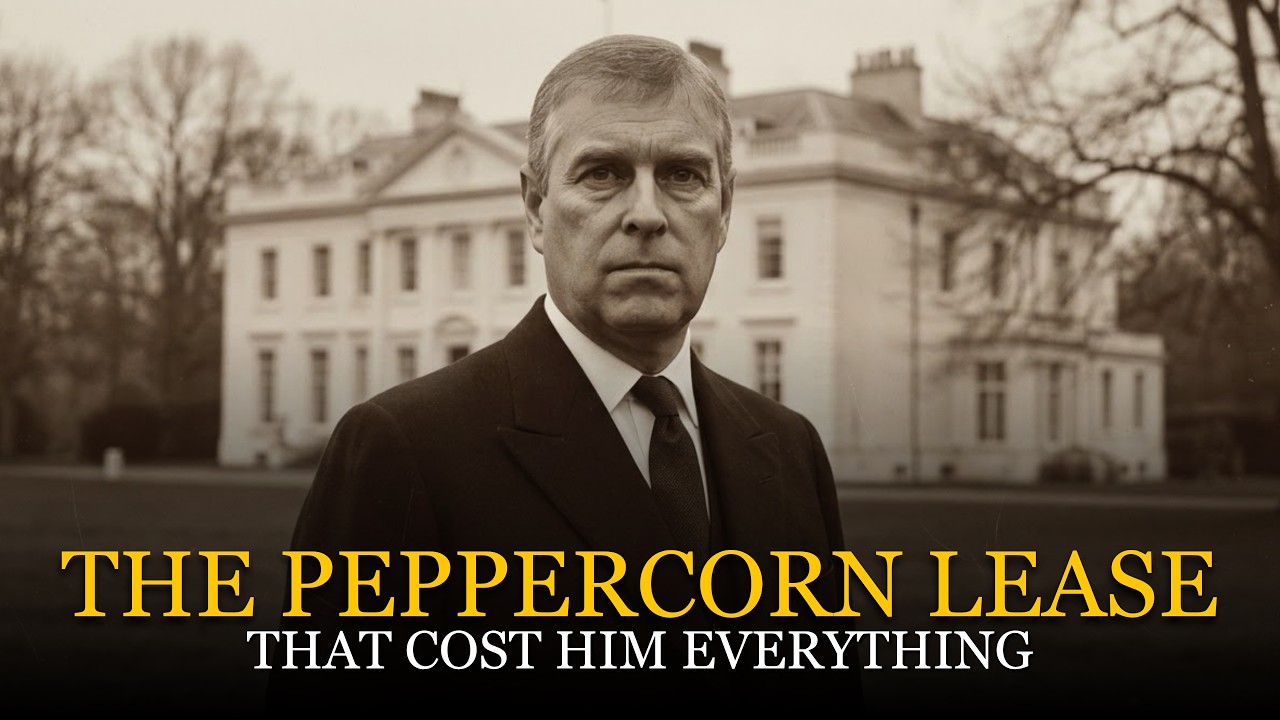
Its history stretched back to the mid-1600s, when a working lodge on the site served the park’s dairy and estate business under plain names like the Lower Lodge and the Dairy Lodge. Grandeur arrived in 1812, when the Prince Regent, soon to become King George IV, enlarged the modest building into a royal cottage and gave it the name it still carries. A chapel, the Royal Chapel of All Saints, was raised beside it around 1825. When William IV came to the throne in 1830, he ordered much of the house pulled down and rebuilt closer to the form recognized today.
For the following century it served mainly as quarters for royal household staff until, in 1931, King George V gave the house to the Duke and Duchess of York as a country retreat. The couple enlarged it with new wings, developed the grounds, and in 1932 received a gift from the people of Wales: a child-sized cottage named Y Bwthyn Bach, the little house, set up as a playhouse for Princess Elizabeth and Princess Margaret and still standing in the grounds today. The abdication crisis of 1936 unexpectedly raised the Duke of York to the throne as King George VI, but the family never let Royal Lodge go. After the king died in 1952, his widow turned to the pale house that had been the happiest setting of her married life.
For half a century she filled it with a quiet rhythm of ordinary days lived in extraordinary surroundings, the Sunday walks to the chapel, the gardens worked through every season, the memory of her husband held room by room. She never owned the house outright, but she made it hers by loving it and living in it well. On the 30th of March 2002, Queen Elizabeth the Queen Mother died at Royal Lodge at the age of one hundred and one, and the house she left behind had become the most beloved private royal home in Britain. Her grandson, Prince Andrew, the Duke of York, wanted that house very much.
In 2002 he stood near the height of his standing, a decorated Royal Navy helicopter pilot who had flown in the Falklands campaign, a working royal who served as a trade envoy and carried out public duties. In 2003, an arrangement was made with the Crown Estate to grant him a lease on Royal Lodge. After a major renovation, he moved in during 2004. The terms of the lease were extraordinary.
It ran for seventy-five years, all the way to 2078, practically a lifetime. For this, Andrew made a single lump sum payment of one million pounds. The rent set down in the lease was one peppercorn a year if demanded, a token payment from an old device in English law meaning that in real terms he paid no rent at all. In exchange, he took on the cost of maintaining the house to a high standard, repainting the exterior every five years and redecorating the interior every seven.
The lease also protected him: he could not be evicted before it expired, and if he surrendered it early within the first twenty-five years, he would be entitled to compensation for what he had put into the house. The renovation itself cost more than seven million pounds, bringing his total outlay to roughly eight and a half million pounds of his own money. The scandal that destroyed him did not come from the house or from money. It came from a friendship he had chosen years earlier with the financier Jeffrey Epstein, later convicted as a sex offender.
A woman named Virginia Giuffre accused Andrew of sexual assault, an accusation bound up with Epstein’s crimes. Andrew consistently and firmly denied the accusation, but the documented fact of the friendship itself was ruinous for a working prince whose entire value rested on public respect. The association followed him home to Royal Lodge and settled over the pale house like a cloud that would not lift. In November 2019, Andrew agreed to a long on-record television interview about the scandal, believing he could clear the air.
The broadcast was judged almost universally a disaster. Within days he announced he was stepping back from public duties, withdrawing from the working life that had justified his privileges, the house among them. In January 2022 his honorary military affiliations and royal patronages were returned to the Queen, and shortly afterward he reached a civil settlement with Giuffre without any admission of liability. Yet he still lived in Royal Lodge on his seventy-five-year lease and his peppercorn rent, refusing to leave while the pressure mounted around him.
The year 2025 changed everything. In April, Virginia Giuffre died, sharpening the world’s attention on the man she had named. Further material connected to the Epstein affair emerged, including reporting of an email that appeared to contradict Andrew’s account of when he had cut off contact with Epstein. The public mood hardened past the point of mercy, and the monarchy, which had long weighed the embarrassment of keeping him against the difficulty of forcing him out, finally crossed the line.
The king himself made the decisive move. On the 17th of October 2025, Andrew announced he would no longer use his titles and honors, still denying the allegations. Thirteen days later, on the 30th of October, it was announced that King Charles III would formally remove his brother’s royal titles and royal style. Andrew would no longer be a prince.
He would be known as Andrew Mountbatten-Windsor, and he would be required to leave Royal Lodge. On the 2nd of December, the London Gazette published the notice cancelling his remaining honors, the knighthood of the Order of the Garter and the Knight Grand Cross of the Royal Victorian Order. The prince who had been born to the title, who had carried the dukedom his own grandfather once held, was stripped of everything in a single season. The surrender of the house followed.
Andrew gave twelve months’ notice, setting the end of the lease for the 30th of October 2026, but he vacated Royal Lodge itself in late October 2025, almost immediately after the decision was announced. He was reported to be relocating to alternative private accommodation on the Sandringham estate, supported by the king rather than paid for from the public purse. The final blow was financial. Under the terms of the lease, Andrew was entitled to compensation for surrendering early, a precise figure of 488,342 pounds and 21 pence.
But the Crown Estate made clear that Royal Lodge had been left in poor condition. It described the thirty-room house with a single unforgiving word: dilapidated. A full assessment of the repairs was required, and once the cost of those repairs was taken into account, Andrew would be owed nothing at all. The compensation was wiped out entirely.
More than eight million pounds spent, more than twenty years lived within the walls, and he left with no title, no honors, no house, and not a penny from the surrender. His daughters, the Princesses Beatrice and Eugenie, inherited nothing from the arrangement either. The questions the affair raised did not leave with him. The correspondence between the prince, his advisers, and the Crown Estate was disclosed, and the National Audit Office and the Public Accounts Committee began scrutinizing how the lease had ever been agreed.
Members of Parliament confronted the peppercorn rent, the one million pound premium, the seventy-five-year term, and asked how such an arrangement had ever been thought reasonable, and whether other such deals sat quietly in other files. Royal Lodge itself stood empty through the winter of 2025, awaiting repairs and a new purpose. The chapel beside it still stood, where the Queen Mother had walked on Sunday mornings across five decades. The little Welsh cottage still stood in the grounds, a fixed point of innocence that had watched a queen grow up and grow old, and a prince disgrace himself, and had outlasted them both.
The comparison between the two keepers tells the whole story. The Queen Mother held no lease and no absolute ownership, yet she belonged to the house and it to her through fifty years of dignity and love. Andrew held the house on paper more securely than almost anyone, and still he never truly belonged to it. Grandeur of this kind is conditional, lent rather than given.
The peppercorn, once a mark of favor, became under daylight a symbol of privilege that could not survive scrutiny. Royal Lodge was not lost to war or taxes or the slow tide of history. It was allowed to decline quietly, year by year, under a keeper who held it by right and neglected it by habit, until the bill for that neglect cancelled out everything he thought he was owed. A house does not belong to whoever holds the keys.
It belongs to whoever proves worthy of it. By that measure, the queen who died in it kept it forever, and the prince who lost it never truly owned it at all.