The image of the Wild West as a place of constant, dramatic violence is one of the most enduring pieces of American mythology. But the historical record tells a very different story. Strict gun laws, surprisingly orderly communities, and long stretches of ordinary daily life rarely make it into Western movies because reality was often less dramatic than the myth. The real math of frontier homicide reveals a far calmer picture.
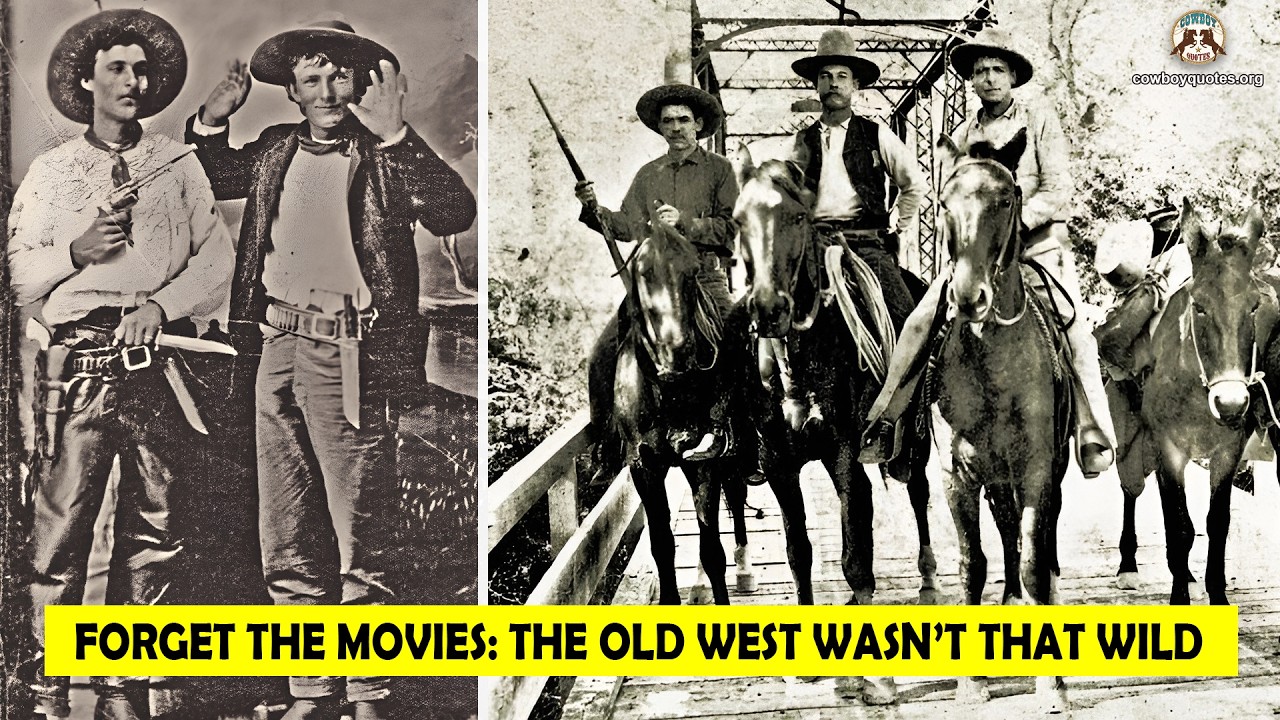
Even with thousands of cowboys passing through towns after long trail drives, five of the most infamous frontier towns combined saw only 45 fatal incidents over 15 years, working out to about three per year across all of them. Dodge City, often portrayed as the most dangerous town of the era, recorded only 15 such incidents across an entire decade as a booming cattle hub, roughly one and a half per year, with some years having none at all. When a serious incident did occur, it was treated as major shocking news precisely because it was so unusual. Tombstone tells a similar story.
Most recorded deaths in these communities were actually due to mining accidents, illness, or disease, not conflict. Comparing homicide rates per 100,000 residents between these frontier towns and larger eastern cities of the same era tells an even clearer story. Although a single incident in a town of only a thousand people can produce a statistically high rate, the actual day-to-day numbers show that residents of towns like Abilene or Tombstone were generally safer than people living in major eastern cities. Most people who moved west weren’t seeking conflict.
The real historical record paints the Wild West as far calmer than its legendary reputation suggests. Local ordinances in many frontier towns restricted anyone besides law enforcement from carrying weapons inside city boundaries. Cowboys arriving after long cattle drives were expected to check their weapons with the sheriff or a hotel clerk before doing anything else, receiving a token to reclaim their gear only when they were ready to leave town. Historical accounts from local papers like the Tombstone Epitaph show that this rule was taken seriously.
Newspapers of the time suggest that many residents supported these restrictions, and those who broke these ordinances typically faced real consequences, including officers moving to address individuals carrying weapons in violation of the rule. So, while popular media often portrays the frontier as a place of constant disorder, the historical record tells a different story. The people who built these towns relied not on constant conflict, but on clear rules, practical enforcement, and a strong desire for order and stability. The image of masked riders storming into a quiet town, bursting into the local bank, filling sacks with gold, and disappearing before the sheriff can react is one of the most repeated storylines in Western storytelling.
But historians who have studied financial and legal records from the era have found that the classic bank heist was actually extremely uncommon and rarely successful when attempted. Banks were typically located near the sheriff’s office, busy shops, or other well-populated buildings, meaning any disturbance would draw attention almost immediately. In one documented case, a gang tried to rob two banks at once, but local citizens quickly recognized them, armed themselves, and moved to defend the town. Most members did not survive the encounter, and the sole survivor was seriously wounded before being taken into custody.
Because towns were so well defended, experienced outlaws generally avoided them. Newspaper archives from papers like the Rocky Mountain News show that criminals more often targeted isolated stagecoaches or train shipments passing through remote areas where fewer people stood between them and their goal and escape. In reality, these institutions were carefully protected, and communities took pride in defending the financial security they represented, making frontier banks some of the more stable and well-guarded parts of western life. This reality makes for dramatic entertainment, but it doesn’t hold up as economic history.
If the frontier had truly operated this way, westward expansion likely wouldn’t have succeeded at all. Historians who have studied period journals, camp bylaws, and legal agreements have found a more encouraging truth: long before federal courts or formal government reached the territories, settlers had to find ways to manage resources fairly among themselves. Rather than resolving disputes through conflict, these communities often organized themselves around shared written rules. When disputes arose, such as over who discovered a resource first, camps often held informal hearings with a jury of peers to reach a decision.
Wagon trains functioned like small traveling communities, often organized under formal agreements before departure. These agreements covered travel order, guard duties, and basic conduct. Water rights, one of the most important resources in the arid West, further demonstrate this pattern. Rather than resorting to conflict over access, settlers developed formal water sharing agreements and cooperative irrigation companies working together to build irrigation systems and share resources according to agreed terms.
This portrait of self-governance extends to the everyday lives of cowboys. The image of a cowboy as a heroic, independent figure living a life of adventure and freedom was largely crafted by later storytellers. But actual diaries, payroll records, and photographs from cattle drives between 1866 and 1886 tell a very different story. The real cowboy’s life was demanding, low-paying, and often repetitive, closer to agricultural labor than adventure.
The demographics of cattle drives may also surprise those familiar mainly with Hollywood depictions. Historians calculate that roughly one in five cowboys were Black men, many of them former slaves who found greater freedom and opportunity in the cattle industry than in the reconstruction-era South. Additionally, a significant number of cowboys were Mexican, particularly in the Southwest, who brought with them the very techniques and tools that made the cattle industry viable. Words like lasso, chaps, and rodeo all come from Spanish.
Native American and white laborers worked alongside them as well. On the trail, practical skill mattered more than background, creating a level of diversity uncommon elsewhere in the country at the time. Daily life on a cattle drive was defined more by exhausting routine than excitement. Even after sunset, work continued, with duties ranging from night-herding cattle to caring for the horses.
The work was hard and the hours were long, with cowboys spending most of their time in the saddle, dealing with dust, extreme weather, and the constant need to keep the herd together. The pay was meager, and the dangers came less from outlaws and more from stampedes, river crossings, and the simple physical toll of the job. At the end of a trail drive, a cowboy might receive his wages, but a significant portion often went to a haircut, a hot bath, clean clothes, and a proper meal after weeks of basic trail food. Wages didn’t last long, and most cowboys soon signed on for another drive out of necessity.
Rather than a glamorous adventure, the cowboy’s life was one of hard, steady work that demanded endurance, cooperation, and patience. The legendary lawmen of the era are also due for a re-examination. We all know the image of the classic frontier lawman, a tall, composed figure of complete integrity, wearing a badge, standing against wrongdoing, motivated purely by justice. Names like Wyatt Earp, Wild Bill Hickok, and Bat Masterson have become part of American folklore, often remembered as flawless heroes.
But the reality of law enforcement in the West was far more complicated. These men were often not paid a regular salary. Instead, they earned a share of collected taxes, fees for serving warrants, and a portion of fines from those they arrested. This fee-based system created real incentives for questionable behavior.
In some cases, lawmen even had financial ties to the very establishments, like saloons and gambling halls, that they were supposed to be policing. Historical records complicate that image. Before becoming a lawman, Earp faced legal trouble in Indian territory in 1871 related to horse theft and left the area before the matter was resolved. Later, while working as a police officer in Wichita, Kansas, he was dismissed following a dispute with a local political figure over town funds.
The well-known confrontation between the Earps and the Clanton-McLaury group at the O. K. Corral is better understood not as a simple standoff between good and bad, but as the result of a tense local rivalry involving political power and business interests. Bat Masterson, another well-known frontier figure, actually spent much of his life working as a gambler and later a sports writer rather than as a lawman.
The badges these men wore weren’t necessarily symbols of impartial justice. Many residents viewed local lawmen with a degree of caution, aware that these figures could be just as focused on collecting fines as protecting the community. So, if the historical West was actually a place of low crime rates, firm local regulations, rare bank robberies, and everyday cooperation, it raises an interesting question: where did the legend come from? The answer lies in 19th-century media, marketing, and early entertainment.
It was a commercial creation shaped and sold to the public well before the actual era had even fully ended. Publishers realized that urban readers seeking escape from routine daily life wanted exciting stories. Writers who had often never traveled west began producing highly embellished tales about real and imagined frontier figures. One of the most famous examples is William Cody, who was transformed into the larger-than-life character Buffalo Bill through a series of dramatized stories.
Many real frontier figures soon realized they could earn more by embracing these exaggerated personas than by continuing ordinary frontier work. Later filmmakers, including directors like John Ford and stars like John Wayne, built on these early templates, transforming a relatively short historical period into a much larger cultural mythology, often replacing the more complex cooperative reality of frontier life with a simplified narrative of conflict and individual heroism. An accomplishment that, while less dramatic on screen, reflects a genuinely impressive story of resilience and collective effort. The real history is quieter, but arguably more remarkable.
The myth of the violent, lawless frontier was a story that sold papers and filled movie theaters, but it was never the whole truth. The communities that emerged from the westward expansion were built not on the backs of gunfighters, but on the shoulders of ordinary people who created order out of chaos, cooperating to build schools, establish courts, and forge a new society. They developed systems of self-governance that would become the foundation for the legal and political institutions of the American West.
The true legacy of the frontier isn’t a showdown at high noon, but the resilience of communities who brought law and order to a vast and difficult land.