A single bullet grazed the head of Frank Costello in the lobby of a Manhattan apartment building in 1957, but the man known as the “Prime Minister of the Underworld” did not collapse. He touched the wound, reportedly said he was okay, and walked away, leaving his would-be killer frozen in confusion. The attempted murder became one of the most defining moments in American organized crime history, not because of the violence, but because of the target. Costello had ruled the mafia for over two decades without building his reputation on bloodshed.
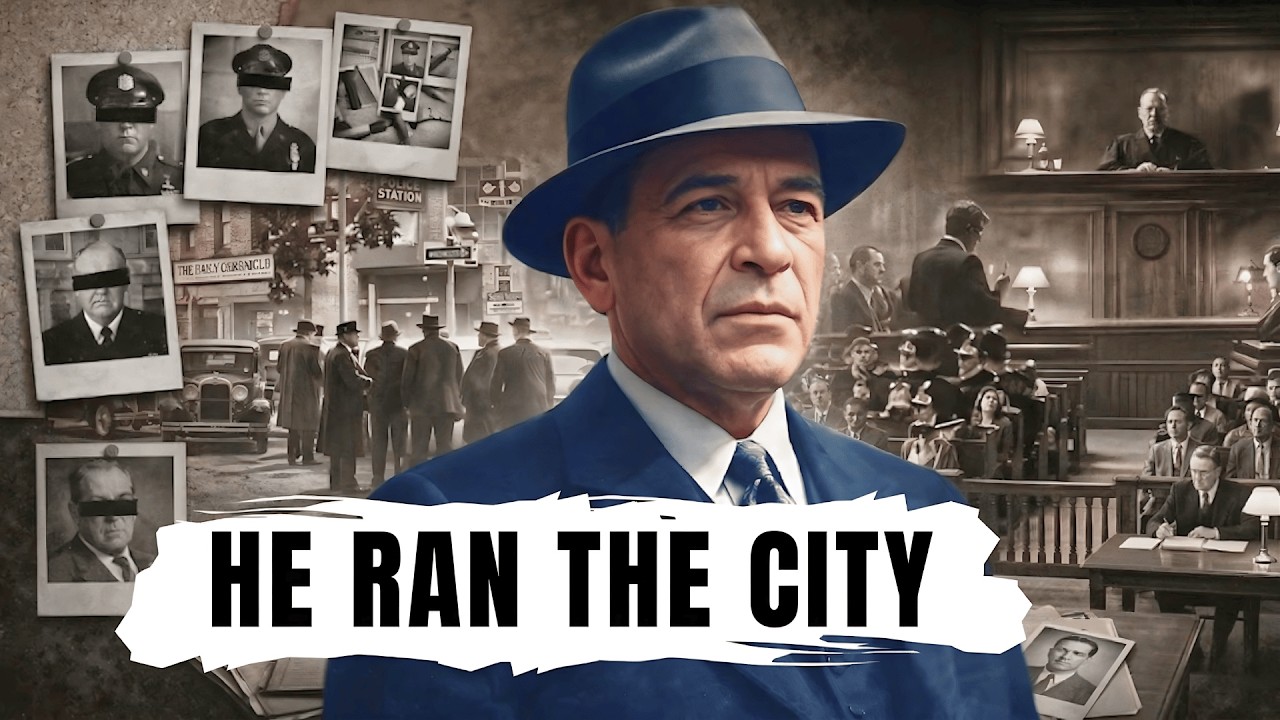
He was not known for executions, street wars, or pulling the trigger himself. His power was built on something quieter: control over the systems around the crime. Born into poverty in the early 20th century, Costello learned early that visibility made men targets. While other young men in New York used guns to build reputations and were quickly killed or imprisoned, he chose a different path.
He decided he would not be the one holding the weapon; he would be the one deciding when it was used. His alignment with Lucky Luciano marked a turning point. Together, they helped transform organized crime from chaotic street gangs into a structured, businesslike enterprise. While others focused on brute force, Costello focused on organization and efficiency, building networks between families that reduced conflict and maximized profit.
Gambling became one of his most powerful tools. It generated steady, movable wealth without attracting the same attention as other criminal enterprises. But Costello understood that money alone was not enough. He extended his influence into politics, law enforcement, and the courts, not through threats, but through favors, relationships, and quiet compromises.
A police officer might ignore a shipment. A judge might hesitate before a harsh sentence. A politician might quietly support an unseen interest. Individually, these actions seemed insignificant, but together they formed a shadow system.
At the center of that system was Costello, essential but never obvious. His reputation grew not from fear of his brutality, but from respect for his rationality. When disputes arose between rival factions, he became the mediator. He could end wars before they started and see consequences others ignored.
This earned him his lasting title and made his influence reach so deep into the city that separating it from reality became nearly impossible. By the mid-1950s, his power was dominant. But another man had been watching and calculating. Vito Genovese represented everything Costello was not.
Where Costello was patient and diplomatic, Genovese was aggressive and believed in absolute control through force. And there was one obstacle standing between Genovese and the top: Costello. Genovese first tried subtle pressure and attempts to undermine Costello’s influence, but found him impossible to buy, intimidate, or isolate. His power was woven into everything.
Genovese concluded that if the system could not be taken apart, the man at the center had to be removed. The plan culminated that night in 1957 when a hitman closed the distance in the lobby and fired. The bullet grazed Costello’s head instead of killing him. A fraction of an inch became the difference between an ending and something far more unpredictable.
In the underworld, surviving an assassination attempt demands retaliation. But Costello did not order a counterattack, hunt down the responsible men, or ignite a war. Instead, he stepped back voluntarily and quietly, announcing his retirement. The decision shocked the mafia.
A boss at the height of his power was walking away without being forced out or destroyed. Some called it weakness; others saw strategy. Costello understood that a war with Genovese would bring attention, escalate violence, and invite authorities to dismantle the entire system he had spent years building. He valued the system more than his position within it.
By removing himself as a target, he removed the reason for war. The violence never came. The system remained intact. Genovese inherited the throne, but took control of something he could never fully understand or manage.
In the years that followed, Costello faded from public view, living quietly without headlines or dramatic confrontations. No one tried to kill him again. While other bosses met violent ends or died in prison, Costello survived into old age and died of natural causes. His life contradicted the mafia’s core belief about power.
He proved that influence could be stronger than force and that shaping systems is more dangerous than destroying enemies. A man who never pulled the trigger controlled those who did. And when the bullet failed that night, it became his final lesson: true power is not proven by fighting to keep it, but by knowing when you no longer need to.