Meyer Lansky played a central role in the development of organized crime in the United States, building a legacy as one of the most financially successful gangsters in American history. Over nearly 50 years in the underworld, Lansky was never convicted of a crime more serious than illegal gambling. He rose to prominence alongside childhood friend Benjamin “Bugsy” Siegel, with whom he ran the violent Bugs and Meyer Mob during Prohibition, and forged a powerful alliance with Charles “Lucky” Luciano after a teenage encounter in which Luciano attempted to blackmail him for protection money. Lansky’s defiance won Luciano’s respect, and the two went on to build a criminal empire together.
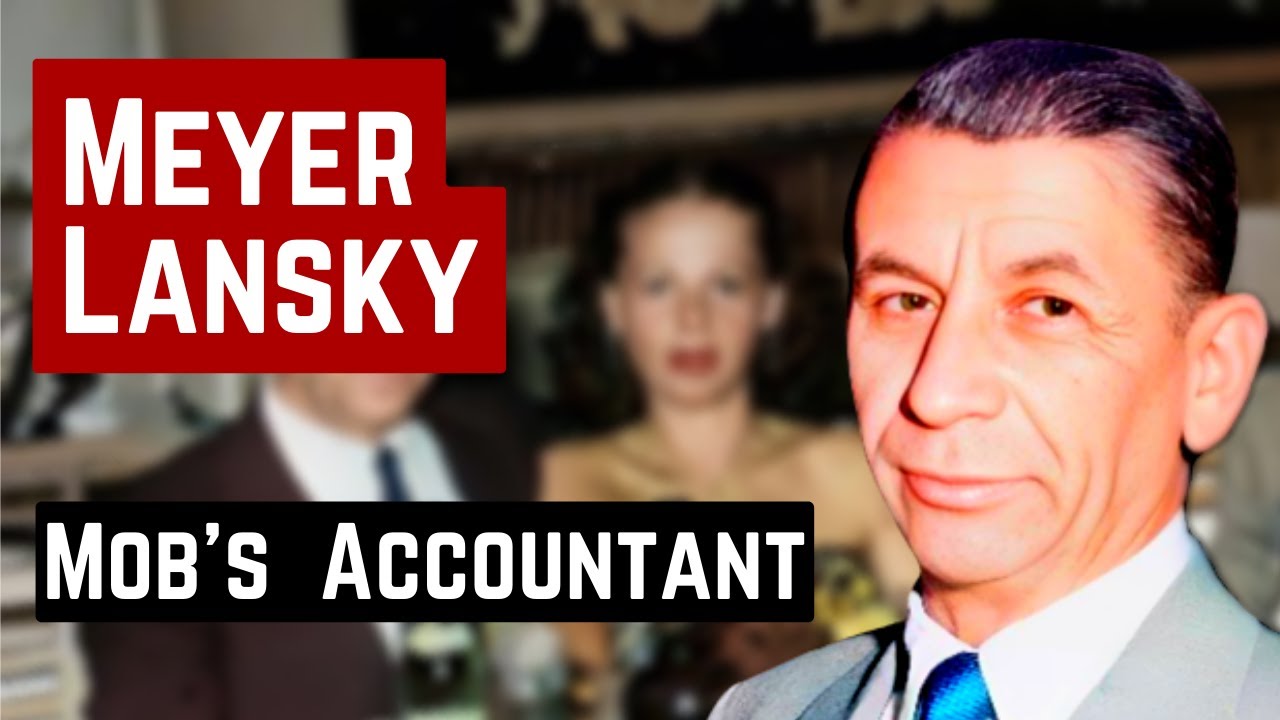
By 1936, Lansky had expanded his operations into Cuba, New Orleans, and Florida. His gambling establishments thrived due to two key innovations: his technical expertise in the mathematics of popular wagering games, and the use of mob connections and bribed law enforcement to secure physical and legal protection. Unlike many rival operations, Lansky’s “carpet joints” operated with a strict code of integrity—players were always assured the games were fair, and the men running them were chosen for their character. Lansky later became a significant investor in Siegel’s Flamingo Hotel in Las Vegas, and he played a key role in the mob’s national expansion.
In 1946, Lansky helped organize a landmark meeting of underworld figures at the Hotel Nacional in Havana, the first major gathering of American crime bosses since 1932. Attendees included Albert Anastasia, Frank Costello, Vito Genovese, and representing the Jewish interest, Lansky and Dandy Phil Kastel. Luciano, who traveled secretly with a fake passport, was the first to arrive. The group heard Lansky’s vision of a prosperous Havana for those willing to invest, and it was decided that Luciano would lead the mob from Cuba until he could find a legal way to return to the United States.
Frank Sinatra, who traveled with the Fischetti brothers, was among the performers. The conference laid the groundwork for a partnership between Lansky and Cuban President Carlos Prío Socarrás. In 1952, Lansky reportedly offered Prío a $250,000 bribe to allow gambling to return to Cuba. The resulting law permitted anyone investing one million dollars in a hotel or two hundred thousand dollars in a nightclub to obtain a gaming license, without the background checks required in Las Vegas.
Investors received public matching funds, a 10-year tax exemption, and duty-free importation of furniture and equipment. In return, the government received a share of casino revenues. However, Fidel Castro’s rise to power in 1959 ended this arrangement. Castro seized control on January 8, 1959, and within months began shutting down casinos.
By October 1960, Castro nationalized all hotel casinos and outlawed gambling, wiping out Lansky’s assets and income. Lansky’s later years were marked by legal troubles and a dramatic deportation. He was deported from the United States and spent time in Israel, but was expelled after two years. His return to the U.
S. led to a 1974 federal trial on charges related to his gambling operations. The government relied on the testimony of loan shark Vincent “Fat Vinnie” Teresa, who alleged that Lansky used blackmail to influence judges, police officers, and politicians. Despite the FBI’s belief that Lansky had hidden over $300 million in secret bank accounts, he was acquitted.
At the time of his death, Lansky’s known assets were minimal, and the government never found the fortune they believed he had stashed away.