By the fall of 1968, the world believed it already knew everything about Jacqueline Kennedy. She was the graceful widow of a fallen president, a symbol of a lost American dream, and the quiet survivor of unbearable tragedy.
But far from Washington and New York, on a guarded island in Greece, her life was about to take a sharp and surprising turn, one that stunned both America and Europe.
On a remote island called Scorpios, hidden deep in the Ionian Sea, a private ceremony took place that few people were invited to witness. There were no cheering crowds, no grand cathedral, and no public celebration.
Under tight security and strict secrecy, Jacqueline Kennedy, aged 39, married Aristotle Onassis, a 62-year-old Greek shipping magnate whose name was synonymous with power, wealth, and controversy.
The decision sent shock waves across the world.
For many Americans, the marriage felt confusing, even painful. Jackie Kennedy had once been the emotional center of a nation during its darkest hours. After the assassination of President John F. Kennedy, she carried herself with dignity, strength, and silence.
To millions, she represented loyalty, sacrifice, and American elegance. Her choice to marry Onassis, a man often described as ruthless, aggressive, and morally questionable, felt like a betrayal of that image.
Newspapers exploded with criticism. Television commentators debated her motives. Society elites whispered behind closed doors. Some accused her of abandoning her country. Others questioned whether grief had clouded her judgment.
Many asked the same stunned question: Why would Jackie Kennedy do this?
The truth was far more complex than the headlines suggested.
To the public, Aristotle Onassis was a symbol of raw ambition. He built one of the largest shipping empires in history, rising from poverty to unimaginable wealth. He lived lavishly, collected women, challenged governments, and refused to follow social rules.
In contrast, Jackie came from old American society, raised with tradition, restraint, and quiet polish. On the surface, they seemed like complete opposites.
Yet behind the closed gates of Scorpios, this marriage was not about romance alone. It was about safety, survival, protection, and escape. By 1968, Jackie Kennedy was no longer simply grieving. She was terrified.
To understand why Jackie Kennedy chose Aristotle Onassis, one must understand the emotional storm she had already endured. By the time she stood on Scorpios as a bride, she had lived through more tragedy than most people face in a lifetime.
In August 1963, just months before the assassination of her husband, Jackie gave birth prematurely to her son, Patrick Kennedy. The baby survived for only two days. His death shattered her.
Friends later said she fell into a deep and silent depression, retreating emotionally even while still serving as first lady.
Only weeks later, on November 22, 1963, her world collapsed completely. While riding beside President John F. Kennedy in Dallas, Jackie watched as her husband was shot and killed in front of her eyes.
The images of her bloodstained pink suit and composed public strength became etched into history. But privately, she was devastated beyond words.
From that moment on, Jackie Kennedy lived with constant fear. She feared for herself. She feared for her children, Caroline and John Jr. She feared that the Kennedy name itself had become a target. That fear would only grow stronger over time.
Long before marriage, Jackie Kennedy's path crossed with Aristotle Onassis during a moment when her life was already fragile.
In the fall of 1963, while still first lady, Jackie accepted an invitation arranged by her sister, Lee Radziwill, to spend time aboard Onassis's luxury yacht, the Christina. The meeting was casual, not romantic, at least not at first.
Lee Radziwill, born Caroline Bouvier, was everything Jackie was not allowed to be. She lived freely among Europe's elite, moving through fashion, art, and high society with ease. She had a close and widely rumored relationship with Onassis herself. Many believed she hoped to marry him one day.
At the time, Onassis was already one of the richest men alive. His ships dominated global trade. His lifestyle was legendary, and his yacht, the Christina, was floating proof of his power, filled with marble bathrooms, gold fixtures, and private staff.
When Jackie stepped aboard, she was still grieving the loss of her infant son. She was emotionally exhausted, searching for distraction, peace, and distance from the pressures of Washington.
None of them could have known how significant that meeting would become.
Throughout the early 1960s, rumors followed Lee Radziwill and Aristotle Onassis wherever they went. Society magazines hinted at intimacy. Insiders claimed Lee expected a serious commitment. During the Kennedy family's European tour in 1963, whispers grew louder.
But something changed. After meeting Jackie, Onassis's attention slowly shifted. Unlike Lee, Jackie carried the weight of tragedy with quiet dignity. She was not chasing glamour or status. She was wounded, guarded, and deeply human.
To Onassis, who thrived on control and power, Jackie represented something rare: someone untouched by his wealth, someone who did not need him to shine.
Still, nothing moved forward immediately. Fate had more cruelty to deliver.
After President Kennedy's death, Jackie attempted to rebuild a sense of normal life. She briefly found comfort with John Carl Warnecke, the architect who helped design JFK's grave at Arlington National Cemetery.
Their shared grief created a strong emotional bond, and for a time, marriage was even discussed. But reality intervened. Warnecke admitted he was deeply in debt and could not provide the level of security Jackie required. With two children and constant media attention, emotional connection alone was not enough.
Then tragedy struck again. On June 5, 1968, Robert F. Kennedy, Jackie's brother-in-law and another symbol of hope, was assassinated. His death reopened every wound Jackie had tried to close.
This was the moment everything changed. Jackie reportedly told friends that if they were killing Kennedys, her children would be next. She was done feeling exposed. She was done being watched. She was done being afraid.
When Aristotle Onassis reached out again, his offer was simple but powerful: protection, privacy, and distance. He could give Jackie something no one else could, a life beyond America's reach.
He owned islands. He owned ships. He commanded respect from governments. Paparazzi could be blocked. Security could be controlled. For the first time since 1963, Jackie saw a path away from constant fear.
By the summer of 1968, her decision was clear. She would leave the United States. She would protect her children, and she would do it on her own terms.
On October 20, 1968, Jacqueline Kennedy became Jacqueline Kennedy Onassis. The ceremony was small, guarded, and intentionally private. Only close family and trusted friends were present. There was no public celebration, no press allowed, and no attempt to soften the shock that would follow.
When news broke, outrage erupted.
By marrying a foreign citizen, Jackie lost her Secret Service protection as the widow of a US president. Critics accused her of abandoning America. Religious leaders debated whether the Catholic Church would recognize the marriage. Rumors spread wildly.
But Jackie did not respond. For the first time in years, she chose silence, not as weakness, but as control.
After the wedding on Scorpios, Jacqueline Kennedy Onassis did not return to the United States as a celebrated bride. Instead, she stepped into one of the most hostile periods of public judgment she had ever faced.
The woman once admired as America's graceful first lady was now criticized, questioned, and in some circles openly resented.
For many Americans, Jackie's marriage felt like a final goodbye. Newspapers no longer referred to her simply as Jackie. Instead, headlines emphasized her new last name, Onassis, as if it were a declaration of disloyalty.
Editorial writers accused her of choosing wealth over values. Radio hosts questioned her morals. Even former supporters struggled to understand her choice.
But Jackie did not explain herself. She had learned long ago that public approval was fragile and temporary. What mattered now was survival, hers and her children's.
Becoming Jacqueline Kennedy Onassis changed more than just her legal identity. It altered how the world treated her at every level.
As the widow of President John F. Kennedy, Jackie had received lifetime Secret Service protection. That protection ended the moment she married Aristotle Onassis, a foreign national. Overnight, the safety net she depended on disappeared.
Critics framed this as reckless. But Jackie saw it differently. With Onassis, she no longer needed American protection. His private security was stronger, quieter, and far less visible.
Guards were stationed on his islands, his yachts, and his estates. Access to Jackie and her children was strictly controlled. The paparazzi who once followed her every move suddenly found doors closed and cameras blocked. For the first time since 1963, Jackie could breathe.
Almost immediately, rumors spread that Jackie might be excommunicated from the Roman Catholic Church. Critics pointed to Onassis's previous marriage and divorce, claiming her new union violated church rules.
These rumors caused deep anxiety among the public, but they were largely unfounded. Cardinal Richard Cushing, the Archbishop of Boston and a close Kennedy family ally, dismissed the claims outright. He publicly stated that there was no religious punishment awaiting Jackie.
Still, the damage was done. The whispers lingered, feeding the narrative that Jackie had crossed a moral line. Once again, she remained silent. Her faith, like her grief, was private.
From the outside, Jackie's life with Aristotle Onassis appeared impossibly luxurious. She traveled by private jet, lived on islands, and sailed aboard one of the most famous yachts in the world.
But wealth did not erase emotional distance.
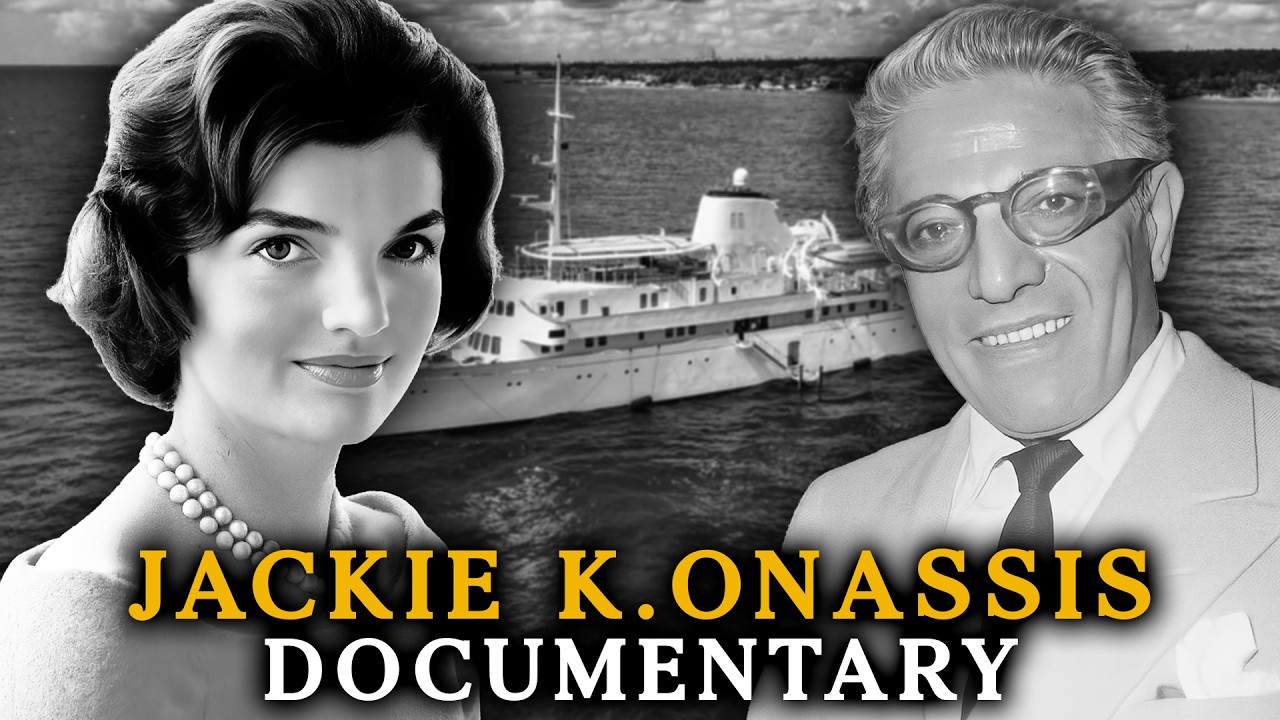
Onassis was used to control. He commanded fleets, negotiated with governments, and made decisions without hesitation. Marriage did not change that nature. He was often absent, frequently traveling for business and deeply immersed in his empire.
Jackie, meanwhile, craved stability. She did not need extravagance. She needed predictability. She needed quiet. Most of all, she needed to know her children were safe.
Though they cared for one another, their relationship was not built on constant closeness. It was built on mutual benefit and mutual understanding.
At the time of their marriage, Jackie was 39 and Onassis was 63. The age difference became a favorite topic for critics. Some portrayed Jackie as fragile and dependent. Others accused her of trading youth for wealth.
Both views missed the truth. Jackie was not naive. She was experienced, educated, and emotionally resilient. She had navigated world leaders, survived assassination, and managed unimaginable grief. She knew exactly what she was doing.
In many ways, Onassis respected her strength. He admired her intelligence, her cultural knowledge, and her ability to move comfortably among elites without arrogance. When they appeared together at social gatherings, Jackie's presence softened his rough reputation. Doors opened for him that money alone could not unlock.
Their partnership was strategic as much as emotional.
Life with Aristotle Onassis meant access to a global network of extraordinary properties, each designed to display power, privacy, and prestige.
The most famous of these was Scorpios, the private Greek island where they married. Purchased in 1962, the island had been transformed by Onassis into a secluded paradise. Once barren and empty, it now held a grand villa, guest houses, gardens, private beaches, and even a helipad.
Scorpios became Jackie's refuge. There she could walk without photographers. Her children could swim freely. No strangers approached without permission. The island was not just a luxury; it was a shield.
Beyond Scorpios, Onassis owned residences in Paris, London, Monte Carlo, and New York City. He also held a historic townhouse on Manhattan's Upper East Side, once owned by John D. Rockefeller Jr., linking old American wealth with global power.
Jackie, no stranger to elite living herself, brought her own legacy into the marriage.
Despite her new life abroad, Jackie never fully abandoned America. She had grown up in a refined apartment at 740 Park Avenue, one of Manhattan's most prestigious addresses, built by her grandfather.
After marrying Onassis, she maintained a strong connection to New York, purchasing a spacious 14-room apartment on Fifth Avenue overlooking Central Park. She also continued to visit East Hampton, spending time at Lasata, the estate that had been part of her family since 1925.
These places grounded her, reminding her that her identity stretched beyond marriage. Jackie was not becoming someone new. She was protecting what remained.
Despite security and comfort, Jackie's marriage was not without pain. Onassis's frequent absences weighed heavily on her. His business interests always came first, and rumors of his infidelities never fully disappeared.
Jackie, who valued loyalty deeply, often felt emotionally alone. Yet she endured. She had learned long ago that love did not always arrive in perfect form. What mattered was survival, dignity, and the future of her children.
By the early 1970s, Jacqueline Kennedy Onassis had settled into a rhythm that few people could truly understand. Her life now unfolded across oceans, countries, and cultures. Yet it was often marked by deep emotional quiet.
While the world saw yachts, private islands, and glamorous dinners, Jackie experienced long stretches of isolation behind guarded gates.
To outsiders, her life appeared dazzling. To Jackie, it was complicated. She had gained safety, but she had also surrendered familiarity. Friends from her American past were now far away.
The rhythms of Washington and New York politics had been replaced by the unpredictable schedule of a global shipping tycoon. Aristotle Onassis lived at a relentless pace, and Jackie often found herself waiting rather than participating.
Still, she adapted.
Jackie never believed her marriage would resemble a fairy tale. She had already lived through enough tragedy to know that idealized love rarely survived reality. What she sought instead was structure, security, and control over her own life.
Onassis, in his own way, understood this. He did not expect Jackie to play the role of a traditional trophy wife. He allowed her space, respected her independence, and supported her interests. When Jackie pursued work in publishing and cultural preservation, he encouraged it.
He understood that her identity did not end with marriage. But emotional distance remained.
Onassis's world revolved around negotiations, ships, and power struggles. Jackie's world revolved around children, history, and quiet routines. Their lives ran parallel more often than they intersected.
Above everything else, Jackie Kennedy Onassis was a mother. Her children, Caroline Kennedy and John F. Kennedy Jr., were the center of her decisions. She structured her life around their education, privacy, and emotional health.
The scars left by assassination and constant media exposure shaped every choice she made.
Onassis respected this deeply. He ensured that the children were protected wherever they went. Private tutors, secure transportation, and carefully screened staff became the norm. When they were on Scorpios or aboard the yacht Christina, their movements were invisible to the press.
Jackie believed this isolation was necessary. She had seen what public life could destroy.
One of the most iconic symbols of Jackie's life during the Onassis years was the yacht Christina. Originally a wartime frigate, Onassis transformed it into one of the most luxurious private yachts ever built.
Inside, everything spoke of power. Marble bathrooms, gold-plated fixtures, private suites, and attentive staff created an environment unlike anything Jackie had known before. World leaders, celebrities, royalty, and business tycoons passed through its decks.
Yet for Jackie, the yacht was not just luxury. It was a moving sanctuary. On the open sea, she felt free from cameras and expectations. The horizon offered distance, both physical and emotional, from the tragedies she carried.
When Jackie and Onassis appeared together in public, they were carefully composed. Jackie wore elegant but restrained clothing. Onassis stood proudly beside her, aware of the attention she commanded. Together, they formed a powerful image.
But behind closed doors, tensions surfaced.
Jackie struggled with Onassis's rumored relationships, particularly his long-standing emotional connection with opera singer Maria Callas. Though Onassis had married Jackie, his attachment to Callas never fully disappeared.
Jackie knew this. She did not confront it publicly, nor did she allow it to dominate her life. Instead, she withdrew emotionally, focusing on her children and personal projects. Her strength lay in restraint, not confrontation.
Despite unlimited resources, Jackie often felt trapped by the very world that protected her. The constant movement between properties prevented her from forming lasting friendships. Trust was rare. Privacy came at the price of isolation.
She had escaped fear, but she had not escaped grief. In quiet moments, she still mourned John F. Kennedy, Patrick, and the life she once imagined. No amount of wealth could rewrite history.
In 1973, tragedy struck Aristotle Onassis in a way that forever changed him. His only son, Alexander Onassis, died in a plane crash at the age of 24.
The loss devastated Onassis completely. Friends noted that he aged rapidly in the months that followed. His health declined. His energy faded.
Jackie witnessed this transformation up close. For the first time, Onassis was no longer the untouchable titan of industry. He was a grieving father, broken and vulnerable.
Jackie offered support in the only way she knew, through quiet presence and understanding. But the loss created distance as well. Onassis withdrew further into himself, becoming bitter and withdrawn. His business interests suffered. His health worsened. The balance of their marriage shifted again.
Following Alexander's death, Onassis's physical condition deteriorated. Respiratory problems plagued him. His once commanding presence weakened. Doctors warned him to slow down, but he refused.
Jackie watched helplessly. She had entered the marriage seeking protection. Now she found herself caring for a man who could no longer protect himself. The roles reversed, and the emotional weight grew heavier.
Despite their differences, Jackie remained loyal. She understood grief too well to abandon someone consumed by it.
By the mid-1970s, Jackie's life existed between past and future, between America and Europe, between wealth and solitude. She had secured safety for her children, but the cost was emotional distance and public misunderstanding.
Still, she endured. Jackie had survived assassination, loss, and judgment. The Onassis years were not about romance or glamour. They were about endurance. And the most difficult chapter was still ahead.
By the mid-1970s, the balance that had once held Jacqueline Kennedy Onassis and Aristotle Onassis together was slowly breaking apart. The strong foundation of security and protection that Jackie had sought was now weakened by grief, illness, and growing emotional distance.
What had once felt like a shelter from chaos began to feel fragile. The turning point came with the death of Alexander Onassis.
When Alexander Onassis died in a plane crash in 1973, the loss struck Aristotle Onassis deeper than anyone expected. Alexander was not just his son. He was his heir, his pride, and the future of the Onassis empire. In one moment, that future vanished.
After the crash, friends and associates noticed an immediate change in Onassis. The powerful businessman who once dominated rooms now moved slowly and spoke less. His confidence faded, his anger surfaced more often, and his health began to fail.
For Jackie, this was painfully familiar. She had already lived through the sudden death of a husband, a child, and close family members. She recognized the signs of grief consuming someone from the inside.
She stayed close, offering support without forcing conversation, understanding that grief often lived in silence. But Alexander's death also created tension.

As Onassis grew more withdrawn, Jackie felt increasingly alone. He spent long hours isolated, surrounded by legal advisers and business managers. Their conversations grew shorter. The warmth that once existed between them faded into routine.
Jackie did not fight this change. She had learned that some losses could not be fixed. She focused instead on maintaining stability for Caroline and John Jr., keeping their lives as normal as possible despite the emotional storm around them. Yet even with her strength, the strain was undeniable.
By 1974, the powerful presence of Aristotle Onassis was visibly fading. Once known for his relentless energy and commanding authority, he was now struggling with serious health problems that weakened him day by day.
He suffered from severe respiratory illness that left him dependent on constant medical attention. Hospital visits became a regular part of his life. The fast-paced schedule that had once driven his empire slowed dramatically, not by choice, but by necessity.
Jacqueline Kennedy Onassis watched this change unfold with quiet concern. The man who had promised her safety, control, and protection was now fighting a battle he could not dominate.
Doctors repeatedly warned Onassis that stress was worsening his condition and urged him to step away from business matters, but he refused. Control had always defined his identity, and surrendering authority felt unbearable.
Even as his body weakened, he continued to involve himself in decisions, negotiations, and disputes, unable to imagine life without command. This refusal to let go placed enormous strain on his health and deepened the emotional distance between him and Jackie during his final years.
As Onassis's health declined, another difficult reality became impossible to ignore. Although Jackie was his wife, Greek inheritance law strictly limited what a non-Greek spouse could inherit.
The majority of Onassis's immense fortune was legally reserved for his daughter, Christina Onassis, regardless of Jackie's role in his life.
Jackie was fully aware of these laws and accepted them without bitterness. She had not married Onassis for wealth, but she understood that financial clarity was essential for independence and peace.
What she wanted was resolution, not endless conflict or legal warfare that would bind her to the Onassis empire long after his death. These discussions about estates and legal boundaries added another layer of emotional strain to an already fragile marriage and underscored how separate their lives had become.
On March 15, 1975, Aristotle Onassis died in Paris at the age of 69. His death marked the end of one of the most powerful and controversial business careers of the 20th century, closing a life shaped by ambition, wealth, and global influence.
For Jackie, it marked yet another chapter of loss. Once again, she was a widow. But this time, the experience felt profoundly different.
There was no national funeral, no shared mourning, and no country grieving alongside her. Instead, Jackie faced quiet farewells, private negotiations, and the heavy silence that followed the end of a complicated marriage.
She handled it with the same restraint and composure that had defined her adult life, choosing dignity over display.
After Onassis's death, Jackie entered into private negotiations with Christina Onassis. The process lasted nearly two years and was conducted away from public view, free from scandal or courtroom drama.
In the end, Jackie accepted a $26 million settlement, agreeing to relinquish any further claims to the Onassis estate. The decision reflected her desire for closure rather than control.
She did not fight for power, nor did she attempt to remain tied to the empire. Instead, she walked away calmly, choosing independence over entitlement.
Once again, Jacqueline Kennedy Onassis demonstrated that her strength lay not in what she claimed, but in what she chose to leave behind.
After the legal matters were resolved, Jacqueline Kennedy Onassis made a decisive choice. She left Europe behind and returned permanently to the United States. The chapter that began on Scorpios was over.
She divided her time between New York City, Martha's Vineyard, and the Kennedy compound in Hyannis Port. These places offered familiarity, memory, and connection to her roots. For the first time in years, she was living by her own rhythm, rebuilding a life on her own terms.
Jackie did not retreat into isolation after Onassis's death. Instead, she began building a new identity, one defined by work, purpose, and quiet influence.
In 1975, she accepted a position as a consulting editor at Viking Press. Publishing allowed her to stay connected to ideas, history, and culture without stepping back into politics.
Her work was serious. She was not a figurehead. She read manuscripts carefully, offered thoughtful feedback, and helped shape projects she believed in. For Jackie, publishing became a way to contribute without public exposure.
But even here, controversy followed.
When a novel involving a fictional assassination plot was scheduled for publication, public pressure forced Jackie to resign from Viking Press. Critics accused her of poor judgment, even though the project had literary value.
Rather than retreat, Jackie moved forward. She later joined Doubleday as an associate editor, where she worked quietly for years. She helped bring important books to life, including historical works, biographies, and cultural studies.
Once again, Jackie proved she did not need applause to succeed.
By the late 1970s, Jackie's life had transformed completely. The fear that once drove her away from America had softened. Her children were growing. Her work gave her purpose. And the world no longer defined her by marriage alone.
The Onassis years were over. They had given her safety when she needed it most. But they had also tested her endurance, strength, and identity.
What followed would be a quieter, more deliberate chapter, one where Jackie finally lived for herself.
When Jacqueline Kennedy Onassis returned to the United States permanently, she did so without ceremony or announcement. There were no press conferences, no interviews, and no public effort to explain her choices or reshape her image.
After more than a decade spent under intense global scrutiny, Jackie had learned a powerful lesson. Silence often gave her more control than words ever could. The world had already formed its opinions, and she no longer felt the need to challenge or correct them.
This time she returned not as a public figure seeking acceptance, but as a private woman determined to live on her own terms.
After years of crossing oceans and moving between estates, islands, and guarded residences, Jackie finally embraced a steadier rhythm. New York City became her primary home, offering the rare balance she had long searched for.
In the city, she could remain connected to art, literature, and history while still protecting her privacy. She walked its streets without spectacle, visited bookstores quietly, and built a life that felt grounded rather than performative. New York allowed her to exist as a citizen instead of a symbol, which mattered deeply to her.
At the same time, Jackie continued to spend meaningful stretches of time in Martha's Vineyard, where the slower pace of life offered comfort and clarity. Long walks along the shore, open skies, and the steady rhythm of the ocean provided peace that city life could not.
The Kennedy compound in Hyannis Port remained an emotional anchor, filled with family memories and reflection. For Jackie, these places were never about status or luxury. They were about belonging, familiarity, and the ability to feel rooted after so many years of displacement.
One of the most defining aspects of Jackie's return to America was her commitment to serious, meaningful work. Her decision to enter the world of publishing was neither symbolic nor decorative.
She approached the profession with the same discipline and care she had once applied to restoring the White House.
At Doubleday, Jackie worked as an associate editor, reading manuscripts closely, guiding authors thoughtfully, and helping shape books she believed had cultural value. She gravitated toward history, art, and literature, subjects that reflected her lifelong respect for knowledge and preservation.
Colleagues often described Jackie as meticulous, prepared, and deeply private. She avoided attention and never sought credit for her contributions. Instead, she focused on the quality of the work itself, believing that ideas mattered more than recognition.
Publishing gave her something she had lacked for many years: a sense of control over her time and purpose over her days. It allowed her to contribute quietly to the cultural world without stepping back into the spotlight she had worked so hard to escape.
Alongside her professional life, Jackie devoted herself to historic preservation, a cause that had shaped her identity long before her marriage to Aristotle Onassis.
As first lady, she had helped protect elements of America's architectural heritage, but now she worked free from political pressure.
In the 1970s, she became a key figure in the fight to save Grand Central Terminal from demolition. Developers wanted to replace the historic structure with modern towers. But Jackie believed that progress should not come at the cost of erasing history.
Her advocacy proved influential. Courts ultimately ruled in favor of preservation, establishing an important precedent for protecting historic landmarks across the country. Jackie did not seek attention for her role, but her impact was widely acknowledged by those who understood the importance of the decision.
She also opposed developments that threatened Central Park, believing that public spaces deserve protection from unchecked ambition and commercial interests. To Jackie, preserving history was not about nostalgia. It was about responsibility to future generations.
Although she avoided active politics, Jackie did not withdraw entirely from public life. She supported Ted Kennedy's 1980 presidential campaign, offering guidance privately rather than speaking publicly.
In the early 1990s, she also supported Bill Clinton, recognizing his respect for history and culture. During this time, she shared advice with Hillary Clinton, offering insight into raising a child in the White House and navigating public pressure with dignity and restraint.
Jackie understood that influence did not always require visibility. Power, she believed, could be exercised quietly, thoughtfully, and without spectacle.
In choosing a life defined by purpose rather than attention, Jacqueline Kennedy Onassis finally claimed the peace she had spent so many years searching for.
More than any title she ever held or any role the public assigned her, Jacqueline Kennedy Onassis believed her greatest achievement was being a mother to Caroline Kennedy and John F. Kennedy Jr.
After the tragedies that defined the early years of their lives, Jackie made a quiet promise to herself that her children would not grow up imprisoned by grief or fear. Every major decision she made after 1963 was guided by one central goal: to give her children the chance to live full, meaningful lives that were not shaped entirely by loss.
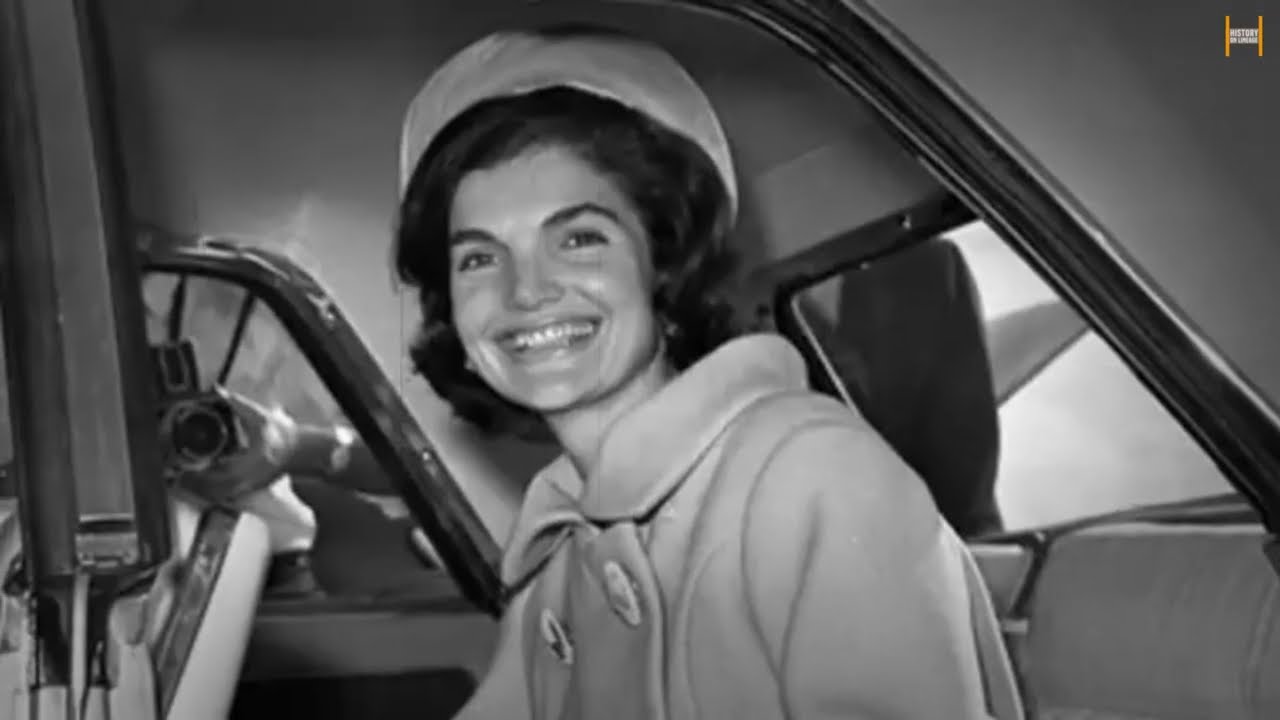
Jackie placed enormous importance on her children's independence, education, and emotional strength. She wanted them to think for themselves, to ask questions, and to understand the world beyond privilege and fame.
Discipline mattered to her, but so did humility, and she worked carefully to ensure that Caroline and John Jr. understood responsibility as much as opportunity.
At the same time, she shielded them fiercely from unnecessary attention, limiting media access and guarding their private moments with determination. Jackie believed that childhood should be protected, not performed. And she prepared her children to face public life with confidence rather than fear.
In motherhood, she found a sense of purpose that no public role ever gave her. And it was in this role that she felt most complete.
By the late 1980s, Jackie's life had entered a period of rare calm that had eluded her for decades. The constant fear that once followed her everywhere had softened. The endless travel had slowed, and the noise of public judgment had faded into the background.
She had survived assassination, public criticism, deep loneliness, and years of isolation. And now she lived with intention instead of urgency.
Her days were no longer dictated by security schedules or public expectation. She walked through bookstores without being recognized, edited manuscripts quietly in her office, and spent evenings with family and close friends rather than in grand social settings.
These ordinary moments brought her a deep sense of peace because they represented something she had long been denied: a normal life.
Jackie lived deliberately during this time, choosing simplicity over spectacle and privacy over praise, finally existing outside the headlines that once defined her every move.
In December 1993, that calm was interrupted when Jackie was diagnosed with non-Hodgkin's lymphoma. The illness came without warning and progressed rapidly, shocking those closest to her.
Even in the face of serious illness, Jackie remained true to the character she had shown throughout her life. She approached treatment with dignity and composure, refusing to dramatize her condition or invite public attention.
Chemotherapy weakened her physically, but her mind remained clear and her emotional strength never faltered. Friends later recalled that she accepted her diagnosis without panic or bitterness, viewing it as another chapter she would face with quiet resolve.
Fear had followed Jackie for much of her life, but in these final months, it no longer controlled her.
As her health declined, Jacqueline Kennedy Onassis chose to remain in her Manhattan apartment, surrounded by family, close friends, and familiar comforts. She withdrew completely from public appearances, focusing instead on peace, love, and reflection.
The woman who had once stood at the center of world history now sought only quiet and closeness.
On May 19, 1994, Jackie passed away peacefully at the age of 64. Her death marked the end of one of the most complex and influential lives of the 20th century. Yet it did not mark the end of her story.
Her legacy continued through her children, her cultural work, and the example she set of resilience, restraint, and strength in the face of unimaginable loss.
By the time Jacqueline Kennedy Onassis reached the final months of her life, the world had finally begun to understand her choices with greater clarity. Time softened the anger, reduced the noise, and replaced outrage with reflection.
What once seemed shocking now appeared deeply human. The woman who married Aristotle Onassis was no longer judged only by that decision, but by the full arc of her life. History had caught up to her truth.
For many years, Jackie was trapped inside narrow descriptions. Some called her a tragic widow, while others labeled her a social icon, and still others reduced her to a controversial bride who married into foreign wealth.
None of these labels captured the full person she truly was.
Jackie Kennedy Onassis was not defined by a single role or moment. She was a survivor shaped by constant loss, a mother driven by fear and devotion, and a woman who made difficult decisions under extraordinary pressure.
The Onassis years were not an escape from responsibility. They were a response to danger, grief, and exhaustion. She did not choose comfort over character. She chose protection over exposure.
With distance, historians and biographers began to see the marriage between Jackie and Onassis for what it truly was. It was not a romantic fantasy built on passion or glamour. It was a partnership formed during a time of crisis, grounded in practical needs and emotional survival.
Aristotle Onassis offered something no American institution could provide at that moment. He offered distance from violence, isolation from media intrusion, and the resources to protect her children from becoming symbols or targets.
Jackie understood the trade-offs clearly, and she accepted them with open eyes. Their marriage was imperfect, strained, and often lonely. Yet it fulfilled the purpose Jackie needed most at that time in her life.
The harsh criticism Jackie faced after her marriage revealed more about society than it did about her. Many Americans wanted her to remain frozen in time as the grieving first lady, untouched by change or personal need.
They expected her to carry national sorrow forever, even as she raised two children under constant threat. Jackie refused to live as a symbol instead of a person.
She accepted the cost of public anger because she valued her children's safety more than approval. In doing so, she reclaimed ownership of her life, even when the consequences were painful.
Looking back, it becomes clear that every major decision Jackie made after 1963 revolved around Caroline and John Jr. Her marriage, her relocation, her silence, and even her withdrawal from public life were all shaped by the same purpose.
She wanted her children to grow up alive, grounded, and emotionally whole. The Onassis years allowed her to give them a childhood, protected from the constant threat that followed the Kennedy name. In that sense, her choice achieved exactly what she intended.
After the death of Aristotle Onassis, Jacqueline Kennedy Onassis did not react in the way many expected. She did not attempt to hold on to his power, his vast wealth, or the social status that came with his name.
Instead, she stepped away with calm resolve, choosing dignity over struggle and closure over conflict.
The legal matters surrounding the Onassis estate were handled quietly and without spectacle. And when the process ended, Jackie walked away from that world without bitterness or regret.
What followed was not retreat, but renewal.
Jackie returned fully to a life centered on work, purpose, and intellectual engagement. Her career in publishing reflected her true character, revealing a woman who valued discipline, thoughtfulness, and the written word.
She approached each manuscript with care, believing that ideas mattered and that books shaped how people understood history and culture. This work was not about recognition or prestige. It was about contributing something lasting and meaningful after years defined by loss.
Her dedication to historic preservation further revealed her values. Jackie believed deeply that the past deserved respect and protection, not replacement or erasure. She used her influence quietly but effectively to defend cultural landmarks that carried collective memory.
Whether protecting historic buildings or public spaces, her actions reflected responsibility rather than nostalgia. These choices were not the decisions of a woman running from pain. They were the decisions of someone rebuilding meaning and identity after profound loss.
When illness finally entered Jackie's life, she faced it with the same calm strength that had defined her response to tragedy for decades.
Diagnosed with cancer, Jacqueline Kennedy Onassis did not seek public sympathy or attention. She prepared quietly, focused on comfort, and surrounded herself with loved ones rather than the public eye.
There were no dramatic statements or final appearances, only deliberate choices guided by acceptance and peace.
As her health declined, Jackie remained composed, understanding that her life had already carried more meaning than most could imagine. She accepted the end without fear, having long since made peace with uncertainty and loss.
Her passing did not feel abrupt or chaotic, but measured and quiet, much like the way she had lived in her later years.
She was laid to rest beside President John F. Kennedy and their children, returning symbolically to the place where her public story began. Yet her private journey had taken her far beyond that moment, shaped by resilience, independence, and deliberate choice.
The years Jackie spent with Aristotle Onassis were never a departure from her legacy. They were an essential passage through fear, grief, and survival. Without those years, her story would remain incomplete and deeply misunderstood.
They revealed her courage in choosing safety over symbolism and her strength in enduring public judgment without surrendering her dignity.
Those years also demonstrated her intelligence and self-awareness. Jackie understood when to step away from a world that demanded too much from her and offered too little in return.
She refused to live as a permanent symbol of tragedy and instead reclaimed ownership of her life. In doing so, she proved that she was not controlled by history, public opinion, or expectation. She belonged to herself.
Today, Jacqueline Kennedy Onassis is remembered not only as one of America's most iconic first ladies, but as a woman who quietly changed the way public figures could reclaim control over their own lives.
She showed that dignity did not require constant visibility and that influence could exist without spectacle. At a time when public figures were expected to perform their grief and explain every decision, Jackie chose restraint, proving that silence itself could be powerful.
Her legacy continues through the causes she championed after stepping away from public life. Her work in historic preservation helped protect landmarks that might otherwise have been erased in the name of progress, while her career in publishing reflected her deep respect for history, culture, and thoughtful storytelling.
These contributions were not driven by attention or ambition, but by responsibility and care for future generations.
The years she spent with Aristotle Onassis are now understood not as a scandal, but as a lesson in survival. They remind us that strength does not always appear bold or heroic in the moment.
Sometimes true strength is quiet. Sometimes it means choosing safety over symbolism, peace over approval, and walking away from a world that demands too much.