Billy the Kid remains one of the most recognizable figures of the American Wild West. Yet the legend often overshadows the brief, complicated life behind it. Beyond the theatrics of macho tales, his story is one of despair, vulnerability, and desperation.
He was not seduced by the allure of a criminal life. Instead, his environment and the events of an innocent childhood forced him into it. In many ways, crime was chosen for him rather than the other way around.
Born into tragedy, he soon became its harbinger. His story symbolizes a West that is often reduced to stereotypes, from John Wayne waving a gun to Clint Eastwood's silent mannerisms. This article rejects that mythological premise in favor of a grounded perspective.
The teenager who became one of America's most iconic criminals had very humble beginnings. He grew up in dismal poverty in the bleak slums of New York City. Born into an Irish family, he was no stranger to social challenges, as New York looked down on Irish immigrants in the 1860s and 1870s.
Living conditions in those slums were almost inhumane. Families were crammed together amid piles of filth with no access to sanitation. As an oppressed minority, many Irish immigrants turned to criminal activities.
He was born Henry McCarthy in 1859, and his brother Joseph was born in 1863. From this point onward, calamities would take refuge in Henry's life. In the 1860s, his father Patrick McCarty died or left the family, with sources differing on what happened.
His mother left New York with her two boys and headed to Indianapolis after meeting a man named William Henry Harrison Antrim. His mother Catherine then left Indianapolis and arrived in Kansas, a state ravaged by the American Civil War. Henry and Joseph settled in with their mother and William in Wichita, Kansas.
Henry, the future gunslinger, was a good, quiet, and courteous student who loved to read. The two siblings would play cops and robbers and cowboys and Indians in the afternoons with boys from all over town. Little did Henry know that the game would soon bleed into his real life in the most shocking way.
When Henry was 14 years old, a doctor diagnosed Catherine with tuberculosis. Knowing she had little time left, she heeded the doctor's advice and moved her family south. Getting away from the winters may have prolonged her life, but it also uprooted her children, who were used to the quiet comforts of Wichita.
After arriving in Santa Fe, New Mexico, William and Catherine decided to marry. As his mother's health dwindled daily, Henry had a lot on his mind. The thought of William as his stepfather did not help matters either.
Shortly afterward, the family moved to Silver City. As the name suggests, the city boomed after silver was discovered nearby. The city had little in the way of buildings or infrastructure, and this is where the defining moments of Henry's life would occur.
When Catherine died, William left the boys and went away. In the squalor of a lawless city, the two boys were helpless. Silver City was no place for a couple of orphans.

At different points in their early teenage years, some families took the orphans in. But Henry never managed to stay with one family for very long. Having grown up enough to earn a wage, he started working in a hotel.
One day, Billy the Kid was left alone with several pounds of butter. He knew it was fairly expensive and decided to capitalize on the opportunity. He stole the butter, which ironically sent him down a very slippery slope.
Having stolen the butter, Henry was caught, and locals called the sheriff. The sheriff could not bring himself to punish the boy, letting him go with only a stern warning.
During his years in Silver City, Henry had befriended a man named Sombrero Jack. Jack was a thief and may have seen the boy as an easy mark. One day in 1875, Jack called upon the teenager for help, having robbed a laundry and needing a place to hide the goods.
Henry took the clothes and hid them. Unfortunately, he was caught with the clothes, prompting another run-in with the sheriff. The sheriff was still affectionate toward the boy but could not let a criminal roam free, so he kept him in the hallway of the jail cells, away from hardened criminals.
The sheriff might have taken a liking to the boy, but the feeling was not mutual. Henry viewed the sheriff as a threat to his freedom, though he remained courteous with him as he did with everyone. After two days in captivity, he was fed up.
He was a nimble and agile boy, often ridiculed for his skinny frame. He climbed into the fireplace, shimmied up the chimney, and reached the jailhouse roof. As soon as he jumped to the ground outside, his life changed.
He had been bullied, abused, restrained, and overworked. Now his agility had overpowered the tactics of his oppressors. He had finally come into his own.
He may have been a boy, but he was starting to think like a man. By escaping captivity, he earned the nickname "the Kid," a moniker that would follow him for the rest of his short life. Instead of being the teacher's pet who liked to read, he was now a hardened boy willing to please his urges at the behest of others, with no regard for consequences.
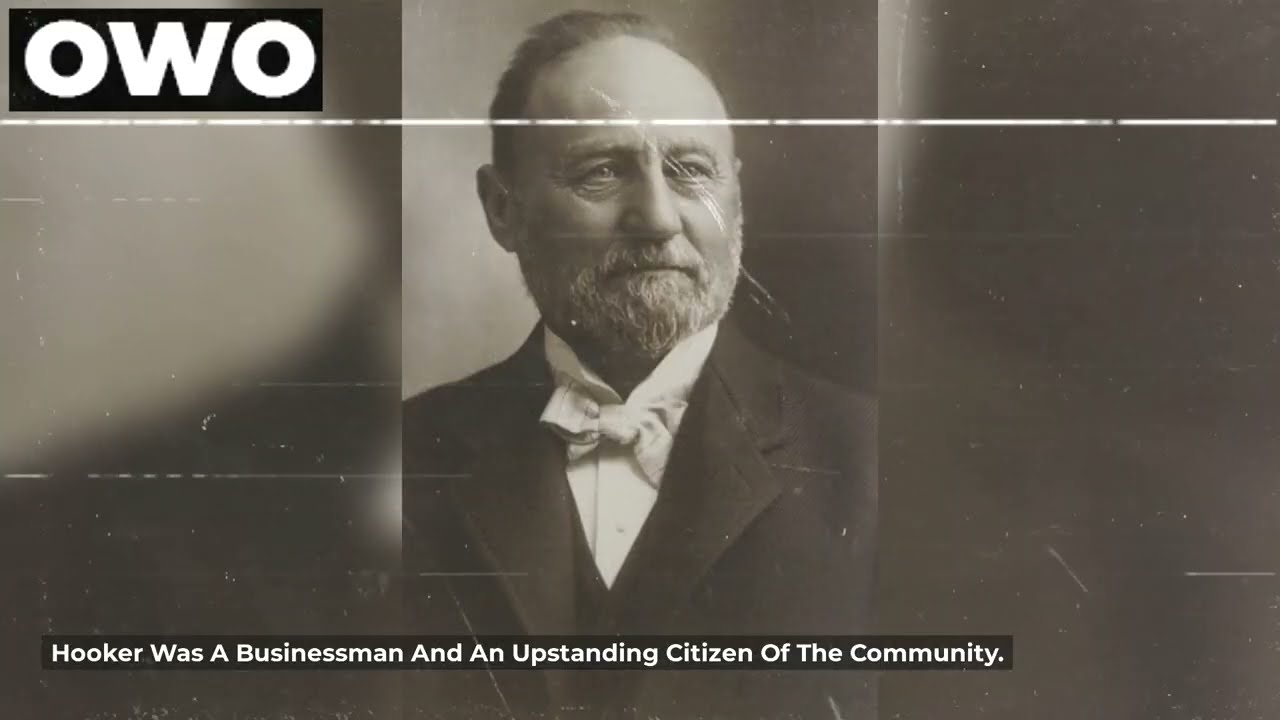
He headed southeast, deeper into the territory of Arizona. He was 15 or 16 at the time and fell under the wing of Henry Hooker. Hooker was a businessman and an upstanding citizen who even knew the famous lawman Wyatt Earp.
Here, Henry started stealing horses from a nearby army camp with some friends. Stealing horses was not easy, but Henry took to it well. One fateful day, he drew his gun after being attacked by a blacksmith in a bar. It was the first time he spilled blood.
The arrest orders showed the Kid had committed murder and would be hanged for it. He panicked, because escaping the area was not easy. Still, one night when jail personnel had gone off to attend a dance, the Kid escaped again.
Nobody knows how he managed it, but when locals returned from the dance, the shackles were gone and the cell was empty. He had taken a horse and headed back to Silver City. The Apache roamed this region, and it was known to be incredibly dangerous to traverse without the Army's backing.
The Indians caught up with him, threw him to the ground, stole his horse, and left him lying in the desert. Amazingly, the Kid dragged himself to Doña Ana County, New Mexico, where he met an old friend, another outlaw named John Jones, whose mother nursed him back to health. Still on the run, he could not stay in one place too long, so he left and ended up in the town of Apache Tejo in Lincoln County.
By this time, he had accepted that a simple life was not for him. In Lincoln County, he fell back into stealing horses with accomplices. Billy the Kid had grown in notoriety since his adventures in Arizona, and he quickly impressed his new friends.
He stopped using his original name because it was dangerous, and even "Kid Antrim" would not do. He decided to use his stepfather's name and his mother's maiden name as his new moniker: William Henry Bonney.
In 1877, Billy the Kid stole horses from John Henry Tunstall, a wealthy English businessman and rancher. Tunstall had Billy arrested and charged with theft. However, as a young bachelor himself, he understood the glint in the teenager's eyes.
Tunstall was won over by the boy's charm and decided to hire him as a cowboy and gunman on the ranch he owned with his lawyer, Alexander McSween. Billy worked at the ranch for the entire winter and had begun settling into a routine. But his dream of a simple life would be shattered in the coming days.
A local group of three Irish Americans was monopolizing the cattle industry in the area. They wanted to run the Englishman out of business and out of the territory. Since McSween owed Dolan a debt of eight thousand dollars, the three men persuaded the local sheriff, William Brady, to seize Tunstall's land as payment.
Tunstall discovered the plan. Sheriff Brady knew Tunstall would not let his ranch go without a fight, so he sent a posse formed from known outlaws. When they arrived, John Henry rode out to meet them and, during a brief scuffle, was shot in the chest and head. Thus began the Lincoln County Wars.
Deeply bereaved, the Kid went looking for retribution. Sheriff Brady's posse of outlaws was a great concern for the local Justice of the Peace, John Wilson, who deputized the Kid and others, calling the new group the Regulators. Wilson sent his new group after Sheriff Brady and his outlaw posse.
Billy the Kid was less interested in the Regulators' other agendas. He was focused on finding Tunstall's killers and bringing them to justice, and he did so in his own style. In early March 1878, Henry and a few other Regulators located and attempted to capture Frank Baker and William Morton, both accused of murdering Tunstall. As the story goes, both men were killed as they tried to escape.
A few weeks later, on April 1, 1878, the Regulators ambushed and killed Sheriff Brady and his deputy, George Hinman. Four days later, the Kid and his group killed two more members of the outlaw posse, and he was wounded in the leg. Participants on both sides were charged with murder, including Henry, who was accused of killing Brady and Hinman.
Aware they must run, McSween and the Regulators left for Lincoln, New Mexico, stationing themselves in McSween's home and nearby buildings. They knew they were being hunted by a new lawman, George Peppin, surrounded by sharpshooters. The Regulators fought bravely, but many were killed, including McSween.
Peppin's group set fire to McSween's home to smoke out the remaining Regulators. The Kid escaped, but not before shooting and killing McSween's murderer, Robert Beckwith. With warrants issued for his arrest, he did what he had been doing all his life: he ran.
Alongside him were three other Regulators. Within a few weeks, the group ended up near Mescalero, where a bookkeeper for the Mescalero Indian agency was killed. Despite conflicting evidence that Constable Atanacio Martinez murdered the bookkeeper, Henry and his Regulators were indicted. Later, all indictments were quashed except Billy's.
Later in 1879, Territorial Governor Lew Wallace proclaimed amnesty to all participants of the Lincoln County Wars except those convicted of or indicted for a crime. This excluded Billy the Kid from amnesty.
Just a few months later, in February 1879, he and a friend, Tom, were forced at gunpoint by Jesse Evans to watch as an attorney, Houston Chapman, was shot and burned. Witnesses even testified that he and his friend were only bystanders, but he was once again on the run.
In March, he wrote Governor Wallace claiming his innocence in the Chapman murder and his willingness to provide information about it in exchange for amnesty. The governor agreed. A meeting was set up, promises were made, and Henry did testify. But those promises were broken when the local district attorney refused to set him free and instead put him in jail.
Three months later, he escaped again and ran to Fort Sumner. He was still only 21 and had grown accustomed to a life of crime. He killed a man in a bar scuffle and was caught by the law.
After being moved to a jail in Santa Fe, he faced trial for the murder of Sheriff Brady and the other Lincoln Wars victims. He was found guilty and sentenced to hang on May 13, 1881. After the hearing, he was moved back to Lincoln, where he escaped once again, killing two deputies in the process.
Bounties were placed on the Kid's head. Billy the Kid had returned to Fort Sumner, where he was staying with his friend Pete Maxwell. Sheriff Pat Garrett heard of Billy's whereabouts and tracked him there.
On July 14, 1881, Garrett met with Maxwell at his home to discuss capturing the Kid. Apparently, Billy entered unexpectedly around midnight, and Garrett shot him in the chest. According to one account, he was not actually killed, but Pat Garrett, out of friendship, concocted the story so he could go free.
Many men have since claimed to be William Bonney. Two have been of particular interest. Texas's Ali Roberts made his claim, asking New Mexico's governor to pardon him. The governor dismissed his claim, and Roberts died shortly afterward.
The other man of interest, John Miller, hailed from Arizona. His family did not support his claims. In May 2005, his bones were exhumed and DNA samples were sent to a Dallas lab, but the results proved nothing conclusive.
In 2010, New Mexico Governor Bill Richardson refused to pardon Billy the Kid posthumously for Sheriff Brady's murder. More than 130 years after his death, the story of William Bonney continues.