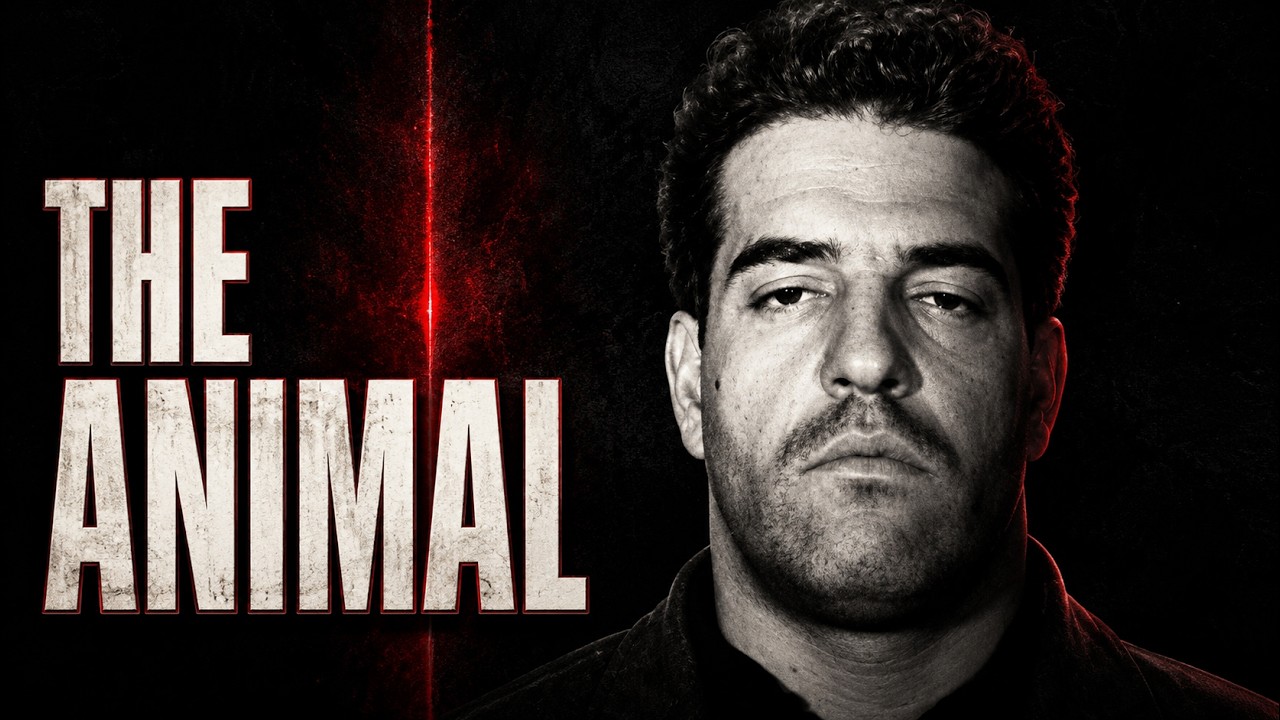
Joseph Barboza was violent, useful, and disposable. To the Mafia, he was muscle. To the FBI, he was a witness. To the men wrongfully convicted because of his testimony, he became something much worse.
His life started in New Bedford, moved through boxing rings, prison cells, Boston gang wars, and federal protection, then ended on a San Francisco street with four shotgun blasts. This is the story of how one mob enforcer became one of the most dangerous witnesses in America.
Joseph Barboza, Jr. was born on September 20, 1932, in New Bedford, Massachusetts, into a Portuguese immigrant family. His father, Joseph Barboza, Sr., born Jose Barbosa, came from Valpacos in northern Portugal and had tried his hand as a prize fighter. His mother, Palmeda Camille, worked as a seamstress.
Barboza grew up with two brothers, Donald and Anthony, and a sister named Ann. It was a working-class start, far from the criminal reputation that later followed him through Boston and beyond.
School did not hold him for long. Barboza had less than an eighth-grade education and was described as barely literate, though he could speak Portuguese, Italian, and Spanish. That mix tells you something about him early.
He lacked formal education, yet he understood people, neighborhoods, and language. Later, that helped him move through different ethnic circles in Massachusetts, including the criminal ones.
Before he became known as The Animal, Barboza entered the boxing world under the name The Baron. He fought as a light heavyweight, and his record was short with 11 professional fights. He won eight with five knockouts.
His first recorded fight came in 1949 in El Paso, Texas, and his last came in 1961 in Boston. Boxing gave him a public image built around strength, pressure, and punishment. It also placed him near men who moved between gyms, gambling, and the streets.
The ring did not keep him out of trouble. As a teenager, Barboza was already involved in robberies and assaults. In 1950, at 18 years old, he was sent to the Massachusetts Correctional Institution at Concord for five years. Prison became the first major stop in a life that kept turning toward violence.
Then came the 1953 escape. Barboza and six other inmates broke out of Concord after overpowering four guards and fleeing in two cars. It was described as the largest escape in the prison's 75-year history.
The breakout was reckless and short-lived. The men moved through parts of the Boston area, including Scollay Square, Lynn, and Revere, before they were caught at a subway station in East Boston less than 24 hours later.
That early chapter shows the pattern. Barboza had the body of a fighter, the temper of a street criminal, and the prison record to make other criminals notice him. By the time he returned to the streets, he already carried the kind of reputation that organized crime could use.
Barboza was paroled in 1958, and once he was back on the street, he did not move toward a clean life. He returned to the same world that had already shaped him: robberies, strong-arm work, and men who made money outside the law.
East Boston became one of his main bases, especially around the corner of Bennington Street and Brook Street. Among local criminals, that spot became known as Barboza's Corner.
By this point, Barboza was not a made Mafia member, and he did not yet have the power he would later chase. He was still building. Around him was a crew of small-time burglars and thieves, including Joseph Amico, Patrick Fabiano, James Kearns, Arthur Bratsos, Thomas DePrisco, Joseph and Ronald Dermody, Carlton Eaton, Edward Goss, and Nicholas Femia.
These were not boardroom criminals. These were street operators, men who stole, collected, threatened, and survived by reputation.
Barboza's value was simple. He could intimidate people. He had the body of a fighter, a prison record, and a temper that made even other criminals careful around him. In the street economy, that mattered.
Gambling debts had to be collected. Robberies needed muscle. Disputes needed men willing to hurt someone without needing a long explanation. This is where the name The Animal began to fit him. It was not a title of respect in any noble sense. It was a warning.
Barboza became known for extreme violence, the kind that made stories travel faster than facts. The more people feared him, the more useful he became to bigger players in Boston's underworld.
East Boston gave him a stage. The crew gave him reach. His violence gave him identity. By the early 1960s, Barboza was no longer only an ex-convict and former boxer. He was becoming a recognized figure in the Boston criminal world, a man who could be sent to collect money, settle problems, and scare people into obedience.
That reputation opened doors, but they were dangerous doors. Men like Barboza could rise fast because they were useful. They could also become disposable for the same reason.
By the early 1960s, Barboza had moved close to the Patriarca crime family, the Mafia organization that controlled much of New England's underworld from Providence, Rhode Island, with power reaching into Boston. The boss was Raymond L. S. Patriarca, one of the most important organized crime figures in the region.
Barboza was useful to that world because he had what crime bosses always needed: muscle, fear, and a willingness to do violence.
Still, Barboza had a limit placed on him from the start. He was Portuguese, not Italian. In the rules of La Cosa Nostra, that meant he could work with the Mafia, earn money for the Mafia, and kill for Mafia interests, but he could not become a fully initiated member. He could be an associate, not a made man.
That difference mattered. A made man had status and protection. An associate had value only as long as he remained useful.
Barboza operated around men tied to the Patriarca network, including Stephen "The Rifleman" Flemmi, who was connected to Boston's criminal circles. Barboza also trusted Vincent Flemmi, and through those connections he became tied to the wider street alliances that shaped Boston during the 1960s.
These were years when Irish gangs, independent criminals, and Mafia crews fought for control over gambling, loan-sharking, and street power. The McLean-McLaughlin gang war made men like Barboza even more valuable.
Boston's underworld was violent and unstable. Crews needed shooters, collectors, and enforcers who could push rivals back. Barboza filled that role. He was not a strategist sitting at the top. He was the man sent into the streets when fear needed to be delivered in person.
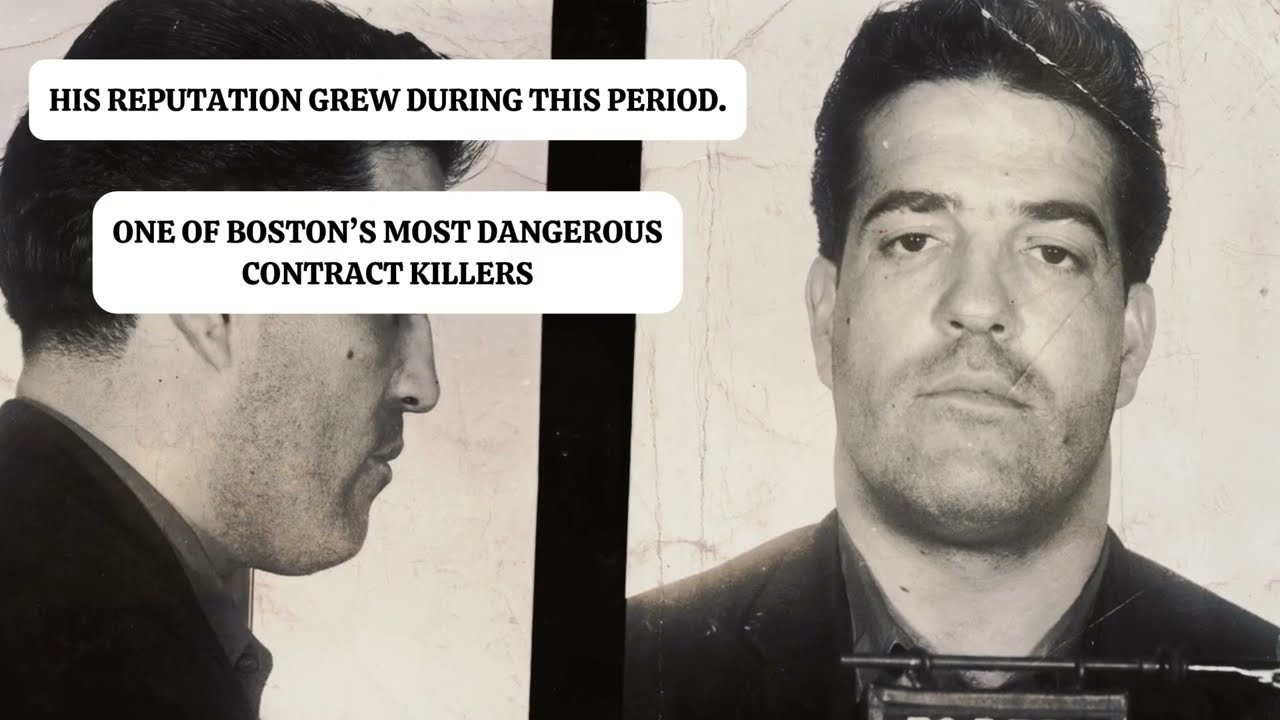
His reputation grew during this period. Law enforcement later viewed him as one of Boston's most dangerous contract killers and enforcers. He was linked to killings during the gangland conflict and was believed to have carried out murders for Raymond Patriarca.
By January 1966, Barboza was considered a powerful figure in Boston's underworld. That rise came with a problem. Barboza was violent enough to help the Mafia, yet he was never fully inside the family. He had power in the streets, but not real protection inside the organization.
That imbalance would become deadly. The same bosses who used him could later decide he was too loud, too dangerous, or too hard to control.
In March 1965, Edward "Teddy" Deegan was murdered in Chelsea, Massachusetts. Deegan was a minor underworld figure, not a boss, not a major power player, but his death would become one of the most important cases in the history of Boston organized crime and federal misconduct.
At the time, the killing looked like another gangland murder in a violent city. Boston's criminal world was already unstable. Crews were fighting, alliances were shifting, and men were being killed over gambling, burglaries, loan sharking, and control of the streets. Deegan had been involved in burglaries, and according to later accounts, that helped put him in danger.
Barboza's name would become tied to the case, but not in the honest way the courts first believed. Years later, the Deegan murder became the center of a wrongful conviction scandal because Barboza's testimony helped send six men to prison. Four of them were sentenced to death, and two received life sentences.
The deeper problem was that later evidence showed the case had been built on false testimony, hidden information, and FBI protection of criminal informants.
That is why Deegan's murder matters so much in this story. It was not only another killing from the Boston gang war. It became the case where the government's use of violent informants crossed into something far darker.
Barboza was not simply a witness with a dirty past. He was a violent criminal whose words were used to shape a murder case, even though later findings showed the truth had been buried. The damage lasted for decades. Men lost their freedom, families were destroyed.
The justice system defended a version of events that later collapsed, and behind it all was the same dangerous bargain that kept appearing in Boston. Law enforcement wanted access to the Mafia, and to get it, they relied on men who lied, killed, and protected themselves.
By 1966, Joe Barboza was no longer only useful to the Patriarca crime family. He was becoming a problem. He had a violent reputation, he drew police attention, and he was not always careful about whose territory he stepped into.
One report described him walking into a nightclub that was already paying protection money to Gennaro "Jerry" Angiulo, a powerful Boston Mafia figure, and demanding payments for himself too. That kind of move could not be ignored.
Then, in October 1966, Barboza was arrested in Boston's Combat Zone on weapons charges. He was riding with three local criminals when police stopped them and found guns. The others got out on bail, but Barboza's bail was set at $100,000. At that time, that was an enormous amount of money.
For Barboza, the message was clear. He needed help from the same underworld he had served. But the help did not come. Nobody from the Patriarca side posted his bail. Barboza sat in custody and started hearing that the Mafia itself may have tipped off police.
For a man like Barboza, that was more than abandonment. That was betrayal. He had collected for these men, hurt people for these men, and helped protect their rackets. Now he was locked up, exposed, and expensive to save.
Two of his associates, Arthur Bratsos and Thomas DePrisco, tried to raise the money. They gathered tens of thousands of dollars for Barboza's bail. Then they were murdered at the Night Light Cafe. Their bodies were placed in Bratsos's car and dumped in South Boston.
The money was gone. The killing looked like an attempt to steal the bail cash and push suspicion toward Irish gang rivals. Another associate, Joe Amico, was also murdered around this same period.
To Barboza, the pattern looked obvious. His people were being killed, his money was being taken, and the men above him were not protecting him. The same criminal system that had used his violence now seemed ready to erase him.
This was the break. Barboza was sitting behind bars, angry, frightened, and surrounded by proof that loyalty in the Mafia had limits. He had never been a made man. He had never been truly protected, and once he became more trouble than he was worth, the bosses treated him like a loose end.
That betrayal would push Barboza toward the FBI, not because he became clean, not because he found a conscience. He turned because the street code he had lived by had collapsed around him, and he believed the mob had marked him for death.

By the summer of 1967, Joe Barboza was locked up and convinced the Patriarca crime family had turned against him. His bail had not been paid. Men connected to raising money for him were dead.
Then Stephen "The Rifleman" Flemmi, a Boston mob associate, warned him that Gennaro "Jerry" Angiulo and his brothers had plans to kill him. For Barboza, the message was simple. The mob had used him, left him in jail, and now might want him gone.
That is when the FBI found its opening. Agents had already been trying to turn him, and Barboza finally agreed to cooperate. He did not become an informant out of morality. He turned because he was trapped, angry, and afraid for himself and his family.
The government also put pressure on him by making clear that his wife and children would not be protected unless he testified.
Barboza became one of the most important government witnesses in New England organized crime history. He gave information against Raymond Patriarca, the boss of the New England Mafia, and Henry Tameleo, a high-ranking Patriarca figure.
On June 20, 1967, Patriarca and Tameleo were indicted for conspiracy to murder Providence bookmaker Willie Marfeo. That case hit the leadership directly.
Barboza also gave testimony tied to Gennaro Angiulo, the powerful Boston underboss who controlled major gambling and loan sharking interests. Angiulo was accused in connection with the murder of Rocco DeSeglio, though he was later found not guilty. Even with that result, the damage was clear.
Barboza had crossed a line that few mob associates crossed in open court. His cooperation changed the balance between the Mafia and federal law enforcement.
Barboza was a violent criminal with years of blood behind him. Yet he also became a weapon for prosecutors. He was moved between secure locations, and his role helped push the government toward what became the federal witness protection program.
For the Patriarca family, Barboza was now more than a problem. He was a traitor with names, dates, and stories the government wanted to use. For the FBI, he was a chance to reach men who had always been hard to convict.
That bargain would bring major cases, major headlines, and later one of the darkest scandals in Boston legal history.
In May 1968, the Deegan murder case went to trial, and Joe Barboza became the star witness. The case centered on the 1965 killing of Edward "Teddy" Deegan in Chelsea, Massachusetts. By then, Barboza was cooperating with the FBI, and prosecutors used his testimony to build a case against six men.
The trial lasted for weeks. Barboza took the stand as a man who claimed to know the underworld from the inside. That was true in one sense. He had worked around mob crews, knew violent men, and had been part of Boston's criminal life. The problem was that his testimony was later shown to be false in key ways.
The jury convicted all six defendants. Peter Limone, Louis Greco, Henry Tameleo, and Ronald Cassesso were sentenced to death. Joseph Salvati and Wilfred Roy French were sentenced to life in prison.
Nobody was executed, yet the damage was already done. Men lost decades of their lives. Families were broken. The court had accepted the word of a violent informant whose story served both his own interests and the government's larger fight against the Mafia.
Years later, the Deegan case collapsed under the weight of what had been hidden. Later accounts showed that Barboza helped frame men who had not taken part in the murder. Some later findings and witness accounts differ on the exact roles of each person involved in the killing, so that part must be handled carefully.
What became clear is that Barboza's testimony helped send innocent men to prison, and federal agents had information that contradicted the story used in court.
Joseph Salvati was eventually released in 1997. Peter Limone was released in 2001. Henry Tameleo and Louis Greco died in prison after serving decades. In 2007, a federal judge found that the FBI helped cause the wrongful convictions, and the government was ordered to pay damages.
This was the real poison inside the Barboza deal. The government wanted a witness who could hurt the Patriarca family. Barboza wanted protection and revenge. In the middle were men who became useful targets.
The Deegan trial showed how dangerous it is when law enforcement depends on killers and then protects the lies those killers tell.
After the Deegan trial, Joe Barboza was valuable to the government and hated by the mob. That made protection difficult from the start. On January 30, 1968, a bomb was planted in the car of his attorney, John E. Fitzgerald. Fitzgerald survived, but he lost his right leg below the knee. The message around Barboza was clear. Anyone close to him could become a target.
Federal authorities began moving Barboza from place to place. He was held at Thatcher Island off Cape Ann, then Fort Devens, and later Fort Knox in Kentucky. These moves were meant to keep him alive because his testimony had reached the top of the New England Mafia.
Raymond Patriarca and other powerful men now had every reason to see him as a threat.
In March 1969, Barboza was paroled under a new identity, Joseph Bentley. He was sent to Santa Rosa, California, far from Boston and Providence. The government placed him in a new setting with a new name, and he enrolled in culinary arts school.
The idea was simple: take the witness out of the old world and give him a chance to disappear. But the plan had problems. Barboza had reportedly been promised help starting a restaurant and even plastic surgery to change his appearance. Those promises were not fulfilled.
Instead of becoming invisible, he became angry and restless. The government could move him across the country, but it could not erase the habits that had shaped his life.
California was supposed to be a reset. For Barboza, it became another place where crime followed him. He found work including kitchen work, but he did not stay away from violent people or violent choices.
By 1970, he was already involved in trouble again in Santa Rosa. That year, Barboza killed a man named Clay Wilson. The details of that killing showed how badly the witness protection experiment had failed.
The government had taken a mob killer, protected him because he was useful, and placed him into a new community. Then another man ended up dead. Barboza had escaped the Mafia for the moment, but he had not escaped himself. His name changed. His address changed. His danger did not.
By 1970, Joe Barboza's new life in California had already started to fall apart. The government had moved him away from Boston, placed him under a new identity, and tried to give him a quieter future in Santa Rosa. But Barboza did not stay quiet for long.
That summer, he became involved with a small-time criminal named Clay Wilson. Wilson had talked about money and valuables connected to burglaries. Barboza wanted a piece of it, and the situation turned violent.
While out in the country with Wilson and two women, Barboza shot Wilson and killed him. His body was later hidden under a tree stump.
This murder exposed the danger of the government's gamble. Barboza had been protected because he helped prosecutors strike at the New England Mafia. But in California, away from the mob war, he was still the same violent man. Witness protection had changed his name and location. It had not changed his behavior.
After his arrest, Barboza tried to use his value to the government as leverage. He threatened more than once to take back his earlier testimony from Boston. That mattered because his testimony had helped convict major figures and had already become central to federal organized crime cases. If Barboza recanted, it could create serious problems for the government.
Federal officials came to his aid during the California case. Agents and prosecutors who had benefited from his testimony helped support his claim that he acted in self-defense, even though Wilson was described as unarmed.
In the end, Barboza pleaded guilty to second-degree murder. He was sentenced to prison and served his time at Folsom. He remained there until late 1975, when he was released.
By then, his usefulness as a government witness had weakened, his protection had failed, and his enemies had not forgotten him. California had not become a safe second life. It became another crime scene, another prison term, and another step toward the final trap waiting for him in San Francisco.
Joe Barboza walked out of prison in late 1975, but freedom did not mean safety. By then, the government had moved him, renamed him, and used him as a witness. The mob had not forgotten.
He settled in San Francisco under another identity, living far from the Boston streets where his reputation had been made. But distance did not erase the price on a turncoat's head.
In San Francisco, Barboza connected with James Chalmas, a small-time hoodlum from South Boston. That connection became fatal. Chalmas tipped off Gennaro "Jerry" Angiulo, the powerful Boston Mafia figure who had long viewed Barboza as a threat. Once Angiulo learned where Barboza was, the old world reached across the country.
On February 11, 1976, Barboza left Chalmas's apartment in San Francisco's Sunset District and walked toward his car. He was armed, but it did not matter. A van pulled up and shotgun blasts hit him at close range.
Barboza, the former boxer, enforcer, informant, and protected witness, died on the street before he could defend himself.
For years, the full details of the hit were not publicly clear. Later, FBI bugs picked up conversations involving Ilario Zanino, a top enforcer for Angiulo. In those recordings, Zanino implicated Joseph Russo in the assassination and also placed himself close to the killing.
The hit was not random. It was punishment. Barboza had broken the underworld rule that mattered most to men like Angiulo. He had talked.
But Barboza's death did not end the damage he left behind. The Deegan murder case kept coming back. Over time, later witnesses, investigations, and court findings showed that Barboza's testimony had helped frame men who spent decades in prison.
Joseph Salvati and Peter Limone were eventually released. Henry Tameleo and Louie Greco died before they could get their lives back.
The scandal exposed something larger than one lying informant. It showed how federal agents in Boston protected dangerous criminals because they wanted information on the Mafia. The government's bargain with Barboza helped produce convictions, but it also helped bury the truth.
In 2007, the federal government was ordered to pay major damages for the wrongful convictions tied to the Deegan case.
That is the final weight of Joe Barboza's life. He hurt people as an enforcer. He hurt people as a witness. Then the same violent world he served finally caught up with him in San Francisco.
His death closed his part of the case, but it did not close the wound he helped open inside the justice system. Barboza died in 1976, but the real consequences kept living in courtrooms, prison cells, and families for decades.