On the morning of October 10, 1918, the RMS Leinster left Kingstown Harbour on its regular mail run to Holyhead. Among the passengers were three women from the same household: Lady Alexandra Phyllis Hamilton, the family cook Martha Bridge, and a servant, Eleanor Strachan. Somewhere east of the Kish Bank, a German torpedo from UB-123 struck the ship on the port side. The Leinster went down in minutes, and 564 people died. All three women were among them.
Phyllis was 42 years old, unmarried, and the daughter of one of the grandest aristocratic families in Ireland. The public knew the name Abercorn. It meant Ulster, tens of thousands of acres, a ducal title, Baronscourt, and royal godparents. What the public did not know was that the woman who had built that family, Maryana Curzon-Howe, Duchess of Abercorn, was by the autumn of 1918 running out of children to bury.
This is the story of a dynasty that seemed to exist beyond the reach of ordinary catastrophe, and of the mother who gave it nine children and lost seven of them. Four died in the nursery, one at Ypres, one in silence, and one on a mail boat in the Irish Sea 32 days before the war ended.
To understand how a daughter of Baronscourt came to die on a mail boat, and how a family that had spent centuries arranging its own permanence could not protect the people inside it, the story must begin earlier. It begins in the valley in County Tyrone, with the marriage that brought Maryana Curzon-Howe into the Hamilton family, and with the long, careful construction of a dynasty so deeply rooted that it appeared immune to ordinary grief.
The Abercorn name, by the time Mary married into it, meant something very specific in the vocabulary of British and Irish power. It meant Ulster, acreage on a scale most families could not conceptualize, a ducal title created in 1868, and a family seat occupied since 1612. The Hamiltons were not merely aristocrats with an Irish estate. They were part of the architecture of British rule itself.
The man who assembled the late Victorian version of the dynasty was James Hamilton, first Duke of Abercorn. He rose through conservative politics with the steady trajectory of a man whose chief talent was being precisely what was expected of him. He served twice as Lord Lieutenant of Ireland, the Crown's ceremonial representative in Dublin Castle, and entertained lavishly.
The Lord Lieutenancy explains the particular flavor of the Abercorn claim to power. The position was ceremonial, representational, and deeply symbolic. For a family already rooted in tens of thousands of acres of Ulster soil, it confirmed that the Abercorns were not simply living in Ireland. They were governing it.
In 1868, Disraeli's government elevated the first Duke from Marquess to Duke. A dukedom was the highest rank in the peerage below royalty itself. It was the final act of construction. A Marquess could afford a quiet generation. A Duke could not.
His wife completed the design. Louisa Jane Russell was the daughter of the sixth Duke of Bedford, connecting two of the most powerful dynasties in the British Isles. Louisa understood that a Duchess's primary function was reproductive and strategic. Her household became a marriage factory of remarkable efficiency.
Daughters were placed into high-ranking families with the precision of diplomatic appointments. Sons were channeled into politics, the military, or the court. No child was merely born. Every child was deployed. The operating principle was never stated because it never needed to be stated: rank must be maintained, alliances must be useful, and private feelings were secondary to the continuation of the name.
That principle is the machinery that Maryana Curzon-Howe married into on January 7, 1869, at St. George's, Hanover Square. The system was already complete before she arrived. Her role was not to redesign it. Her role was to supply it with children.
What nobody standing in that church could have known was that the system would protect the name far more efficiently than it would protect the human beings who carried it.
The scale of the estate must be made plain because it explains the pressure behind everything the family did. In the 1870s, the Duke of Abercorn's Irish holdings included almost 16,000 acres in Donegal and more than 47,000 acres in Tyrone. By 1883, the second Duke held 76,500 acres across Tyrone and Donegal, with additional property in Scotland.
Baronscourt functioned as the visible proof of that permanence. The estate still describes itself as the home of the Duke of Abercorn's family since 1612, and the claim has barely altered across four centuries. Everything at Baronscourt was designed to communicate duration, to tenants, to neighbors, and most importantly to the family's own children.
To grow up there was to understand before you could articulate it that the house was more durable than any single life inside it. The valley endured, the title endured, the individual was temporary.
The world surrounding the family was not stable, even if the estate made it look that way. The Abercorns had risen to their greatest prominence during the high Victorian era of Anglo-Irish landlord power. By the time Mary's children were growing up in the 1880s and 1890s, that authority was under sustained attack.
The land war had convulsed the Irish countryside. Tenants were organizing and rents were being challenged. The parliamentary struggle over Irish home rule had turned the governance of Ireland into the most divisive question in British politics. Families like the Abercorns, unionist to the core, found themselves defending not merely their estates but the political order that justified their existence.
The dynasty was not collapsing. Not yet. But the ground beneath it was shifting. Her eldest surviving son would end up not as a great Irish landowner in the old sense, but as the first governor of Northern Ireland, a ceremonial role in a partition state created from exactly the kind of upheaval the family had spent centuries trying to prevent.
Maryana Curzon-Howe was born on July 23, 1848, the daughter of Richard Curzon-Howe, first Earl Howe, and Anne Gore. She came from a world that overlapped with the Abercorns without quite matching it, English rather than Anglo-Irish, naval rather than territorial. She became in time a lady-in-waiting to Queen Alexandra.
The public saw a Duchess in attendance on a queen. What the public did not see was a woman who spent the better part of two decades pregnant, who buried four infant sons before any of the public tragedies arrived, and whose emotional life was structured by a cycle of conception, birth, christening, hope, and burial that the outside world chose to treat as ordinary.
Her husband, James Hamilton, second Duke of Abercorn, was born on August 24, 1838, the eldest son of the first Duke. He was educated at Harrow and Christ Church, Oxford, and moved through the expected stations with the measured confidence of a man for whom deviation had never been a serious possibility.
He was an institutional man, a man who embodied the family's public gravity through the accumulation of offices, duties, and appearances rather than through any single dramatic act. For his children, that steady, undramatic authority created a model that was almost impossible to challenge.
Their eldest surviving son, James Albert Edward Hamilton, was born on November 30, 1869, barely ten months after his parents' wedding, with the Prince of Wales as his godfather. He was educated at Eton, served in the military, and built a long unionist political career that would culminate in his appointment as the first governor of Northern Ireland in 1922.
James Albert was the child the entire system existed to produce. The heir. The continuation. His marriage in 1894 to Lady Rosalind Bingham, daughter of the fourth Baron Lucan, was itself a dynastic act. The system functioned through him. Everyone else inherited the duty to be useful or the permission to disappear.
Lady Alexandra Phyllis Hamilton was born on January 23, 1876, with Queen Alexandra herself as one of her godmothers. Phyllis never married. She remained within the orbit of family duty and aristocratic femininity, inhabiting the kind of life the late Victorian and Edwardian world had quietly arranged for well-born daughters who did not marry.
She was not scandalous. She was not defiant. She was simply present inside the family, beside the family, useful to the family. A woman whose existence confirmed the household's completeness without requiring the world to take particular notice of her.
She was 42 years old when she boarded the RMS Leinster with the family cook and a servant. The titled daughter, the cook, and the maid. They died together.
Lady Gladys Mary Hamilton was born on December 10, 1880, and followed the path the family's machinery had prepared for its daughters. In 1902, she married Ralph Howard, seventh Earl of Wicklow, and produced a son. This was the classic dynastic transaction, a daughter redistributed through marriage into another titled family.
Gladys died in March 1917 at the age of 36. The public record is quieter about the circumstances of her death than about almost anything else in this story. What matters is the timing. Gladys died a year before Phyllis. Mary lost both of her daughters in successive years.
The memorial she later erected inside the church at Baronscourt to both of them together in stone is the act of a mother who had exhausted every other way of holding her children.
Lord Arthur John Hamilton was born in 1883, educated at Wellington College, and commissioned into the Irish Guards. He rose to captain and was appointed deputy master of the household, a court position that confirmed the pattern. The Abercorn sons served in uniform, and they served at court.
At 30 years old, on November 6, 1914, during the First Battle of Ypres, Arthur was killed. His name is inscribed on the Menin Gate, commemorated alongside the tens of thousands of men whose bodies were never recovered from the Flanders mud. There was no body. There was no grave to visit.
Lord Claud Nigel Hamilton, the youngest of the five children who reached adulthood, was born in 1889. He served in the First World War, survived it, and built a career as a courtier, serving in the households of George V, Queen Mary, and eventually Elizabeth II. He never married and died in 1975 without issue.
And then there were the four who never had the chance to become anything at all. Claud Penn Alexander, born in 1871, dead in infancy. Charlie, born in 1874, dead in infancy. Claud Francis, born in 1878, dead in infancy. And an unnamed stillborn boy in 1886.
Four sons born and lost before the family's visible tragedies began. They are not footnotes. They are the foundation of Mary's private experience of motherhood, a pattern of pregnancy and burial that the social world around her either did not notice or did not consider worth acknowledging publicly. The dynasty looked fertile. The nursery was unstable from the start.
The family took its public shape with Mary's marriage at St. George's, Hanover Square, on January 7, 1869. A winter wedding in one of London's most fashionable churches. Two powerful families joined. A bride of 20 entering one of the leading ducal houses in the British Isles.
The heir arrived that same year, securing the succession almost immediately. Once the heir existed, every later child entered a pre-written hierarchy. The eldest son was the future duke. The second son was the reserve. The daughters were potential alliances, their value measured in the rank and connection of the husband who could be secured for them.
A duke's nursery in this period was not a place of uncomplicated joy. It was the production floor of a dynasty, and the losses that occurred there were treated as operational setbacks rather than existential wounds.
For a stretch of years that lasted perhaps a decade and a half, the household appeared to function with the seamless authority the outside world expected of it. Baronscourt in season, the long Tyrone summers, the shooting calendar. London for the court calendar, the townhouse, the season. Royal godparents at christenings. Military commissions arranged for the boys. Marriage prospects quietly assessed for the girls.
But the private record does not support the public image. By the time Mary had carried nine pregnancies, four of her sons were dead. Claud Penn Alexander in 1871, barely two years after the wedding. Then Charlie in 1874, then Claud Francis in 1878, then the unnamed stillborn boy in 1886.
This was not a single catastrophe. It was a pattern. Slow, repetitive, and invisible to anyone who was not inside the nursery. Mary was 38 years old by the time the last of these losses occurred. She had been producing children for the Abercorn name for 17 years.
There was no public language for what this cost Mary. There was no mechanism inside the world she inhabited for a duchess to say that the thing she had been asked to do was producing funerals as reliably as it produced heirs. The christenings happened. The burials happened. And the social world around her continued to see what it preferred to see.
If you had visited Baronscourt in 1890, you would have seen a great house at the height of its confidence. You would not have seen the four small graves.
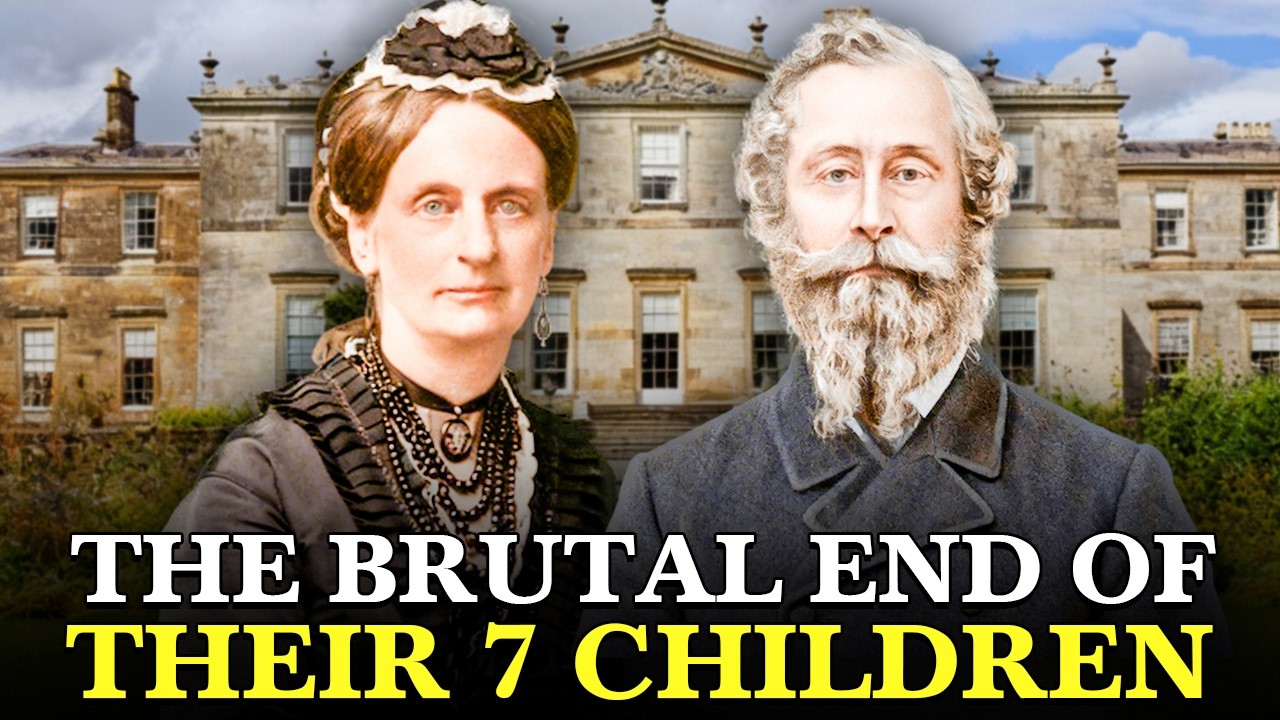
By the close of the 1880s, the Abercorn family appeared to have achieved everything the system was built to produce. The title was secure. The heir was healthy and growing. The daughters were being prepared for their futures. The estate was vast, profitable, and administratively sound. And inside that achievement, Mary had already buried four children.
The years between the Diamond Jubilee and the turn of the century were, for a family like the Abercorns, a period of almost theatrical confidence. The empire was still expanding. The great estates of Ireland and England still functioned as private kingdoms. The Abercorns occupied a position inside that world that was as close to unassailable as the British aristocracy could offer.
The second Duke was approaching the summit of his public career in the accumulative way that characterized men of his rank. He chaired boards, including the Great Northern Railway of Ireland. He attended the House of Lords. He was, in the phrase the Edwardians would have understood instinctively, a man of weight.
His wife was lady-in-waiting to Queen Alexandra, which placed the family inside the private domestic circle of the monarchy itself. Their eldest son had come down from Eton and entered the military. In 1894, James Albert married Lady Rosalind Bingham, and the next generation of the dynasty began to take shape.
For the daughters, the best years had a different texture, defined above all by the understanding that a daughter's value was transactional. Gladys, the elder of the two, had been brought up inside the household's expectation that she would marry well, and in 1902, at the age of 21, she did.
Gladys produced a son. The alliance was sealed. She was no longer an Abercorn daughter waiting in the drawing room. She was the Countess of Wicklow, installed in another titled household, her value to the dynasty fully realized. Whether Gladys wanted that particular future is not something the record tells us.
Phyllis's story was different, and the difference was never acknowledged publicly because the social world the Abercorns inhabited had no vocabulary for it. She did not marry. The reasons are unrecorded, and the silence itself is instructive.
Perhaps she chose not to marry. Perhaps no suitable match presented itself. Perhaps the family's own calculations meant that Phyllis's unmarried state served the household's needs as efficiently as Gladys's marriage served its ambitions. Whatever the reason, the outcome was the same. She was the daughter who stayed.
In a house built around the heir, the daughter who stayed was both essential and invisible. Always present, never quite the point.
Arthur, meanwhile, had followed the path the family had laid for its younger sons with a directness that left no room for ambiguity. Wellington College had shaped him, then the Irish Guards, the regiment most closely associated with Anglo-Irish aristocratic service. Arthur served. He rose to captain. He was appointed Deputy Master of the Household.
An Abercorn son was useful or he was nothing. The estate would not be his. The title would never be his. What he could have was a role, defined by the family, sanctioned by the crown, visible enough to honor the name without competing with the heir.
Claude Nigel, the youngest, was still a boy during these years. Born in 1889, he was a decade behind Arthur and nearly 20 years behind the heir. His childhood at Baronscourt would have been shaped by absorption of its atmosphere. The vast parkland, the servants' deference, the slow Tyrone seasons, the knowledge, absorbed rather than taught, that this house and this valley and this name were the most important things in the world.
These were the best years because nothing on the surface was wrong. The heir was married and producing the next generation. One daughter had been successfully placed. The younger sons were in service. The estate was vast and functioning. And if you had visited Baronscourt in, say, 1905, you would have seen something that looked like a dynasty that had mastered the central challenge of aristocratic life.
But the surface was not the whole story. The Abercorn architecture created radically unequal futures for the children inside it, and by the early 20th century, those inequalities were becoming visible.
James Albert had everything. The heir's position was not merely one of privilege within the family. It was a complete identity. He did not need to seek purpose. Purpose was his birthright. Beside him, everyone else was diminished, not by cruelty, not by deliberate neglect, by architecture.
The system that elevated the heir necessarily reduced the others to supporting roles, and those roles were defined not by what the individual wanted, but by what the dynasty needed. Arthur needed to serve in uniform. Claude Nigel needed to serve at court. Gladys needed to marry into another title. Phyllis needed to remain available for whatever the household required of her.
When Arthur died at Ypres, the loss was devastating not only because he was young, not only because the war was brutal, not only because there was no body to bury, but because he had spent his entire life inside a system that valued him primarily for his usefulness. The same logic that had given Arthur his commission had given him his death.
The first fracture came on June 3, 1913, and it came not through scandal or war, but through the ordinary inevitable mechanism that every dynasty must eventually confront. James Hamilton, second Duke of Abercorn, died. He was 74 years old. He had held the title for 28 years.
The death of a duke is never merely a private event. It is an administrative, legal, and social reorganization. The title passes not by choice or deliberation, but by the automatic operation of law. The eldest son becomes the duke in the instant his father ceases to be one.
For Mary, the most immediate consequence was a change of title that carried an entire change of identity. She was no longer the Duchess of Abercorn. She was the Dowager Duchess, a designation that carried honor but diminished authority. Mary, at 64, was no longer the woman at the heart of the Abercorn machine.
Her son, James Albert, was the third Duke. His wife, Rosalind, was now the Duchess. Baronscourt's future belonged to the next generation, and Mary's role was to step back with the grace that her class and her era demanded of widows.
The transition alone would have been enough to test any family. But the timing made the fracture deeper and more ominous than it might otherwise have been. The second Duke died in June 1913. Fourteen months later, Britain would be at war.
What the second Duke's death did, in retrospect, was remove the last layer of protection between Mary's children and the world that was coming. While the father was alive, the family had a center. Once he was gone, each of them stood more exposed.
The political world around the family was darkening, too. In Ireland, the Home Rule crisis had reached a pitch of intensity that made the question of Irish self-governance feel like an imminent threat to everything the Abercorn world represented. The Ulster Unionist Council was organizing resistance. Edward Carson was rallying Protestant Ulster. The Ulster Volunteer Force was drilling.
The family's Unionism was not a casual political preference. It was existential. The Abercorns' wealth, their authority, their social position, their identity as an Anglo-Irish ducal house, all of it depended on the continuation of the union with Britain. Baronscourt was not simply a country house in a beautiful valley. It was a Unionist outpost under political siege.
When Arthur went to France in the autumn of 1914, he went not merely as a British officer doing his duty, but as the younger son of a family whose relevance was already being contested on its own doorstep.
Mary was 65 years old when the war began in August 1914. She had already buried four infant sons and a husband. What the name had not yet survived was a European war. And the war was coming not for the name. Names survive wars. That is what they are designed to do. It was coming for her children.
The war, when it came, came quickly for the Abercorns. Fourteen months separated the second Duke's death from the outbreak of war. Five months separated the outbreak of war from the death of his son. The family had barely finished adjusting to one loss when the next one struck.
Arthur went to France with the Irish Guards in the autumn of 1914, part of the first wave of the British Expeditionary Force. He was a professional officer. He had trained for this. The Irish Guards were among the finest infantry regiments in the British Army, and their officers were expected to lead from the front.
Arthur was 30 years old. He was a captain. He was the Deputy Master of the Household, a court appointment that meant nothing in a Belgian field, but everything about the world he had come from. He was the younger son of a Duke, carrying a name recognized in every officer's mess in the army.
The First Battle of Ypres, which began in October 1914 and ground on into November, was the engagement that ended the war's brief phase of movement and inaugurated the static, attritional horror of trench warfare. The British Expeditionary Force was outnumbered. The fighting was close, chaotic, and devastatingly costly.
Arthur was killed on November 6, 1914. His body was never recovered, and his name was later inscribed on the Menin Gate at Ypres, the memorial that bears the names of nearly 55,000 British and Commonwealth soldiers who fell in the Ypres Salient and have no known grave.
The news reached Baronscourt in the way that such news reached every household in Britain and Ireland during the autumn of 1914. By telegram, by official notification, by the arrival of words on paper that converted a living son into a name on a casualty list. Mary was 66 years old. She had now lost five of her nine children.
The public response was dignified and institutional, as the public response to aristocratic war dead always was in the early months of the conflict. Arthur was honored. His service was noted. His sacrifice was folded into the larger narrative of national duty and noble obligation.
None of that language touched what the loss actually meant inside the family. Arthur's death did not remove one person from the household. It altered the emotional architecture of every relationship that remained.
The heir, James Albert, was now the duke whose younger brother had been killed in the war's first autumn, a man whose own survival carried for the rest of the conflict the particular and uncomfortable weight of being the brother who stayed behind. Dukes were not sent to the front line.
The system that had made James Albert the heir had also made Arthur the expendable son, the son whose value lay in service rather than in inheritance, the son who could be sent to the Western Front because the dynasty did not depend on his survival in the way it depended on the heir's.
For the women in the family, Arthur's death created a different kind of alteration. Phyllis was no longer simply the unmarried daughter living within the family orbit. She was now the unmarried daughter in a house that had been marked by war death.
Before November 1914, Baronscourt was a great Anglo-Irish estate adjusting to a new duke, looking forward, settling in. After November 1914, it was a house in mourning, and not the gentle, expected mourning that had followed an elderly patriarch's passing, but the sharp, unnatural mourning that followed the killing of a young man.
Claud Nigel, the youngest surviving son, was 25 years old when Arthur was killed. He was himself in military service. What is known is that he served, that he endured, and that he came through the war alive. That survival would shadow the rest of his long life.
Claud Nigel did not choose to survive any more than Arthur chose to die. The war simply used them differently, and the difference was permanent. He would outlive Arthur by 61 years. He would spend those years in royal service, quiet, unmarried, childless, useful, present.
Mary, in those first months after Arthur's death, inhabited the grief that had no adequate public expression and no private outlet that her world would have considered appropriate. She was expected to grieve with dignity, to wear mourning, to accept condolences, to attend memorial services, and to conduct herself in a manner that honored her son's sacrifice.
The problem with that bargain is that the forms of noble grief do not actually address the experience of losing a child. They address the experience of witnessing someone else lose a child. They are designed for the audience, not for the mother.
Mary had already learned, through the infant deaths, that grief in her world was something to be absorbed rather than expressed. Arthur's death did not teach her grief. It merely confirmed that grief was the one subject in which she had been given the most practice and the least help. And the next was coming.
Lady Gladys Mary Hamilton, the Countess of Wicklow, died on March 12, 1917. She was 36 years old. Her son was 15. The public record offers less detail about Gladys's death than about almost any other event in this story. The cause is not prominently documented. The circumstances are not narrated with the specificity that Arthur's death or Phyllis's death can be reconstructed.
The absence of elaboration is itself a kind of evidence. In the Edwardian and Georgian world that the Abercorns inhabited, certain deaths were spoken about freely, and certain deaths were not. The deaths that were not spoken about were often the ones that carried the heaviest private freight.
Gladys died in March 1917. Arthur had been dead for two and a half years. The war was in its third year with no end in sight. Mary, at 68, had now lost a husband, a son killed in combat, and a daughter whose death the record declines to illuminate. She had also buried four infant sons.
Of the nine children Mary had carried and delivered for the Abercorn dynasty, six were now dead. Three remained: the Duke, the unmarried daughter, and the youngest son still in uniform.
The memorial that Mary later erected inside the church at the Baronscourt estate, to Gladys and to Phyllis, both of them named together, both of them commemorated in stone by their mother, is one of the most quietly devastating details in this entire story.
This was not a widow honoring a husband. This was not a son commemorating a father. This was a woman who had outlived her children arranging for the evidence of that fact to be cut into the wall of the family church. The stone would endure. The daughters would not.
The loss of Gladys also narrowed the family in a way that went beyond the arithmetic of grief. Before March 1917, the surviving adult children numbered four. After Gladys, there were three. And those three occupied radically different positions in relation to both the family and the war.
The Duke was safe. James Albert's war was political rather than military. His trajectory was upward even as the family around him contracted. Claude Nigel was still in uniform, still at risk, still inside the military machine that had already consumed his brother. And Phyllis was still at home, still unmarried, still moving through the narrowing world that the war had made of aristocratic female life.
By the spring of 1917, the Abercorn family's story had acquired a shape that no amount of public composure could disguise. It was the shape of a family being thinned out, not by a single catastrophe, but by a succession of losses that arrived separately across years, each one absorbed into the family's silence before the next one came.
The war ground on through the summer and autumn of 1917 and into the terrible winter that followed. In Ireland, the political landscape was shifting beneath the Abercorns' feet. The Easter Rising of 1916 had transformed the terms of the Irish question. Sinn Féin was ascendant. The old constitutional nationalism was collapsing.
Then 1918 came, bringing with it the war's final convulsions. Claude Nigel survived. The Duke continued his political work in Ulster. And Phyllis continued her quiet, dutiful existence within the family orbit, still in Ireland, still unmarried, moving between the Abercorn household with the modest retinue of servants that her position entitled her to.
The household cook, Martha Bridge, and a servant, Eleanor Strachan, were part of the small female world that surrounded Phyllis in the absence of a husband or children of her own. These were the women she traveled with, ate with, relied upon, not as intimates in the way the modern world uses the word, but as the human framework of a titled woman's daily existence.
By the autumn of 1918, the war was entering what would prove to be its final phase. The Great German Spring Offensive had been launched and turned back. The Allied forces were advancing along the Western Front. Germany's military position was deteriorating by the week. The end was coming, but the end had been reportedly coming before.
In early October 1918, Phyllis prepared to travel from Ireland to Britain. The route was the Kingstown to Holyhead mail boat, the RMS Leinster, operated by the City of Dublin Steam Packet Company. A familiar vessel on a familiar crossing that thousands of passengers took each month without incident.
She was accompanied by Martha Bridge and Eleanor Strachan. Three women from the Abercorn household boarding a mail boat on a Thursday morning in early autumn. The daughter of a duke, the family cook, and a servant. They had no reason to believe the crossing would be anything other than what it had been every other time they had made it.
Mary had now lost a husband, four infant sons, an adult son at Ypres, and a daughter in circumstances the family chose to absorb in silence. Seven of her nine children were dead. Phyllis was 42 years old. The armistice was three weeks away.
The morning of October 10, 1918, was a Thursday. The RMS Leinster was scheduled to depart Kingstown, the harbor town south of Dublin that would later be renamed Dún Laoghaire, on her regular mail run to Holyhead on the Welsh coast.
The Leinster had been making the passage for years. She was not a grand liner. She was not a warship. She was a mail boat, a functional working ship designed for the mundane essential business of carrying letters, parcels, and passengers across a stretch of water that was narrow enough to be completed in a few hours and wide enough in wartime to hide a submarine beneath its surface.
Estimates of the total number of people aboard vary, but the figure most commonly cited places it in the range of 700 to 800 passengers, crew, and military personnel combined. Among the military passengers were soldiers returning to duty, servicemen on leave, and members of the Royal Engineers Postal Section.
The passengers who boarded the Leinster that morning were, for the most part, the kind of people who treated the crossing as routine. They boarded a mail boat, found their places, and waited for the departure as they had waited for countless departures before.
Among them were three women from the Abercorn household. Phyllis was the mistress, Martha was the cook, Eleanor was the servant. The hierarchy was clear, and it would have been maintained even in the informality of a mail boat crossing.
The Leinster departed Kingstown that morning and headed out into Dublin Bay, following the route she had followed hundreds of times before. The weather was not extreme. The sea was not calm, but it was not dangerous. The ship carried, in addition to her civilian passengers and crew, a significant number of military personnel.
The submarine was UB-123, a German coastal U-boat operating in the Irish Sea under the command of Oberleutnant zur See Robert Ram. She had been patrolling the approaches to Dublin Bay, waiting for targets in one of the busiest shipping lanes in the British Isles.
The first torpedo was fired as the Leinster made her way through the water east of the Kish Bank. It missed or struck without delivering a fatal blow. Accounts differ, and the chaos of the event makes precise reconstruction difficult. What is not in dispute is that the Leinster's master, Captain William Birch, attempted to turn the ship back toward Kingstown.
He did not have time. The second torpedo struck the Leinster on the port side forward, and the detonation was devastating. The mail boat's hull, built to carry letters and passengers and livestock, not to absorb the concentrated force of a warhead, ruptured. The sea entered the ship.
The ship began to list and settle. The order to abandon ship was given, but the speed of the sinking and the damage to the vessel's structure meant that the evacuation was chaotic, incomplete, and in many cases impossible. Lifeboats were lowered. Some reached the water intact. Others were damaged or capsized.
People jumped into the sea. People were thrown into the sea. People who had been below decks when the torpedo struck never reached the decks at all. The Irish Sea in October is not the North Atlantic in winter, but it does not need to be. The water temperature was cold enough to kill through hypothermia within an hour.
The Leinster sank within minutes of the second torpedo strike. The speed of the sinking was the single most devastating factor in the death toll because it meant that the evacuation could never be completed. There was not enough time to launch all the boats. There was not enough time to get all the passengers on deck.
The rescue effort began almost immediately. Naval vessels, patrol boats, and fishing craft from Kingstown and the surrounding coast all responded, but the rescuers arrived to a scene of profound distress. Bodies in the water, some alive and some not, wreckage, overturned lifeboats, people clinging to debris.
The final death toll, as calculated by researchers associated with the National Maritime Museum of Ireland, stands at no fewer than 564 people. That figure makes the Leinster sinking the single greatest loss of life in the Irish Sea and one of the deadliest maritime disasters of the entire war.
Phyllis did not survive. Martha Bridge did not survive. Eleanor Strachan did not survive. The three women from the Abercorn household went into the Irish Sea together and the sea did not return them.
The exact circumstances of their deaths are not recorded with the precision that a family as prominent as the Abercorns might in other circumstances have been able to establish. The sinking was too fast, the death toll too large, the confusion too complete.
What is known is that Phyllis Hamilton, daughter of the second Duke of Abercorn, goddaughter of Queen Alexandra, the woman who had stayed inside the family orbit for 42 years without marriage or children or an independent trajectory of her own, died on the RMS Leinster in the Irish Sea on October 10, 1918. The armistice that would end the war was 32 days away.
There is something about the manner of Phyllis's death that concentrates everything this story has been building toward. She was not killed in battle. She was not killed by illness. She was not killed in a way that the family's culture of service and sacrifice could absorb into its existing language of noble loss.
Arthur's death at Ypres, for all its devastation, could be narrated within the framework the Abercorn world understood. A soldier, a battle, a regiment, a memorial. The family had a vocabulary for that kind of death. Phyllis's death offered no such framework. She was a civilian on a mail boat, traveling with her cook and her servant. And a torpedo killed her.
The randomness of it and the sheer grinding contingency of being on that boat on that morning resisted every attempt to give it meaning. There was no regiment to mourn her. There was no memorial gate to inscribe her name among the honored dead. There was only the fact that she had been there and now she was not.
The contrast between Phyllis's life and Phyllis's death is where the story's central truth becomes most visible. She had lived the most contained, most dutiful, most invisible life that the Abercorn system could produce. She had not married. She had not had children. She had not built a career or pursued an ambition or made a public mark of any kind.
She had stayed, and staying was her function, and the function was performed so quietly that the performance itself became a kind of disappearance. And then she died in the most public, most chaotic, most indiscriminate way possible.
The privacy that had defined her entire life was obliterated by the manner of her death. The invisibility that had been her condition for 42 years was reversed brutally and completely by a German torpedo. In death, Phyllis Hamilton became more visible than she had ever been permitted to be in life.
For Mary, the news of the Leinster sinking would have arrived in the way that catastrophic news arrived in Ireland in 1918. First as rumor, then as headline, then as the terrible suspended hours of not knowing, then as confirmation. The sinking was reported immediately. It was front-page news across Britain and Ireland.
Mary was 69 years old. She had now lost seven of her nine children. Four infant sons dead in the nursery before any of them reached an age where memory could properly hold them. Her husband dead at 74. Arthur dead at Ypres, his body unrecovered. Gladys dead at 36 in circumstances that the family's silence continues to guard. And now Phyllis, the daughter who had stayed, dead on a mail boat in the Irish Sea.
The arithmetic does not bear thinking about, but it must be thought about because arithmetic is what dynasties are built on. Nine children born to the Duchess of Abercorn for the continuation of one of the grandest houses in the British Isles. Four dead in infancy. One killed at Ypres. One dead in her 30s under circumstances the family chose to keep private. One drowned in the Irish Sea. Two sons remaining.

The immediate aftermath of the Leinster sinking was, for the families of the dead, a period of administrative anguish overlaid on grief. Bodies were recovered from the sea over the following days by rescue vessels, naval craft, and fishing boats. But not all bodies were recovered. The sea does not return everything it takes.
The process of identification was complicated by the scale of the disaster, the condition of the remains, and the chaotic circumstances of the sinking itself. Some of the dead were identified by documents found on their persons. Some were identified by personal effects. Some were identified only by the process of elimination.
For a family like the Abercorns, the practical dimensions of the disaster would have been managed by the machinery that managed everything in the household's contact with the outside world. Solicitors, agents, secretaries, the network of intermediaries that shielded a ducal family from the raw mechanics of bureaucracy.
But the practical arrangements, however competently they were handled, did not address the thing that no arrangement could reach. Phyllis was dead. The cook was dead. The servant was dead. And no amount of ducal authority could retrieve them from the Irish Sea.
The Abercorn household had, by this point, more experience with grief than any household should ever accumulate. But the Leinster was different from every loss that had preceded it. Every earlier death had been, to a greater or lesser degree, contained within the family's control. The Leinster destroyed that control.
Phyllis's death was sudden, violent, random, and reported in every newspaper in the kingdom. The family's private grief was now inescapably public property. The name Abercorn appeared in the Leinster casualty lists alongside the names of men and women who would never have found themselves in the same room as a Duke's daughter in life.
In death, the title that had separated the Hamiltons from ordinary Irish experience for three centuries could not separate Phyllis from ordinary Irish tragedy. She was one victim among 564. She was mourned by a Duchess and mourned by a nation. And the two mournings had nothing in common except the dead.
Inside the family, the loss rearranged everything that remained. The third Duke was now the brother who had lost two siblings to the war. Arthur, to a German bullet at Ypres. Phyllis, to a German torpedo in the Irish Sea. And a third sibling, Gladys, to causes the family kept private.
The system had worked exactly as it was supposed to work. The name survived, the house survived, the estate survived. The heir survived. And the children who were not essential to that survival had been consumed, one by one, by the forces that the dynasty's structure could not control and that its wealth could not deflect.
Claude Nigel, the youngest, was now one of only two surviving children of the nine Mary had born. He had come through the war physically intact. He was 29 years old. He was unmarried. He had no estate, no political career, no obvious future beyond the one the family's pattern suggested: service, duty, the attachment to institutional life.
He would never marry. He would never have children. He would spend the next 57 years in royal service, attached first to the household of George V, then to Queen Mary, then continuing into the reign of Elizabeth II, performing the quiet, invisible, essential duties that kept the monarchy's domestic machinery running.
He died in 1975 at the age of 86, alone in the way that unmarried, childless men are alone, carrying whatever he carried in the silence that his family and his era had taught him was the only acceptable response to things that could not be borne.
Mary had 11 years of life remaining. She would die in 1929 at the age of 80, having outlived seven of her nine children. In the years between the Leinster sinking and her own death, she would do what mothers in her position did. She would continue.
She would commission the memorial inside the Baronscourt estate church, the stone that bore Phyllis's name and Gladys's name together. She would watch her eldest son assume the role of first Governor of Northern Ireland in 1922. She would see Claude Nigel settle into royal service, quiet and unmarried, the last surviving echo of the generation she had brought into the world.
The dynasty would continue. The title would continue. Baronscourt would continue. The system Mary had served would endure, as it was designed to endure, absorbing loss and grief and catastrophe into its own continuity without ever pausing to ask whether the continuity was worth the cost.
The question this story must sit with is not whether the dynasty survived. Of course, the dynasty survived. Dynasties are machines built for survival. The question is what kind of survival this was, what it meant for a system to function exactly as intended and still leave a trail of dead children behind it.
What did it mean for a mother to spend 50 years inside that system, providing it with the one thing it required, heirs, spares, alliances, continuity, and then to watch the system outlive almost everything she had given it? And what remains in the end when the name endures and the people who carried it do not?
The armistice came on November 11, 1918, 32 days after the Leinster went down. The guns stopped on the Western Front. The bells rang in London and Belfast and Dublin and in the village churches of County Tyrone. The war that had consumed millions of lives was over.
For the Abercorn family, the armistice arrived as a fact rather than a release. The war was over. Arthur was still dead. Phyllis was still dead. Gladys was still dead. The end of the fighting did not reverse the losses. It merely stopped the accumulation of new ones.
Mary entered the post-war years as a woman whose public identity had been overtaken entirely by what she had lost. She was the Dowager Duchess of Abercorn, a title that by 1919 meant less to the world than the fact that she was the mother who had buried seven of her nine children.
She had done everything the family asked. She had married well. She had produced nine children across 20 years. She had appeared at court, served the Queen, managed one of the grandest households in Ireland, and raised her surviving children inside the framework of duty and service that the Abercorn name required. And the dynasty had used those children and given back, in the end, two surviving sons and a plaque on a church wall.
The years between 1919 and Mary's death in 1929 are, in the public record, quiet years. The household was the third Duke's household now. The decisions were the third Duke's decisions. The political future was the third Duke's to navigate. Mary's role was to occupy the space the family reserved for its widowed mothers, honored, respected, and fundamentally peripheral.
That peripherality should not be mistaken for peace. A woman does not bury seven children and then find peace. She finds, at best, a way of carrying the weight that does not cause her to collapse in public. Mary continued. She attended family occasions. She worshipped in the estate church where the memorial to her daughters stood.
She was 80 years old when she died in 1929, 50 years after her first infant son had been buried. The obituaries noted her rank, her court service, and her connection to the Abercorn name. They did not attempt to narrate the private arithmetic that had structured her life.
The third Duke, meanwhile, was building the most consequential public career any Abercorn had ever had. When the Government of Ireland Act of 1920 partitioned the island and created the new entity of Northern Ireland with its own devolved parliament at Stormont, the question of who would serve as its first governor was answered with the inevitability that had characterized every major appointment in the Abercorn story for three generations.
The third Duke was appointed in 1922. He was 52 years old, the son of a Duke who had governed through courtly service, the grandson of a Duke who had governed through viceregal office. The pattern was unbroken.
The family had lost children to war, to the sea, to illness, to the indiscriminate cruelty of infant mortality. It had lost its patriarch. It had watched the old political world of landlord Ireland disintegrate. And yet the heir, the son for whom the entire system had been constructed, emerged from the wreckage not diminished but elevated.
James Albert served as governor until 1945, a tenure of 23 years that spanned the establishment of the Northern Ireland state, the economic depression of the 1930s, and the Second World War. His wife, Rosalind, became the woman who stabilized the line. She managed the household. She raised the next generation of Abercorn children.
Rosalind did what Mary had done a generation earlier. She married into the dynasty, produced heirs, and subordinated her private life to the family's public demands. But she did it inside a house that bore the scars of the woman who came before her. She would have seen, every time she entered the estate chapel, the memorial that her mother-in-law had placed there.
Claude Nigel's trajectory through the post-war decades confirmed, with a steadiness that bordered on the monastic, the pattern that had governed his life since boyhood. He entered the household of George V shortly after the war and remained in royal service through the death of that king, through the abdication crisis, through the Second World War, and into the reign of Elizabeth II.
He never married. He never had children. He never, so far as the public record shows, published a memoir or gave an interview or offered any account of what his life had contained beyond the facts that the court circulars recorded. He was the most faithful expression of the Abercorn principle. A son whose entire adult existence was given to the institutions his family served.
No major film, television series, or literary dramatization has been built around the specific story of Maryana Curzon-Howe and her children. That absence is itself a kind of evidence, evidence of how deeply this story has been buried inside the larger narratives that the Abercorn name generates.
The private narrative of the mother who lost seven children, the story of Mary and of what the dynasty cost the woman who supplied it with the one thing it could not manufacture for itself, has not been extracted from the larger record and told as the human story it is.
The RMS Leinster itself occupies a similarly overlooked position in public memory. It was the greatest maritime disaster in Irish waters and one of the deadliest of the entire First World War. Yet it carries nothing like the cultural recognition of the Lusitania or the Titanic.
It was overshadowed first by the armistice that followed it by 32 days, then by the revolutionary upheaval that consumed Ireland in the years immediately after the war, and then by the passage of time. The fact that Phyllis Hamilton's death occurred inside this largely forgotten disaster is consistent with the life she led. She was invisible in life. She is nearly invisible in historical memory.
What remains is this. The dukedom continues. The title has passed from the third Duke to the fourth and from the fourth to the fifth Duke of Abercorn, and Baronscourt remains the family seat, a working estate in County Tyrone that still presents itself publicly as the home of the Duke of Abercorn's family since 1612.
The church on the estate grounds still stands, and inside that church, the memorial that Mary commissioned remains in place. The names of Lady Phyllis Hamilton and Lady Gladys Hamilton, carved by their mother's instruction, visible to anyone who enters, enduring in the way the cut stone endures while the people it commemorates do not.
The estate has adapted as all surviving Anglo-Irish estates have had to adapt to a world that no longer sustains aristocratic land ownership in the form that the first Duke would have recognized. Baronscourt operates as a rural business, forestry, accommodation, country sports, food production.
What the name does not immediately convey, and what it takes a story like this one to uncover, is the cost of that permanence. Nine children born to Maryana Curzon-Howe between 1869 and 1889. Four dead in infancy. One killed at Ypres in 1914. One dead in 1917 under circumstances the family chose to guard with silence. One drowned on the RMS Leinster in 1918, 32 days before the end of the war, alongside the cook and the servant who were the nearest thing she had to companions.
Two sons surviving: the Duke who became governor of Northern Ireland and the courtier who served four monarchs and died unmarried at 86. The mother outlived seven of her children and spent her final decade inside the house that had demanded them, worshipping in the church where the names were cut into the wall.
The Menin Gate still stands in Ypres, bearing Arthur's name among the 55,000. The Baronscourt church still stands, bearing the memorial Mary placed inside it. The estate still stands with the valley and the parkland and the trees that were planted by people who believed the family would endure forever.
All of it endures. The stone endures, the land endures, the title endures. The children do not.
This story is not about whether rank failed to protect the Abercorns. Of course it did not. Wealth and title have never protected anyone from grief. What they do is make grief more ceremonial, more contained, more orderly from the outside, and more isolating from within.
The tragedy of Mary Hamilton's family is that the dynasty worked exactly as it was supposed to work. The heir inherited, the estate endured, the public offices continued, the name passed from generation to generation without interruption, and still child by child, year by year, the private world inside that name was thinned out until continuity itself became a form of silence.
A great house in a green valley, a church with a memorial on the wall, and a mother who turned her daughters into stone because stone was the only thing she could give them that would last.