In the autumn of 1956, in a village called Stöcksee in northern Germany, a mother walked her son to a brick house with a polished brass plate beside the door. The plate read: Dr. Herta Oberheuser, general medicine and pediatrics. Inside, a calm woman in a clean white coat warmed the end of a stethoscope in her palm and listened to the boy's chest.
Nine years earlier, the same woman had been sentenced to 20 years in prison for what she did to prisoners in a German concentration camp. Women and children close to the age of the boy in front of her.
She was not hiding. She was not using an assumed name. Her medical license was valid, her practice was legal, and the German state of Schleswig-Holstein had restored all of it without asking a single question. For four years, no one in Stöcksee knew.
Then one afternoon, a woman none of them had ever seen stopped on that road. She read the name on the plate. Then she read it again. She knew exactly whose hands were reaching for these children. That was all it took to end it.
On September 23, 1941, a train entered a siding in the pine forests of northern Germany and unloaded a cargo of Polish women. Most were young. Some had barely finished their schooling. They had been arrested in and around the city of Lublin for the same kinds of offenses: carrying messages, hiding weapons, printing underground newspapers, and working against the German occupation of their country. Others had already been sentenced to death and were waiting for a date to be set.
The place they arrived at was called Ravensbrück. It sat about 55 miles north of Berlin on the edge of a lake called Schwedtsee, surrounded by forest dense enough to hide it from the nearest road. It was the largest camp in the Nazi system designated for women, and before the war ended, nearly 130,000 women and children passed through its gates. Most worked as forced laborers for German companies contracted with the SS. They stood for roll call in the dark. They died of typhus, hunger, exhaustion, and gunfire.
But the women of the Lublin transport were going to be used for something else. A decision had already been made about them in an office in Berlin. They had not been told.
In the last weeks of 1940, an advertisement appeared in a German medical journal. A government facility was looking for a female doctor. The woman who answered it was 29 years old. Her name was Herta Oberheuser. She had trained in Bonn and Düsseldorf and qualified in dermatology. She wanted a career in surgical research badly enough that she did not ask many questions about the nature of the work.
She arrived at Ravensbrück in December 1940. The man she would work under was Karl Gebhardt, a surgeon and the personal physician to Heinrich Himmler.
Gebhardt had a problem the German military needed solved. On the battlefields of Russia and North Africa, German soldiers were dying of infected wounds faster than anyone had expected. Shrapnel drove dirt and clothing deep into muscle, causing gas gangrene. The military wanted to know whether a new class of drugs, the sulfonamides, could stop it.
Proper medical research takes years. It requires precision, gradual steps, and volunteers who consent. The SS was not interested in waiting years. It offered Gebhardt something faster: an unlimited supply of human beings with no right to refuse.
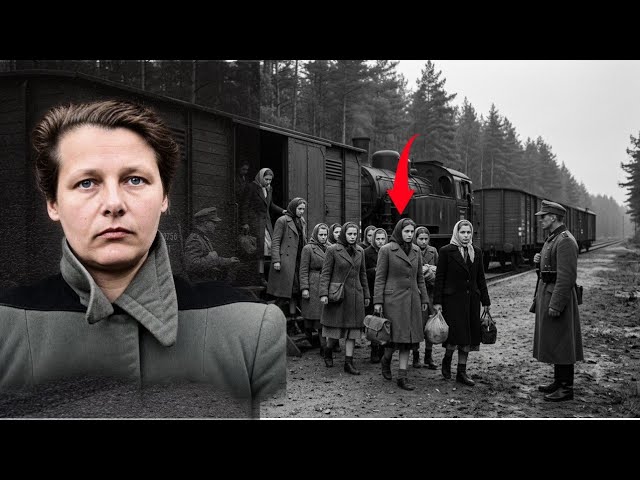
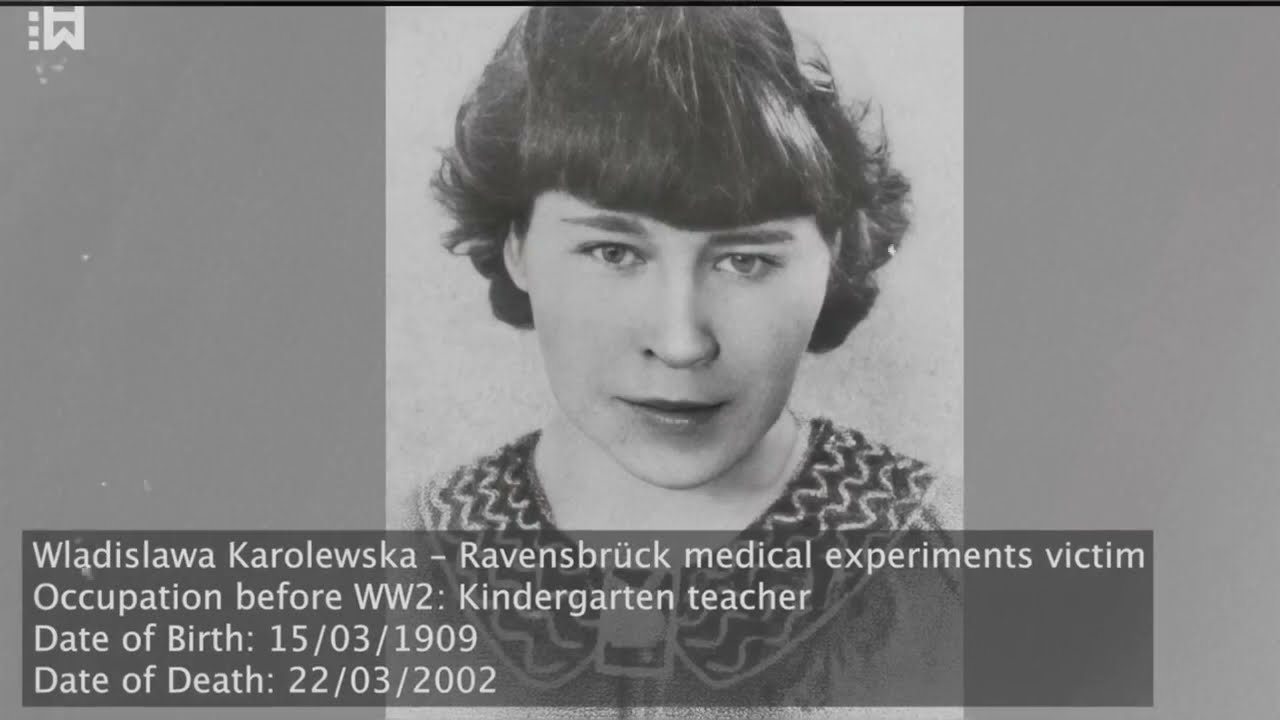
One of the women in the Lublin transport was named Władysława Karolewska. Before the war, she had been a teacher. In the summer of 1942, her number was called during morning roll call, along with others. They were told they were being taken to the hospital block for an examination. They were young. They were healthy. That was not a coincidence. It was the selection criterion.
What happened in that room was not medicine. She was placed on an operating table, her leg was cut open down to the muscle, and the wound was contaminated — not merely left dirty, but packed with dirt, wood shavings, broken glass, and bacteria grown specifically for the purpose, such as gas gangrene, tetanus, and streptococci. Then the wound was closed with sutures over the infection, and the waiting began.
The goal was to simulate a soldier's wound from a Prussian battlefield inside the leg of a healthy young woman, then see whether the drugs worked. For the data to be accurate, the infection had to be allowed to run its course, so no proper pain relief was provided. The dressings were not changed. Fevers rose. The leg swelled, blackened, and began to smell. Some women ran temperatures so high they lost consciousness.
Herta Oberheuser walked that ward with a notebook, recording what she observed. Karolewska was operated on a second time, then a third. She was not the only case. Seventy-four Polish women underwent these operations. Because of their condition afterward — limping, wrapped in bandages, moving around the camp in small, slow groups — the other prisoners gave them a name: the Rabbits.
Some of the Rabbits did not survive. The drugs failed. The patients developed sepsis. The wound designed to become as bad as possible did become as bad as possible. And when a woman reached that point — dying and no longer producing useful data — Herta Oberheuser's role changed. She stopped being a researcher. She did not use gas chambers. She used a syringe.
The killings were done by intravenous injection of a barbiturate called Evipan. Prisoners who worked in that hospital block understood what it meant when Oberheuser entered carrying a filled syringe. Women who received an injection did not return to the barracks. When a group of orphaned children was brought to that hospital, they were disposed of the same way.
That is the important detail for everything that follows. She did all of it as a physician, not as a guard or a soldier. She used the training she had received to heal people, applied it carefully and precisely, and recorded the results afterward in clear handwriting.
By the beginning of 1945, the war was lost, and everyone inside Ravensbrück knew it. The Red Army was coming from the east, which created a problem for the SS. The Rabbits were evidence of a crime. Dozens of women walking around the camp with surgical scars that no battlefield or accident could explain. Living evidence, with names and voices, of what had been done in that hospital block.
Orders were issued to kill them before the troops reached the camp. What happened next is the part of this story that is almost never told. The camp hid them.
Prisoners of Ravensbrück — Polish, French, Czech, Soviet, and German women — moved the Rabbits between blocks, concealed them among the sick, and covered for them during roll call. Prisoner numbers were exchanged with women who had already died, so that on paper the Rabbits appeared to have departed. When the SS came looking for them, they were somewhere else under someone else's number. They were hidden by women who were themselves starving. Women who had nothing to gain from doing it.
On April 30, 1945, Soviet forces reached Ravensbrück. They found women who could barely walk. Thin legs, muscle entirely missing. Wounds three years old that had never healed properly. The witnesses had survived. That meant a trial could be held.
In December 1946, in the same Palace of Justice where the major war criminals had stood the year before, a second trial began. The Americans recorded it as Case No. 1. History remembers it as the Doctors' Trial.
Twenty-three defendants sat in that dock. Doctors and administrators who had organized their work, charged with war crimes and crimes against humanity for experiments performed on human beings who had never consented. Twenty-two of them were men. The only woman in the dock at the Nuremberg Doctors' Trial was Herta Oberheuser.
The prosecution brought the Rabbits to Nuremberg. Four Polish survivors traveled from Poland to testify: Władysława Karolewska, Jadwiga Dzido, Maria Broel-Plater, and Maria Kuśmierczuk. They entered an American military courtroom and were asked to describe, in sequence, what had been done to their legs. Then they showed the judges.
There is a photograph that documents the moment. Jadwiga Dzido stands before the court with her leg bare while the prosecution's doctor points to what remains of her calf. The scar is not a line. It is a sunken gap. Four years had passed, and the tissue had never healed.
When it was Oberheuser's turn to defend herself, she did not deny the operations. She said she had been carrying out legal orders from a superior officer. She said the lethal injections were an act of mercy, that she had given them out of compassion to end suffering, and that this should be understood as sympathy, not murder. She was asking the court to accept that she had killed these women to spare them the agony of wounds she herself had caused to fester.
The court refused. On August 20, 1947, the sentences were read. Seven of the 23 were sentenced to death. Among them was Karl Gebhardt, the man who had run the entire program. He was hanged at Landsberg Prison the following year. Herta Oberheuser was sentenced to 20 years in prison.
That should have been the end of it. It was not.
Here is the accounting of what happened instead. The sentence was 20 years. She served only four years and eight months.
By the early 1950s, Europe had rearranged itself. Nazi Germany was no longer the enemy that mattered. The Soviet Union was. Washington wanted West Germany brought into NATO as a partner, not kept as a defeated state to be punished. German politicians and church groups pressed hard to close the wartime chapter. So the U.S. High Commissioner for Occupied Germany, John J. McCloy, formed a committee to review the sentences of war criminals held at Landsberg. Sentences were reduced across the board — not only hers, but those of men convicted of crimes with far larger numbers of victims. The 20 years became 10.
In April 1952, Herta Oberheuser walked out of the gates of Landsberg Prison at the age of 41. She applied to the state of Schleswig-Holstein to have her medical license restored. No one appears to have conducted a serious review. In a country where former Nazi officials were quietly returning to ordinary jobs everywhere one looked, the license came back in full.
Karl Gebhardt, who issued the orders, was hanged. Herta Oberheuser, who carried them out, got her stethoscope back. By 1953, she was the doctor in the village of Stöcksee. For four years, she was simply part of the village. She delivered their children. She treated their parents. She sat with their frightened children and told their mothers it was nothing serious. The village trusted her completely. And why wouldn't it? There was a sign on the door with a doctor's name on it.
Then in 1956, a woman passed through the area. She was a former prisoner of Ravensbrück. We know what she did, and we know what came of it. What she was doing in that village, and in most accounts even her name, has not come down to us. She walked past a brick house with a brass plate outside and read the name the way anyone reads a sign, without intending to. Then she stopped walking. She read it a second time, certain she had misread it. Through the window, there was a waiting room, a row of chairs, mothers, and children. She had not misread it.
Word reached the surviving Rabbits in Poland within weeks. Most were still disabled. Many were living in poverty, with legs that had not worked properly since 1942. They demanded that the German government revoke her license and return her to prison. They were told no.
German prosecutors explained that she could not be tried again for the Ravensbrück case because an American court had already convicted her of it once. The medical board of Schleswig-Holstein pointed out that she had served her sentence and had acted professionally since. Oberheuser, confronted by journalists, refused to apologize. She said the courts had dealt with her past. She had a right to work.
It looked as though the system had decided to look away. And it would have — if not for a woman 3,000 miles away who had never been to Ravensbrück and never met any of the Rabbits.
Her name was Caroline Ferriday, a former Broadway actress from a wealthy American family, in her fifties, living in Bethlehem, Connecticut. During the war, she had worked on getting members of the French Resistance out of occupied Europe. A letter reached her describing two things: what had been done to the Polish women at Ravensbrück, and the fact that the doctor responsible was practicing pediatrics in a German village.
Ferriday had no official standing in any of this, no legal role, and no personal stake. But she recognized one thing. The courts were constrained by their own legal procedures. Public opinion was not constrained by anything at all.
She flew to Poland — a difficult trip for an American at the height of the Cold War — found the surviving Rabbits, and sat with them as they showed her their legs and told her about the friends who had not come back. She told them she would not stop until the world knew their names. Then she returned home and launched a campaign.
She enlisted Norman Cousins, editor of the Saturday Review, one of the most widely read magazines in America. Together they put the story before the American public in the plainest terms: disabled Polish women getting by with nothing, and a doctor who had caused their injuries living in comfort and examining other people's children. Letters poured into the West German embassy in Washington.
Then Ferriday took the step that effectively settled the matter. She raised the money to fly 35 of the Rabbits to the United States. American families hosted them in their homes. American surgeons performed free operations on injuries that were by then 16 years old. The Polish women, carrying Ravensbrück scars, walked American streets and told their stories in front of American television cameras.
For the West German government, this was no longer a local matter officials could wait out quietly. On August 11, 1958, the Interior Ministry of Schleswig-Holstein revoked Herta Oberheuser's license to practice medicine.
She fought the decision. She hired lawyers and sued to get it back, arguing that the revocation was an unconstitutional attack on her right to work. The case dragged on for two years. In December 1960, an administrative court rejected her appeal for good, holding that a doctor who had used her medical training to torture and kill defenseless people had no right to carry that title again. She never practiced medicine again. She died in 1978.
What actually stopped Herta Oberheuser was not the Nuremberg court. That sentence was quietly undone by politics within five years. What stopped her was a stranger who happened to glance at a brass plate, and a woman on another continent who decided that was reason enough to act.
If you had been sitting in that waiting room in 1956, watching her examine your child's throat, would anything about her have told you the truth?