For 43 years, Sofía believed every word her husband Antonio told her, convinced their marriage was as calm and transparent as a glass of water on the kitchen table. That certainty shattered one March afternoon while she was organizing his books after his funeral. Tucked between the yellowed pages of an old copy of Fortunata y Jacinta, she found a fragile train ticket with a stamp that read “Madrid, Sevilla, 23 de marzo de 1976. ”
On the reverse side, in faded blue ink, was a name and address: Elena Martínez, calle Feria 17, bajo izquierda, Sevilla.
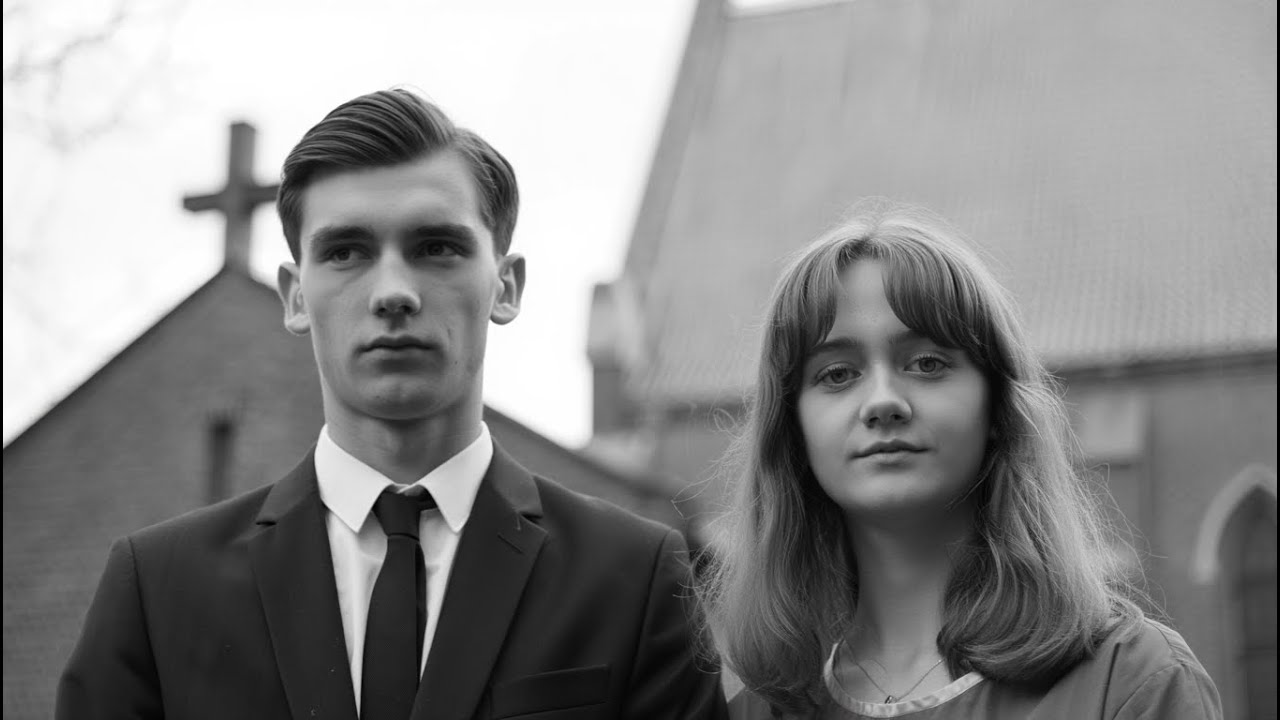
The discovery was devastating because Antonio had told her he had traveled to Valencia for work that week. She had no reason to doubt him then. Now her hands trembled as she stared at the small cardboard slip. When she closed the book, a small black-and-white photograph fell out.
It showed a woman in her thirties with short dark hair and a serene smile, standing before a whitewashed house with a wrought-iron balcony and geraniums. On the back, a single word was written: “Perdón” — “Forgive me. ”
Sofía’s legs felt weak as she went to the dark wooden dresser in the bedroom. Beneath neatly folded shirts that still smelled of his cologne, she found a gray envelope with a thick bundle of letters inside.
All were addressed to Elena Martínez in Seville. None had postmarks. None had ever been sent. The first letter was dated March 25, 1976.
In it, Antonio wrote about seeing Elena through her kitchen window and lacking the courage to knock. Then came a name that crushed Sofía’s heart: “Javi, nuestro hijo” — Javi, our son. The word “son” resonated from the yellowed paper louder than any promise of happiness she had heard during their long marriage. That night, Sofía sat on the edge of the bed in her bathrobe, reading through the letters by lamplight.
She did not read everything in full but captured the phrases that burned most fiercely. Javi was three years old when he died, she learned. The same sentence appeared in different versions across several letters. In another, Antonio wrote that he could not look at a face without seeing the boy’s eyes.
Sofía realized that the couple’s childlessness, which she had always accepted as a calm mutual decision, was actually born of a man’s fear. In one letter written years later, Antonio admitted that when Sofía asked whether he regretted not having children, he lied and said no because they had each other. He then wrote that he did not regret meeting her, only that he never found the courage to share his old pain with her. Sofía stood by the window and considered her options.
She could throw the letters away and pretend nothing had happened, explaining away the ticket and photo as remnants of a youthful romance. But the knowledge was already inside her. She realized that if she looked away now, she would live beside his truth, not with it. That thought frightened her more than any lie she could accuse him of.
The next morning, she went to Atocha station and asked the ticket clerk for a single ticket to Seville. As the AVE train slid smoothly through the landscape, she sat by the window clutching both the new ticket and the old one. Across from her sat a young woman with a small boy of about three sleeping on her shoulder. Sofía could not take her eyes off him, imagining that this could have been Javi.
When the train arrived at Santa Justa station, she took a taxi to calle Feria. Number 17 was an old corral de vecinos, a traditional communal house with a green wooden gate and an inner courtyard full of potted plants. Sofía crossed the courtyard, hesitated before the brown wooden door on the left, then knocked. An elderly woman with white hair gathered in a low bun opened the door.
She looked at Sofía as though searching her face for traces of someone else. “I knew you would come someday,” Elena Martínez said softly with an Andalusian accent. “Please, come in. ”
Sitting in Elena’s tiled kitchen, Sofía listened as the story unfolded.
Elena had worked as a waitress at a venta near Bellavista in Seville when she met Antonio, a young draughtsman arriving for early projects related to the 1992 Universal Exposition. He joked that he left the same tip so she would remember his face. When Javi was born, they thought the world had finally fallen into place. Antonio carried the boy on his shoulders through María Luisa Park and taught him to identify birds in the Plaza de América.
But Javi fell ill one early spring in March. At first it seemed like a cold, but then came fever, coughing, and delirium. The clinic doctor arrived late. It was meningitis.
Javi spent five days in the Virgen del Rocío hospital, with Antonio never leaving the chair beside his bed. Then the doctor came out and said nothing more could be done. Antonio blamed himself for everything — for calling the doctor late, for not having money for a private specialist, for not noticing how badly the boy’s head hurt. He could no longer breathe in that flat where every corner reminded him of his son.
Two weeks after the burial at San Fernando cemetery, he told Elena he had to leave. She did not hold him back. He left, and he never returned. But he wrote every year, on Javi’s birthday, from different cities.
Eventually, he began writing about a good, calm woman he had met in Madrid. Elena handed Sofía one of the letters. In it, Antonio described his fear that if he told Sofía about Javi, her love would become mixed with pity. He wrote that his silence was his own penance, not her fault, and that he promised himself every year he would finally tell her, only to lose his courage.
“He loved you, Sofía,” Elena said calmly. “I saw it in these letters with the same force with which he loved our son. He was only afraid that those two loves could not fit in one life without destroying it. ”
Sofía dried her cheeks with her hand.
She sat in a stranger’s flat in the Macarena neighborhood, holding a letter from her dead husband and a photograph of a child above her, and felt her resentment mix with something close to compassion. She asked if she could have a small photo of Javi, to remember him not just by hearsay. Elena found one with the serrated edges of old photos and handed it over without hesitation. “He was part of Antonio’s life long before you,” Elena said.
“But you were with him until the end. I think that is right. ”
When Sofía returned to Madrid on the last train of the evening, she went straight to the brown leather family album. Between her wedding photo at the church of Los Jerónimos and a picture from their first holidays in Benidorm, she placed the photograph of Javi.
She smoothed the album plastic with her finger and spoke quietly to the smiling Antonio in the wedding picture. “Your son,” she said. “I will remember him too, not to judge you, but so our life is complete and not half-lived. ”
She sat on the sofa and felt the tension in her shoulders gradually ease.
It was not simple relief but a quiet acceptance that a human being sometimes cannot carry the whole truth, even when loving deeply. She concluded that love is not the absence of secrets but the capacity to accept someone’s shadow along with their light.