British military exercises in London this week have centered on defending the UK against a conventional Russian missile attack, using disused sections of the underground railway system for the drill. The exercise coincides with press reports detailing how Russian cruise missiles could strike British targets with virtual impunity, a warning that has now drawn renewed attention after facing criticism when first made at the start of the Ukraine war. The concern is that in a NATO-Russia conflict, possibly triggered by Ukraine, Russian bombers could launch precision cruise missiles from outside British airspace to hit infrastructure, power generation, and the UK’s dwindling number of operational RAF and naval bases. The argument is that years of downsizing have left Britain increasingly vulnerable to such conventional precision strikes, a vulnerability also highlighted by Iran’s long-range missile capabilities and drone attacks on RAF Akrotiri in Cyprus.
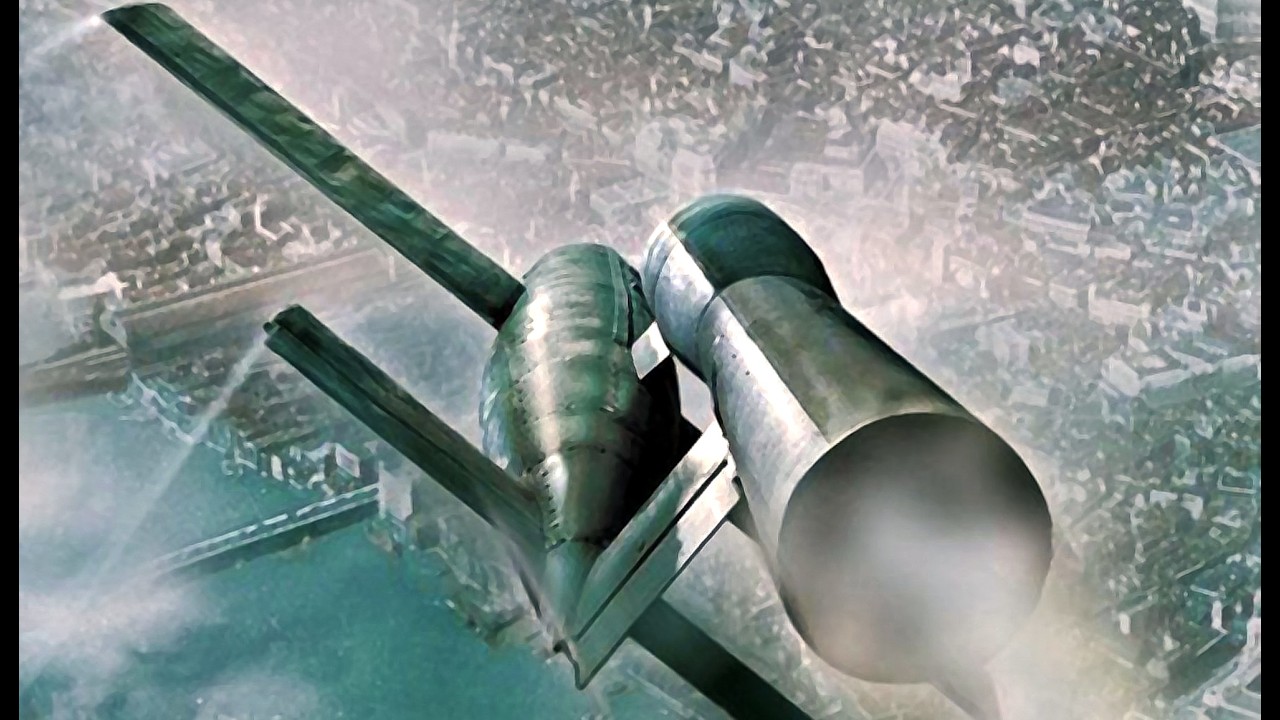
The current exercise has a historical echo. Eighty-two years ago, Britain faced the first sustained cruise and ballistic missile campaigns in history: the German V1 and V2 attacks. Now, a controversial theory about a V1 launch site on British soil has resurfaced as directly relevant to today’s concerns about cruise missiles as delivery systems, potentially for chemical agents. The theory concerns Alderney, the most remote of the Channel Islands and the closest to Britain.
Evacuated almost entirely of its civilian population before German occupation in 1940, Alderney was uniquely secretive. It was also the only place on British soil where the SS operated a concentration camp, Lager Sylt, brutally run by SS Captain Maximilian List. Some 5,000 prisoners were forced to build defenses, with huge numbers dying from exhaustion, beatings, or hangings. In 2017, Colonel Richard Kemp, a former commander of British forces in Afghanistan, and researcher John Weingold proposed that the SS presence on Alderney had a more sinister purpose than simply running a camp.
They focused on a tunnel system at Water Lane, outside the island’s only town, St. Anne’s, hewn from rock by prisoners under intolerable conditions. Historians had long believed the tunnels were for fuel, ammunition storage, or a power generator. But Kemp and Weingold found the details did not add up.
There are two tunnel systems, one on each side of the valley, each main tunnel being 10 feet wide and 9 feet high, with a narrow-gauge railway once running along its length. The tunnels were lined with wood and waterproofed with bitumen sheets, an unusual degree of finishing compared with other German tunnels on the islands and in France. The two investigators concluded that whatever was stored there was delicate and valuable, needing special protection. They argued against the accepted theories: ventilation was poor for a fuel store, the dimensions were wrong for ammunition, and the tunnels had odd curves and bends, inefficient compared with standard German military storage tunnels.
The fitted-out tunnels, with rails bolted to the floor, seemed designed to hold something long and thin that could be shunted outside. Their conclusion was that a Fieseler Fi 103, or V1 flying bomb, with its wings detached for storage as was standard, would fit perfectly. Outside each tunnel, they noted, spoil from excavations had been deliberately piled to create two slopes running to flattened areas, resembling the ski-ramp launchers used at V1 sites in northern France. A water tank at the site, strange for fuel or ammunition storage, was integral to V1 launch sites for washing down the ramp after firing.
Kemp and Weingold calculated each tunnel could hold 72 disassembled V1s on trolleys, a total of 144 missiles. But they also found a detail that set the site apart from V1 bases in France: two smaller side tunnels, each 30 yards long, branched off the main tunnels. These were extremely well-built, completely dry, and led nowhere. The investigators speculated these chambers held special warheads requiring special storage.
Supporting this theory is a British archive report of a Guernsey fisherman who witnessed Germans unloading yellow-painted barrels from a ship at St. Anne’s Harbor during the war. Yellow is the international military color for chemical weapons. Additionally, surviving prisoners reported that German guards on Alderney frequently conducted gas drills, often lasting all day.
The Germans did develop and stockpile terrifying chemical agents during World War II, including the nerve gases tabun and sarin. The Germans designed a chemical warfare variant of the V1, the Fi 103 D1, but as far as is known, it never entered serial production. Whether special warheads were built in small numbers remains unknown. Hitler was reportedly loath to use such weapons, even in the war’s final weeks.
But on Alderney, the operations were under the SS, reporting directly to Heinrich Himmler, known for his secret operations. The practical case for an Alderney launch site is strong. The closest point of mainland Britain is about 60 miles away, well within the V1’s range of up to 150 miles. The island was nearly empty of civilians, heavily militarized, and its labor force was disposable and directly under SS control.
Launching from Alderney, rather than northern France, would have avoided French resistance informants, escaped British suspicion, and contained any accident involving nerve agents on a small island just 4 miles long. Kemp and Weingold stated that two launch ramps had been built, one for each tunnel complex. One ramp lined up with the port of Plymouth, the other with Weymouth. Both ports were vital to the D-Day operation, crowded with warships, transports, troops, and supplies heading to Normandy, and they continued operating at maximum capacity for months afterward.
The researchers suggested the nerve-agent-armed V1s were intended to disrupt the Allied invasion effort by striking these two ports. The V1 was not a precision weapon, generally landing within a 7-kilometer circumference of a target. Against London, about 20 percent of V1s got through the extensive defenses. The defenses that countered V1s fired from France were concentrated in southeast England, meaning missiles fired from Alderney would have faced much less opposition.
Weymouth is about 60 miles due north of Alderney, and Plymouth is about 110 miles away, both within the V1’s range. At roughly 400 mph, flight time would be about 9 minutes for Weymouth and 16. 5 minutes for Plymouth. With one battery firing over two ramps, crews could fire 20 to 30 missiles per day.
With 144 missiles stored, the Germans could have fired continuously for three days at both ports. Even a handful of successful nerve agent hits would have been devastating compared with conventional high explosive warheads. The theory has faced sharp criticism, notably from Trevor Davenport, author of Festung Alderney. He dismissed the idea as “utter nonsense,” though he also acknowledged that “there are, of course, many things we do not know.
That is accepted. It’s always been accepted. It was quite secret. ”
The question remains unanswered: were the Germans planning to launch nerve-agent-tipped V1s at England from Alderney in 1944 or 1945?
Without an actual German document proving the operation, the theory cannot be confirmed. But the special nature of Alderney, the secret SS activities there, and the analysis of the Water Lane tunnels remain compelling, leaving the possibility open that one of the most secretive corners of occupied British territory may have been the launch point for an attack that never came.