There is a photograph from 1938 that almost nobody talks about. It was taken during a period of European history when the old world was unraveling and nobody yet knew what would replace it.
A young man stands beside a young woman on one of the most important days of her life. He is poised, composed, and unmistakably present. He is not hovering at the edge of the frame or wandering close to the camera by accident. He is standing beside her deliberately, as though he belonged there.
The young man was Prince Philip of Greece and Denmark. The young woman was Hélène Cordet. Historians still debate why she remained so important in Philip's life for more than 40 years.
The explanation was always the same. She was a family friend. A childhood acquaintance. Someone from his past who never quite disappeared from his present. It was a respectable phrase, a convenient phrase — the kind that answers a question just enough to stop people asking it again.
But the photograph predates that explanation by decades. And the photograph is harder to dismiss than the phrase ever was.
Before getting to Philip, it is necessary to talk about Hélène. Her story spent 70 years being treated as background. That, as it turns out, is exactly where the problem begins.
According to contemporary birth records and her own later memoirs, Hélène Fufuni was born in 1917 in Marseille into a Greek family displaced by the same political upheavals that had driven the Greek royal family into exile. Her father moved in the same social world as Philip's exiled relatives — the tight, complicated network of Greeks living outside Greece, bound together by language, shared memory, and shared uncertainty about the future.
She grew up in France speaking multiple languages, moving between the remnants of a world that no longer had a country to anchor it. By every account that survives, she was exceptional — not in the quiet, overlooked way that women in mid-century biographies are often described, but in ways that made her impossible to ignore.
She was undeniably beautiful, but her real power lay in her social fluency. She possessed the sharp, adaptive confidence of someone who grew up caught between shifting cultures, never fully belonging to one world and therefore never entirely intimidated by any of them.
She spoke French, English, and Greek with equal ease. She understood the codes of aristocratic European society while having no particular reverence for them. And she had a quality that people who knew her described consistently: she made you feel, when you were talking to her, that you were the most interesting person she had encountered in some time.
Philip knew her from childhood. They had grown up alongside each other in the exile community during years when both of them were being shaped by instability. Philip moved between relatives, schools, and temporary arrangements. Hélène's family offered something the exile years rarely provided in abundance: consistency, warmth, and a household where a young, displaced prince could simply exist without performing anything for anyone.
This is the detail that biographies gloss over most completely. Philip's childhood had an emotional texture that rarely made it into public accounts. His mother was suffering from severe mental illness during crucial years of his development, and his parents had effectively separated. His sisters had married and moved into lives of their own in Germany.
The family, which is supposed to give children a fixed point, was for Philip a series of temporary arrangements and well-meaning substitutes. The Foufounis household was, for a period, one of those fixed points. Hélène was part of what made it one.
So when the public is later handed the phrase "family friend" and told it explains the relationship, they are being given something technically defensible and humanly inadequate. What they are not being told is that Hélène was connected to the years when Philip most needed connection — not the years of royal ceremony and formal duty, but the years before all of that, when he was simply a boy with an unstable home and too many addresses.
That context matters enormously. After the war, after Philip married Princess Elizabeth and became the Duke of Edinburgh, after public life had wrapped itself around him like a set of permanent instructions, Hélène built something remarkable entirely of her own.
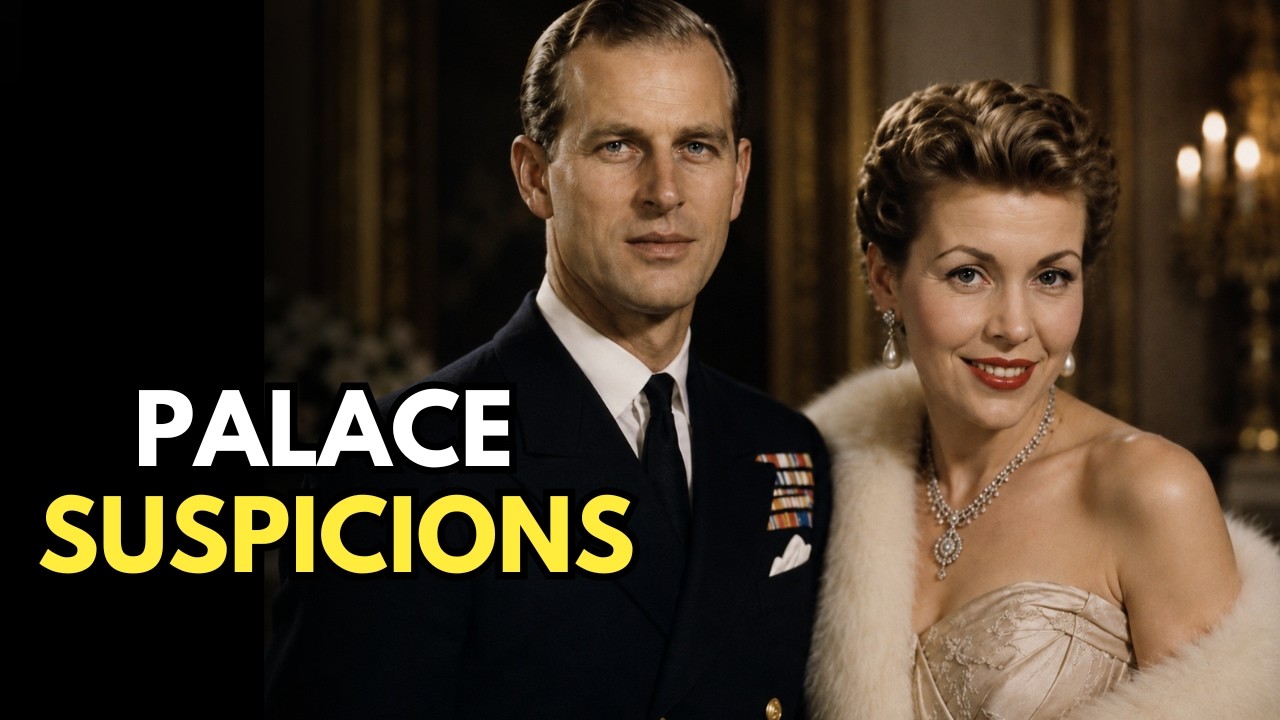
She arrived in London after the war as a divorced single mother with very little money, reinventing herself first as a cabaret singer and then as the glittering host of the BBC's first televised variety show, Café Continental. By the time she conquered London's nightlife, she wasn't merely running a club. She opened Chez Hélène Corday, followed by the Saddle Room on Park Lane, which became London's very first true discothèque — a late-night sanctuary where the city's elite could gather far from public view.
Contemporary press coverage consistently described her as one of the most magnetic presences in post-war London society, a woman who had built her world entirely on her own terms.
This matters because one of the things the received account implicitly suggests is that Hélène's significance derived from her proximity to Philip — that she was notable because he knew her, and that without the connection she would have been unremarkable. The record does not support this.
Hélène Cordet was a woman who built a public career in a country that was not her own, in a decade when the options available to divorced single mothers were considerably more limited than they later became. She did it with charm, intelligence, and an understanding of how rooms work that cannot be taught and cannot be faked.
Her daughter, Louise, who performed under the surname Cordet, became a recognizable pop star in her own right during the 1960s, touring alongside the Beatles at the height of their fame. Philip did not make Hélène interesting. She was interesting.
That distinction changes the nature of the question entirely. The question is not why a man of power and position maintained contact with an unremarkable woman from his past. The question is why two people of genuine force of character who had known each other since childhood maintained a relationship across every obstacle that time, status, and public scrutiny placed in front of it. That is a different question, and it is the one that was never seriously asked.
The version of Philip presented to Britain was coherent, impressive, and in certain crucial ways incomplete. The exile years were noted briefly and left behind. The people who had mattered during those years were reduced to footnotes. For the public, Philip began effectively when Britain decided to adopt him. Everything before that was prologue.
The incompleteness had a specific shape. It was the shape of a woman standing just outside the frame — present enough to be undeniable, described just carefully enough to seem ordinary. Hélène Cordet, family friend. That photograph from 1938 had been quietly suggesting for the better part of a century that "ordinary" was never quite the right word.
Begin with what is known — not what was rumored, not what circulated in the social circles that existed at a comfortable distance from royal respectability, where gossip goes when it has nowhere more respectable to live.
The photograph exists, and a closer look at what it captures changes the picture. This was not a sudden wedding-day glitch where a guest filled an empty slot. Hélène's father had died, leaving her without anyone to walk her down the aisle. The person who stepped forward to take his place, to formally give this young woman away to her new husband, was a 17-year-old Prince Philip.
Not a distant acquaintance doing a favor. Not a last-minute substitute. A 17-year-old boy who had lost his own stable family years earlier, choosing to stand in for the father of a young woman and give her away on the most significant day of her life. That is what the photograph is actually showing — and that is not what "family friend" was designed to make people think about.
The relationship did not end there. After the war, after Philip had become the Duke of Edinburgh and taken his place at the center of British public life, Hélène was in London building the career that historians have always found easier to mention in passing than to examine directly.
Then comes the fact that should have stopped every biographer in their tracks. Childhood friendships fade. Exile communities disperse. Wars separate people forever. The lives that reassemble on the other side rarely resemble what came before.
Yet decades after standing in for Hélène's dead father at her wedding, Philip chose to legally and spiritually bind himself to her children, Max and Louise. He became their official godfather. In the rigid social world of the British royal court, where every public association is carefully audited, the Queen's husband openly tied his name to Hélène's family.
According to accounts documented in subsequent biographies, he also paid out of his own pocket for young Max's education at his own alma mater, Gordonstoun. That is not a man maintaining a polite connection to someone from his past. That is a man honoring a commitment that had clearly never loosened its hold on him.

Place those facts beside everything that preceded them — the childhood, the photograph, the sustained connection across war and transformation, and the enormous social distance that public life had placed between them — and the picture that emerges is not complicated. It is simply larger than two words.
And those two words had been doing a great deal of work. "Family friend" covered the 1930s. It covered the war years. It covered the post-war London period. It covered the godparenthood and the school fees and every subsequent indication that the relationship had endured across four decades in which any such endurance should have been, by any ordinary reckoning, improbable.
The phrase was not chosen carelessly. It was respectable enough to signal that further inquiry was unnecessary, vague enough to mean almost anything, and repeated consistently enough that it gradually became the default description — the phrase biographers reached for when they needed to mention Hélène without making her the subject of the sentence.
Over time, that description became received wisdom. Received wisdom became the story. And the story, told often enough, began to feel like the truth.
Then came the rumors. This is where precision matters most, because the history of this relationship has been significantly distorted by the failure to distinguish between what is documented and what was merely repeated.
The rumors centered on Hélène's children, on their paternity, on the question of whether the man who had become their godfather was connected to them in a way the record did not acknowledge. These rumors were never proven. No documentary evidence has emerged. No credible testimony has appeared. The claim exists and has existed for decades in the space between persistent gossip and verifiable fact.
That must be said clearly. What must also be said clearly is this: rumors of this specific type, attached to figures of this prominence, typically have a lifespan. They generate heat for a period, fail to produce evidence, and lose momentum. The story of Philip and Hélène did not follow that pattern.
Decades passed. The people who had originally propagated the rumors aged and died. No new evidence appeared. The rumors continued anyway. Rumors require something to feed on. What fed these was not fresh information. It was the persistent gap between the documented facts and the explanation offered for them.
When the only available account of a relationship this substantial is a phrase this thin, the space created by that inadequacy fills with speculation. People were not wrong to notice that "family friend" was insufficient. They may have been wrong about what it was insufficient to describe, because there is a possibility that the romantic interpretation crowds out entirely.
What if the careful handling of Hélène's significance had nothing to do with what she and Philip had been to each other privately? What if it had everything to do with what she represented?
By the time Philip was Duke of Edinburgh, he had been comprehensively remade. His Greek and Danish titles were gone. His German family connections had been retired from public discussion. His surname had changed. His nationality had been converted. His story had been rebuilt to produce a figure who could occupy the role Britain required of him.
Every transformation produces a remainder. There is always some portion of the original self that the process cannot fully reach. For Philip, one of the most durable remainders was his connection to the world he had inhabited before any of the remaking began — the exile years, the displaced families, the European network of loyalty and intimacy that had sustained him when he had nothing more formal to rely on.
Hélène was part of that remainder. She knew the pre-public Philip — the 17-year-old who had stood in for her dead father at her wedding, not because protocol required it, not because a courtier had arranged it, but because she mattered to him. And he was the kind of person who showed up when someone he cared about needed someone to show up.
The person who had grown up alongside her belonged to a world that no biography could adequately reconstruct, because it existed entirely outside the categories that public memory finds useful. A person who knows who you were before the world decided who you would become is not a threat. But they are a complication.
Not because they carry secrets, not because they represent something shameful, but because their continued presence is a quiet, persistent reminder that there is a before — and that the before contained people, loyalties, and attachments that had nothing to do with palaces or protocol or the careful management of appearances.
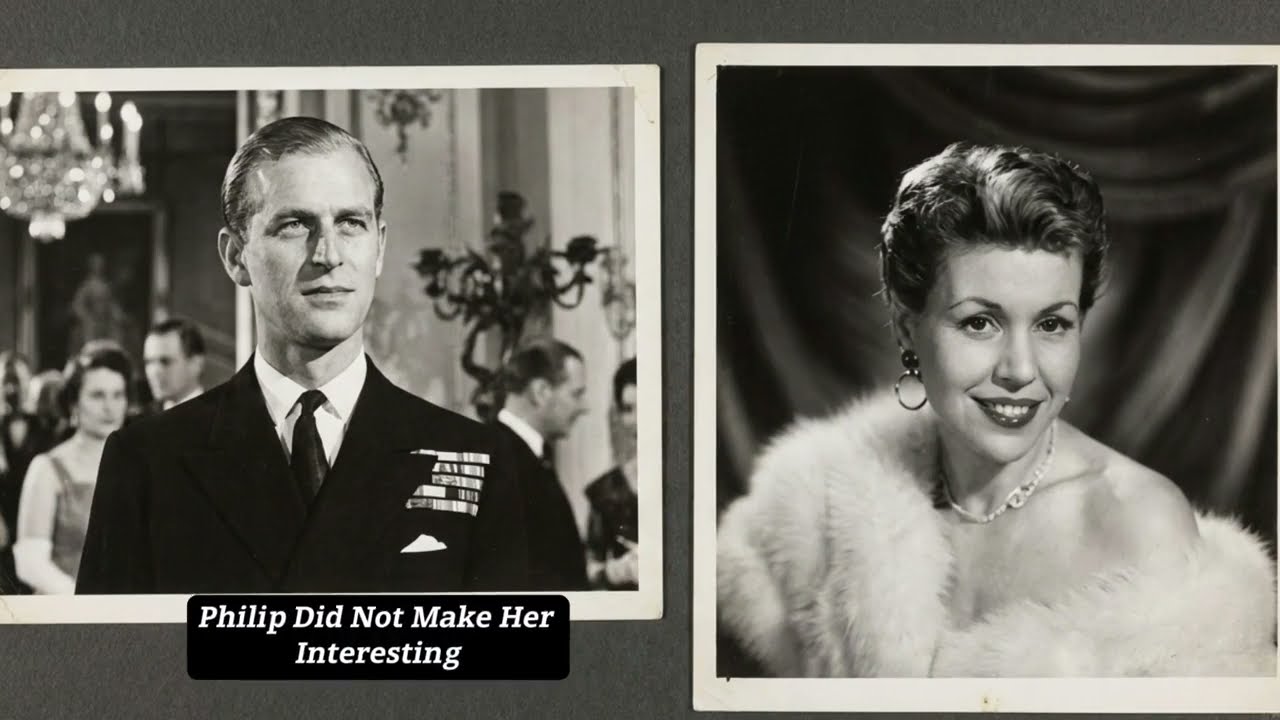
Hélène, by remaining part of Philip's private world across four decades of public life, was demonstrating something quietly undeniable. That the man inside the role had a history. That the history had not ended. That the people in it had not gone away.
Here is what is not known. The exact nature of what Philip and Hélène were to each other at 17, standing together in that photograph, is not known. What the relationship looked like in the years during and after the war, when Philip's life was transforming and Hélène was rebuilding hers from almost nothing in a foreign city, is not known.
What passed between them privately during the decades when she was running the Saddle Room and he was navigating the particular loneliness of being the most scrutinized supporting figure in the most scrutinized family on Earth is not known. It may never be known. The witnesses are gone. The private correspondence, if it existed, has not surfaced. The accounts that shaped what the public was told have had 70 years to ensure that whatever required containing stayed contained.
These are the limits of the record. Now, here is what the record does contain. A relationship that was real, documented, and sustained across a span of time that makes minimizing it an act of deliberate interpretation rather than honest assessment.
A 17-year-old giving away a bride whose father had died. A godfather paying school fees decades later. An account calibrated to be defensible while remaining humanly thin. And a set of questions that were never asked out loud — not because they were unaskable, but because asking them was inconvenient for the version of events that had already been decided upon.
None of that adds up to proof of a scandal. What it adds up to is a relationship that deserved a more honest account than it received.
Why does that matter now? It matters because the way the stories of public figures are told shapes what people believe about public life. When convenient language is accepted without examination, when "family friend" is allowed to stand unchallenged as the complete description of something the evidence shows was considerably more, a biographical detail is not simply missed. The reduction is participated in.
The Philip who emerges from what the public was given is impressive but strangely abstract, a figure defined almost entirely by function — a man whose private loyalties and genuine attachments are visible only in fragments, glimpsed through the gaps that careful description could not entirely close.
The Philip that Hélène's story points toward is more recognizable as a human being, someone shaped by loss and displacement before he was shaped by duty. Someone who valued loyalty precisely because his early years had given him so little reason to expect it. Someone who at 17 years old stood in for a dead father because a young woman he cared about needed someone to stand there — and who was still honoring versions of that same instinct in quieter ways decades later.
That Philip is more interesting than the version the public was given. He is also almost certainly more accurate.
And then there is Hélène herself. The reassessment history owes her is, if anything, more overdue than the one it owes Philip. She has existed in this story almost entirely as context for his — as a background detail, as the woman in the photograph, the name in the footnote.
Her own life — the BBC television career, the Saddle Room, the decades of genuine achievement conducted entirely on her own terms, the daughter who became a pop star on the same circuit as the Beatles — has been almost completely subsumed by her proximity to a man the record found more important to discuss. She deserves better than that. Not as a corrective sentiment, but because she was genuinely remarkable and the historical record is genuinely poorer for having treated her primarily as a footnote.
What remains at the end of all of this is not a solved mystery. The evidence does not support a conclusion that Philip and Hélène were lovers. It does not conclusively exclude it, either. The record is incomplete in ways that feel less like simple historical accident and more like the accumulated result of choices made over time by people with reasons to make them.
A relationship of genuine documented significance was described in language designed to foreclose curiosity. That language was repeated until it became the story. The story, told often enough, acquired the texture of truth.
But the photograph still exists. A 17-year-old standing in for a dead father, giving a young woman away at her wedding. Present in the way that only matters when the relationship is real.
History looked at that photograph for 70 years and said there was nothing to see — family friend, move along. Perhaps the real mystery was never whether Hélène Cordet mattered to Prince Philip. The evidence tells us she did. The mystery is why history worked so hard to make that fact seem ordinary. And why for so long, everyone let it.