A series of unsettling encounters in a remote section of the Appalachian Mountains between 1952 and 1958 has remained buried in local folklore and obscure county records for decades. Known among researchers as the Blackburn incident, the events in the Blue Ridge Mountains of Virginia involved strange sounds, missing persons, and accounts of a mysterious figure locals called the old man of the mountain. In the fall of 1952, residents of Floyd County, Virginia, reported unusual echoes carrying through the valleys at night. The Floyd County Times ran a small article on October 23, 1952, titled “Mountain noises puzzle locals,” quoting residents who described wailing calls and mimicked bird sounds that didn’t match any known species.
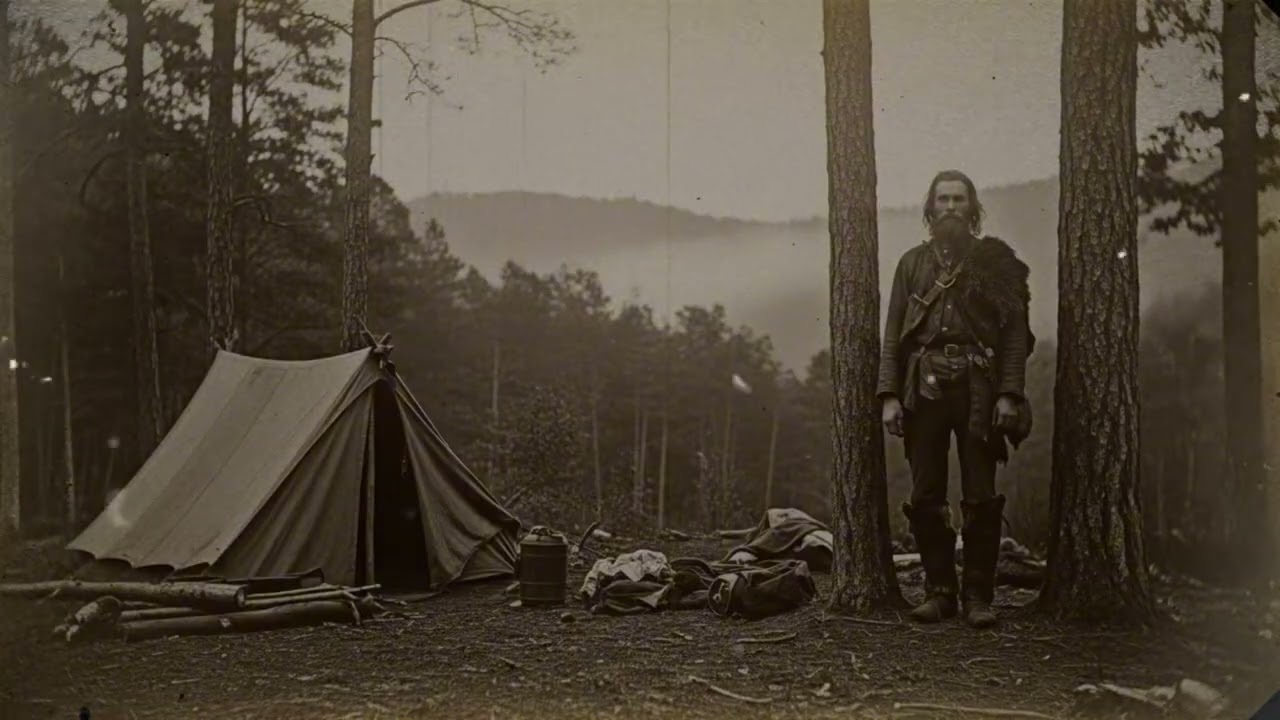
Marjorie Wilson, who operated a general store near Buffalo Mountain, told the newspaper, “It’s like nothing I’ve ever heard before, and I’ve lived in these hills all my 67 years. ”
A retired coal miner named Everett Hulcom described the sounds as having a pattern, with three short whistles followed by a long low one, then two short again, repeated and answered from other ridges. He recalled his grandfather’s stories about people called “the listeners” who lived in the deepest hollows and watched over places regular folks weren’t meant to find. Forest ranger Leonard Pritchard documented the reports in his monthly logs.
After finding a crude shelter with recent occupation in November 1952, he noted it was unlike a standard hunter’s blind, more permanent and deliberately concealed. A deputy who accompanied him later described strange symbols scratched into the dirt floor and an unusual smell, adding that the interior seemed larger than it appeared from outside. The phenomenon took a more disturbing turn when hunter Elmer Radford stumbled upon a series of small shelters in late November 1952. He told sheriff’s deputies that someone had been watching him from a ridge while he field-dressed a deer, collecting his cigarette butts and arranging small stick figures in a circle around his position.
Radford said he found a drawing of himself at the observation post, rendered in charcoal on parchment from an angle that would have been impossible from where the watcher had been sitting. He burned it as soon as he got home. When Deputy Wallace Jenkins returned to the site three days later, the entire area had been cleared of all evidence of habitation. Jenkins found a small carved wooden figure with exaggerated ears and eyes placed exactly where Radford claimed to have felt watched.
He later surrendered the figure to federal authorities during their 1957 investigation, and its current whereabouts remain unknown. Local historian Amelia Carrington connected these carvings to pre-Civil War traditions in her 1972 book, Shadows in the Hollow. She documented accounts of carved sentinels used by isolated mountain communities, noting that the practices had largely disappeared by the early 20th century. A letter from 1823 written by circuit preacher Reverend Josiah McCreary described finding carved figures at the edges of clearings, with local residents telling him, “They keep watch for those who dwell deep in the hollows.
”
The comfortable explanation that a transient individual had simply moved on collapsed in May 1953 when hikers James Whitaker and Thomas Caldwell failed to arrive at their scheduled checkpoint. Both were experienced outdoorsmen in their 30s. The search operation involved forest rangers, local volunteers, and state police, but the official report found no evidence of foul play. Volunteer Earl Simmons described unusual behavior from the tracking dogs.
Well-trained animals refused to enter what locals called the deep hollow, with hackles raised and tails tucked. One German Shepherd that had served in Korea snapped at its handler. Search teams also found stone piles and branches bent into shapes that unsettled a local guide, who refused to continue, saying they were crossing into territory they shouldn’t be in. Notes from search coordinator Martin Yates documented symbols scratched into tree trunks surrounding the hikers’ last known campsite, described as deliberately placed to form a perimeter.
Whitaker’s recovered journal included entries about feeling watched, unfamiliar boot prints outside the tent, and a man his companion claimed he hadn’t spoken to during the night. The final entry read, “Something circling the camp tonight. T doesn’t hear it, but I do. More than one of them out there.
”
Three weeks after the search was called off, Caldwell emerged from the woods nearly 40 miles away from where search efforts had concentrated. He was severely dehydrated, malnourished, and suffering from exposure, but he insisted he had only been lost for two days. The attending physician at Roanoke Memorial Hospital noted significant temporal disorientation. Dr.
Margaret Hulcom’s notes described unusual patterns of minor injuries with precision uncommon for accidental wounds. A nurse’s aid reported Caldwell speaking during semi-consciousness about a man “who moved without making sound and could speak with the birds. ” Caldwell described being taken to a place where he could see everything but not be seen, with tunnels that went on forever and rooms full of items collected from hikers, arranged like a museum. Caldwell was released after a week and moved to Arizona by the end of the year.
Whitaker was declared missing, presumed dead in December 1953. His family erected a memorial stone at the Rocky Knob Overlook that remains there today. Caldwell refused public statements but sought ongoing psychiatric treatment, telling his therapist he could sometimes still hear the calling sounds from over 2,000 miles away. In 1968, a journal hidden inside a wall cavity was discovered during renovation of the Rocky Knob Ranger Station.
Belonging to Leonard Pritchard, it documented the ranger’s unofficial investigation. In June 1953, Pritchard met with Caldwell before his discharge and described a man living deep in the valleys with a network of shelters. He also documented consulting with Sheriff Grayson, who advised keeping the information confidential to prevent panic. Pritchard’s historical research uncovered accounts of solitary mountain dwellers described as having gone wild.
An 1817 journal written by Andrew Caldwell described encounters with what he called “the hollow people,” who collected small objects from travelers not as theft but as a form of fair exchange for safe passage. Those who disturbed their boundary markers often became lost for days with no clear memory upon return. Pritchard began exploring regions of the national forest far from established trails. He found shelters with handmade tools, dried plants, and animal skins, plus collections of watch faces, compass needles, and knife handles arranged in specific patterns.
During his return trip, he felt watched and heard whistling calls from opposite ridges. He found a pouch of unidentified dried herbs on his driver’s seat, placed there despite his locked vehicle. After unexplained disturbances around his station, Pritchard consulted 80-year-old Harlon Willis, who identified a stone arrangement as a boundary mark. Willis advised leaving tobacco or salt as acknowledgment.
When Pritchard did so, the disturbances stopped immediately. Willis told him “the mountain has watchers older than the trails or the roads. ”
Willis later described the mountain dwellers as people who had gone to the deepest hollows to escape the world of people, then been changed by the experience. “They start out normal enough,” he said.
“But stay there long enough and the mountain starts to change you. You learn to move different, see different, think different. ”
Between 1953 and 1956, four more hiking groups reported similar experiences in the same region. Each account shared certain details: strange calls in the night, a sense of being watched, and small items missing from camps in the morning.
One group reported finding a circle of stones around their campsite with openings pointing eastward. When they tried to photograph it, they heard agitated whistling from opposite directions and what sounded like someone running toward their camp. They left half their gear behind, and when the guide returned later with rangers, everything had been removed. Park Service records showed a subtle shift in trail management during this period, with certain campsites quietly relocated away from specific valleys.
Trail maintenance logs included an unusual notation about maintaining a minimum 500-yard distance from an eastern ravine system, with no explanation provided in official documentation. One maintenance worker reported having his boots taken after disturbing a structure in the woods, returning them only after he left an offering of tobacco and a silver dollar where he found the structure. The full extent of the events was never officially acknowledged.
The journal, the photographs, and the carved wooden figure were never made public, and the case remains documented only in scattered county records, personal notes, and the memories of those who were there.