Jesse James built his reputation as one of the most wanted outlaws in American history, but his path to infamy began long before the bank robberies and train heists that made him a legend. Born in Clay County, Missouri, James grew up in a region already torn apart by political violence and civil war. By the time the conflict erupted, the James family had firmly aligned themselves with the Confederate cause, with his older brother Frank serving under Confederate forces and later joining pro-Confederate guerrilla units in Missouri. In May 1863, Union militia units arrived at the James family farm, searching for Frank.
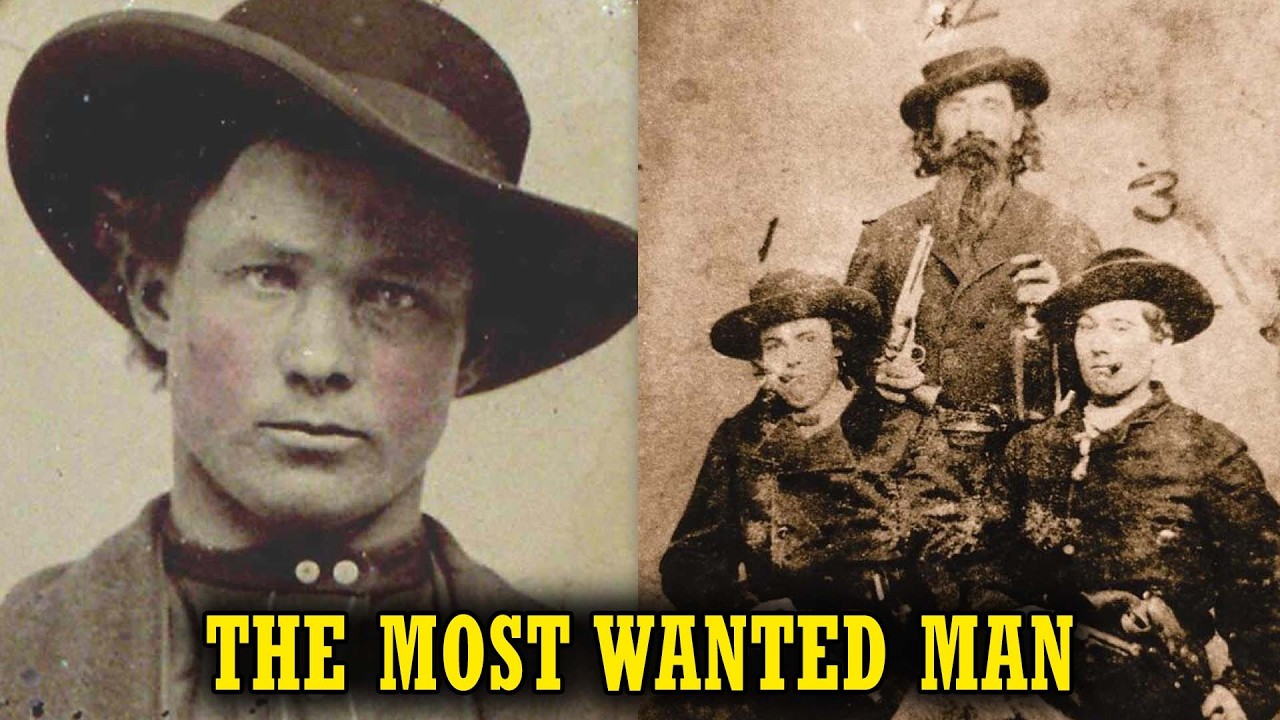
They interrogated Jesse’s stepfather, Dr. Reuben Samuel, demanding information about Frank’s whereabouts. Historical accounts agree that Samuel was subjected to a mock hanging or temporary suspension during the interrogation. Later stories also claimed that Jesse, then only 15 years old, was beaten or whipped for refusing to cooperate.
While some details were embellished as the James legend grew, this raid hardened Jesse’s resentment toward Union authorities, although historians caution against simplifying it as the single moment that turned an innocent farm boy into an outlaw. By 1864, at around 16 years old, Jesse joined a guerrilla band initially associated with commander Fletcher Taylor, and later with William “Bloody Bill” Anderson. Although often casually described as one of Quantrill’s raiders, his documented service was with men operating under Taylor and Anderson, rather than directly under William Clarke Quantrill himself. These rebels were not traditional soldiers living in camps and following regular army procedures.
They moved quickly through familiar territory, relied on surprise attacks, and disappeared among sympathetic communities. Jesse learned to ride effectively, handle multiple pistols, choose favorable terrain, and escape before larger forces could respond. Missouri rebels often carried several Colt revolvers instead of relying entirely on single-shot infantry weapons, allowing mounted fighters to fire repeatedly without stopping to reload. Jesse was also present with Anderson’s command during the events at Centralia, Missouri, on September 27, 1864.
That day, Anderson’s men stopped a train and executed 24 unarmed Union soldiers who were on board. When a Union detachment under Major A. V. E.
Johnson arrived to pursue them, the guerrillas ambushed and annihilated the entire force, an attack that became known as the Centralia Massacre. Jesse participated in those events, which intensified the Union military’s determination to hunt down the guerrilla bands. General Henry Halleck had already ordered that guerrillas be treated as bandits rather than prisoners of war, giving commanders the authority to execute captured partisans. In response to a later raid by Anderson’s men into Missouri, General Clinton B.
Fisk authorized militia members to hunt down the guerrillas and kill them on sight. After the Civil War ended, Jesse James did not return quietly to civilian life. He was shot in the chest by a Union officer in May 1865 while trying to surrender, but he survived the wound and continued his criminal career. As a former Confederate guerrilla with a $2,000 bounty on his head placed by General Fisk, he formed a new gang with his brother Frank, joined by fellow ex-guerrillas like Cole Younger, Bob Younger, and Clell Miller.
Together they planned and executed bank robberies across Missouri, Iowa, Kentucky, and other states. Their first bank heist occurred on February 13, 1866, when they robbed the Clay County Savings Bank in Liberty, Missouri, though the gang may have been acting without the James brothers on that occasion. The James-Younger Gang included a rotating roster of former guerrillas and outlaws, including John Jarrette, Dick Liddil, Jim Cummins, and the Ford brothers. They carried out some of the most audacious robberies in American history, including the attack on the bank in Corydon, Iowa, and the famous train robbery at Muncie, Kansas, in 1875.
The gang’s activities frustrated authorities and created widespread fear, prompting the Pinkerton Detective Agency to take on the case in 1874. The Pinkertons, led by Robert Pinkerton, believed that normal police work was failing and deployed agents to infiltrate the area. However, their operations often relied on questionable methods, including illegal detention, torture, and undercover agents posing as outlaws. One of the most tragic events during this manhunt occurred on the night of January 26, 1875, when a group of Pinkerton operatives threw an incendiary device into the James family home near Kearney, Missouri.
The device exploded, killing Jesse’s half-brother Archie, who was only eight years old, and severely burning his mother. The Pinkerton men had intended to burn down the home and shoot whoever tried to escape, but the attack instead ignited public sympathy for the James family and led to widespread criticism of the agency’s methods. By the late 1870s, public opinion in Missouri had shifted significantly. Many citizens had grown tired of the violence and the constant fear of retaliation.
Governor Thomas Crittenden determined to end the outlawry and offered a reward of $5,000 for the capture of Jesse James, an amount matched by a Missouri railroad, bringing the total to $10,000. The governor’s offer attracted the attention of Robert Ford, a young man who had joined the James gang. Ford, along with his brother Charles, saw an opportunity to collect the reward and avoid prosecution. On the morning of April 3, 1882, Robert Ford shot Jesse James in the back of the head while James was straightening a picture frame in his home in St.
Joseph, Missouri. James died instantly. The death of Jesse James became the subject of immediate controversy. Ford was later convicted of murder and sentenced to death, but Governor Crittenden swiftly pardoned him, sparking allegations that the governor had orchestrated the assassination.
Critics accused Crittenden of arranging a secret deal with the Fords, while his defenders argued that the state was merely fulfilling its duty to rid Missouri of a dangerous criminal. The true nature of any arrangement remains a matter of historical debate. Robert Ford himself was killed in 1892 by a shotgun blast in a Colorado saloon, an act that some have called “a miserable little coward’s death” much like the way his victim had died. Historians continue to see Jesse James as one of the most consequential figures of the American West.
His life, shaped by the violence of war, family loyalties, and his own choices, transformed him from a Missouri farm boy into a figure of both outlaw legend and historical study. The men who were once his neighbors, allies, and enemies all played a part in creating the mythology that continues to fascinate historians and the public alike.