The United States Navy spent its final morning governing Micronesia trying to solve a problem that had resisted every attempt for six years: persuading a group of Japanese holdouts on a remote volcanic island to surrender. On June 30, 1951, a Navy fleet tug named Kokopa lay offshore from Anatahan, about 75 miles north of Saipan, carrying armed Marines, an interpreter, and a photographer from Life magazine. The men on the island had refused to believe the war was over since 1945, dismissing every leaflet, newspaper, and magazine dropped to them as American propaganda. The breakthrough came four days earlier, when an aircraft dropped a bundle containing personal letters written by the men’s own families in Japan.
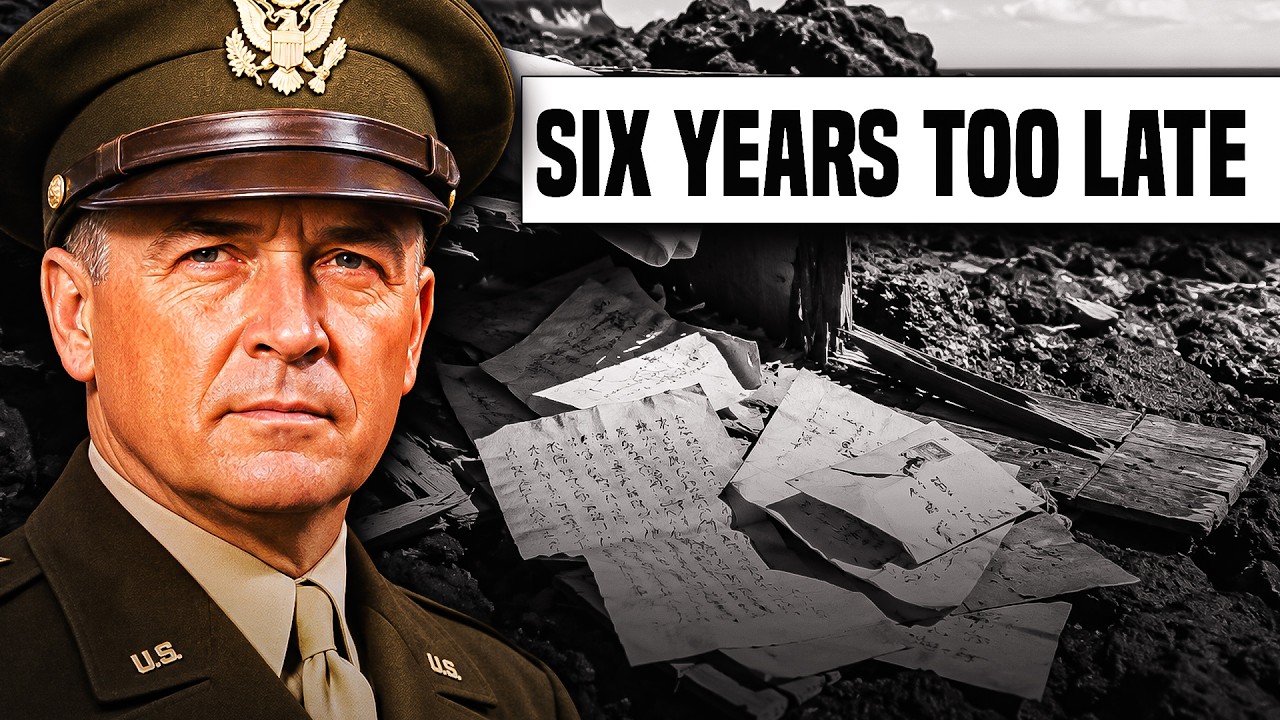
The package included a message from the governor of Kanagawa Prefecture, who told the men that the emperor had ordered everyone to surrender in peace, and enclosed a square of white cloth so they could signal the Navy boat. When someone on Anatahan waved that cloth, Lieutenant Commander James Johnson, who also served as the Navy’s deputy civil administrator on Saipan, went ashore by rubber boat with interpreter Ken Akatani. The Japanese came down from the grass in shirts and trousers cut from parachute nylon, carrying their belongings in cloth bundles. By the end of the morning, all of them were aboard the tug.
The story of how they got there began in June 1944, when American carrier aircraft attacked Japanese shipping around the Marianas ahead of the Saipan landing. Three small Japanese ships went down near Anatahan, and about 30 survivors—navy seamen, army privates, and merchant sailors—made it ashore. A plantation manager named Kikuichiro Higa already lived there with a young woman named Kazuko Higa, the only woman for a very long distance in any direction. The castaways survived on coconuts, taro, wild sugarcane, fish, crabs, birds, and lizards.
They smoked dried papaya leaves rolled in banana leaf and brewed a strong drink from coconut sap. The Americans knew about them almost from the start. In May 1945, an army detachment searched the volcano for a week. In July, a Marine battalion came ashore and took off the 45 island workers still living in the village.
After the surrender in Tokyo Bay, the leaflets began, followed by newspapers and magazines. The men on the hill dismissed them all as forgeries. The first crack came in June 1950, when Kazuko Higa walked down to the beach and asked an American vessel to take her away. She told authorities on Saipan something they had not grasped: the men on the hill were not holding out from stubbornness or pride.
They still did not believe the war was over. Word of the holdouts had reached Tokyo, where officials offered to send a Japanese ship. The Navy asked for something more useful instead. It had the men’s families found and asked to write, then began running a delivery service to armed enemy holdouts.
Johnson’s packages went in under a white flag, carrying letters, Tokyo newspapers, magazines, food, beer from Japanese breweries, and cigarettes. He kept it up for a year. The logic behind the strategy was simple. A leaflet could be forged by an enemy, but a brother’s handwriting could not.
The first reply came in mid-June 1951, from Junji Inouye, the senior military man among the holdouts. After receiving a letter from his brother, he came down out of the bush in parachute cloth and gave himself up. He told the Navy that 18 of his companions were still up on the island, still holding out, and still had one machine gun among them. The photographers aboard the tug laid out everything Inouye had carried down: sandals woven from fiber, a hat made from coconut husk, and knives hammered out of the wreckage of an American bomber.
That bomber was a Superfortress that had crashed on Anatahan in January 1945, returning from a mission over Nagoya. All of its crew were killed. The Japanese found the wreck and took it apart for years. They beat the aluminum into pots, razors, and fish hooks, bent machine gun springs into shark hooks, turned oxygen bottles into water tanks, made diving goggles from Plexiglas, and wore the parachute nylon.
One man built a three-string Japanese banjo from the scrap. The story of Anatahan turns darker when the accounts reach what happened among the men themselves over those years. Quarrels ran through the years over food, drink, fishing, and over the one woman there. Men died in them, including Kikuichiro Higa.
Time magazine reported that eight of the men had died at their companions’ hands. Another account from the Navy’s side counts 11 deaths among the holdouts, six of them by violence, and one survivor carrying 13 knife scars. The two counts do not match, and nobody who was not on that hill has ever been in a position to settle it. Even the number of men who walked out on June 30 depends on whose count is trusted: 18 in the magazine’s figure, 19 in later lists that put the survivors at 20 in all.
By afternoon, the Kokopa had them aboard and was heading south. At Guam, the men spent a week in hospital, then the Navy flew them home to Japan—six years after the war that had stranded them ended, and seven years after their ships went down. The Navy’s account credits the family letters for the surrender, and the timing supports it: a box dropped on the 26th, a white flag on the 30th. But mail from home had been arriving for a year before that.
The group the letters finally reached was not the group that had ignored them for so long. The woman at the center of the island’s quarrels had been gone for 12 months. Several of its most dangerous members had been killed by the others. And the senior man on the island had just walked down the hill, with his own written appeal following him in.
Any one of those things could be the reason. The men who could have said which were the men themselves, and nobody asked them with much care. The Japanese press turned the story into a lurid tale of sex and murder almost as soon as the men landed. In 1953, Hollywood director Josef von Sternberg made it into a film.
One survivor, Michiro Maruyama, wrote his own book in 1954 to set the record straight against what the papers had made of it. But the version that stuck was the one about the queen of Anatahan, and the quieter question of why 20 men changed their minds in one week of June was left where the newspapers had dropped it. That night, at midnight, the Navy’s administration of the Trust Territory of the Pacific Islands ended, and the Interior Department took over. The Navy’s official history of the Kokopa covers the years from 1947 through 1960 in a single sentence about rotating between the West Coast, Hawaii, and the Far East.
Anatahan does not appear in it.