When American intelligence officers first began examining captured Japanese documents in the Pacific theater, they realized they were dealing with something far more revealing than standard military reports. By August 1945, the Allies had amassed an estimated 10 million captured documents, ranging from official battle plans to the most intimate personal diaries of Japanese soldiers. The sheer volume was staggering, and the reasons behind it revealed a profound cultural gap between the two fighting forces. The Japanese army did not just tolerate soldiers keeping diaries; it actively encouraged the practice.
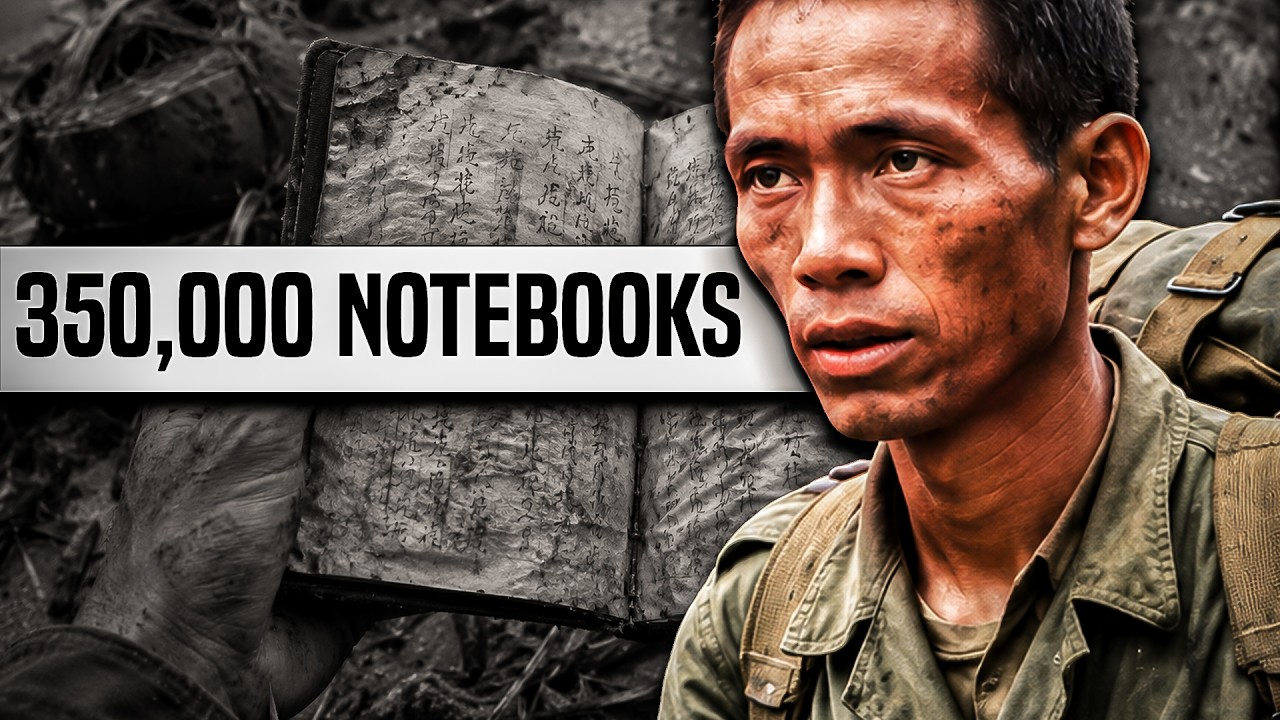
This was in stark contrast to the American military, which officially prohibited its own soldiers from maintaining personal journals during wartime. The American regulation was so strictly enforced that soldiers like Eugene Sledge famously hid their notebooks inside their Bibles, and James J. Fahey wrote his diary while at sea, fully expecting severe punishment if it were ever discovered. These men became famous for breaking the rules, but the Japanese had no such restrictions.
For them, the diary was a tool of discipline, a habit deeply ingrained through decades of military and educational policy. The military, the state, and even private corporations all encouraged it, reinforcing a practice that had been instilled from a young age. The sheer volume of paper that flowed from the front lines was a direct result of this policy, a fact that stunned Allied intelligence and created a unique intelligence-gathering opportunity. The Japanese military’s confidence in this system stemmed from a profound sense of cultural insularity.
They believed that no Westerner could possibly understand the Japanese language, and so they saw little need for strict secrecy around personal documents. This assumption, however, was a critical miscalculation. The Allies did have a dedicated and highly effective team of Japanese-language experts, and their work would prove invaluable. In the summer of 1944, the Allied Translator and Interpreter Section (ATIS) in Brisbane, Australia, established a special section with a team of six women from the US Women’s Army Corps.
Their task was to painstakingly sort, clean, and dry waterlogged and mud-caked enemy documents. They were dealing with papers recovered from sunken ships, downed aircraft, and the bodies of dead soldiers, often tearing and crumbling as they worked. These women were the first line in a painstaking process of recovery and translation that would contribute significantly to the war effort. The Japanese had failed to anticipate this dedication and skill, and the intelligence gleaned from their soldiers’ own words would have a direct and lasting impact on the course of the war.
The effort was not limited to high-level documents. The bulk of the material that passed through these tables was not just enemy battle plans. It was personal letters, postcards, pay books, and the small, everyday documents that soldiers carried in their pockets. Realizing the potential value in this personal material, ATIS issued a manual on how to handle and restore them.
They even sent restoration kits to field units. One of the most significant sources of this documentary evidence came from a series of major battles in the Pacific. In the Kokoda Track campaign in New Guinea, the Allies captured 268 documents. At Buna, they seized 509.
At Lae, the number jumped to 1,562. By the time of the Marianas campaign, culminating in the Battle of Saipan in July 1944, the sheer volume was so immense that the military stopped bothering to count individual pieces and started weighing them in tons. From letters that had been sent to wives and sweethearts at home, to official orders written on the battlefield, the Allies were piecing together a detailed and often personal picture of their enemy. It was a revelation.
The war, it seemed, was being fought not just with bullets and bombs, but with the very words of those who were fighting it.