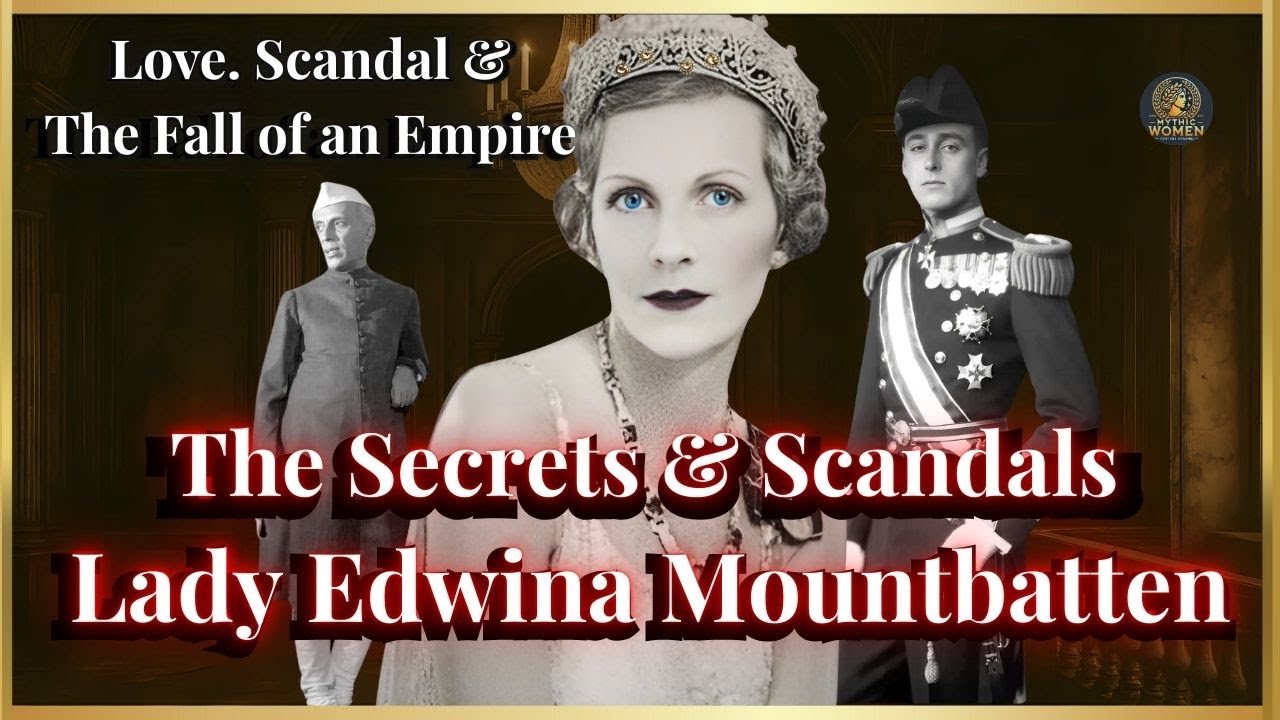
Few women of the twentieth century lived a life as scandalous or as remarkable as Edwina Mountbatten. Born into immense wealth, she was once called the richest heiress in the world. But splendor offered no shield against sorrow.
Her story runs from the gilded halls of Mayfair to the jungles of Burma, from the domed palaces of Delhi to the quiet ache of a restless heart. It is a story of love and loss, war and heartbreak, and of a woman who broke through the quiet walls built to contain her.
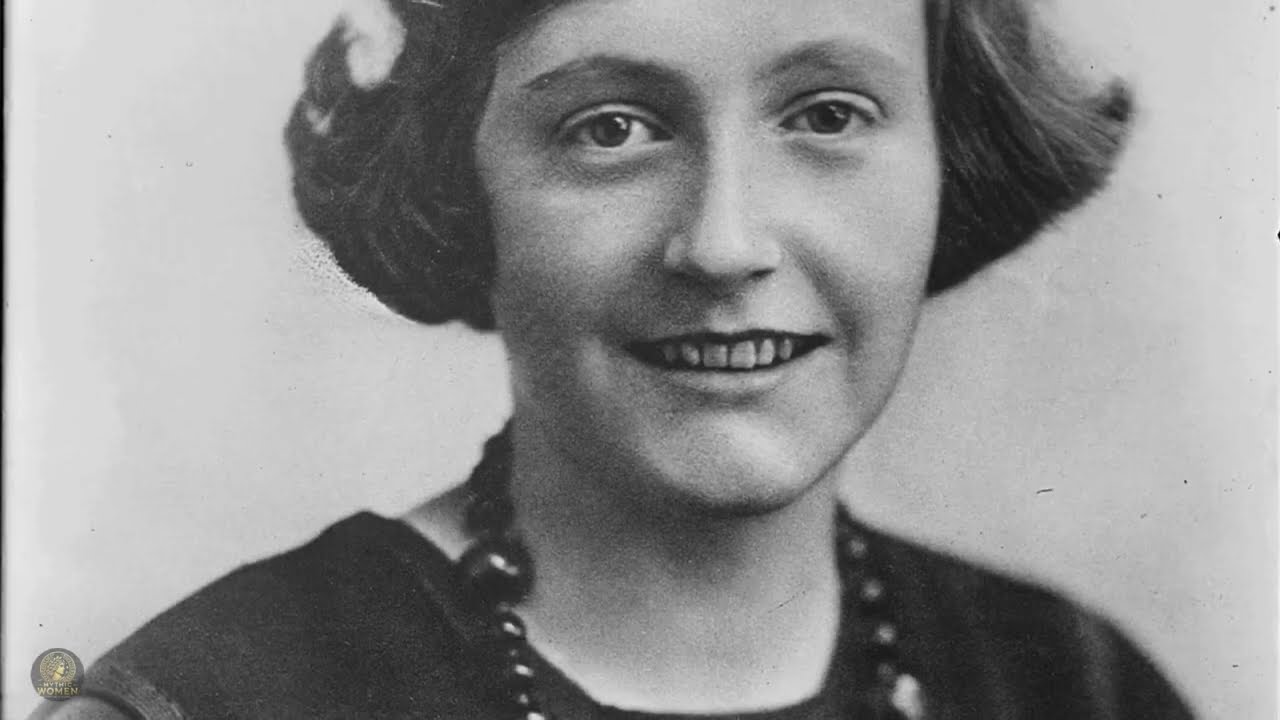
Edwina Cynthia Annette Ashley was born on November 28, 1901, in a drawing room at 32 Bruton Street, lit by cut-glass chandeliers. She entered the world wrapped in wealth, watched by nurses, and kissed by kings. She was named after her godfather, Edward VII.
Her mother was Maud Ashley, known as Ma. Her father was Wilfrid Ashley, a soldier and later a politician whose lineage traced to Queen Victoria's first prime minister and even to Pocahontas. He lacked a title, but the Ashley name bore weight.
Her grandfather was Sir Ernest Cassel, a man who was not born to power but built it. Born in 1852 into a Jewish banking family, he rose through Europe's financial veins. By twenty-two he was rescuing governments and reshaping currencies.
Cassel's fortune swelled across copper mines and railroads, arms deals, and imperial loans. A personal friend of the Prince of Wales, later Edward VII, he controlled kings and barons. But his German birth and religion made him an outsider.
He had married for love, lost his wife to tuberculosis, and kept two things from the union: a British passport and a daughter, Ma. Into her he poured his grief, his ambition, and his legacy.
Edwina's early childhood unfolded across a gilded kaleidoscope of drawing rooms and estates. She passed from governess to governess, cousin to cousin, house to house, never rooted, always observing. Life was orderly but impersonal.
Her parents moved in different orbits. Wilfrid, earnest and anxious, followed politics and punctuality. Ma, bright and brittle, chased light, air, and distraction. Neither paused long enough to anchor Edwina.
There was one constant: her grandfather. Cassel poured his heart into Edwina. He wrote to her, brought kittens, rabbits, and a pony. With him, Edwina was not a figure to be presented but a person to be known.
When Ma gave birth to a second daughter, Mary, Edwina was five. She welcomed the new baby with fierce, unspoken loyalty. For a brief, golden season, Ma lingered at home to recover, and Edwina had a mother.
But the spell dissolved. Soon she was dressing for dinners she would not attend and curtsying to guests she would never see again. No one taught her how to be loved, only how to behave.
By 1907, Ma's vitality began to fail. The brightness in her cheek was the deceptive flush of tuberculosis. Cassel recognized it too well. He had seen it before when it claimed the woman he loved.
He took Ma to Egypt, hoping the dry air would heal what London could not. For a moment she revived, then faltered again. Edwina was fetched for a brief visit, photographed beside her grandfather and the sovereign, then sent away once more.
In Edwardian society, children were not companions. They were ornaments, well-dressed, well-trained, and best kept out of sight. Edwina and Mary were no exception.
Edwina listened closely. She watched, and she began to draw the most dangerous of childhood conclusions: that love had to be earned. At eight, she opened a savings account. When Wilfrid joked about being broke, she offered him everything she had.
In one letter to Father Christmas, Edwina asked only for maps, so she might trace the places her mother wandered. Ma's postcards were sweet but strange. Edwina kept them all.
Eventually the doctors confirmed Cassel's deepest fear: tuberculosis of the glands. Egypt had not worked. Neither had Paris. Switzerland offered little more than delay.
For Edwina's birthday, Ma sent a silver brush and a velvet jewel box. Edwina replied with careful gratitude. There was no party, only a rain-drenched cake and a growing silence.
That December, Edwina pinned her hopes on a single date: Ma's birthday. She and Mary sent out invitations in careful script. Ma, of course, did not come.
At Christmas, the absences doubled. Wilfrid traveled to Egypt. Sir Ernest, left with the girls, did his best. Edwina made toffee at Stanmore and sent it to Ma with a note promising they would make some every week when they were together again.
Edwina never cried. She smiled, hoped, and asked only for what others might be willing to give. She was steady, composed, unfailingly kind. An aunt once mocked her for it, calling her too good to be true. But it was not an act. It was her armor.
On February 5, 1911, Ma died. She was thirty-five. The funeral was held at Romsey Abbey. The children were not allowed to attend.
Edwina wrote to her father that she was so very sorry, that Mama had left them all so suddenly and forever. She said she had wanted to kiss her only once, and now she had not. It was a grown-up letter, too grown up.
After Ma's death, Wilfrid buried himself in Westminster, wandering its corridors like a ghost. He spoke little and smiled never. On weekends he vanished into country-house parties, seeking noise to drown out the silence.
Mary, just six, grieved loudly. Edwina would quiet her, brush her hair, straighten her collar. Her own grief ran deeper and quieter. She blamed herself, as children do, sincerely and illogically.
She became dutiful. She offered solace to others and asked for nothing herself. She was trying to be everything: Wilfrid's comfort, Mary's protector, Cassel's hope.
Then, just in time, someone arrived. Her name was Laura Dvaria. Miss Dvaria became Edwina's governess in September 1912. She was firm but never cold, intelligent but never stiff.
Within weeks, the atmosphere shifted. Edwina adored her. Lessons expanded. Edwina read Kipling, then Tennyson, then Shelley. She was taken to concerts, shown paintings, introduced to ideas.
That summer they went to Switzerland. The children walked the hills, drank milk in wildflower meadows, and took tea on mountaintops. It was a season of sun and ease, a season of healing. It was also the last.
By August, Britain was at war, and Wilfrid had remarried. Her name was Molly. Edwina and Mary had never met her. On August 28, 1914, just weeks after Britain declared war, she became their stepmother.
Molly stepped into Ma's place with astonishing ease and no tact. She tore down curtains, rearranged furniture, and had Broadlands redecorated before her wedding ring had even settled. Within days, the girls were banished from the drawing room and sent to bed at 6:30 sharp.
She insisted the children call her Madre. They did, but in tones reserved for fairy-tale stepmothers. Worse still, Molly despised Laura Dvaria, who had restored color to Edwina's life. Within weeks, Laura was dismissed.
Mary was sent away to school, deemed too noisy, too emotional, too defiant. Edwina resisted in the only way she could: quietly, fiercely, with love. She planted forget-me-nots in Mary's patch of garden and sent peppermint creams wrapped in wax paper.
By thirteen, Edwina was quietly exacting. She cataloged books, logged piano scores, and kept her diary with archival precision. Every penny was accounted for. Guests were tallied, telegrams priced, her glove size recorded, her boot size too. Never her weight.
Wilfrid, unaware of the wound, once called her Fatsy. She never forgot it. That spring, the fourth toe on her right foot bruised too easily. She was sent to a London nursing home, where it was to be partially amputated.
Relief came in the form of Mary's return. The sisters roamed Harrods and Debenhams. There were beach races, games, and long walks with Sir Ernest. The world briefly became warm again. But as always, the parting came.
War, once distant, crept closer, and Edwina began to follow it like a scholar. She clipped newspaper articles and pasted them into her diary under the heading "History of the War." She asked to visit wounded soldiers, and when allowed, she did not flinch.
Then in July came the final insult. Molly had decided Edwina must be sent away to school. Wilfrid broke the news just before dinner on July 3. Edwina recorded the date with the solemnity of a memorial, a black-letter day.
For the first time, she did not obey. What followed was a full-scale rebellion waged across the lawns and corridors of Broadlands. But the storm, like all tempests, passed.
In late September, she boarded the train to Eastbourne. The school was called the Lynx. The days were orderly and long. Edwina described it with one word: ghastly.
And yet the place was not without charms. She shared a bedroom with Mary. In French and German, she rose to the top. Her essays showed flair. There were walks on the downs and occasional roller skating in the corridors.
What she missed more than anything was movement, freedom, laughter, life unscripted by bell or timetable. On her fifteenth birthday, she received a diamond fox-head brooch with ruby eyes. Madre predictably forgot the date, but Sir Ernest never did.
By her second year, she wanted to leave. Her father agreed, and Edwina entered what was called a domestic science training college. The girls were expected to scrub floors, launder linens, and prepare stews in smoky kitchens. Edwina captioned one photograph: "Learning to be a woman the hard way."
She wrote to Sir Ernest almost daily, pleading for a trip abroad. He agreed, and the departure was set for October. The journey began in Paris, where Edwina and her cousin Marjorie took rooms at the Ritz.
Sir Ernest had laid out the pillars of the tour: shopping, culture, and refinement. The itinerary began with the Louvre, Notre-Dame, and the opera. Edwina called it perfectly wonderful.
By the time they crossed into Italy, she looked transformed, less schoolgirl, more swan. In Rome, the days fell into a rhythm of elegance and education. There was an Italian teacher, an etiquette guide, and a dozen dusty palazzos to explore.
But the letters home told only half the story. She did not mention Captain Mott, or Mr. Scott with his lacquered hair, or Ricardo, the duke with the velvet cloak and the dangerous smile. Nor did she report the cigarettes smoked in Roman cafes or the wine sipped over long lunches.
Sir Ernest had intended the trip as an education. He got one, just not the kind he expected. In Rome, Edwina discovered something far more potent than charm. She discovered freedom.
When Edwina returned home, she was met not with warmth but with indifference. It was Sir Ernest who declared she would stay at Brook House, and that come May, she would be launched into society from there.
Brook House was neither silent nor still. It throbbed with staff and ceremony. The chef presided over four assistants. The housekeeper managed a small army of maids, one assigned full-time simply to dust the vases.
Her presentation at court was scheduled for May. Out went the school skirts and blouses. In came pleated gowns and jackets with a subtle flare. Dressmakers came with pins and tape. Sir Ernest paid every bill.
She was launched with a ball at Brook House. For eight weeks she was seen at dinners, dances, and suppers. The papers called her the richest heiress. In time, she was recognized as one of the most intriguing debutantes of the season.
At eighteen, Edwina was restless. She asked to be moved at table, pleaded to skip certain events, and begged to be spared political conversation. When that failed, she mastered the art of evasion.
Then came Cowes, the second season. The same names circled from yacht to shore and back again. But this time there was a new guest: Louis "Dickie" Mountbatten.
He had missed Cowes the year before, away with the Prince of Wales on a royal tour through Australia and New Zealand. Now back, he spoke of little else. Dickie was Queen Victoria's great-grandson, cousin to nearly every royal house in Europe.
His father, Prince Louis of Battenberg, had risen through the Royal Navy to become First Sea Lord until anti-German sentiment forced him out. In 1917, King George V anglicized the name. Battenberg became Mountbatten.
Dickie was nothing like the men Edwina usually met. Her world was filled with tweeds and restraint, dry wit and languor. He moved fast. He aquaplaned behind launches in a rubber cap, somersaulted off the stern of yachts, and climbed rigging like a boy in a storybook.
He was twenty-one. She was not yet twenty. They began to orbit each other at charity balls, yacht parties, and dances. On the final night of a cruise along the French coast, claiming a flicker of nausea, Edwina rang for a steward. Dickie arrived instead.
The cure, he said, was to sleep on deck. And so they did, curled in a lifeboat beneath the stars, a tangle of youth and salt air. The next morning, he invited her to lunch with his parents.
Prince Louis met the car at the gate. He watched her step from it, poised, luminous, unreadable. "She's the best of her generation," he said. "If you marry her, you have my blessing."
Soon after, Dickie's father died. The call came during a house party at Dunrobin Castle. He had collapsed at his club. Dickie spent the day with the Prince of Wales and found a note from Edwina delivered sometime in the night.
That same week, Edwina received a summons of her own. Sir Ernest had collapsed across his desk at Brook House. When she arrived, the great doors were closed and the lights dimmed. She stayed the night alone in his study, the air still bearing his scent.
Edwina was now left entirely unmoored. Whatever love and comfort she received as a girl had come from Sir Ernest, and with him gone, she felt lost. At first light, she sent a note to Dickie.
He came at once, and together they walked to Hyde Park, walking beneath falling leaves, speaking of fathers, of grief, and impossibly of the future. They had barely been together three weeks, but grief had stripped away performance.
His departure for India was imminent. Renown would sail on October 26, carrying the Prince of Wales through India and Japan. The separation would last 246 days. He wanted to ask her to be his bride but felt it would be wrong before such a long separation.
That morning, before boarding, Dickie handed her a small watch. "To keep track of the time," he said, but of course it was more than that. As Renown pulled away, he turned his telescope not toward India but back to shore, where Edwina waited.
Back in London, Edwina filled the silence as best she could. She danced until three in the morning, attended plays, and lunched with suitors who failed to impress. Her letters to Dickie sparkled deliberately. She dropped names, wanting him to feel the ache of distance. He did.
From Bombay, he sent lacquer bowls, two swords, and a map of the royal party. Each face was labeled by hand, their personalities scribbled in the margins like a secret. She read the line twice, then folded the map carefully, as though sealing a promise.
By December, she confessed that she was miserable and desperately wanted to go to India. It was agreed. A chaperone was arranged. She was coming out.
India was unlike anything she had seen. Etiquette there had the gravity of ritual. Every gesture was choreographed. The viceroy and vicereine moved with deliberate grace.
"I can't tell you how smart and rich one feels here," Edwina wrote. "A car whenever you want. Ten servants for everything. Special flowers for each dress." India was theater, and she had a starring role.
They walked together, rode together, danced in the prince's drawing room. She taught Dickie a new step, and in a private moment, he proposed. Caught in it all, Edwina said yes.
The next morning, they told the prince, the Readings, and Lord Cromer. Not everyone was thrilled. The viceroy, acting as her custodian, panicked. Lady Reading was more blunt, writing to Wilfrid that she knew nothing against him except that he was too young.
But there was no stopping it now. Edwina had chosen. By the time Dickie's formal letter arrived requesting Wilfrid's consent, the news had already swept through the palace. By morning it was all over London.
Wilfrid was furious. He had been bypassed. He sulked, muttered his outrage in low tones, and refused to authorize any public announcement until Edwina returned in person.
She meanwhile refused to let royal protocol shadow her final days in Delhi. She rode elephants at dawn, hunted through dusk, and went pigsticking alone before breakfast, against etiquette, against advice, and returned with dust in her hair and triumph in her eyes.
Back in London, her arrival was met with telegrams, armfuls of roses, and the relentless flicker of press bulbs. Brook House disappeared beneath an avalanche of gifts. Pendants from Queen Alexandra, tiaras from Wilfrid and Mrs. Cassel, a coronet of five diamond stars from Aunt Victoria.
Their wedding was not simply a union. It was a spectacle. The press was enchanted. The marble staircase became a grove of orange trees. Lilies spilled through every room. Her gown shimmered in silver cloth and antique lace. Her bouquet held a single Madonna lily.
At three in the afternoon, Dickie wrote in his diary, "We were married." They walked beneath an arch of naval swords. Edwina, powdered but unpainted, bit her lips for color.
They drove to Broadlands, but the Rolls broke down. Every few miles, Dickie pulled over to patch a fuse while Edwina smoked beneath the trees. At Romsey, they arrived as the village fete was ending.
"Perfect, wonderful bliss," he wrote. And later, with detachment, they went to the cinema the next day to watch the newsreel of their own wedding. Seeing themselves frozen, luminous, and unreal made it feel true.
Then came America. From the moment they disembarked in New York, the Mountbattens were stars. The press could not get enough. A royal wedding, a naval groom, a glamorous, wealthy bride.
They were swept into the Fairbanks-Pickford circle. Charlie Chaplin met them at Pasadena Station, driving the Fairbanks Rolls-Royce. When Douglas and Mary left for New York, they lent Pickfair to the newlyweds, a white wood fantasy perched on the hills where giraffes wandered the grounds.
Chaplin proposed they make a film, Nice and Friendly, shot on location at Pickfair. Edwina was the damsel, Dickie the hero. Chaplin directed and performed. The plot: Edwina is kidnapped for her necklace. No one remembered their lines.
For Dickie, it was the perfect stage. For Edwina, it was something better: freedom. She danced until morning, laughed too loudly, kissed strangers on the cheek. She did not have to be polite, only dazzling, and she was.
They traveled east in a private train car chartered just for them. At Santa Fe, Native Americans posed solemnly beside them as the flashbulbs burst. In Washington, he gave a Navy League speech. In New York, Mrs. Vanderbilt hosted a farewell dinner.
Back from America, Edwina struggled to adjust. Poker, tennis, pantomimes. It all felt slow. Then came the news. Dickie had been ordered to Constantinople to serve aboard Revenge. Edwina was furious.
That night, she wrote in her diary, "Very miserable." It was their first night apart since the wedding. Edwina drifted. Brook House felt cold and empty. While most of society was marooned in damp country houses, Edwina clung to a handful of loyal friends.
By February, she was exhausted. "Nothing," she wrote, "can revive me for long." Dickie was contrite. He promised to make it up to her. After three months apart, Dickie returned to London, ready for a child.
In June, Edwina became pregnant. Both were elated. But in July, Revenge sailed north. In August, she joined Dickie in Edinburgh, where he had secured a suite at the Caledonian Hotel. She was learning what it meant to be a naval wife. She did not like the weather, the stillness, or the waiting.
At ten in the evening on February 13, Nurse Nisbitt called Dr. Simpson. Edwina thought it a false alarm, but within hours, under chloroform, she gave birth. "A divine little daughter," she wrote in her diary carefully in pencil so she would not stain the sheets.
The cause of all the excitement, Patricia Edwina Victoria, was promptly installed in the nursery. The Prince of Wales came to admire her. So did Prince George. Edwina was more detached. The nanny took over.
By March, the baby was sent to Branscombe Dean. With her figure restored, Edwina resumed her life. First Paris for fittings, then to Mrs. Pulitzer's villa in Antibes. Parties stretched till dawn.
Like her own mother, Edwina left child care to experts. The Mountbattens were everywhere. To outsiders, it looked like bliss. After Dickie's next departure, Edwina ran faster than ever.
She moved from Wimbledon to Ascot to Cowes to Paris. To observers, it was one long costume ball. And Edwina dressed the part. Gray fox fur and rose-pink hats for the races, orange silk for Cowes, a red hat and white fox for polo.
When heavy earrings became the rage, she had her lobes pierced and hardened so she could carry jeweled fruit-shaped pendants. She stayed slim through strict dieting and constant motion. Tennis by day, three hours of dancing each night.
With Dickie back, they returned to America, this time with the Prince of Wales. Edwina danced until dawn. Dickie took his morning massage and pretended to enjoy himself. He did not. He was beginning to feel unwell.
They were meant to stay on Long Island with oil millionaire Joshua Cosden, but as soon as they arrived, Dickie was diagnosed with tonsillitis and sent to bed. Edwina did not slow down. Her newest admirer, Johnny Gaston, was always on the phone. Dickie could hear them from his sickbed.
One night, he escaped to Coney Island with two naval friends. He got home at two in the morning. Edwina was not back yet. She returned at six. He had waited up, hoping to share his evening. She was furious. She thought he was spying on her.
As a lover, Dickie was enthusiastic but unskilled. He had married without practice, and three chaotic weeks in America had only widened the gap. Edwina could not quite say what was wrong, and Dickie had no idea how to fix it.
He sailed home alone, determined to become the man she wanted. Edwina alone resumed the triangle. Johnny Gaston and Laddie Hull hovered, sometimes together, more often apart. She believed she was keeping them all at arm's length.
She thought America was more modern, more forgiving, less judgmental. But the society she had stepped into, however loud and lively, was conservative at its core. And Edwina, debt-ridden and terribly depressed, turned toward home.
Dicki transformed his bedroom at Brook House into a naval cabin. Walls lined with cork, ceilings sprayed white, ventilation ducts installed, a regulation bunk, a folding washstand, two brass-framed portholes. Next door, Edwina slept on satin and swansdown.
By 1925, Edwina was declared one of the six best-dressed women in the world. In honor of the event, she threw a party where Leslie Hutchinson, known as Hutch, came to perform. He was velvet-voiced and magnetic, elusive but never overlooked.
Society whispered about his lovers, women and men, sometimes both. He had been companion to royalty. Now he played in her home while she wrapped a scarf of chiffon around his shoulders. Later there would be a rumored affair that would shock society.
By spring 1926, Dickie had completed his course at Greenwich and joined the Centurion for a short assignment with the reserve fleet. The pace for Edwina was relentless. Her health began to fail. Month after month, she complained of migraines, cramps, poor digestion.
And behind it all was the strain of hiding the truth from Dickie. They were called "ginks" in Mountbatten slang: charming escorts who filled the hours when Dickie was away. Her first real affair was with Hugh Molyneux, heir to the Earl of Sefton.
It lasted ten months. When Hugh was posted to India, Edwina moved on to Steven "Laddie" Sanford. Laddie was everything Dickie was not: a Yale man, a champion polo player, a big-game hunter, and heir to a fortune.
In August 1925, he joined the Mountbattens on holiday in Deauville. From that moment, he and Edwina were inseparable. Dickie, oblivious, carried on until the Prince of Wales told him.
In London, Edwina and Laddie were seen everywhere. Dickie hated it, but he could not plead ignorance. Sometimes from her bedroom, she would call, "Just in here with Laddie." Friends stopped visiting in the morning. They were too embarrassed.
By September 1926, there was someone new. Mike Wardell, tall, magnetic, with a black eye patch, a former cavalry officer recently hired by the Daily Express. He and Edwina became inseparable.
Dickie, who later became notorious for his own affairs, at this point still clung to his wife. "No action, however small, of yours passes unnoticed by your spouse," he wrote. "I wish I could flirt with other women, especially my wife. I wish I wasn't pompous. I wish I drove like Bobby Casamajor, talked like Peter, shot like my father. I wish I wasn't in the Navy. I wish I had more money to give you better gifts."
In other words, he wished he were worthy of her love. Edwina kept the letter. She never replied. On the surface, nothing changed. She hosted Dickie's family, planned fundraisers, and arranged guest lists, but she was unraveling.
Five years after their wedding, the marriage had quietly broken. Hugh Molyneux returned to London. Laddie was still in America. Edwina and Hugh found each other again. Then Mike returned. Then Laddie returned.
On a particularly chaotic afternoon, a maid at Brook House neared collapse. Edwina had just returned from a shopping spree. Five suitors were waiting. "Mr. Gray is in the dining room," the maid announced. "Mr. Sanford is in the library. Mr. Phillips is in the boudoir. Señor Portago is in the anteroom. And I simply don't know what to do with Mr. Molyneux."
Edwina was thin, anxious, fraying. Her diary filled with headaches and dizzy spells. She left for Paris. Most biographers believe she had an abortion. She told Dickie it was her appendix. Before she left, she confessed, "I felt like ending my life."
Then finally, Malta to see Dickie. This time, she brought Patricia. Dickie was overjoyed. The family was whole again. For a few months, the world slowed. They took Patricia paddling, bought her a dollhouse, decorated the Christmas tree, and made plans with joy.
But soon he was reassigned to the Queen Elizabeth, then to Egypt. Edwina followed. She loved it. The heat, the monuments, the echo of her mother's past. "My lovely Edwina," Dickie wrote. "Edwina in black shorts, very indecent, but very sweet." He was in love. She was not.
The doctor confirmed she was pregnant. The baby was due in May. On April 19, Edwina woke in agony. The baby was five weeks early but strong. They named her Pamela.
Edwina recovered for three weeks. Then the cycle continued. On a whim, she and Marjorie sailed for America. The Wall Street crash had gutted the economy, but you would not know it from Edwina's diary. She saw only architecture, hotel lobbies, and luxury.
While Edwina wandered, Dickie worked. He had become head of wireless instruction at the signal school. Each morning, he visited Patricia. He took her to the Natural History Museum. They rode ponies together. When she fell from Rusty and broke her arm, Dickie carried her home.
Edwina had never been a natural mother. In photographs with Patricia, there was always space between them. When she placed an arm around her daughter, she smiled at the camera, not the child. Pamela was different. Perhaps because Patricia turned easily to Dickie, Edwina became possessive of her younger daughter.
One evening at Brook House with Laddie Sanford at dinner, Edwina collapsed. "I feel faint," she said, and sent the guests to the theater. Three days later, the doctor made his diagnosis: a severe internal infection. Emergency surgery was required.
Months passed. Electric therapy, massage. She learned to walk again. Her reappearance came at the Midnight Review, a charity performance at the London Pavilion. Edwina floated in white silk, white chamois, and a diamond coronet. She looked like a ghost.
By 1931, the parties resumed. She sailed to the West Indies. In Havana, she saw Larry Gray. In Mexico, Ted Phillips. Then Laddie arrived. It became a dance of management. Three months of sunshine. Three months of fantasy. Dickie received four letters.
Then came the letter. His cousin, who had seen Edwina in Cuba, wrote to Dickie. Edwina was disgracing herself. Disgracing the Mountbattens, disgracing the Cassels. Dickie was stunned. He called her, told her to come home. She refused.
Then came the gossip. The New York papers said Edwina Mountbatten was seeking a divorce, that she was planning to marry Douglas Fairbanks. She cabled Dickie that it was all nonsense. Dickie tried to believe her, but in London, the story spread. He was humiliated.
This time, he demanded she return. When she did, he confronted her. She brushed him off, went to cocktails, then left to see Laddie. That was the last straw. That night at Brook House, Dickie sat her down. "You've lost the ability to frighten me," he said. "I used to become meek or rude. Now I'm just calm."
They agreed the marriage was over. But that night, she came to him in his bedroom. They talked. They would not separate. They would evolve. Separate beds, some separate lives. Edwina could look elsewhere, but discreetly.
To outsiders it seemed a marriage of convenience, that Dickie needed her money and Edwina liked his title. But they misunderstood. Dickie still needed her. And though she was less dependent, she had not found a love strong enough to pull her away.
"Were Hugh and Laddie serious?" he asked. "I suppose you'd call them serious," she replied. "But they never changed my affection or respect for you." "You're a very sweet person," she added. "I love you very much."
There was little thrill in affairs conducted under a husband's indulgent gaze. The secrecy was gone. The thrill had dulled. Hugh drifted away. Laddie sailed back to America.
Then another crisis. For years it had been Dickie who worried about money. Now it was Edwina. Between 1929 and 1931, their expenses had spiraled. Brook House was the greatest burden. Between autumn 1930 and autumn 1931, the house alone cost nearly sixteen thousand pounds.
Sir Ernest's will had forbidden its sale. Lawyers were called, negotiations dragged on, items were auctioned. In the end, the house itself could not be sold, so they had it demolished. On the rubble of the old Brook House, a sleek eight-story block of flats rose.
In the midst of financial upheaval, they left for Malta as tax exiles. In Malta, Edwina tried. She entertained, threw picnics, hosted coastal dinners, and sailed on yachts. For a moment, life seemed still.
Then came the scandal. In May 1932, The People ran a blind item under the headline "Society Shaken by Terrible Scandal." It concerned one of the leading hostesses in the country, a woman highly connected and immensely rich. Her association with a colored man had become so marked that they were the talk of the West End.
There was no name, but everyone knew. The woman was Edwina. The quarter was Buckingham Palace. Dickie was furious. The case went to court. Both Edwina and Dickie were permitted to testify. On the stand, she was composed, unshakable. The judge ruled in her favor. The paper printed an apology.
The man in question was widely assumed to be Paul Robeson. Later it was confirmed to be Leslie Hutchinson, Hutch. She had first met him in Harlem in 1925. He played at her parties. She gave him gifts. He would remain part of her world for decades.
But the scandal had consequences. For years, Edwina had written the rules. Her affairs were tolerated. Her independence admired. But now the press was circling. The palace was watching.
And in 1932, Dickie fell in love. Her name was Yola Letellier. She was the much younger wife of Henry Letellier, a French newspaper magnate. Yola was witty, serene, beautiful, and very quiet.
The discovery hit Edwina like a thunderclap. She had never imagined Dickie with a mistress of his own. Affairs were hers to conduct, not his. She packed her bags and left for Paris, not to end it, but to meet her.
"Your girl is sweet and I like her, and we got on beautifully," Edwina reported. It was a performance, part charm, part diplomacy, part control. If Yola was to remain in their lives, it would be on Edwina's terms. It was not approval; it was strategy.
And in that quiet exchange, one woman's grace, another's patience, the Mountbattens' marriage shifted. Not broken, not healed, but for the first time equal.
Over time, Edwina and Yola became more than companions. They were a living portrait of intimacy, inseparable in motion and mood. They shared rooms without ceremony, moved together through train stations and hotel lobbies.
In Monte Carlo, Count Anthony Szapary reemerged, tall, golden-haired, his Hungarian charm burnished by a movie-star smile. Yola had first introduced them in Budapest. Now he waited at the Grand Prix, and soon he was Edwina's lover.
Then came Bunny. Harold "Bunny" Phillips, eight years her junior, six foot five, a Guards officer with a private income and a pilot's license, floated through life with a golden serenity that stood in direct opposition to Dickie's manic orchestration of details.
With Bunny, Edwina could breathe. He became her Yola. "We loved having Bunny in our home," Pamela Mountbatten would later recall. "He made my mother easier to be around. He invented games, wrote us letters, brought joy. To us, he was just part of the family."
Together, Bunny and Edwina moved across the map like a waking dream. Carnival in Rio, horses in the Andes, uprisings in Bolivia, rickshaws slipping through moonlit streets. In a hotel under siege, they played cards and laughed like children, ignoring the thunder of the world.
By the close of 1934, Edwina held everything: a husband who remained devoted, a lover who asked little, and a life suspended in a velvet net of indulgence and escape. But war, like a whisper through lace, gathered at the edges.
Bunny and Yola moved in. "We're practically communal now," Edwina joked. But the arrangement, though open, was never easy. She bristled when Dickie lingered near Bunny, sulked when he paid Yola too much attention. Her moods shifted with the tide.
Their thirteenth wedding anniversary passed in Paris, spent with Bunny and Yola. Dickie gave her a gold box engraved with Roman numerals. She gave him a Cartier stopwatch. Then she vanished again.
In 1936, the world tilted. King George V died that January. His son David, now Edward VIII, took the throne. Dickie imagined the new king would seek his counsel. He was only partly right. Where Dickie once whispered advice, another voice had risen: Wallis Simpson.
When the abdication came, the Mountbattens pivoted their loyalties without guilt. That winter, they took the children to Switzerland. Bunny and Yola joined them. There was snow, light, and illness.

In May, Hitler and Mussolini signed the Pact of Steel. Refugees poured into London. Edwina, moved by the stories of flight and fear, joined Jewish aid committees, sent money to strangers, and offered quiet support to those who arrived with nothing but names. Her own Jewish ancestry, once barely considered, now throbbed with significance.
Then came the call. Her father was dying. She rushed to Broadlands and found the house not in mourning but in confusion, chaotic with staff, memories, and silence. Wilfrid died on July 3. "Terribly sad losing Daddy," she wrote. "Really heartbroken, but for his sake, it's best."
On September 3, war was declared. Dickie remained in Portsmouth. "Only when one faces the prospect of death," he wrote, "does one realize how much one's loved ones mean."
Edwina offered Broadlands as a hospital. No reply. She applied to the WVS and was rejected. She tried the WAAF, the WRNS, even St. John, which refused her. To the committees, Edwina was a headline, a name in pearls, not a nurse in boots. She was too known, too glamorous, a socialite playing war.
So she found another way in. In April, she was named president of the Hampshire Nursing Division. And soon boxes began to spill into her Kensington Palace flat: bandages, reports, uniforms, supplies, each one a symbol of the chaos she was learning to orchestrate.
Then on May 10, Germany invaded Holland, Belgium, and Luxembourg. Chamberlain resigned. Churchill rose, and Dickie, already at sea aboard the Kelly, was thrown into the storm. The Kelly was struck on the ninth. Fifty feet of hull were destroyed, twenty-seven men died.
With no power, Dickie called for a tow. For ninety-one hours, they were rammed by enemy boats, strafed by German fighters, and nearly capsized. When the line snapped on the second night, Dickie evacuated most of his crew, dumped ballast by hand, and stayed behind. It was one of the war's most daring recoveries.
Back in London, Edwina was spinning through a different kind of combat. By summer 1940, she was moving faster than ever, organizing lectures, selecting Red Cross volunteers, hunting for space to launch a new center for intensive training.
But something darker stirred beneath the busyness. If Britain fell, what would happen to the Mountbattens? Edwina was Jewish by descent. So were her daughters. Dickie was a royal cousin and a naval officer. They knew the Nazis kept lists and assumed they were on one.
So Edwina devised a plan. She would buy a boat, hire a captain and two deckhands, and sail to Florida with the girls, three thousand miles across the Atlantic. It was absurd. They had no trained crew, no wartime clearance, and no assurance they would survive the Channel, let alone the ocean.
Then in June, France fell, and Edwina hesitated. Instead, she sent Patricia and Pamela to America. "Too sad and all in tears," she wrote. But when she heard that the king and queen were keeping Elizabeth and Margaret in London, she wondered if she had acted too soon.
By autumn, there was no time to wonder. "We're certainly in the front line now," she wrote to her daughters. "But don't worry, I'm getting pretty nippy at dodging what I don't want to come into contact with." She meant bombs.
Edwina enrolled in a nursing course. From nine to six, she studied machine-gun wounds, burns, amputations, and shock trauma. Tatler covered the course, photographing her gleaming hair and crisp uniform, outshining every other trainee. Applications soared, but Edwina did not want glamour. She wanted blood and bedpans.
At Westminster Hospital, she pushed stretchers, fetched supplies, fainted once during surgery, and recovered. When the Blitz began, there was no time for queasiness. "Awful lacerations, fractures, amputations, plate glass injuries," she wrote. She endured it all.
Brook House was struck directly, destroying the penthouse. "At least we can get out of the rent," she joked. Then in late November, disaster again. The Javelin, Dickie's new command, was torpedoed off the coast of France. Forty-six men were killed.
By the end of 1940, Edwina was doing the best work of her life, and she knew it. In October, she began touring the city's shelters, tunnels, basements, and tube stations. They were dark, overcrowded, and ill-equipped.
Edwina was appalled. She returned with a report and left with a new title: director of all St. John volunteers in shelters, rest centers, and aid posts. But this was no desk job. Edwina hit the streets.
She drove through blackout-curtained alleys and rubble-strewn roads, flashing her emergency pass at checkpoints. If the siren sounded, she went toward the fire. Volunteers stood straighter when she appeared. She missed nothing.
She briefed the king and queen, berated ministers, and dismissed those she felt had failed the public. Sir John Anderson called her a terror. She did not suffer fools, no matter how many stars on their shoulders.
To the women she led, she was something else entirely: glamorous, relentless, and present. After sixteen-hour days, she would vanish for a facial at Elizabeth Arden, lunch at the Mirabel, then dine with Prince George after shelter rounds.
In January 1941, she was promoted lady district officer and acting deputy district superintendent, just two ranks from the top. By spring, Broadlands had been converted into a hospital, and Edwina Mountbatten had found her front line.
In May, Dickie returned home. That night, incendiaries rained down. The roof caught fire, and through smoke and soot, Edwina, Dickie, and Bunny battled flames with buckets in hand and boots soaked through before dawn broke over the scorched grounds.
War had brought them into rhythm. He was forged by danger at sea. She was tempered by rubble, ration books, and the moaning silence of the wounded. The tension that had once defined them had loosened its grip.
Dicki had long been disinterested in sex, referring to it as "psychology and hydraulics," and Edwina too had come to view it less as intimacy than intrusion. Her affairs had never been driven by lust, but by the need for air, freedom.
Then came Bunny: calm, undemanding, kind, a refuge rather than a flame. And Dickie, remarkably tenderly, allowed it. "I love you so much," he told her. "And I like him better than all your friends. He's nicer than me."
But it was not Bunny who set her free. It was her work. Edwina led with clarity, discipline, and a purpose she had never tasted before. At last, something in her life was hers alone.
That autumn, Dickie took command of the Illustrious, an aircraft carrier undergoing repairs in Norfolk, Virginia. Edwina, determined not to be idle, joined him in America, intent on rallying support for Britain's cause.
At Newport, before her first public appearance, her hands shook and her head pounded. But when she stood in uniform, the words came. Her voice did not falter. She could hold a room. In New York, she faced the British War Relief Board, eighteen skeptical men in tailored suits, and won them over.
By autumn 1941, she was everywhere: St. Louis, Detroit, Chicago. She spoke to schoolchildren, Red Cross units, factory women. She toured the Packard plant, dined with six hundred club women, and scribbled in her diary, "All seemed rather drunk, but very sweet."
Dicki, meanwhile, gave speeches, played polo, and led a mock British naval attack on Pearl Harbor. "If you're ever attacked," he warned, "you'll lose all your planes."
Six days after Edwina's final night in America, Japan bombed Pearl Harbor. The United States joined the war. Churchill appointed Dickie chief of combined operations, a role that finally matched his drive.
Edwina's work multiplied. At St. John, the president fell ill. At the depot, Lady Pound collapsed, and Edwina assumed control of both posts. In summer, she was appointed superintendent and chief of the nursing division of St. John Ambulance, the highest post a woman could hold.
She now oversaw seventy thousand adult volunteers and ten thousand cadets. She inspected hospitals, blood banks, ARP posts, opened bazaars, led parades, and signed appeals by lamplight. She traveled between five towns in a day, sometimes speaking at each.
In January, she was awarded the CBE. She folded the note of congratulations, set it aside, and returned to her desk. The first five months of 1943 were the hardest Edwina had known.
Then everything changed. On August 28, Churchill and Roosevelt appointed Dickie Supreme Allied Commander Southeast Asia. He wanted Edwina with him. But Edwina had no intention of going. Not yet. She had her own work.
She stayed at Broadlands with Bunny. It was their final weekend together. He too was headed to Southeast Asia, doing intelligence work for Dickie's chief of staff. They walked the grounds, said little, said everything.
In January, she had met Bill Paley, the founder of CBS, newly arrived from Eisenhower's staff. Brilliant, charming, generous. Their connection was immediate. From February to June, Edwina and Paley were nearly inseparable.
Bunny knew. He came to Broadlands to tell her he was ending their relationship. He was engaged to Gina Wernher. Edwina was heartbroken, and Dickie was nearly as stunned. He had decided that if she and Bunny wished to marry, he would not object.
In late October 1944, Edwina was cleared to travel. Her mission was vast: to inspect hospitals, clearing stations, welfare centers, and troop rest arrangements across India, Siam, Burma, and Chungking.
Her official itinerary allowed for one hospital visit a day. She doubled it. "I want to see what isn't on the schedule," she told Dickie. "That's the only way to spot the difference between real care and window dressing."
In early 1945, Edwina launched her most grueling mission yet, a sweeping inspection across India, Burma, and Siam. Her evenings were spent not with dignitaries but with surgeons, nurses, orderlies, and volunteers.
She traveled by ambulance train, by jeep, by military aircraft, by truck, and sometimes on foot, carrying not just luggage but the war's administrative burden on her back. When her jeep stalled in a spring tide, she waited through waist-high water with her clothes on her head, then flagged down a three-ton lorry and arrived drenched but smiling.
In Madras, she reviewed six hundred members of St. John Ambulance. Then she went to the front. Over ten days, she moved camp to camp, watching jaw surgeries, breathing the stench of rotting bodies, dodging mines, sleeping under parachute silk, and driving to within five hundred yards of Japanese lines.
By March she had crossed into China. She and Dickie flew over the Himalayas to Kunming, where he disappeared into briefings and she vanished into blood banks, orphanages, delousing stations, and supply rooms. In Paoshan, she inspected the local hospital, then drove the Burma Road.
After weeks of travel, heat, and constant reporting, she announced quietly and to everyone's disbelief that she would travel south from Dimapur by third-class leave train, the same way the soldiers did. The conditions stunned her. "No lights, no food, no washing facilities, just a slit in the floor," she wrote. "The trains are filthy."
She returned to England in mid-April and resumed work immediately. She reported to the joint war organization. Her words galvanized the room. Hospitals needed drugs, beds, fans, boots, mosquito netting, soap. The list was long and raw.
In early May, Rangoon fell. Victory in Burma. Hitler was dead. Berlin had fallen. And on May 7, Germany surrendered. On August 6, Hiroshima. On August 9, Nagasaki. Edwina wrote nothing in her diary.
Thirty-six hours later, at two in the morning, she boarded a flight to Southeast Asia. No one could have written the role that awaited her. Southeast Asia Command stretched across a million square miles. Half a million Japanese soldiers still wandered its borders, some unaware the war was over.
And somewhere in that haunted sprawl were the Allied prisoners. More than 120,000. Forgotten, broken, wasting away in camps that had long stopped being camps and had become something closer to hell. They needed rescuing. Not next month, not next week. Now.
On August 23, Edwina arrived. Rangoon was her first descent. The heat hit like grief. Planes touched down with the hollow-eyed, the rag-bound, the near dead. She moved from bed to bed, collecting names, fragments of story, messages that barely made sense.
Thailand followed. Generals warned her away. The port was mined. The airstrip wrecked. The land full of still-armed ghosts. At the airfield, one prisoner whispered that she was the first white woman he had seen in three years.
At Changi Gaol, she walked among twelve thousand survivors. One man handed her a ten-dollar Japanese note and a bamboo sliver and asked for her autograph. He had no ink, so he offered his blood. She signed without hesitation.
In Sumatra, the horror deepened. Prisoners had died by the thousands from malaria and starvation. In Semarang, Java, twelve thousand women and children were packed into compounds without air, water, or rest. Edwina ordered immediate evacuation.
She flew to the Philippines, then to Hong Kong. In Manila, she promised a British engineer he would be home by Christmas. Ten years later, they met again at a flower show. "You remembered," he whispered. "I never forget," she said.
When she finally returned to Singapore, Dickie had just arrived from Rangoon, and Patricia came from Delhi. For a fortnight, they became a family again. "Log fires at night," Edwina wrote, "and brilliant sun by day. We laughed a good deal."
On November 25, she began the journey home. She wept. "I've loved my time out here," she told Dickie. In a final letter, she wrote of surrender ceremonies and sunsets, of pride, of partnership, of the joy not of power but of being useful.
On her forty-fourth birthday, a letter arrived. "If you weren't my wife," Dickie wrote, "I'd offer you permanent employment in a very high rank on my staff, and I know of no other woman I'd say that to."
On New Year's Day, the phone rang. She had been made a dame commander of the Royal Victorian Order. But Edwina was not done. By February's end, she sailed east again to witness final evacuations, to inspect Red Cross efforts in Malaya and Java, to lend her name once more to the work that never quite released her.
On March 17, she arrived in Singapore, swept into a Red Cross conference just as dignitaries began to descend. Among them was a man she had never met, but whose presence would shift the course of her life: Jawaharlal Nehru.
Some of Dickie's staff advised caution. Nehru was political, volatile. But when an overzealous official denied him transportation, Dickie sent his own car. The two men arrived at the YMCA side by side, climbing the steps to the cheer of a crowd expecting protest and witnessing something rarer: grace.
Inside, Edwina waited. When Nehru entered, a surge of supporters swept her beneath a table. She emerged laughing, brushing off the chaos. Introductions were made over upturned chairs. From that moment, they never looked back.
But peace did not follow her. Dickie wanted the Navy again. Edwina looked at houses in Malta. She found herself once more fitting her life around Dickie's. The old calendar returned, and with it the faint suffocation of parties she no longer recognized.
She was lonely, lost, and then came a possible new horror: job. She scribbled in her diary. No one said it aloud, but the crown was readying its final act in India, and Dickie, loyal and dazzling as ever, had been chosen to carry the last burden of empire.
Immediately she rewrote the court circular. No longer would the vicereine receive according to rank. "We don't honor people with our presence," she said. "We invite and we attend." It was not symbolic. It was a shift in gravity.
And so Edwina Mountbatten, the last vicereine of India, began her final performance, not as an empress in pearls but as a woman of reform, of presence, of purpose. It was not easy to unmake centuries of ritual.
Edwina tossed out the old guest list, a dusty registry of signatures in the book, and invited those shaping India's future: poets, social workers, skeptics, dissidents. "Only six of the Indian guests at our first garden party," she wrote, "had ever been inside Viceroy's House."
Among the British women in Delhi, many bristled. For years they had drawn a social line between themselves and Indian women. Edwina now crossed it daily, arm-in-arm with Gandhi's friends, soft-spoken with socialists, unbothered by snubs.
The heat rose to 106 degrees and climbing. Her nerves throbbed, but she worked harder. Within days she was meeting the YWCA, the Welfare League, the All-India Women's Conference. She visited military wards, maternity clinics, caste shelters.
"The trouble," she wrote, "is not religion. It is illiteracy, neglect. One in five children dies before their fifth birthday, and there are fewer nurses in all of India than in London."
While Dickie hosted the princely states, Edwina gathered their wives, not for ceremony but for maternal health. Four days later, she hosted another summit, governors' wives this time. "The ignorance, the anti-Indian feeling, appalling," she wrote.
They called her a whirlwind, a force, a storm in silk. Some said she courted the women to reach the men. Perhaps, but it was not her motive. She spoke to them because no one else did.
With Nehru, no preparation was needed. He arrived like poetry in motion. Graceful, tired, exquisitely dressed, a rose in his lapel and a line from Shelley on his lips. His daughter Indira came often. His sister Mrs. Pandit became Edwina's ally.
But it was Gandhi who moved her most. He came to Viceroy's House reluctantly. The Mahatma in white homespun, the rebel in the seat of power. Edwina was asked to make him comfortable. They sat in the garden. Gandhi spoke. Edwina listened.
At the end, he reached not for Dickie but for her, resting his hand on her shoulder to steady himself. "Of course," she said later. "We think Gandhi and his friends are right. We must try to fit in with what they want us to do."
But what did India want? Jinnah wanted Pakistan. Nehru would not divide the country. The princes clung to privilege. The Sikhs demanded the Punjab. Gandhi, always the dreamer, offered something radical: let Jinnah form an interim central government. The Congress refused. Gandhi withdrew.
Partition was the only path left. Bengal and Punjab would choose sides. The princely states would be asked to join India or Pakistan. Mountbatten believed he had consensus. But the country was a tinderbox.
Seventy thousand gathered just outside the city. They chanted, waved knives. Pakistan Zindabad. The tide was rising. Government House was under threat. Edwina and Dickie drove out. No guards, no parade. Just the two of them in bush shirts, the color of the crowd's flags.
They climbed a railway embankment alone against a sea of unrest and raised their arms in greeting. A pause, then a roar, cheers, stillness. In twenty minutes they had come and gone. No decree, no speeches, just presence and peace for that day.
Edwina stayed behind in the places torn deepest by fire. "A sad tour," she wrote. "The devastation is like the Blitz at its worst." Villages burned. Hospitals overflowed. Fear choked reason. In four days, she covered fifteen hundred miles by jeep, plane, and foot.
One afternoon, Nehru joined the family for a picnic. They hiked together. He taught them how to walk backward uphill. "Easier on the lungs," he said. Edwina smiled. She bore her neuralgia silently, but trouble brewed beneath the sun.
Dickie showed Nehru the draft independence plan. Nehru rejected it outright. India must be the sole successor to the Raj, he said, not a partitioned ghost. The blow was heavy. "Non-stop conferences and headaches have started again," Edwina wrote. But still she remained.
Edwina was not in the room when India's fate was decided, but her voice was there, over breakfast in the garden, along every corridor where power paused to breathe. V. P. Menon would later tell his daughter that it was Edwina's quiet conversations with Nehru that tipped the balance.
Power would transfer not in 1948 but within the year. India and Pakistan would become dominions. Partition was inevitable. Independence would come, not slowly, but in seventy-two days. The transfer of power would take place on August 15.
As Dickie maneuvered in halls thick with negotiation, Edwina had her own campaign. Not borders, but continuity. She met with the heads of India's medical and welfare institutions, not to instruct but to build something that would last.
After Britain left, one bill mattered most: the Nursing Council Bill, long stalled, meant to set national standards. Edwina lobbied. She briefed. She persuaded. When it nearly collapsed, she appealed to Nehru. Two days later it passed.
On July 18, they marked their silver wedding anniversary. Gandhi sent a letter calling her "dear sister." Photographs showed a glowing couple, but their marriage, as always, was threaded with strain.
Behind the curtain, a quiet disappointment bloomed. Dickie had hoped to serve as governor general of both India and Pakistan. But Jinnah made it clear there would be no shared future. He would govern Pakistan. Mountbatten would remain only in India.
The sun would set on the British Empire on August 15. Astrologers were aghast. The fifteenth, they said, was inauspicious. On the fourteenth, Nehru spoke to the nation. "At the stroke of the midnight hour, when the world sleeps, India will awake to life and freedom."
While he spoke, the Mountbattens waited in the Viceroy's House, watching a Bob Hope film. At 8:30 the next morning, they descended the grand stairs of the Durbar Hall. Dickie in full regalia, Edwina in gold brocade. A flashbulb exploded. The crowd gasped. Was it a bomb? Neither moved.
In the afternoon, the new flag rose by the war memorial: saffron, white, green. As it unfurled, a rainbow appeared. That night, three thousand guests filled the Mughal Gardens. Lanterns swayed in the trees. The air was soft at last.
At two in the morning, the final guest left. Mountbatten wrote, "I've written to thank so many people for their help in finding the right solution for India. But so far, I've not written to the person who helped me most. Thank you, my pet, with all my heart."
Independence had come. The flags had risen. But no one was ready for what came next. India descended into chaos. Blood on the streets. Women, children, men, bodies everywhere. The brutal civil war had started.
Edwina demanded they return. On September 5, they returned to Delhi. Dickie to his council chamber. Edwina to the Muslims inside Government House. Five thousand were brought into the compound. Food was scarce. Tempers flared.
She chaired the relief committee. The meetings began at dawn, and no voice was too small. Priorities were set not by ceremony but by need: fluid, urgent, real. She summoned every agency, every aid society, and created something new: the United Council for Relief and Welfare.
For eighteen hours a day, she worked, organizing food, medicine, clothing, shelter. One hundred camps now lined the roads, and more with each sunrise. There were no uniforms, no titles, no tiaras, just a woman with limp hair and ink-stained fingers wading through paper, pain, and people.
"Bodies lying around on roads everywhere," Edwina wrote. The skies burned with fire. Hospitals were attacked. Cholera bloomed in the gutters. She did not flinch. One day she walked among the Muslim women baking bread at the Ridge. The next, she inspected Irwin Hospital under sniper fire.
She stood in Purana Qila, where fifty thousand now slept, in Humayun's Tomb, where sixteen thousand took refuge in the damp. At Jama Masjid, unofficially housing five thousand, the filth was indescribable. She moved through monsoon and mud, but still it was not enough.
She flew over the refugee columns with Nehru below them on the roads: bullocks, carts, bare feet, and silence. Sikhs and Muslims passed one another without speaking.
Once a week, she visited Gandhi. His presence in Calcutta had stilled the mobs. He had fasted until peace returned. His followers held prayer meetings on train platforms, waiting for violence to vanish. And sometimes it did, but not everywhere.
And then Gandhi was shot. The news tore through the city like thunder through smoke. The war stilled, the streets filled. His body, cloaked in marigolds, was placed on a flower-draped carriage. From all corners they came, millions pouring into Delhi like a tide.
The Mountbattens joined the crowd, swept forward by a sea of grief as the procession moved toward the pyre. But the mourners became a crush. Edwina, Pamela, the staff were nearly pulled into the fire. Dickie, seeing the panic rise in their eyes, gave a single command: "Sit."
And so they did. The governor general, the vicereine, their daughter, secretaries, soldiers, knees bent, heads bowed, sitting in the dust like everyone else. It was more than safety. It was surrender to grief, to greatness, to the weight of a nation in mourning.
The flames rose, the petals fell. From the crowd came one cry: "Gandhi is immortal." And something passed between Edwina and Nehru in that moment. Not yet love, but something like recognition, the kind that stills time.
Afterward, she wrote to him, not as a statesman but as a man whose heart she could feel breaking. He replied, his voice almost whispering through the page. "I am in some danger of losing faith in myself. Where are our brave ideals?"
In May, she invited him to the mountains. He came. They drove north in a red Talbot, the road coiling behind them like ribbon. Each day, the air grew thinner, clearer. They wandered through orchards, picnicked by glacial lakes, walked barefoot through streams.
In the evenings, they read together. One night he knocked over her inkstand. They laughed and blotted the mess with their hands. "A perfect evening," she wrote, and later "a heart-to-heart with JN."
She told him everything. The child she had been, the woman she became, the emptiness she still carried. And Nehru, who had worn loneliness like a second skin, listened with a tenderness that made her feel, perhaps for the first time, whole.
The morning he left, she stood watching the road. "I hated seeing you drive away," she wrote. "You've left me with a strange sense of peace and happiness. Perhaps I brought you the same." His reply crossed hers in the post. "Life is a dreary business, and when a bright patch comes, it rather takes one's breath away."
When they were apart, she felt unmoored. When they were together, she felt real. At dawn on June 11, he came for her again. They flew east to say goodbye to Sarojini Naidu. In the gardens of Nainital, under the heavy scent of bougainvillea, they made a promise.
Not as lovers, but as two souls who had found each other late, when they thought there was nothing left to find. "That nothing we did or felt," she later wrote, "would ever come between your work and mine, because that would spoil everything."
But the days fell away too fast. The governor of Bengal had arrived to take Dickie's place. Their time in India was ending. She had not wanted to come. Now she could not bear to leave. "I love Delhi even like this," she wrote, "and my heart aches at the thought of leaving it and them so soon."
Then came one last gift, a final journey. Hyderabad trembled on the edge of rebellion. Dickie flew to Dehradun. Edwina and Nehru joined him. On the drive, she spoke of faith and loss, of death and rebirth. She felt ill on the curves, but still she smiled.
Nehru asked her to stay, to continue the work. She reminded him he had told her to be practical. He sighed. "You and Dickie cannot escape your fate," he said, "just as I cannot escape mine. But a general fear and malaise creeps over me when I picture you saying your final goodbyes."
And then those goodbyes came. June 16: one last meeting on the abducted women. June 17: farewell to the staff. June 19: dinner under a full moon with Nehru's family. "Sadder and sadder," she wrote. June 20: a farewell banquet, seven thousand guests.
Nehru stood to speak. Then Dickie. Then Edwina, her voice trembling, her words lost to tears. Nehru could not hear them, but he felt them. The next morning at Government House, they met at sunrise. They gave each other small gifts, simple things heavy with meaning.
Then she boarded the plane. But something inside her broke. Quietly, without spectacle, she unclasped the St. Christopher medallion she had worn all her life, the one her father had given her mother, the one she had never taken off. She called for a steward. "Give it to him," she said, and he ran across the tarmac into the rising sun toward Nehru.
India had given her many things, but the most precious came at the very end. "You've shown me how to speak about my feelings," Edwina wrote. "I never wanted to, never thought I could until now."
Back in London, the silence was startling. "General exhaustion and depression," she wrote. "Life is lonely and unreal." She sent Nehru a letter each day, numbering them carefully to keep them in order. He read them over and over.
"I lose myself in dreamland," he confessed, "very unbecoming in a prime minister. But then I am only incidentally a prime minister." And later: "You came and unlocked the doors and windows."
That October, he came to London. "Too lovely," she wrote. She drove him to Broadlands the next morning. She had asked Dickie awkwardly for time alone. He agreed. She had imagined the moment for weeks, but when it came, she was too moved to speak, so she let him lead.
They walked the gardens, sat beside the river, talked in the drawing room. They laughed, they wept. He pressed her hands, took her arm, held her, as he liked to do when he was moved. Whether it ever went further did not matter. Not to them, not to those who truly knew them.
To her lovers, someone once said, Edwina gave only the shell of herself. To Nehru, she gave her soul. They spent a few perfect weeks. Then came London again. Banquets, receptions, duties, and then goodbye.
Dickie was posted to Malta. She was expected to join him. She wore dark glasses, hoping they would hide the tears. In Malta, she could not settle. "I feel my brain shrinking," she wrote. She threw herself into work with St. John's.
That autumn she went back to India. This time, Pamela came with her. The visit was official: refugee camps, hospitals, schools. But they stayed at the prime minister's residence. Each day was full. But the best moments came early in the garden before breakfast.
They had promised themselves four days, a holiday in Orissa, to walk the sands at Puri, to visit the temple at Konarak. They swam at sunrise, walked beneath the moon. He told stories of gods and ghosts, of prison, of childhood. She listened even as fever pulled at her.
They never called it love. They did not need to. They spoke in silence, in mythology, in mangoes and birch bark, in a garden before dawn. Once she had feared revealing herself, but in those letters she gave him everything.
He returned with her to London, met the king, stayed another two weeks. "You've brought me all I ever longed for," she told him. "Happiness, balance, misery."
Then Dickie was posted to Cyprus. She did not want to go. She knew her duty and resented it. For years, rumors had circled about Dickie's sexuality and his relationships with young men. Files had been destroyed, but the whispers persisted.
Once Dickie had written to her, "I believe early failures in our marriage caused you to loathe me much as I loathe myself. I'm vain, not the man you wanted. But please believe me, your friendship is what matters most. As long as we place no restrictions on one another."
She thought of a ship thirty years ago. His smile, the way he kissed the back of her hair as she leaned seasick over the rail. Two young lovers with no idea what lay ahead. And still that same ridiculous flutter returned.
That October, Nehru returned to London. He brought mangoes, cigarettes, but more than that, he brought ease. With him, she felt seen, respected, understood. She had spent her life giving love to the sick, the dispossessed, the forgotten. But now she had found a soulmate.
Back in India, Nehru walked his garden. "The house was lit up," he wrote, "except for one wing, your rooms. The darkness stood out. A sign of a light that had gone, of life slipping away and leaving emptiness behind. All that remains is your scent."
In 1952, the king died. Just days before, Edwina had seen him laughing, full of life. Then came Dickie's mistake. At a dinner before the Lords, he toasted the House of Mountbatten. Churchill was livid. A royal decree followed. Philip would not pass on his name.
To quiet the storm, he was posted abroad. Beaverbrook's papers sharpened their knives. They dredged up Dickie's affair with Jeanie Lindsay. Edwina only fueled the fire. At a luncheon with aristocrats, she condemned British colonialism. She decried police brutality in Kenya, arguing that all subjects of all colors deserve justice.
She was told in no uncertain terms, "Do not bring your wife again." Edwina was incandescent, but she had become a convenient scapegoat for her husband's enemies and would remain so for years to come.
Still, she worked: St. John's convalescent homes, Girl Guides, Sea Rangers, mutual health services for housewives. She and Dickie drifted further apart. They were rarely seen together except when protocol required it. Every spring she returned to India. Most winters he visited Britain. They spoke often of divorce.
"I've never tried to hold you," Dickie told her. "I just want you to stay if you want to." And they stayed. Not for appearances, not for power, but for the children, the grandchildren, the life they had created together.
A few days after the king's death, Edwina collapsed. A hemorrhage. She was rushed to hospital. No malignancy was found, but something inside her shifted. She turned to Dickie. "I've been thinking about all those letters from Nehru," she said. "They are part love letters, part history. Most of it spiritual. You'll understand."
Once she had kept them secret. Now she entrusted them to Dickie and to her legacy. Dickie said little. He was still reeling from nearly losing her. A year later, he wrote back, "I've always understood the very special relationship between you two. God, in his mercy, didn't give me jealousy, only the desire for your happiness."
Whether their love was physical, history cannot say. Read twenty biographies and you will find twenty answers. But the truth was never about what happened. It was about what endured.
In 1954, Mountbatten was named First Sea Lord. He moved into Admiralty House beneath the portrait of his father. Edwina congratulated him, smiling, supportive. But privately she confessed, "His job loomed so large that I dare say and do nothing without due thought. It frightens me. It suffocates me."
War had changed her. She no longer longed for salons or champagne. She traveled again: Korea, Malaya, Kenya, Nigeria. She saw war, famine, prisons, starvation. "Why is it always the communists and fascists who seem to get away with it?" she asked. "I feel powerless and guilty."
But she never stopped. "No journey too daunting," one colleague recalled. "No distance too great." Earthquake zones, jungles, refugee camps. Wherever governments failed, Edwina walked in, St. John uniform pressed, asking no permission.
Critics called her a do-gooder. She did not care. Her politics were her own: progressive, impatient, deeply felt. "NATO has everything wrong with it," she said. "The UN is a racket." To ministers, she was unsettling because she was often right.
And still people talked. "There were rumors about me and Nehru," she told a friend. "Of course there were." She ignored them. So did he. So did Dickie. "We decided long ago to take gossip in our stride."
In 1958, when Nehru considered resigning, she urged him to rest. "Should I go silent for a while?" she offered. His answer came quickly. "What have I done to deserve that? Do you know what your letters mean to me?"
By the end of 1958, something softened in her. She let Yola visit. She sat in the hall waiting for Dickie. She smiled through ministerial dinners. The family thrived. Patricia had four children. Pamela married David Hicks.
The wedding was beautiful, but Edwina was exhausted. She had been ill for years: fevers, infections, cracked ribs, laryngitis, angina, chickenpox caught from a grandchild. "India will set me up," she told Dickie. And it did for a time.
But by the summer of 1959, "I am not so good," she wrote to Nehru. By October, she was warned. Without rest, she had months to live. She went anyway. Cyprus, then Bombay, then Delhi. One final meeting with Nehru.
They walked quietly, spoke of what was, what might have been, what would never be. Then North Borneo. She changed into her uniform before exiting the plane. By the time she reached the Turners' residence, her skirt was soaked with sweat. She smiled and pressed on.
On February 19, she visited a jungle training camp. She laughed on the way back. That night, she stumbled on the stairs. She brushed it off. The next morning, neuralgia. The doctor suspected flu. She refused to cancel. She shook hands, inspected parades, smiled through the pain. That evening, she collapsed quietly.
On the morning of February 21, 1960, Irene Czechley came to wake her. There was no reply. Edwina had died in her sleep, sometime around 2:30 a.m., surrounded by Nehru's letters.
Her coffin, draped in the flag of St. John, was placed aboard a plane. Orchids were laid beside her. Dickie was woken by a telegram. "Edwina has died peacefully in her sleep." He was devastated. "Tragedy," he wrote in his diary. His hand shook across the page.
She was brought home to Broadlands. As her coffin came up the drive, her little dog, Snippet, ran to greet her. That was the worst. She lay in Romsey Abbey, guarded in silence by her people. Dickie stood alone, weeping openly.
Thirty years earlier, on a rainy afternoon, she had written him, "Please don't bury me in a cemetery. I'm claustrophobic. Could I be buried in a sack at sea?"
And so on February 25, they took her to Portsmouth. Aboard the frigate Wakeful, the archbishop read the rites. Edwina was committed to the waves from the Indian ship Trishul, sent by Nehru. A wreath of marigolds was cast into the sea. It floated for a time, then disappeared.
And Edwina Mountbatten, the girl who was always running, finally found peace.