Dorothy Kilgallen was found dead on the morning of November 8, 1965, in a third-floor bedroom of her Manhattan townhouse. A hairdresser with a standing appointment let himself in and discovered her in a bed she famously hated, in a room she had not slept in for years.
She was cold and stiff. She was wearing full makeup, her trademark false eyelashes still attached, as if she were waiting for a camera crew.
But the most chilling detail was what was missing. A collection of investigative notes related to the JFK assassination, which she reportedly called her insurance policy, was never recovered.
This is not just the story of a celebrity tragedy. It is the story of a reporter whose investigation ended abruptly before she could complete her work.
Long before she was the voice of Broadway or the sharp inquisitor on What's My Line, she was a girl watching her father pack a suitcase. James Kilgallen was not just a journalist. He was a legend of the Hearst empire, a reporter who covered major crime stories during the Prohibition era.
To Dorothy, he was not just a father. He was a god. In the Kilgallen household, love was not a soft thing. Love was a byline. Love was getting the story first.
Born in Chicago in 1913, Dorothy May Kilgallen entered the world at a time when women in journalism faced significant social limitations. She did not conform to the conventional beauty standards of her era.
She had a chin that receded too much, eyes a little too far apart, and a frame that was slight and nervous. She looked in the mirror and saw what the world would later cruelly point out: a face made for radio, perhaps, but not for the glamorous high society she yearned to conquer.
But biology is not destiny if you have enough drive. Dorothy decided early that if she could not be the prettiest girl in the room, she would be the smartest. If she could not capture men with her eyelashes, she would capture them with her adjectives.
She did not want to be looked at. She wanted to be listened to.
The family moved to New York, the beating heart of the media world, and Dorothy enrolled in the College of New Rochelle. It was a respectable path for a Catholic girl from a good family. She was supposed to graduate, marry a nice lawyer, and raise children in Westchester.
But the ink in her veins was too hot. At 17, she dropped out. She did not want to study history. She wanted to write the first draft of it.
She took a job at the New York Evening Journal in 1931. The newsroom was a cavern of smoke, shouting men, and clattering typewriters, a place of aggression fueled by whiskey and adrenaline.
A teenage girl entering such a newsroom faced intense skepticism and hostility. The men laughed at her. They called her Jimmy's little girl. They gave her the fluff pieces, the flower shows, the charity luncheons, expecting her to quit or marry the first copy boy who smiled at her.
They underestimated her. Dorothy did not write fluff. She wrote with precision and an unusually sharp critical eye. She attacked her stories with a ferocity that startled the veterans.
She had her father's instinct for the jugular, but she had something he did not: a woman's eye for the devastating detail. She noticed the shoes the murderer wore. She noticed the trembling hands of the corrupt politician.
She turned the sob sister trope, the female reporter assigned to weep over tragedies, on its head. She did not weep. She analyzed.
By the mid-1930s, she had clawed her way out of the society pages and onto the front page. But she was still just a reporter. She wanted to be a star.
The opportunity to transcend her profession came in 1936 in the form of a publicity stunt that sounded like a Jules Verne fever dream: three reporters, one race around the world using only commercial transportation.
It was the golden age of aviation, but flying was still a dangerous, rattling, vomiting affair. The New York Evening Journal chose Dorothy as their champion. She was 23 years old.
She was pitted against two seasoned male journalists, Leo Kieran and H.R. Ekins. The premise was simple. Whoever circled the globe and got back to New York first won.
When Dorothy boarded the Hindenburg, the doomed airship then at the height of luxury, to begin the first leg of the race, she was not just carrying a suitcase. She was carrying the aspirations of every working woman in America.
The press went wild. They dubbed her the modern Nellie Bly.
The race was a grueling, terrifying ordeal. She flew in planes that were little more than canvas and wood, navigating through storms over the South China Sea. She ate sand in Baghdad and dodged political unrest in Italy.
She slept in hangars and wrote her columns on her knees, filing dispatches read by millions. For 24 days, the world held its breath. People tracked her position on maps pinned to their walls.
Although she did not win the race, the event established her national reputation. When she landed back in New York, she was not Jimmy's daughter anymore. She was Dorothy Kilgallen.
Hollywood called. They made a movie loosely based on her adventure, Fly Away Baby. She wrote a best-selling book about the race, Girl Around the World.
She had tasted fame, the flashbulbs, the cheering crowds, the adoration, and she found that she liked the taste. It was sweet, and it numbed the insecurity that still whispered to her when she took off her makeup at night.
But fame is a hungry beast. It needs to be fed daily. The excitement of the race faded and Dorothy needed a new mountain to climb. She found it not in the skies but on Broadway.
In 1938, she was handed the keys to the kingdom: the voice of Broadway column. To understand the power of a gossip columnist in the mid-twentieth century, you have to realize there was no social media. There was no Instagram, no Twitter, no TMZ. There was only the morning paper.
The columnists Walter Winchell, Louella Parsons, Hedda Hopper, and Dorothy Kilgallen were the gatekeepers of reputation. They decided who was in and who was out. They could turn a struggling actor into a star with a mention or destroy a marriage with a blind item.
Dorothy took to the role of the queen of Broadway with terrifying ease. She was not just reporting on the social scene. She was curating it.
She established her headquarters at the Stork Club, the most exclusive nightclub in the world, Table 50. It became her throne room.
Every night she would arrive dressed in couture, her hair perfectly coiffed, her diamonds glittering under the low lights. She would sit there sipping champagne or a vodka tonic and the world would come to her.
Press agents would slide notes onto her table. Actors would stop by to pay homage, terrified that if they did not, they would read something nasty about themselves the next morning.
She developed a writing style that was distinct, sharp, witty, and often cruel. She had a list: people she liked and people she destroyed. If you were on Dorothy's bad side, you did not work in New York.
She famously feuded with those she deemed lacking in class or talent. But beneath the cruelty was a rigorous standard. She loved talent. She loved class. She was a snob, yes, but a snob with taste.
It was during this ascent that she met Richard Kollmar. Dick Kollmar was a handsome, charming, slightly dissolute actor and singer. He had played Boston Blackie on the radio. He was the kind of man who looked good in a tuxedo and knew how to order wine.
He was also, in many ways, the male version of Dorothy: ambitious, fond of the night life, and deeply concerned with appearances. They married in 1940. It was the wedding of the year for the New York set.
To the public, it was a fairy tale: the powerful columnist and the dashing actor. They became a brand. They launched a radio show together, Breakfast with Dorothy and Dick.
Broadcast from their sprawling apartment at 6:30 Park Avenue, the show was a precursor to reality TV. Millions of listeners tuned in every morning to hear Dorothy and Dick chat over coffee about the plays they had seen, the people they had met, and the charming antics of their children.
It was an impeccably produced illusion. The canary chirping in the background was real, but the happiness was often scripted. Listeners imagined a perfect domestic idyll: Dorothy in a silk robe, Dick reading the paper, the children playing quietly.
They did not see the hangovers. They did not see the separate bedrooms. They did not see the growing distance between a wife whose star was rising into the stratosphere and a husband whose career was stalling into mediocrity.
Richard Kollmar loved Dorothy, but he struggled to live in her shadow. He became Mr. Kilgallen. As Dorothy's power grew, Dick retreated into the bottle. But in the 1940s, you did not talk about alcoholism. You did not talk about marital strife. You put on your pearls, you turned on the microphone, and you performed.
Good morning, darling, Dorothy would say into the mic, her voice crisp and bright. Good morning, sweetie, Dick would reply, his voice smooth as velvet. And the audience ate it up.
They bought the products Dorothy endorsed. They copied her style. They believed in the myth of the Kilgallens because they needed to believe that somewhere in a penthouse in Manhattan, life was perfect.
But Dorothy was bored. The gossip column was lucrative. The radio show was successful. But her mind was too sharp for just discussing hemlines and debutantes.
The girl reporter who had raced around the world was still alive inside the society matron, pacing the cage of her celebrity. She missed the blood. She missed the stakes.
Then came the murder. Dorothy had never abandoned her crime reporting roots, but in the late 1940s and 1950s, she elevated it to an art form. When a sensational trial gripped the nation, the Hearst papers did not send a crime-beat reporter. They sent Dorothy.
There was something jarring, almost perverse, about seeing Dorothy Kilgallen in a courtroom. She would arrive in a limousine, stepping out in white gloves and a hat by Lilly Daché, looking like she was on her way to a garden party.
She would take her seat in the press box, opening a gold compact to check her powder. The other reporters, gritty men in rumpled suits, would roll their eyes. Here comes the Duchess, they would sneer.
But when the testimony began, the compact snapped shut. Dorothy would pull out a notebook and a pen, and the socialite vanished. Her eyes, those wide, intelligent eyes, missed nothing.
She watched the jury. She watched the defendant's hands. She caught the contradictions in the prosecutor's opening statement that the men missed.
Her coverage of crime was different from anyone else's. She did not just report the facts. She scrutinized the psychology. She treated a murder trial like a play, examining the motives, the casting, the performance of the lawyers.
And because she was famous, she had access. Judges invited her into their chambers. Defense attorneys leaked strategies to her over dinner. She was becoming the most powerful woman in American media.
She had the ear of the housewife through her radio show, the fear of the celebrity through her column, and the respect of the intellectual through her crime reporting.
But the final jewel in her crown, the vehicle that would take her from famous in New York to famous in every living room in America, arrived in 1950: television, when CBS launched What's My Line?, a parlor game where a panel of celebrities tried to guess the occupation of a guest.
They needed a cast. They hired Arlene Francis, the warm, bubbly actress. They hired Bennett Cerf, the genial publisher. And they hired Dorothy Kilgallen.
If Arlene Francis was the heart of the show, Dorothy was the brain. From the very first episode, she polarized the audience. She did not play for laughs. She played to win.
She took the game seriously. She would narrow her eyes, tilt her head, and fire a rapid succession of questions that dismantled the guest's mystery with surgical precision. Do you deal in a service or a product? Is it made of metal? Is it bigger than a bread box?
She was brilliant. She was often the one to crack the hardest cases. But her brilliance had a cold edge. Viewers wrote letters. They called her the ice queen. They said she was arrogant. They said she did not smile enough.
It was the classic double standard. A man who was smart and aggressive was a leader. A woman who was smart and aggressive was a problem. Dorothy read the letters. They hurt. The insecurity of the little girl with the receding chin flared up.
She tried to soften her image. She wore more expensive gowns. She piled on the jewelry. She tried to smile more, but she could not dumb herself down. It was not in her DNA.
Instead, she leaned into the persona. She became the woman you loved to hate, or the woman you secretly admired for refusing to be dim. She became a national icon. Every Sunday night at 10:30 p.m., America tuned in to see what Dorothy was wearing and who she would outsmart.
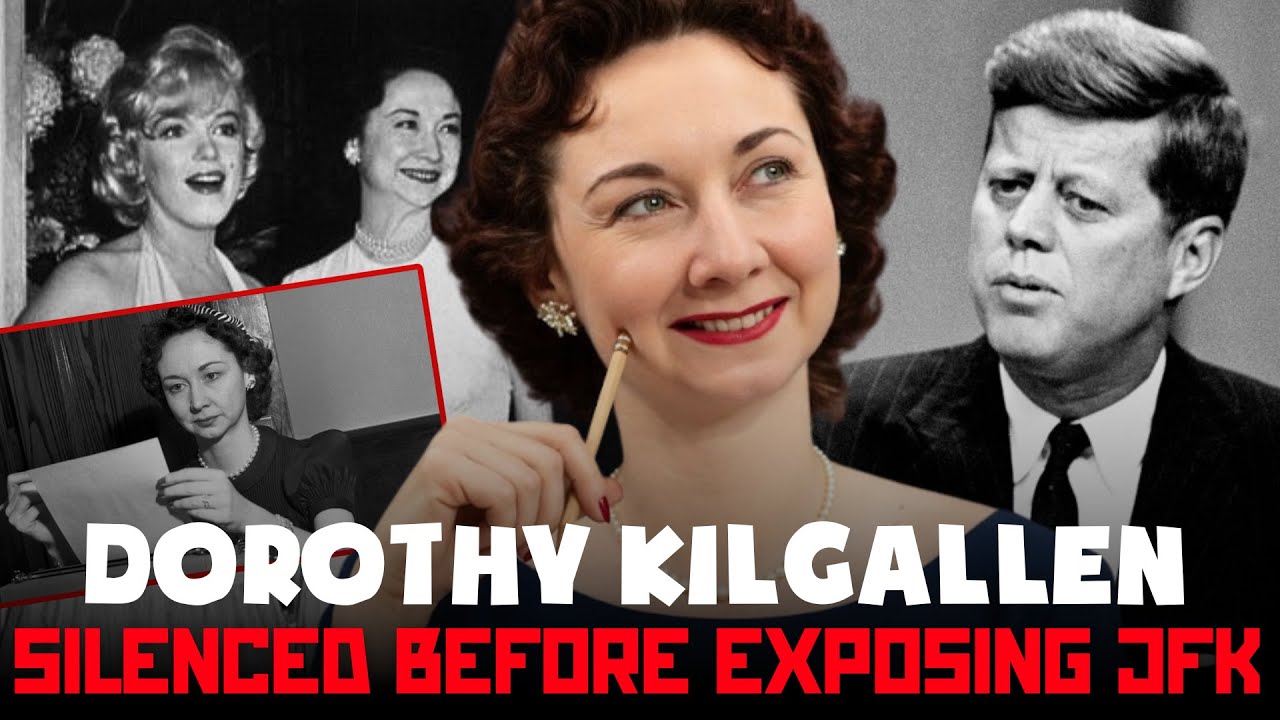
By the mid-1950s, Dorothy Kilgallen was at the zenith. She was earning a fortune. She had the townhouse, the limousine, the fame. She walked through New York like she owned the pavement.
But high altitude makes the air thin. The pressure to maintain the facade was immense. The perfect marriage to Dick Kollmar was disintegrating behind closed doors. Dick was drinking heavily, disappearing for days, engaging in affairs that humiliated her.
Dorothy, in turn, began to rely on her own crutches: a vodka tonic to start the evening, a sleeping pill to end it, then two pills, then three.
She was running a race faster than the one around the world. She was juggling the column, the radio show, the TV show, the crime reporting, the husband, the children. She was terrified of stopping because if she stopped, she might have to look at the emptiness in the center of her life.
And she was terrified of losing her edge. She saw the younger reporters coming up. She saw the world changing. She needed to prove over and over again that she was still the best, that she was still the sharpest.
This need to prove herself, this addiction to the scoop, would eventually lead her to a courtroom in Cleveland, Ohio, in 1954. It was there, covering the trial of Dr. Sam Sheppard, that Dorothy would taste the true power of investigative journalism.
She would realize that she could do more than just report the news. She could change it. It was a heady realization. It was a dangerous realization.
As the 1950s drew to a close, Dorothy Kilgallen was a loaded weapon looking for a target. She had the power. She had the platform. And she had the fearless, reckless ambition of a woman who felt she had nothing left to lose but her fame.
She did not know it yet, but the target was coming. A young, charismatic senator from Massachusetts was rising in Washington. A dark, bubbling conspiracy was brewing in the underworld, and a date was circling on the calendar of history: November 22, 1963.
If the 1940s were the years of building the pedestal, the 1950s were the years Dorothy Kilgallen stood at the top of it, daring anyone to knock her down. She had become a monolithic figure in American culture, a woman who existed in three dimensions simultaneously: the glittering socialite of the Stork Club, the sharp-tongued panelist on television, and the relentless crime reporter in the trenches.
But it was in the courtroom that the true Dorothy emerged. The television studio was a stage, but the courtroom was an arena. And in 1954, she walked into the most gladiatorial arena of them all: the Sam Sheppard trial.
Dr. Sam Sheppard was a handsome, wealthy osteopath accused of bludgeoning his pregnant wife to death in their suburban Cleveland home. The press called it the trial of the century. It had everything: sex, violence, a mystery intruder, and a community baying for blood.
The local papers had already convicted Sheppard in the court of public opinion before the jury was even seated. When Dorothy arrived in Cleveland, the atmosphere was lynch mob toxic. The judge, Edward Blythin, was playing to the crowd. The prosecutor was grandstanding. The other reporters were busy writing colorful descriptions of the bushy-haired intruder defense as if it were a joke.
Dorothy did not laugh. She sat in the front row, her pen scratching furiously across her notepad. While her male colleagues were drinking with the prosecutors at the local bar, Dorothy was analyzing the forensic evidence. She looked at the blood spatter pattern. She looked at the timeline. And she looked at the judge.
She saw something that disgusted her sense of justice: a railroad job.
In a move that shocked the legal establishment, Dorothy broke ranks. She wrote a blistering column, not just reporting the trial, but attacking the conduct of the judge. She famously reported that during a recess, Judge Blythin had leaned over and whispered to her, It's an open-and-shut case. He is guilty as hell.
For a sitting judge to say this to a reporter before the verdict was rendered was a catastrophic breach of ethics. Dorothy printed it. She did not care that she was making an enemy of the Ohio judiciary. She did not care that the public wanted Sheppard to fry. She cared that the system was broken.
Her coverage of the Sheppard trial was a watershed moment. It proved that Dorothy Kilgallen was not just a mouthpiece for the establishment. She was a watchdog. When the guilty verdict came down, she was one of the lone voices calling it a miscarriage of justice.
This victory of insight fed her ego, but it also fed her danger addiction. Dorothy began to realize that her fame was a weapon. She could shine a light in dark corners and the cockroaches would scatter. But shining lights attracts attention, and not all of it is friendly.
In the late 1950s, Dorothy picked a fight with the only man in America more powerful than the president: Frank Sinatra. The feud began, as these things often did, in print.
Dorothy, the self-appointed guardian of class, found Sinatra's boorish behavior, his brawling, and his open association with mobsters to be repugnant. She wrote about it. She mentioned his connections to Lucky Luciano. She criticized his treatment of women.
Sinatra, a man whose ego was as fragile as it was enormous, exploded. He did not just dislike Dorothy. He loathed her. He attacked her in the most personal, vicious ways possible.
During his concerts, he would stop the music to launch into tirades against her. He made fun of her looks. He called her the chinless wonder. He told audiences that she spent her time chasing parked cars.
It was a public bullying campaign that would have crushed a lesser woman. Imagine the most famous singer in the world, the idol of millions, standing on stage in Las Vegas and encouraging the crowd to laugh at your physical appearance.
Dorothy's reaction was terrifyingly cool. She did not cry. She did not sue. She simply sharpened her typewriter keys. She continued to report on him, treating him not as a god, but as a subject.
When friends told her to back off, warning her that Sinatra had friends who broke kneecaps for a living, Dorothy would just sip her drink and smile a thin, icy smile. I'm not afraid of an Italian singer, she would say. I'm Dorothy Kilgallen.
But the bravado was a shield. Inside the townhouse on East 68th Street, the pressure was mounting. The woman who fearlessly took on the mob and the judicial system was slowly losing the battle with her own chemistry.
By 1960, Dorothy's life was a chemical equation that was becoming impossible to balance. To wake up and face the grueling schedule, the radio show at 8:00 a.m., the column deadline at 2:00 p.m., the TV taping at 7:00 p.m., the Stork Club until 2:00 a.m., she needed help.
The doctors, the trusted men in white coats, were happy to oblige. They prescribed Dexedrine to get her up. They prescribed Seconal to bring her down. It was the Valley of the Dolls cocktail, the standard diet of the overworked celebrity.
Dorothy did not see herself as an addict. Junkies were people in alleys. She was a professional. She was just taking medicine to do her job.
But the cracks were showing on What's My Line? There were nights when her speech was slightly slurred, when her razor-sharp questions were a beat too slow.
Her husband, Richard Kollmar, was no help. He had retreated into a haze of alcohol, spending his days at his own art gallery, drifting further and further away from the dynamo he had married. They lived separate lives under the same roof.
Dorothy took lovers, younger men, exciting men. One of them was Johnnie Ray, the emotional singer who was deaf in one ear and openly bisexual. It was a scandalous, unlikely romance: Dorothy, the queen of society, and Johnnie Ray, the weeping pop star.
But in him, she found a vulnerability that matched her own. They were both performers trapped in the spotlight. Lonely in a room full of people.
Yet, despite the chaos at home, Dorothy's professional star rose even higher. With the dawn of a new decade, the 1960s arrived, bringing with them a new energy, a new glamour, and a new president.
Dorothy knew John F. Kennedy. They moved in the same circles. She had written glowing profiles of him. Her young son, Kerry, was infatuated with the president, even writing him letters.
To Dorothy, the Kennedys were the American ideal: rich, beautiful, powerful, and Catholic. They were the Kilgallens of Washington. She was a regular at the White House. She knew the press secretary, Pierre Salinger. She felt a personal connection to the administration.
For a brief shining moment, it seemed like the world was aligning perfectly with Dorothy's vision of how things should be: smart, elegant people in charge, with her there to chronicle it all.
On August 3, 1962, she broke a story that proved her sources went all the way to the top. She published a column suggesting that Marilyn Monroe was on the verge of a breakdown or something worse. Two days later, Marilyn was dead.
Dorothy was the first to suggest that the official story of Marilyn's suicide did not add up. If she wanted to kill herself, Dorothy wrote, why did she do it when her hair needed dyeing?
It was a detail only a woman, and a meticulous one like Dorothy, would notice. Marilyn was a perfectionist. She would not leave a corpse with dark roots.
It was a flicker of the investigative obsession to come. Dorothy sensed the hand of the powerful moving pieces in the dark. She sensed that the official narratives of the 1960s were becoming thin veneers over uglier truths.
But nothing could prepare her for Friday, November 22, 1963.
Dorothy was sitting in the salon at the townhouse, perhaps going over notes for her column. It was lunchtime in New York. The teletype machines in newsrooms across the city suddenly began to ring. Five bells. The code for a flash of catastrophic importance.
Dallas. President shot.
The world tilted on its axis. Like everyone else, Dorothy was glued to the television, watching the grainy footage, listening to Walter Cronkite's breaking voice. She watched the confirmation of death. She watched the swearing in of Lyndon Johnson on the plane. She watched the blood-stained suit of Jackie Kennedy.
But while the nation wept, Dorothy's brain did what it always did. It began to process. It began to look for the loose thread.
The arrest of Lee Harvey Oswald happened too fast. The narrative was too neat: a lone nut, a communist sympathizer, a drifter with a $12 rifle.
Then came Sunday. Dorothy was watching live television when Jack Ruby, a man she recognized, a man whose name she knew from the fringes of her mob reporting, stepped out of the crowd in the Dallas police basement and shoved a gun into Oswald's gut.
The silencing of the patsy.
Dorothy stood up in her living room. She knew with a chilling certainty that this was not a random act of patriotic rage. Mobsters do not kill for patriotism. They kill for business. They kill to shut people up.
While the rest of the media began to churn out biographies of Jack Ruby, the distraught nightclub owner, Dorothy went to her typewriter. She felt a cold anger rising in her chest. They were lying. They were lying to the American people and they were lying to her.
She wrote a column that week that struck a discordant note in the symphony of national mourning. While others were eulogizing, Dorothy was interrogating.
The case is closed, they say, she wrote. Lee Harvey Oswald is dead, but dead men tell no tales, and neither do dead patsies.
She began to work the phones. She called her contacts in the legal world. She called her sources in the underworld. She began to ask the dangerous questions. Who let Ruby into the basement? Why was the security dropped? What did Oswald know?
Her friends noticed a change in her. The grief was there, certainly. She had liked JFK. But underneath the grief was a hunter's focus. The ice queen of What's My Line? had found the ultimate puzzle.
She told her producer, Bob Bach, that this was not just a murder. She expressed her belief that larger forces were involved. She decided then and there that she would not just read the Warren Report when it came out. She would fact-check it.
She would launch her own investigation. She would use her money, her fame, and her terrifying intellect to find the truth about who killed the president.
It was the most ambitious decision of her career. It was the decision that would define her legacy. And as the winter of 1963 turned into the spring of 1964, it became clear that Dorothy Kilgallen had just painted a target on her own back.
She was no longer just fighting Frank Sinatra or a corrupt judge in Ohio. She was challenging powerful institutions during a period of intense political tension. The game show panelist was about to play the most dangerous game of all.
Dallas, Texas, in early 1964 was not a city. It was an open wound. The shame of being the place where the president was murdered hung in the humidity like a toxic fog.
Into this atmosphere of defensive hostility walked Dorothy Kilgallen. She did not blend in. In a sea of Stetson hats, bolo ties, and grim-faced Texas lawmen, Dorothy was a creature from another planet. She wore her white gloves. She wore her pearls. She arrived with the same regal detachment she brought to the Stork Club.
But her luggage did not just contain couture. It contained a skepticism so corrosive it could burn through steel.
She was there to cover the trial of Jack Ruby, the man who had shot Lee Harvey Oswald on live television. To the rest of the press corps, the trial was a formality. Ruby was obviously guilty. The whole world had seen him pull the trigger. The only question was whether he would get the chair or the nut house.

His defense attorney, the flamboyant Melvin Belli, was pushing for an insanity plea, painting Ruby as a patriotic simpleton who snapped.
Dorothy was not buying it. Sitting in the cramped, smoke-filled courtroom, she watched Jack Ruby. She did not see a madman. She saw a frightened man. She saw a man who looked like he was waiting for a rescue that was not coming.
She noted in her columns that Ruby did not have the glazed look of the insane. He had the hyper-alert look of a mobster who knows he is the loose end. He looks, she wrote, like a man who has been double-crossed.
While other reporters drank whiskey at the Dallas Press Club and rewrote the official handouts, Dorothy was working the margins. She was meeting with lawyers and diners. She was talking to the bailiffs. She was using her fame as a skeleton key.
Everyone wanted to meet the lady from What's My Line? And she used that curiosity to extract information.
She began to publish columns that made the establishment in Washington sweat. She ridiculed the security measures that allowed Ruby to get to Oswald. She questioned the timeline.
And then she dropped a bomb that proved she was not just speculating. She had sources inside the highest levels of the government.
In August 1964, months before the Warren Commission was scheduled to release its report, Dorothy Kilgallen published the top-secret testimony of Jack Ruby. It was a stunning breach of national security.
The Warren Commission, led by Chief Justice Earl Warren and future President Gerald Ford, was operating in total secrecy. They were crafting the official narrative of the lone gunman. They were terrified of leaks.
And here was Dorothy Kilgallen, the gossip columnist, printing the classified transcripts on the front page of the New York Journal American.
The leak revealed that Ruby had begged the commission to take him to Washington. He told them, in effect, that he wanted to tell the truth but could not tell it there. He feared for his life in Dallas. He hinted at a conspiracy.
And the commission, in the transcript, effectively told him to be quiet. They did not want to hear it. They left him in Dallas.
Dorothy's headline screamed betrayal. She showed the world that the government was not interested in the truth. They were interested in a clean ending.
The FBI was furious. J. Edgar Hoover, a man who collected secrets for a living, was apoplectic that a society dame had outmaneuvered his agents. They began to open a file on her. They began to monitor her movements.
But Dorothy did not care about Hoover. She cared about Jack Ruby. She knew that the transcript was just the appetizer. The main course was locked in a cell in the Dallas County Jail. She needed to talk to him alone.
It was an impossible request. Jack Ruby was the most guarded prisoner in America. He was surrounded by deputies who hated the northern press. His lawyers were gatekeepers.
But Dorothy had a way of making impossible things happen. She charmed Judge Joe B. Brown. She worked on Ruby's lawyers, arguing that she was the only one telling his side of the story, that he was not crazy, he was a patsy. She appealed to Ruby's own vanity.
And miraculously, the door opened.
In March 1964, during a recess in the trial, Dorothy Kilgallen was granted a private audience with Jack Ruby. The details of that meeting are the holy grail of assassination researchers.
There were no tape recorders allowed, no other reporters. Just Dorothy, Jack Ruby, and a nervous guard standing by the door, though some accounts suggest she managed to get even the guard to step back out of earshot. They spoke for approximately 30 minutes.
Imagine the scene. The small, claustrophobic room, the smell of stale cigarette smoke and industrial cleaner. Jack Ruby, sweating, his eyes darting around the room, sitting across from Dorothy Kilgallen in her impeccable suit.
What did he tell her? He did not have long. He knew he was a dead man walking. If there was a conspiracy, if the mob or the CIA or a rogue faction had used him to silence Oswald, this was his only chance to put it on the record with someone who would not bury it.
When Dorothy emerged from that room, the change in her demeanor was physical. She was not triumphant. She was not smiling like a reporter who just got the scoop of a lifetime. She looked terrified.
Witnesses said she was pale. Her hands were shaking. She walked past the other reporters without saying a word, clutching her notepad to her chest as if it contained a live grenade.
Later, she would tell her close friend and makeup artist, Mark Sinclair, He told me the truth, Mark. He told me everything.
She never told Sinclair exactly what everything was. But she told him enough to let him know that the official story was a fairy tale. She hinted that Ruby and Oswald knew each other. She hinted at a meeting in a motel. She hinted that the assassination was a coordinated hit, a professional job, and that Ruby was forced to clean up the mess to protect his own family.
I'm going to break this case wide open, she told her attorney. But I have to be careful. I have to verify every single word. Because if I print this and I'm wrong about even a comma, they will destroy me.
She returned to New York, but she did not leave Dallas behind. She brought the darkness with her.
The months following the Ruby interview were a strange twilight time for Dorothy. To the public, she was still the glittering star. She appeared on What's My Line? every Sunday, cracking jokes, guessing professions. She attended the galas. She wrote her column.
But in private, she was building a fortress. She began to compile the file. It was a thick manila folder, sometimes described as a collection of folders, that she kept with her at all times. She never let it out of her sight. When she slept, it was on the nightstand. When she traveled, she carried it.
She told her friends, This is my insurance policy.
She stopped trusting the telephone. She was convinced, likely correctly, that the FBI or other agencies were tapping her line. She would hear clicks. She would hear strange echoes. She began to use payphones for sensitive calls. She started speaking in code.
Her drinking increased. The medicine to sleep became a necessity, not a luxury. The burden of the secret was crushing her. She was carrying the weight of a dead president and a crumbling democracy in her handbag.
And she was lonely. Her marriage to Richard Kollmar was effectively over. He was a ghost in his own house, lost in a fog of alcohol. He did not want to hear about the assassination. He told her to drop it. He told her it was dangerous.
You're playing with fire, Dorothy, he warned.
I don't care, she snapped. Someone has to tell the truth.
She found solace in her work and in a new plan. She decided that a newspaper column was not enough. The story was too big. She needed to write a book. A book that would be the In Cold Blood of the assassination. A definitive, unassailable account that would name names.
She titled the project Murder One.
In late 1964 and throughout 1965, Dorothy became a woman possessed. She traveled to New Orleans. She was investigating the edges of the map, looking into the shadowy figures that would later be pursued by Jim Garrison, men like David Ferrie and Guy Banister.
She was connecting the dots between the mob, the intelligence community, and the Dallas police. She told friends she was planning a second trip to Dallas. She needed to see Ruby one more time. She needed to confirm the final piece of the puzzle.
I'm going to bust this thing wide open, she told her hairdresser. It's going to be the biggest story of the century.
But the they she feared were watching. The FBI files on her were growing. J. Edgar Hoover had written notes in the margins of memos about her, calling her a nuisance.
But was she just a nuisance, or was she a threat? A nuisance is annoying. A threat is dangerous. Dorothy Kilgallen, with her millions of readers and her prime-time television audience, was the only journalist in America with the power to make the public believe a conspiracy theory.
If she went on What's My Line? and told 20 million people that the government lied, they would believe her. That made her the most dangerous woman in America.
As the autumn of 1965 approached, Dorothy seemed to be racing against a clock only she could hear. She was frantic. She was exhausted. She told her friends she was scared for her life and the lives of her children.
If I die, she told a friend over drinks at P.J. Clarke's, don't let them tell you it was an accident.
She bought a gun, a .38 caliber pistol. She did not know how to use it, but she kept it in the house. The pressure was reaching a boiling point. She had the notes. She had the interview. She had the timeline. She was ready to write the final chapter of Murder One.
But history has a way of intervening just when the truth is about to be told.
On the evening of November 7, 1965, Dorothy put on a black chiffon dress. She put on her diamonds. She pinned a chameleon in her hair. She looked in the mirror and applied her television face. She had a show to do. What's My Line? was live. She could not be late.
She walked out of her townhouse and into the waiting limousine. She had the file with her. She was always working.
As the car pulled away from the curb, heading toward the CBS studios, Dorothy Kilgallen looked out at the lights of New York City. She did not know that she was looking at them for the last time. She did not know that the clock had already run out.
The investigation was over. The silencing was about to begin.
Sunday, November 7, 1965, dawned gray and chilly in New York City, the kind of autumn day where the wind whips down the avenues and rattles the windows of the brownstones. For Dorothy Kilgallen, it was just another workday.
But the tension radiating from her was palpable. She spent the afternoon preparing for What's My Line? This was her ritual, her arena. No matter how chaotic her personal life, no matter how heavy the assassination file weighed on her mind, when the cameras rolled, she had to be perfect.
She selected a gown, black and white, elegant, with a plunging neckline that showcased her diamonds. She spent an hour in front of her vanity applying the mask: the powder, the liner, the false eyelashes that were her trademark.
But beneath the mask, the fear was humming like a high-tension wire. She had told her friend, the photographer and cameraman on the show, I'm close. I'm so close to blowing this wide open. She was not talking about a game show. She was talking about Dallas.
She arrived at the CBS studios on West 53rd Street. The atmosphere backstage was routine, but Dorothy was manic. She smoked incessantly. Her hands, usually steady, had a slight tremor.
Yet when the announcer's voice boomed, And here is Dorothy Kilgallen, she walked out and hit her mark with the grace of a queen.
If you watch the tape of that final broadcast, it is a haunting piece of history. She is vibrant. She is sharp. She guesses the mystery guest, Glenn Ford, with her usual deductive brilliance. She smiles. She waves. There is no sign of a woman who is about to die. It is a masterclass in compartmentalization.
After the show, the cast and crew did what they always did. They went to P.J. Clarke's. It was an institution, a saloon with sawdust on the floor and the best burgers in Manhattan. Dorothy had her own booth. She sat there with her producer, Bob Bach, sipping a vodka and tonic.
They talked about the show. They talked about gossip. But then the night took a turn into the shadows.
Witnesses later reported that Dorothy was joined by a mystery man. He was never positively identified. Some said he was a younger man, perhaps a press agent she knew. Others whispered he was the out-of-towner she had mentioned to friends, a source from New Orleans or Dallas who had come to deliver the final piece of evidence for her book.
They huddled in the booth. Dorothy looked intense. She was not laughing. She was listening.
Around 2:00 a.m., she left the bar. She did not go home immediately. There are gaps in the timeline here, lost minutes that could hold the key to the mystery. Did she go to another bar, the Regency Hotel lounge? Did she meet someone in a car?

What we know is that she arrived at her townhouse on East 68th Street sometime in the dead of night. The house was a fortress of limestone, five stories tall. Her husband, Richard Kollmar, was asleep in his room. Her children were asleep on the upper floors.
Dorothy let herself in. The heavy door clicked shut. She was safe. Or so she thought.
What happened inside that house between 3:00 a.m. and 9:00 a.m. on November 8, 1965, is a black box that has never been opened.
Normally, Dorothy's routine was ironclad. She would go to her bedroom on the fifth floor, a room decorated in her favorite colors, a sanctuary where she felt secure. She would take off her dress. She would meticulously remove her makeup. She would put on her pajamas. She would read for a while, then sleep.
But on this night, the script was rewritten by an invisible hand.
At around 9:30 a.m., Mark Sinclair, her hairdresser and closest confidant, let himself in with his key. He had a standing appointment to do her hair for a column photo shoot. He called out her name. Silence.
He went to the fifth floor. The bed was empty. Unmade, but empty. Confused, he went down to the third floor.
This floor contained the master bedroom, a room Dorothy notoriously hated. It was part of the suite she used to share with Richard before their marriage crumbled into separate wings. She had not slept in that room for years.
But the door was open. Sinclair walked in and the air hit him first. It was freezing. The air conditioner was blasting at full power, turning the room into a meat locker.
And there she was.
Dorothy Kilgallen was sitting up in the middle of the large bed. She was not slumped over. She was propped up by pillows, almost as if she were posing. She was wearing a matching peignoir and robe.
But something was wrong. Her face. She was still wearing her makeup, the foundation, the lipstick, and the false eyelashes. One was slightly askew, but they were there.
Sinclair froze. He knew Dorothy. He knew her vanity and he knew her habits. Dorothy Kilgallen would never go to sleep with her makeup on. She famously said she liked to scrub the city off her face before bed. To find her like this was as jarring as finding a soldier in uniform in a bathtub.
On her lap lay a book, The Honey Badger by Robert Ruark. It was open, but Dorothy was not reading it. Her reading glasses, which she needed to read anything, let alone a book in dim light, were nowhere near the bed. They were later found across the room on a dresser.
And there was one final chilling detail. Sinclair and Dorothy had discussed The Honey Badger weeks earlier. She had told him she finished it and did not like it. Why was she reading it again in the dark without her glasses in a room she hated?
Sinclair touched her hand. It was cold, stiff. He did not scream. He did not run. He looked around the room. He was looking for one thing.
The file. The folder she carried everywhere. The folder with the Jack Ruby notes. The folder with the interviews from New Orleans. The folder she called her insurance policy.
It was gone. Her purse was there. Her jewelry was there. But the papers were gone.
Sinclair backed out of the room. He did not call the police immediately. He called a friend. Then he called Joseph Tonahill, Jack Ruby's lawyer in Dallas. She's dead, Joe, he whispered. And the file is gone.
When the police finally arrived, the scene was compromised instantly. It was not treated as a crime scene. It was treated as a celebrity tragedy. Another pill popper, the cops muttered.
They saw the empty pill bottles on the nightstand, bottles that Sinclair later claimed were too neatly arranged, like props on a set.
Dr. James Luke, the medical examiner, arrived. He made a quick assessment. No signs of struggle, no blood, just a dead woman in a bed. He ruled it a likely accidental overdose.
But the toxicology report, which came later, screamed for justice. Dorothy died from a combination of alcohol and barbiturates. Seconal was found, her prescription. But Tuinal was also found. Tuinal was a powerful sedative, a knockout drop. Dorothy did not have a prescription for Tuinal. Richard did not have one. Where did it come from?
Even darker were the needle marks noted on her arm in the autopsy addendum. The police dismissed them as vitamin shots, but Sinclair insisted Dorothy was terrified of needles. She did not take shots. So who injected her, and was she conscious when they did it?
The medical examiner originally typed circumstances undetermined on the death certificate. This is the classification for suspicious deaths. But days later, a line was drawn through it and accidental was typed in. Why? Who made the call?
Meanwhile, the house on 68th Street was being scrubbed of secrets. Richard Kollmar, Dorothy's husband, wandered the halls in a daze. He seemed strangely uncurious about how his wife died. He did not demand an autopsy. He did not hire a private investigator. He just wanted it over.
Neighbors reported seeing men in suits, not police, leaving the house that morning carrying boxes. Were they securing her papers? Were they the they she had feared?
The press, her own tribe, betrayed her. Instead of investigating the strange death of their queen, they buried her with faint praise and salacious rumors. They painted a picture of a depressed alcoholic woman who took one too many pills. They made her sound pathetic.
It was the perfect cover story. Who would believe a conspiracy when accidental overdose was so much easier to print?
But the missing file, that was the smoking gun. If Dorothy was just a crazy lady with wild theories, why steal her notes? You only steal evidence if it is dangerous.
Dorothy Kilgallen died because she broke the cardinal rule of journalism in the 1960s. She did not just report the news. She tried to solve it. She stepped out of her lane. She thought her fame would protect her. She thought she was untouchable.
But in that freezing room on the third floor, staged like a doll in a macabre diorama, she learned the final lesson. The truth is not a shield. It is a target.
As her body was wheeled out of the townhouse, past the flashing lights of the photographers she used to command, the era of the girl reporter ended. The door slammed shut on the investigative spirit of the decade. The silence had won, or so they thought.
The funeral of Dorothy Kilgallen was a masterpiece of theater, a final production staged for a woman who had lived her entire life in the public eye.
On November 11, 1965, thousands of people lined the streets outside St. Vincent Ferrer Church on Lexington Avenue. It was the same church where she had married Richard Kollmar 25 years earlier in a blaze of flashbulbs and optimism. Now the flashbulbs popped for a casket.
Inside, the pews were filled with the royalty of the American century. Ed Sullivan was there. The cast of What's My Line? sat in the front row looking like orphans. Bennett Cerf, her sparring partner on the panel, wept openly.
Politicians, actors, and fashion designers rubbed shoulders with grim-faced policemen and weeping secretaries. It was a state funeral for the Queen of New York.
But amid the incense and the Gregorian chants, there was a current of unease. The people in that room knew Dorothy. They knew she was not just a tragic celebrity who slipped up with pills. They knew she was a fighter. They knew about the file. And they knew about her fear.
Yet as the coffin was carried out to the hearse, a collective amnesia seemed to descend upon the congregation. It was a survival mechanism. In 1965, you did not ask questions about dead reporters who investigated the government. You bowed your head. You said, What a tragedy. And you went back to work.
The burial at Gate of Heaven Cemetery in Westchester was the final curtain. But the story did not end in the grave. It rotted in the aftermath.
In the weeks following her death, the dismantling of Dorothy Kilgallen's legacy began. It was swift, brutal, and seemingly coordinated. The narrative hardened immediately. She was a neurotic, pill-popping alcoholic who had lost her grip on reality. Her obsession with the JFK assassination was framed not as investigative journalism, but as a symptom of her mental decline.
Poor Dorothy, the whispers went at the Stork Club. She just could not handle the pressure.
The file, the Murder One manuscript, the notes from the Jack Ruby interview, the evidence from New Orleans, was never officially found. Richard Kollmar, her husband, claimed he burned some papers that were personal, but he remained vague. He was a broken man living in a haze of grief and liquor in that cavernous townhouse. He died just over five years later, in 1971, reportedly of an overdose in his sleep.
Another tidy ending. Another silence.
The FBI closed its file on Dorothy Kilgallen. J. Edgar Hoover, who had once scribbled angry notes in the margins of her columns, likely breathed a sigh of relief. The nuisance was gone.
For decades, Dorothy disappeared. She became a trivia answer. Who was the lady with the chin on that old game show? Her groundbreaking work as a crime reporter was forgotten. Her race around the world was a footnote. Her solitary crusade against the Warren Commission was erased from the history books. She was reduced to a caricature: the harsh, unsmiling woman in diamonds who asked tough questions on TV.
But the truth is a stubborn ghost. It does not leave the house just because you turn off the lights.
In the 1970s and 1980s, as the Watergate scandal shattered Americans' faith in their government, a new generation of researchers began to look back at the JFK assassination. They started to pull at the loose threads that Dorothy had noticed 10 years earlier.
They found that she was right. They found that Jack Ruby did have mob connections. They found that the FBI did withhold evidence. They found that the lone gunman theory was full of holes.
And as they dug through the archives, they kept finding Dorothy's name. They found the FBI memos monitoring her travel. They found the letters from citizens begging her to keep digging. They realized that this gossip columnist was actually the only mainstream journalist in 1964 who was doing her job.
The mystery man, the person she met at P.J. Clarke's on her final night, became a figure of intense scrutiny. Theories abounded. Was he a CIA asset, a mafia fixer, a source she trusted who betrayed her? We may never know his name, but his shadow looms large over her final hours.
And the toxicology report, once buried in bureaucratic paperwork, was re-examined. The presence of Tuinal, the drug she did not take, and the needle marks on the arm of a woman who hated needles, pointed to only one conclusion for modern forensic pathologists. Some modern researchers argue that the overdose may not have been accidental, though no official investigation has confirmed foul play.
Dorothy Kilgallen was not a victim of her own vices. She was a casualty of war. Her death later became one of the most debated journalist deaths connected to the JFK assassination.
Her death sent a chilling message to the press corps: this far and no further. It worked. For years, the mainstream media stayed away from the conspiracy, leaving it to the fringe.
But Dorothy's vindication, though it came too late to save her, is absolute. She proved that a woman could walk into the darkest rooms, the execution chambers, the mob trials, the secret interrogations, and not blink. She proved that you could wear a Balenciaga gown and still be the toughest person in the room.
She shattered the glass ceiling of journalism not by asking politely, but by kicking it down with a high heel. Her life was a testament to the power of curiosity. Her death was a testament to the danger of the truth.
Today, if you watch the old kinescopes of What's My Line?, you see a woman who looks like she knows a secret. She sits there poised and elegant, watching the world with those intelligent, slightly sad eyes. She is forever frozen in black and white, the smartest woman in the room, waiting for the rest of us to catch up.
The file is gone. The townhouse has been sold and renovated. The Stork Club is a memory. But the question Dorothy Kilgallen asks, the question that likely got her killed, still hangs in the air, unanswered and terrifying.
Who really runs the show?
Imagine the room on the fifth floor of the townhouse late on a rainy Tuesday in November, decades after she left it. The air is still, the dust motes dance in the light from the street lamps outside. In the corner there is a desk. On the desk sits a typewriter, a heavy mechanical beast, the kind that requires force to make a mark.
It is silent now. The ribbon is dry. But if you listen closely, you can almost hear the echo of the keys. Clack, clack, clack, fast and rhythmic like a heartbeat. You can smell the faint scent of Jungle Gardenia perfume and cigarette smoke. You can feel the presence of a woman who is pacing the floor holding a glass of vodka, her mind racing faster than the teletype machines.
She is organizing the papers. She is connecting the dots. She is smiling that thin, dangerous smile because she knows she has them. She has the story.
She sits down. She rolls a fresh sheet of paper into the carriage. She types the headline. The keys strike the paper. The ink stains the fiber. The truth is recorded.
And then the door opens. The draft from the hallway chills the room. The typing stops. The paper is ripped from the carriage. The light goes out.
But the words, you cannot kill words once they have been thought. You can burn the paper. You can silence the author. You can bury the file. But the questions she raised continued to resonate long after her death.
And somewhere in the static of history, Dorothy Kilgallen is still broadcasting. She is still waiting for us to listen.