In July of 1962, Marilyn Monroe was photographed on a beach, barefoot in the sand, wrapped in a white blanket, laughing as the wind moved her hair. She was still working, still talking about what might come next. Three weeks later, she was dead.
Most people believe they know the story of August 4, 1962. A bottle of pills, a locked door, a phone call that came too late. It has been told so many times, in books and films and whispered theories, that it feels finished and familiar.
But the closer you look at Monroe's final day, the less finished it becomes. There are phone calls, witnesses, a psychiatrist, a housekeeper, an autopsy report and police records. Yet more than 60 years later, reconstructing exactly what happened inside her home on the night she died remains surprisingly difficult.
Some of what is widely believed came from contemporary reporting. Some came from memories recorded years or even decades later. And some never came from evidence at all, only from stories that grew up around the silence.
This is not an attempt to solve Monroe's death. It is an attempt to establish what can actually be proven, and where the record simply stops.
The house sat at the end of a quiet cul-de-sac in Brentwood, a low Spanish-style home with a tiled roof and a courtyard. Monroe had bought it only months earlier. It was, in a real sense, the first home she had ever owned entirely on her own.
That detail matters. She had spent much of her life moving, through foster homes as a child, an orphanage, a series of marriages, hotel suites and rented houses. By 1962, at 36 years old, she finally had a place with her name on the deed.
At the entrance, tiles bore the Latin phrase "Cursum perficio," meaning "I have completed my journey." She would be dead within months of moving in.
On the morning of August 4, Monroe was not simply drifting toward the end of her life. She had professional matters in front of her.
Photographer Lawrence Schiller later recalled visiting her at the house that day to discuss photographs connected to "Something's Got to Give," the film she had been fired from that summer and was reportedly working to get back, as well as possible future plans involving Playboy.
Her housekeeper, Eunice Murray, was present at the house for portions of the day. Her friend and publicist, Patricia Newcomb, had reportedly stayed over the previous night and remained into part of the afternoon.
The documented record shows a woman still working, still negotiating, still in some sense planning forward. That complicates the simplest version of the story, the one in which Monroe spent her final day quietly deciding to die.
What is missing is a precise, agreed-upon timeline of who came and went and exactly when. That uncertainty starts almost immediately.
Dr. Ralph Greenson was Monroe's psychiatrist, and by the summer of 1962 he had become far more than that. He was deeply woven into her daily life in a way that would strike many modern clinicians as unusual. He had introduced her to his own family, visited her frequently, sometimes daily, and had even helped her hire Murray.
Understanding Greenson is essential, because depending on which account you read, his presence in Monroe's final hours looks very different.
A Los Angeles Times account published shortly after her death, drawing on police information, reported that Monroe telephoned Greenson around 5:15 in the evening, telling him she couldn't sleep. That suggests a relatively brief late-afternoon contact.
Other reconstructions, many written years afterward and drawing on later interviews, describe Greenson spending a much longer stretch of the afternoon at the house, visiting, leaving and possibly returning. Both versions cannot describe the afternoon in exactly the same way.
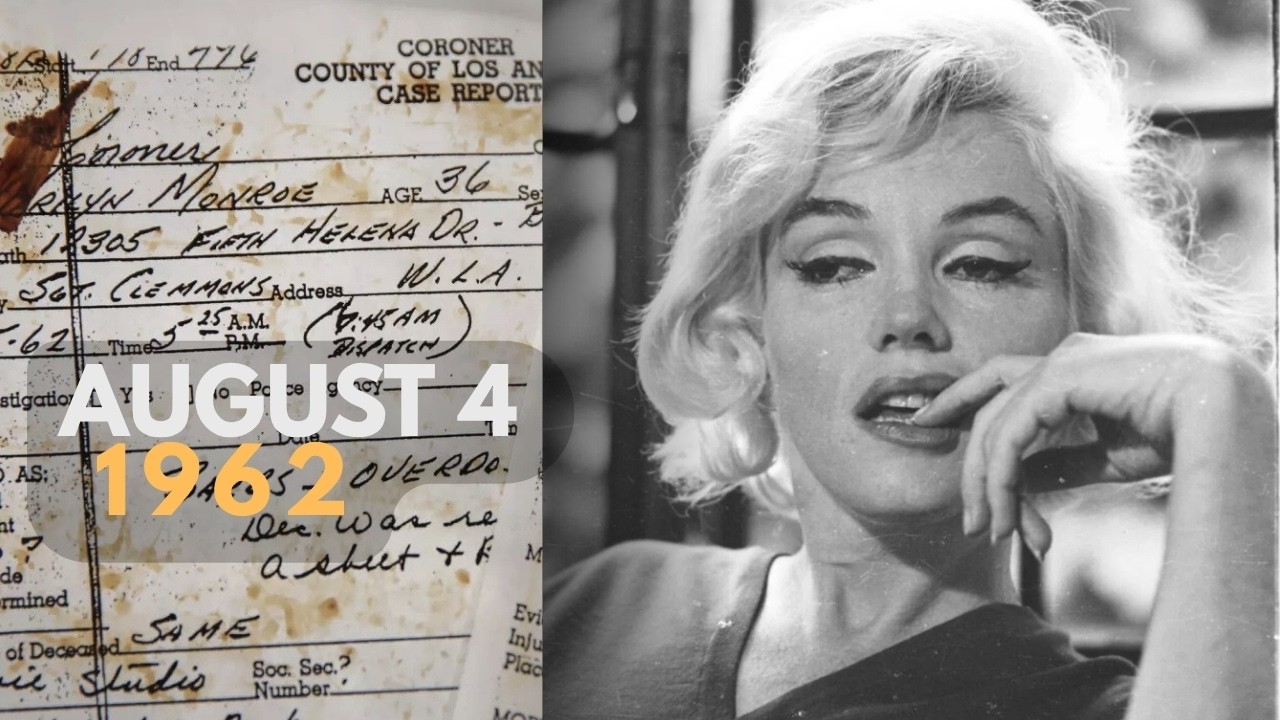
It is not that one version is a lie and the other the truth. It is that contemporary reporting and later recollection do not fully agree. Once memory enters a story like this, exact hours become soft.
What is better documented is Newcomb's departure, reportedly sometime in the early evening. Some later accounts add descriptions of tension between the two women that day, disagreements and an uneasy mood. Those details deserve caution. They arrived after the fact, filtered through memory and, in some cases, through decades of retelling.
By early evening, the house was emptying out, and Monroe was alone with a telephone.
What happened next comes almost entirely through memory, because none of it was recorded. One call, according to later accounts, was with Joe DiMaggio Jr., the son of Monroe's former husband. The two had remained close after her divorce from his father.
By most descriptions, Monroe sounded upbeat during that call, pleased by news about his personal life. There is no recording of the conversation, and her tone cannot be verified with certainty. But it complicates the picture of a woman spending her entire final evening in visible despair.
Then there is the call that has become, for better or worse, the most famous conversation of that night, the one with Peter Lawford. Lawford was an actor, a friend of Monroe's and the brother-in-law of President John F. Kennedy.
According to his own later recollection, he received a call from Monroe that evening in which her speech sounded increasingly slurred and her manner increasingly distant. He recalled her saying goodbye to him, to his wife and to Frank Sinatra in a way that later struck him as final.
The words attributed to Monroe in that call have often been repeated as though they were her literal last recorded statement. They are not a recording. They are not a transcript. They are one man's memory of a phone call, retold with variations each time Lawford described it.
That does not mean the call did not happen or that Lawford invented it. It means one of the most quoted moments in Hollywood history rests entirely on human memory, and memory, even honest memory, shifts.
By some accounts, Lawford considered driving to Monroe's house that night and was talked out of it, reportedly by his agent, who worried about the political risk of a Kennedy-in-law being found at Monroe's home late at night. That detail, too, rests on recollection rather than documentation.
After this call, the phone calls stop appearing in the record. What follows is silence.
The house is quiet. A light is on somewhere inside. From this point forward, the documented timeline becomes almost completely silent. Somewhere inside these hours, Monroe stopped answering the telephone. And somewhere inside this window, she died.
The exact moment is unknown. Estimates of time of death in any such case are reconstructed afterward from body temperature, from the state of medication in the system, and from witness statements about when the person was last known to be alive and when they were found. They are estimates, not certainties. In Monroe's case, that uncertainty has never been fully resolved.
The established account begins with Eunice Murray. By around 3:30 in the morning, Murray had become concerned. A light was still visible beneath Monroe's bedroom door, and there was no response when she tried to check on her. The door was locked or otherwise inaccessible from inside the house.
Greenson was called. He came to the house and gained access to the bedroom, reportedly through a window. Monroe was found lying face down across the bed, nude, with a sheet partially covering her. The telephone was near her. Some early reports described her hand resting on or near the receiver. Empty medication bottles were found on the nightstand.
Monroe was found unresponsive at approximately 3:30 to 3:40 in the morning. Dr. Hyman Engelberg, her personal physician, arrived shortly afterward. It was Engelberg who examined her and officially pronounced her dead. She was 36 years old.
Here is where the case begins to generate real questions, not conspiracy, but genuine documented irregularity. Police were not immediately called. The Los Angeles Police Department's own records placed the notification call at approximately 4:25 in the morning.
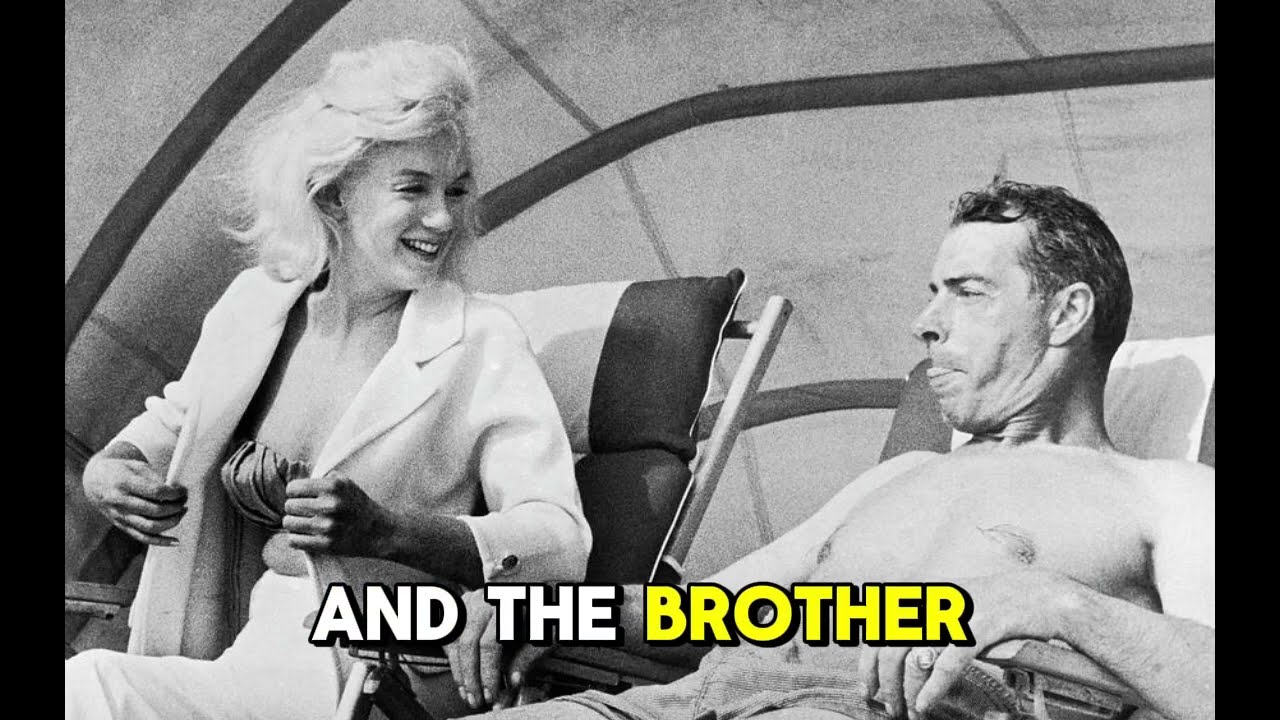
Exactly how much time passed between the discovery of Monroe's body and that call depends on which reconstruction you follow. Some accounts compress the gap, others stretch it toward an hour. What happened in between has never been fully and reliably explained.
Some accounts describe Greenson and Engelberg making phone calls of their own before contacting police, possibly to each other, possibly to others. Precisely who was called, in what order, and how long each step took differs depending on which account you read.
A delay is not evidence of murder. People in shock make strange decisions. A psychiatrist and a physician finding their patient dead might call each other, confer, or simply take time to process what they were looking at before calling police. A housekeeper might freeze. None of that requires foul play to explain.
But in a case that would become one of the most scrutinized deaths in Hollywood history, an unexplained and inconsistently reported gap, however innocent its cause, guaranteed questions that have never fully gone away.
The physical evidence tells its own story, separate from memory and testimony. Los Angeles County Deputy Medical Examiner Dr. Thomas Noguchi performed Monroe's autopsy. His conclusion was death by acute barbiturate poisoning.
Toxicology reported high concentrations of two drugs in her system: pentobarbital, commonly known by the brand name Nembutal, and chloral hydrate, a sedative. The manner of death was officially recorded as "probable suicide," not suicide. The qualifier was and remains part of the official record.
The word "probable" was not a hidden signal that investigators suspected murder. It reflected the conclusion reached after the coroner's psychiatric review of the circumstances surrounding her death.
There is a genuine unresolved detail inside the autopsy findings. Accounts of the examination describe little or no obvious pill or capsule residue in Monroe's stomach, despite the extremely high drug concentrations found in her blood.
Noguchi himself later addressed this directly. He argued that the absence of obvious capsule residue did not necessarily contradict oral ingestion. Barbiturates in liquid or rapidly dissolving form can be absorbed quickly, and stomach findings at autopsy are compatible with swallowing under those conditions.
What Noguchi did express regret over was narrower: that certain organs and tissues were not preserved for more extensive toxicological testing at the time, testing that might have clarified the route of administration with more confidence.
Either way, this is a real forensic limitation. It is not by itself evidence of murder. Unexplained does not mean murder. It means exactly what it says: a detail that was never fully resolved, sitting inside an investigation that by modern forensic standards was far less rigorous than it would be today.
And this is where the case takes a turn that has almost nothing to do with the conspiracy theories that have circulated for 60 years. The question is not only who entered the house that night, but who prescribed the drugs already inside it.
Monroe had access to powerful sedatives through her medical care. Exactly how her doctors coordinated those medications, and how complete each physician's knowledge was of what the others had prescribed, remains an important part of the medical context surrounding her death.
Here the documentary record reveals something more interesting than another conspiracy theory: a contradiction. In 1982, investigators reviewing Monroe's death recorded an interview with Engelberg, her personal physician. Asked about the drugs found at her bedside, he told them plainly, "I knew nothing about chloral hydrate." Engelberg said the only prescription he had written for her was Nembutal.
Yet research into Monroe's surviving prescription and pharmacy records has identified a chloral hydrate prescription from June of 1962, roughly two months before her death, bearing Engelberg's name.
This is a documented contradiction worth examining. It is not proof of murder. It is not proof that Engelberg personally wrote the prescription in question. It is not proof of conspiracy. The surviving record does not tell us why the contradiction exists, including how accurately that medical history was remembered or described 20 years later during the official reinvestigation of a case that had already become notorious.
The strangest contradiction in Monroe's final hours may not involve a Kennedy at all. It may involve one of her doctors.
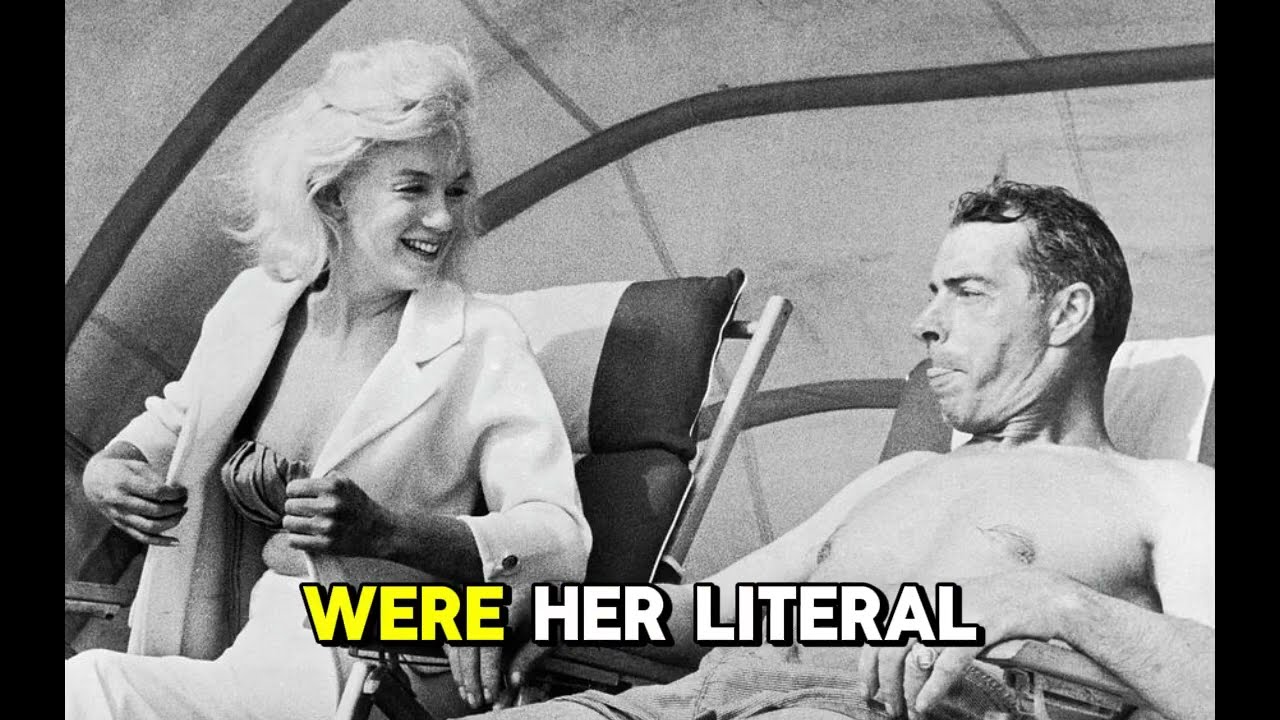
Over the decades, one theory built directly on the missing residue question: that Monroe had not swallowed the fatal dose at all, but had been injected with it, potentially by someone else. The available autopsy and review material did not document injection marks or needle sites supporting this claim.
That does not make the theory impossible in some absolute sense. It means that based on what was actually examined and recorded, there is nothing in the physical evidence that supports it. An interesting claim is not the same thing as evidence.
No account of Monroe's death can avoid the Kennedy question, and it shouldn't. Monroe had known President John F. Kennedy. Rumors dating back to the era itself also connected her to his brother, Attorney General Robert Kennedy.
In the years and decades after her death, various witnesses and authors claimed Robert Kennedy had been in Los Angeles, or even at Monroe's home, around the time she died. Some statements later attributed to Eunice Murray, given years after the original police interviews, helped fuel these theories, including suggestions that she had altered her original account of the night.
Here is what is actually provable: there is no sufficiently reliable contemporaneous evidentiary chain placing Robert Kennedy inside Monroe's home during the hours in question. Unproven, not disproven. The claim has never been substantiated by evidence that would hold up to real scrutiny, contemporaneous documentation, or corroboration free of decades of retelling.
The Kennedy story became so powerful and so endlessly retold that it has often overshadowed the more genuinely interesting irregularities that do exist in the documented record: the conflicting Greenson timelines, the delay before police notification, the limitations of the autopsy, the open questions about medication management, and the Engelberg chloral hydrate contradiction.
Those are real. The Kennedy theory, as most commonly told, is not something the evidence supports.
Two decades later, in the early 1980s, the Los Angeles County District Attorney's Office formally reviewed allegations of murder and cover-up surrounding Monroe's death, allegations that had been accumulating in books and interviews for years. The review did not find evidence sufficient to support a homicide investigation.
Part of what complicated that review was the state of the original files. Some of the LAPD's original 1962 records had apparently been destroyed under standard record retention policies used at the time. Other material survived, including documents associated with former LAPD official Thad Brown.
Destroyed records sound sinister. Sometimes in other cases they are. But routine record destruction under ordinary retention schedules is common and is not by itself proof of anything. What matters is that the surviving evidence, the autopsy, the witness statements and the physical record, was examined on its own merits by investigators two decades later.
That review confirmed several things. Monroe was at her Brentwood home on August 4, 1962. She communicated with several people that day and evening. Powerful prescription sedatives were found in her system. She died of acute barbiturate poisoning. She was discovered unresponsive in her bedroom in the early morning hours of August 5. Police were notified at approximately 4:25 a.m. Her death was officially classified as probable suicide.
What remains disputed and uncertain is a longer list: the exact chronology of Dr. Greenson's visits that day, the precise time of death, the exact time Monroe was first discovered unresponsive, the length and full explanation of the gap before police notification, the complete content of her final phone calls, aspects of medication management among her physicians, parts of Eunice Murray's account of the evening, which changed over the years, and several witness recollections recorded long after the fact.
Also unproven: a fatal injection by another person, the presence of Robert Kennedy inside the house during the crucial hours, and a coordinated cover-up involving the government, the studios or law enforcement. Unproven does not mean impossible. It means that after six decades of investigation, journalism and speculation, the available evidence has never actually established these claims.
Perhaps the strangest thing about Monroe's final night is not that we know nothing. It is that we know so much and still cannot reconstruct every hour with certainty.
We know what killed her. We know where she died. We know who found her. We know many of the people she spoke to in her final hours. But between those known facts are gaps.
Memories changed over the decades. Stories evolved with each retelling. Witnesses died, taking their own versions of events with them. Some documents disappeared through nothing more dramatic than paperwork policy. And into every one of those empty spaces, a mythology grew.
Maybe the greatest mistake we make when looking back at Monroe's final hours is seeing only the ending. Three weeks before she died, she was standing in front of a camera on a beach in Santa Monica. She was laughing. She was working. She was still Marilyn.
Then, sometime during the night of August 4, 1962, the documented life of Marilyn Monroe came to an end, and the mystery that has followed her ever since began. The evidence ends.