Most people remember Wyatt Earp because of the chaotic thirty seconds at the O. K. Corral, but that famous showdown may not have been the deadliest gunfight of his life. Years later, far from Tombstone, Earp found himself in another lethal confrontation that put his life in even greater danger, one largely forgotten by popular history.
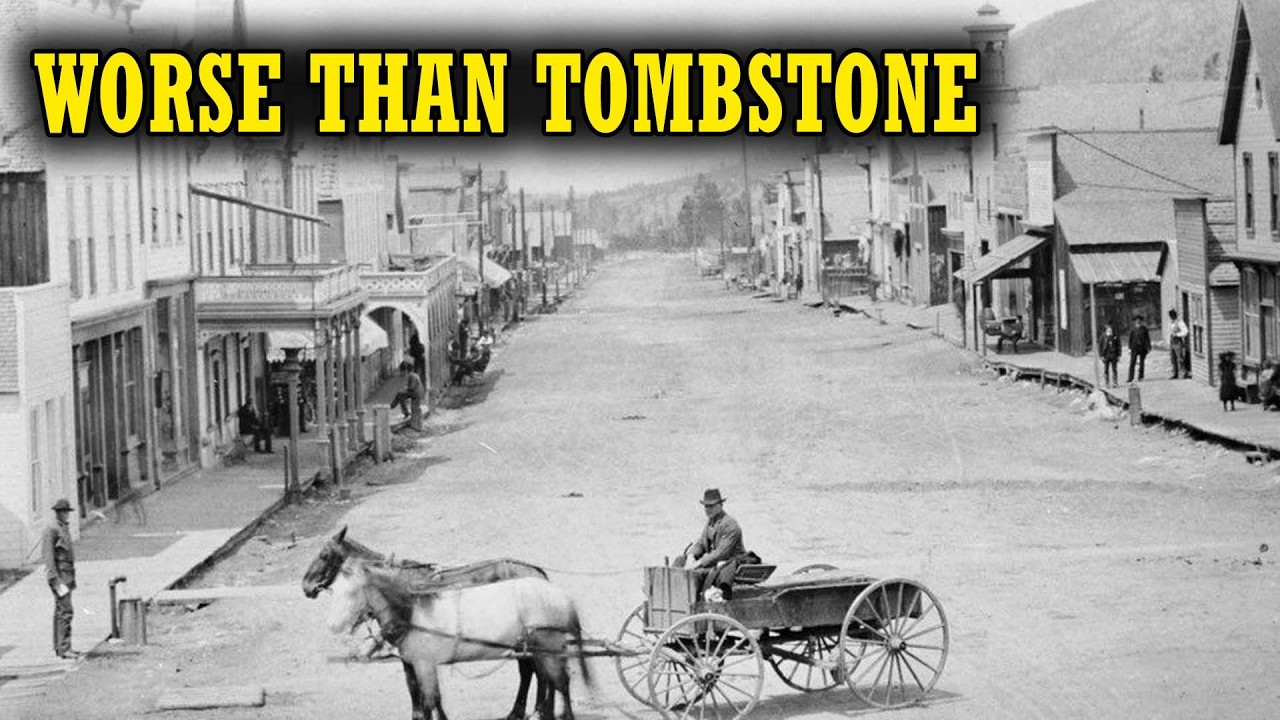
So, what happened? Who was involved, and why did the legend of Tombstone overshadow this battle? In this article, we separate Hollywood myth from the historical record and uncover one of the most overlooked events in Wyatt Earp’s extraordinary life. To understand why Earp’s deadliest brush with death actually occurred in the rugged terrain of Iron Springs, one must first set aside decades of cinematic gloss surrounding the dusty streets of Tombstone.
Consider the event most people think they know well: the gunfight at the O. K. Corral. For nearly a hundred years, books, films, and oral tradition have portrayed that cold October afternoon in 1881 as the defining confrontation of the Wild West.
Popular fiction imagines it on a grand scale: two lines of steely-eyed gunmen facing each other across a wide, sun-baked street, drawing their weapons with perfect precision. History, however, once stripped of its embellishments, rarely matches that tidy image. The O. K.
Corral was not a display of tactical skill. It was a messy, tense encounter in a tight space that lasted roughly thirty seconds. Picture the narrow alleyway along Fremont Street beside the Fly Photography Studio. This was not an open, sweeping backdrop; it was a constricted sliver of land no more than fifteen feet wide.
When Wyatt, Virgil, and Morgan Earp, accompanied by the ailing and sharp-tongued Doc Holliday, approached Frank and Tom McLaury, Billy Clanton, and Ike Clanton, there was no real distance between the parties. They stood close enough to smell the liquor on one another’s breath. Historians such as Casey Tefertiller have meticulously reconstructed those frantic moments, showing that once the first shot rang out, an immediate wave of confusion and dense gunsmoke followed. At such close range, skill and strategy mattered far less than luck.
The Earps’ revolvers, heavy single-action weapons like the Colt Cavalry Single Action Army, produced thick plumes of white smoke. After the initial exchange, visibility vanished completely. Men fired through the haze, their hearing dulled by the sharp crack of gunfire echoing off surrounding buildings. Billy Clanton was hit while retreating toward the fence.
Tom McLaury was shot while trying to take cover behind a panicked horse. The encounter was chaotic and brief, ending before its full consequences could be understood. When the smoke cleared, three men lay dead, and the Earps emerged as apparent victors. But the real danger of that day was not in those thirty seconds.
It lay in the long-term consequences that followed in Cochise County. What came next was not resolution but a tangled legal battle that nearly sent the Earps to the gallows. Out on the frontier, power did not come only from firearms; it also came from newspapers and courtrooms. The town of Tombstone itself was a community split down the middle.
The Tombstone Epitaph, run by John Clum, who favored the Earps, portrayed the brothers as defenders of civic order. The rival Nugget, however, owned by Sheriff Johnny Behan, painted them as cold-blooded murderers. This war of words played out in public, shaping the views of the entire territory. The Earps and Holliday were arrested for murder, and the preliminary hearing that followed became a national sensation.
Judge Spicer, a man of cautious temperament, heard weeks of contradictory testimony. Witnesses on both sides offered wildly different accounts of who fired first and whether the McLaury brothers and Billy Clanton had even reached for their weapons. In the end, Spicer ruled that the Earps had acted within the law, citing their duty to arrest the men. The decision was a relief, but it did not end the feud.
The hatred did not fade; it festered. The vendetta that followed was not a simple matter of revenge but a calculated campaign of intimidation and murder. A few months after the O. K.
Corral, Virgil Earp was ambushed while walking between saloons, his left arm shattered by a shotgun blast. He survived but would never use the arm properly again. Then, in March 1882, Morgan Earp was killed while playing billiards. Wyatt, now the only able-bodied Earp brother left, took matters into his own hands.
With a federal posse authorized by the court, he tracked down those believed responsible for Morgan’s death and for the attempt on Virgil’s life. The vendetta ride that followed saw Wyatt, Holliday, and a handful of others kill several men in a series of running gunfights across the Arizona Territory. These were not the stuff of legend; they were grim, desperate killings carried out in the shadows. Yet even this vendetta was not the most dangerous moment of Wyatt Earp’s life.
That distinction belongs to an obscure encounter that occurred years later, long after he had left Tombstone behind. By the late 1880s, Earp was living in the silver-mining boomtown of San Diego, where he ran saloons and gambled for a living. In 1896, he found himself in a prizefight scheme that went disastrously wrong. He had traveled to San Francisco, then to the railhead at what is now the California-Nevada border, to promote a heavyweight championship fight between Bob Fitzsimmons and Tom Sharkey.
But his problems began when a mining partner named Charlie Earp, no relation, swindled him out of thousands of dollars. The dispute escalated, and on July 26, 1896, Earp confronted Charlie Earp on a desolate stretch of road near the town of Cactus Springs. What followed was not a duel but a gun battle fought at close quarters on horseback. Charlie Earp, a notoriously fast and dangerous gunman, fired first, striking Wyatt in the arm.
Wyatt returned fire, hitting his opponent’s horse and sending it crashing to the ground. The two men then exchanged shots across the desert floor, each taking cover behind rocks and fallen animals. The fight lasted nearly an hour, far longer than the O. K.
Corral, and it left both men wounded and exhausted. Wyatt eventually walked away with a bullet in his side, while Charlie Earp fled the scene. The incident was barely reported at the time, overshadowed by the prizefight and the passing of the frontier era. It would be decades before historians pieced together what had actually happened at Iron Springs.
Why did this encounter remain so obscure? Part of the answer lies in the fact that Wyatt Earp himself rarely spoke about it. He preferred to let the legend of Tombstone define his legacy, and after his death in 1929, his wife Josephine published a biography that leaned heavily on the romanticized version of his life. The Iron Springs gunfight, with its messy, unglamorous details, did not fit the narrative of a heroic lawman.
It was a personal dispute rooted in money and betrayal, not a noble stand against outlaws. The historical record, however, tells a different story. Court documents and letters from the period show that Wyatt Earp was seriously wounded at Iron Springs and that the fight nearly killed him. He carried the bullet fragments in his body for the rest of his life, a constant reminder of a confrontation that history had forgotten.
The significance of this forgotten fight goes beyond the man himself. It reveals the gulf between the romanticized image of the frontier and the gritty reality. The O. K.
Corral, for all its fame, was not a fair fight between heroes and villains. It was a chaotic, smoke-filled scramble in which men died without ever seeing their attackers clearly. The Iron Springs fight, by contrast, was a desperate, personal struggle for survival that had nothing to do with honor or justice. It was the kind of confrontation that the dime novels never captured because it did not fit the mold of the lone gunfighter riding into the sunset.
Wyatt Earp was not a larger-than-life character in that moment; he was just a man fighting for his life on a desolate road, far from the saloons and newspapers that had made him famous. The historical record, once examined closely, does not diminish Wyatt Earp’s accomplishments. He was a brave and resourceful man who survived some of the most violent episodes of the frontier. But the real story of his life is more complex and more interesting than the legend.
The O. K. Corral was not his greatest test; it was merely the beginning of a long and dangerous journey that would take him to the brink of death more than once. The Iron Springs gunfight, forgotten by history and hidden in plain sight, may have been the moment when Wyatt Earp came closest to dying.
Yet it remains absent from the popular imagination, a footnote in the life of a man whose name has become synonymous with the American West. For those willing to look past the Hollywood endings, the truth is far more compelling. Wyatt Earp did not ride off into the sunset; he rode straight into another bullet, time and again, and somehow managed to walk away.