On the morning of August 1, 1999, two families in Alabama reported their teenage daughters missing after the girls failed to come home the night before. That same morning, a black Mazda 929 was discovered parked on Herring Avenue in Ozark, less than a mile from a payphone one of the girls had used hours earlier. Inside the car, investigators found the driver’s license of 17-year-old J. B.
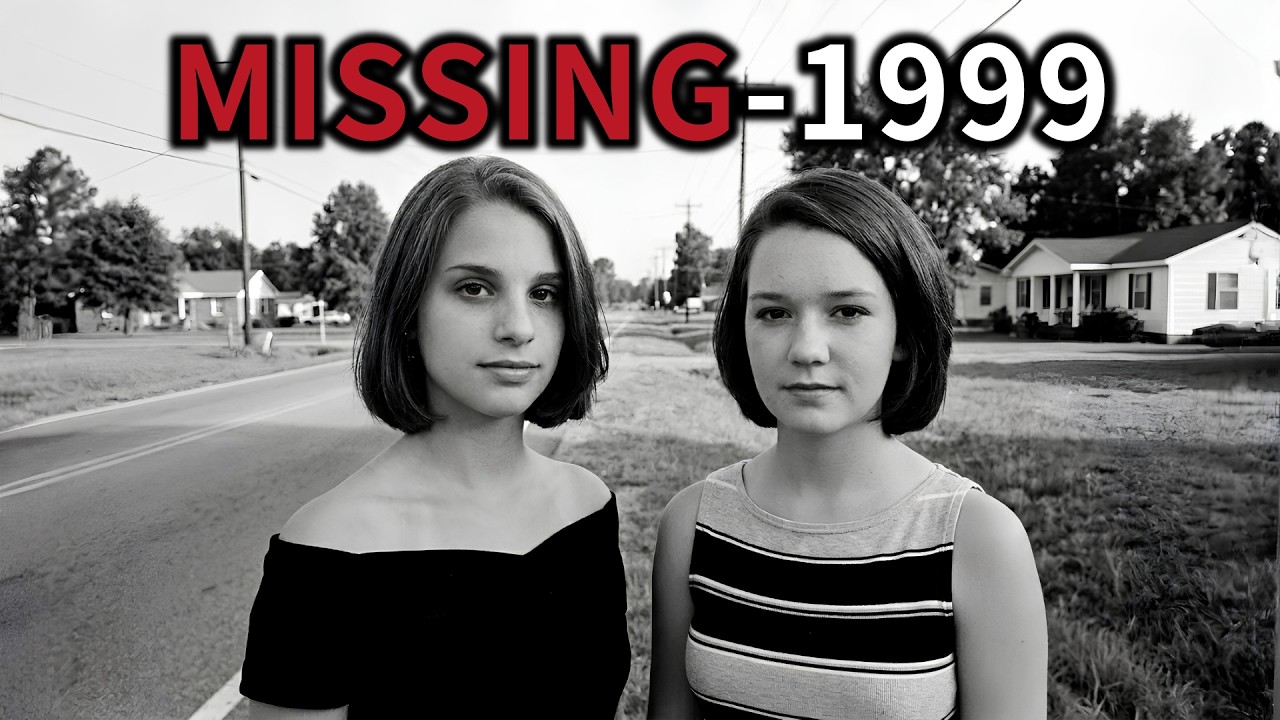
Beasley, along with wallets, cash, jewelry, and credit cards belonging to both young women. The vehicle was towed to a pound, and it was there that an investigator discovered the trunk could be opened from a lever inside without a key. J. B.
Beasley and her best friend, Tracy Hawlett, were found inside the trunk, each killed by a single 9-mm gunshot wound to the head. Both girls were fully clothed and showed no obvious signs of a struggle, but the scene told a more complicated story. Tracy had been shot in the temple, had scratches on her arm, briars stuck to her pants, and her new shoes were caked in mud. Both girls’ pant legs were wet up to the knees, indicating they had walked through wet ground somewhere else before they were killed.
The position of the bodies suggested Tracy had been placed in the trunk first, followed by J. B. Cash, jewelry, and credit cards were all untouched, ruling out robbery as a motive. An unidentified palm print was collected from inside the trunk lid, and a DNA sample from semen was recovered from J.
B. ‘s body. The DNA was the only biological evidence that connected the killer to the crime, but it matched no one in Alabama’s criminal database. The case went cold, and for two decades, the families lived with silence and unanswered questions.
In the months following the murders, police faced intense pressure from the community. Exactly one month after the bodies were discovered, a man named Barentine walked into the police station on his own. Over time, he gave six different versions of his story. In the most detailed account, he claimed he saw a tattooed man get into J.
B. ‘s car and forced him to follow them. Barentine later admitted he had fabricated the entire story to claim a reward, and he was released. The case returned to square one, and the semen DNA remained unmatched in the system.
The database only contained DNA from convicted criminals, and the killer had no criminal record. Investigators had no suspect, no witnesses, and no new leads. The years passed, and the case file grew dusty. Children born after 1999 grew up not knowing what happened to the two girls who vanished that night.
But their mothers, Carol Roberts and Cheryl Bergoon, never stopped thinking about what happened. They held onto the memory of their daughters and continued to hope for answers. The breakthrough came with a technique that had never been used in American criminal justice history: genetic genealogy. Instead of searching for a suspect’s DNA directly in criminal databases, investigators ran the crime scene DNA through public genealogy databases.
From partial matches, they built family trees, working backward from distant relatives to closer ones, until they narrowed it down to a single individual. The DNA pointed directly to a man named Coley McCraney, a local resident who had lived among the community for two decades. He had never been arrested and had no criminal history, which was exactly why his DNA had never been in the criminal database. Investigators invited McCraney to the police station under the guise of helping with the case, a friendly conversation between people who had known each other since high school.
He agreed to provide a DNA sample, unaware that the family tree had already identified him. He sat calmly as an officer took a swab from his mouth. The DNA matched the sample found on J. B.
‘s body. In 2019, McCraney was arrested and charged with the murders. The trial took years to reach, but in 2024, the case finally went before a jury. During the trial, the prosecution reconstructed the sequence of events based on physical and forensic evidence.
They argued that McCraney encountered the girls at the convenience store, followed them in his own car, and then forced them to drive to a remote location. There, he raped J. B. and shot both girls with a 9-mm handgun.
He then placed their bodies in the trunk of J. B. ‘s car and drove it to Herring Avenue, where it was found. The prosecution presented no evidence of a prior connection between McCraney and the girls.
There were no texts, no calls, and no witnesses to confirm they had ever known each other before the night of the murder. The defense maintained his innocence, but the evidence was overwhelming. In his own testimony, McCraney told a different story than he had in 2019, but the jury did not believe him. After deliberating, they found him guilty on all four counts: the murder of J.
B. Beasley during the commission of a rape, the murder of Tracy Hawlett during the same criminal event, the murder of both victims during the same course of conduct, and the use of J. B. ‘s car during the commission of the crime.
The following day, the jury returned to decide the sentence. They chose life in prison without the possibility of parole, sparing McCraney the death penalty. Alabama Attorney General Steve Marshall, who personally prosecuted the case, stood before the press after the verdict. He said, “We lost two precious girls, girls who never had the chance to grow up and experience life.
” He acknowledged that the sentence did not bring complete closure. McCraney is currently serving his sentence at a state prison facility. The case was a landmark use of genetic genealogy, a technique that has since been used in other cold cases across the country. For the families of J.
B. Beasley and Tracy Hawlett, the verdict brought a measure of justice after 25 years of waiting. But it also served as a reminder of the dangers that can lurk in the most familiar places. The two young women were not targeted for who they were.
They were simply in the wrong place at the wrong time, and a man who had lived among them for years took their lives. The case has also sparked discussions about safety and awareness. In the aftermath, officials have shared practical advice for anyone who finds themselves in a dangerous situation. They stress the importance of sharing a specific itinerary with someone before going out, not just “I’m going to a party,” but the exact location, the name of the host, contact phone numbers, and expected time home.
They also warn against stopping for strangers in deserted places at night. If your car breaks down, it is safer to stay inside with the doors locked and call for help rather than getting out to ask for directions. These simple precautions might save a life. The story of J.
B. and Tracy is a painful reminder of how quickly things can go wrong, and how a single night can change everything. For the families, the search for answers is finally over. The two mothers who waited so long can now begin the slow process of healing, knowing that the man responsible will never walk free again.
But for a community that lived with the knowledge of a killer in its midst, the memory of those two young women will not fade anytime soon. Their names will live on, not just as victims, but as the reason why a small town fought for justice for 25 years.