In May 1955, a document arrived at the Newport probate court that staff would remember for the rest of their careers. It estimated the estate of a woman named Aline Tew at $20,113,000, the largest will ever filed in that court at the time. It ignited a small war among the living. Six of her cousins, first-degree relatives from a furniture town in western New York called Jamestown, filed claims to contest the document.
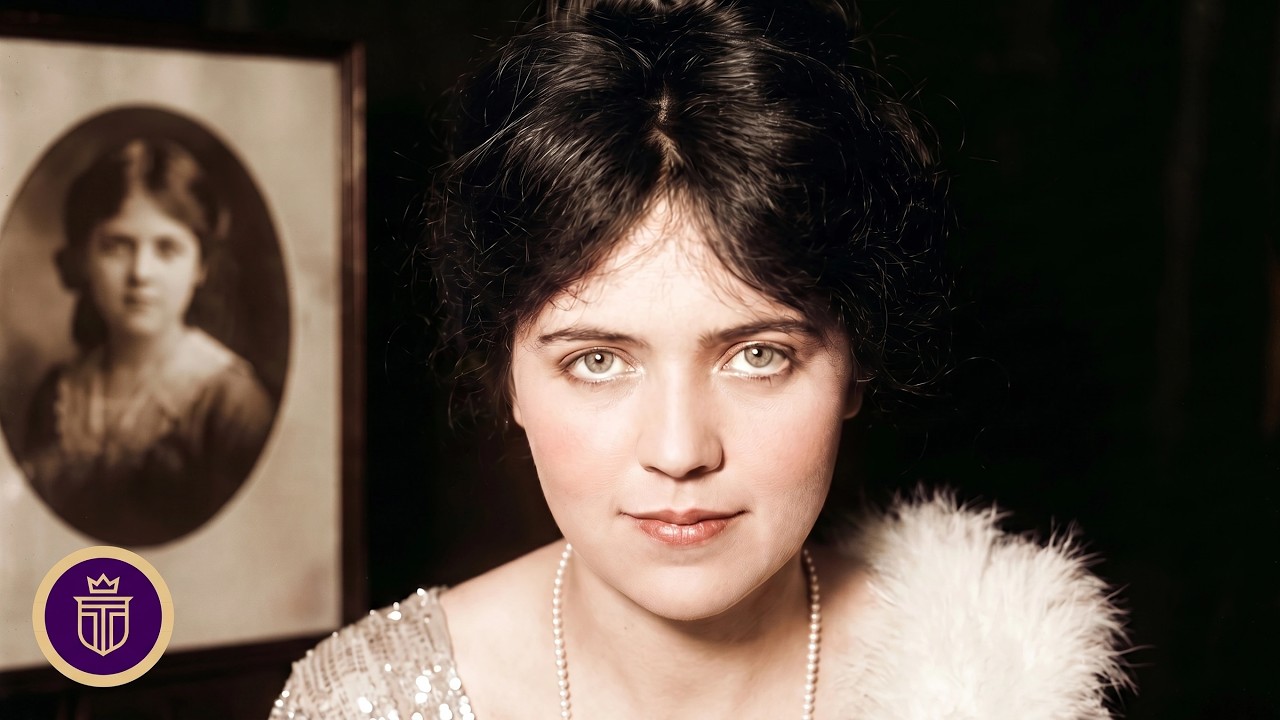
They were certain that such a huge sum could not leave the family. They were wrong. The primary beneficiary named in the will was a German prince none of them had ever met, a man named Heinrich XXXII Reuss, who shared no blood with Aline and had entered her life only because she had briefly been married to his father before divorcing him. The cousins had a point about the strangeness of the situation, even if they had no legal standing.
Here was a woman born to a bank cashier’s daughter, raised while paying rent just four blocks from the grand mansion where her wealthy relatives lived, directing from beyond the grave one of the largest private fortunes ever assembled by an American woman away from her bloodline and toward a stepson she had acquired, like everything else she owned, through marriage. By the time she died in a villa on the French Riviera, she had collected five titles the way other women collect jewels. She had buried four husbands and three of her four children. She had been a Pittsburgh heiress’s wife, a New York divorcée, a General Electric mogul’s widow, a German princess, and a Russian countess.
She outlived anyone who could tell the story of how she did it. The distinction between the family you are born into and the family you make for yourself is the essence of this story. Aline was born in 1872 to a bank cashier in Jamestown, New York, married a Pittsburgh fortune heir at age 18, buried him in her thirties, then married a New York notable and divorced him within seven years. She married a General Electric vice president who left her one of the richest women in America.
She married a German prince and became Princess Reuss. She divorced him, married a Russian count, outlived both of her sons, and left a $20 million Newport estate to the stepson she inherited with her fourth marriage. Aline Tew was born on July 7, 1872, not in the New York town her family always claimed as home, but in Janesville, Wisconsin, during what appears to have been a short and largely undocumented move by her parents. Within about three years, the family returned east to Jamestown, New York, a furniture-manufacturing town on the shore of Lake Chautauqua, respectable and provincial at once.
There, Aline spent her entire childhood. The Tew name carried weight in Jamestown. The family had migrated west from Rensselaerville beginning in 1826. By the time Aline was a young girl, they were one of the prominent clans of the town, the kind that founded banks and built houses large enough to carry private names.
The problem for Aline was that her branch of the family sat at the lowest rung of that status, close enough to see the view from the top, but never allowed to climb to it. Her father, Charles Henry Tew, was an accountant and assistant at the City National Bank of Jamestown, a bank founded by his uncle, the wealthier branch of the family that occupied the massive Tew mansion at 413 North Main Street. That house was a three-story building with a mansard roof concealing a ballroom on the third floor. Built between 1881 and 1882, it was exactly the kind of structure designed to declare that those inside had arrived at the top, and those outside had not.
Aline’s family initially lived in the horse stable of her maternal grandfather on West Third Street. The grandfather ran a horse rental business before eventually moving to a house on Pine Street. Her mother was also named Janet Smith. The stable details placed the family in the middle class of Jamestown, a class the wealthy Tew family above them could not ignore every time the two branches met on the street.
The distinction between the branches was not only social, but architectural, carved into the streetscape and visible on every path to school. The cousins in the mansion lived in the Jamestown headquarters with the ballroom and their own bank, while Charles Henry Tew’s family paid rent and counted other people’s money for a salary. Aline was an only daughter, with no siblings to share the weight of her parents’ ambitions or divert the attention they poured on her. From an early age, she was described as a free spirit who loved horses, a beautiful and impulsive girl, traits tracked by local records from her earliest years.
In a town where horses meant work in the stables, that love of horses seemed less a girl’s whim than a child carefully observing the reasons others were rich and quietly storing the lesson. She could see exactly what money looked like in Jamestown. She simply did not have any of it, and she was old enough to understand the difference. Records of Aline’s formal education are scarce, as is typical for girls’ schooling records in the provinces during the 1880s.
But the nature of her education becomes clear from what happened later. She grew up to be a proper presence in a town that valued appearance above almost anything a woman could offer. She absorbed the curriculum of her class and gender with the same attention she once gave to horses and to the mansion. She learned how to dress, how to move in a room, how to manage conversations that opened doors instead of closing them.
The rewards for mastering these things were always visible on the hill at the Tew mansion. For a beautiful girl in Jamestown in the 1880s, there was one clear path toward the world she could see but not enter. That path ran through marriage. What distinguished Aline from other pretty girls in her town was not beauty itself, which was by all accounts considerable, but the clarity with which she understood the purpose of that beauty.
She did not consider her face a gift to be enjoyed. She considered it an asset to be invested. That distinction would govern the rest of her life. Other pretty girls in Jamestown imagined being chosen, waiting for one of the wealthy sons passing through to select them.
Aline understood from a young age that being chosen was only the first step in a much longer game, and that the prize was not the proposal but everything that followed. Settlements, titles, names on family records, all were acquired through someone who paid attention to documents instead of romance. Lake Chautauqua, on whose shore Jamestown sat, attracted summer visitors from a much higher social class than the year-round residents, bringing wealthy families and their sons within seasonal reach of local girls whose paths would otherwise never cross theirs. For a girl of Aline’s beauty and attention, the lake season was not a holiday but an opportunity that arrived on a predictable annual schedule.
She stood out in society, as much as Jamestown had society, with a reputation for two qualities that would never leave her afterward: beauty and a daring impulsiveness that older women found troubling and younger men found irresistible. She was not content to wait for the world to come to Pine Street, because the world had no intention of coming. She realized this with an early maturity her parents may not have welcomed. A clever child raised on the edge of wealth, allowed to observe but forbidden to participate, learned early that the gap between the mansion and the rented house was not a matter of luck but of arrangements, and that arrangements could be changed by someone determined enough to learn how they were made.
The summer of 1890 brought the usual influx of visitors to the lake. Among them that year was a young man whose family’s fortune was so vast and strange that it seemed to a Jamestown girl like something out of a story. His name was Theodore Ricky Hostetter, and everyone called him Todd. The girl who had grown up watching the mansions from the wrong side of the street was about to discover what real American wealth looked like up close.
In the summer of 1890 on Lake Chautauqua, 19-year-old Aline met Todd Hostetter, the youngest son of a Pittsburgh family that had built one of the most unlikely fortunes in American industrial history. The patriarch, David Hostetter, had grown rich bottling a patented medicine that contained about 47 percent alcohol, selling it to the nation as a bitter stomach cure, a product designed specifically for a country that wanted to drink and wanted even more to be told the drinking was therapeutic. By the time of David Hostetter’s death in 1888, his fortune was estimated, excluding real estate, at about $6,635,322. He was described as second only to William H.
Vanderbilt in his ownership stake in the South Penn Railroad. The business alone generated revenues approaching half a million dollars annually. For a girl from a horse stable on Pine Street, this scale of wealth was almost incomprehensible. Todd himself was charming, reckless, and handsome, already known as a gambler.
A young man with more money than discipline and no apparent intention of acquiring either. Aline became pregnant, which settled the question of whether the relationship would continue. The couple eloped to New York and married on May 14, 1891, at the Church of the Heavenly Rest. Todd’s mother, Rosetta, was never pleased with the match.
The Hostetter family received the country girl from Jamestown with a coldness that set the pattern for the marriage. Within days, the couple was on their way to Pittsburgh, to a house with eight servants, where Aline found herself in real luxury but ostracized from the society around her. She had married wealth, but she had not married her way into the world that wealth was supposed to buy. The old elite of Pittsburgh, the Carnegies, Fricks, and Mellons then forming, had a instinctive distrust of Hostetter money, funds collected from selling high-proof alcohol as medicine to gullible people during the Civil War and after.
For their part, the Hostetters had an instinctive distrust of a country girl who had married by elopement after a premarital pregnancy. These two suspicions left Aline in what one account describes as complete social isolation, she and her infant daughter shunned. Her response revealed the character that would sustain her for the next sixty years. In 1892, she applied for membership in the Pittsburgh chapter of the Daughters of the American Revolution, claiming descent from a Revolutionary War ancestor.
Her application was accepted, then stricken when investigators concluded that one of the ancestors she named had never existed. This episode is among the most revealing of her entire life. She understood that the rules required documents, so she provided documents, and the question of whether those documents were genuine was in her mind entirely secondary to what they could achieve. Hostetter children followed in rapid succession through the 1890s.
Her daughter Greta was born on September 27, 1891. A second daughter, Verna, was born in 1893 and died in 1895. Then a son, Theodore Ricky Hostetter Jr. , was born on October 2, 1897.
During those years, Todd’s gambling addiction escalated steadily, a passion the Pittsburgh money could not fully satisfy. Family life had the character of the rich who had nothing to occupy them. They had a summer home in Narragansett Pier, Rhode Island, where Todd served as first commodore of the Conanicut Yacht Club, a winter home in South Carolina, and a New York address at 8 East 65th Street. In 1901, he bought a new yacht, and the following summer, Aline took the children from him mid-cruise after watching her husband spend most of his time below deck at the roulette table, returning them to her parents.
The end came quickly. Todd caught a cold aboard the yacht Seneca on July 30, 1902. It developed into pneumonia, and he died on August 3, 1902, still in his thirty-second year. His estate was estimated at $1.
3 million, far less than expected, because he had lost a million dollars in the single year before his death, and gamblers claiming debts demanded settlement with the widow before he was even buried. Then the Hostetter family trust applied its terms with the cold efficiency for which Gilded Age legal structures were designed. The estate was placed in a trust for the children, not for Aline, who was merely a temporary arrangement in the documents her husband signed. She was left effectively nothing beyond what the trust would administer on behalf of her children.
She had spent 11 years married to one of the strangest fortunes in America and came out of it with only the children and almost nothing else. She packed her bags that very evening, took the children to New York, and never returned to Pittsburgh. The lesson of those eleven years was written in the documents that stripped her of her rights, and it was a lesson she would never forget. To possess wealth is not necessarily to control it.
To marry does not necessarily mean you have secured a settlement. A widow who had not secured her position in writing was a widow who could be wiped out by a will drafted to protect a bloodline that did not include her. She was beautiful enough to marry Hostetter money and powerless to keep it. At thirty, with two living children and a name that still carried modest social weight, she set out to learn the other half of the equation that beauty alone could not provide.
In New York, Aline rebuilt her social standing from scratch, leveraging what remained of the value of the Hostetter name and the important events she could attend. On December 27, 1904, at St. Thomas Church, she married Morton Colton Nichols, a millionaire stockbroker and prominent member of the firm Ladd & Nichols. A member of the New York Stock Exchange, he had once been rumored to be engaged to Vivian Sartoris, granddaughter of President Ulysses S.
Grant. The wedding was respectable and the marriage short. It lasted barely a year before Aline divorced Nichols in Paris in 1905. The speed of that dissolution tells you this union was never meant to last the way the Hostetter marriage was.
What Aline took from the Nichols marriage was not love or even companionship, but capital and a sharp understanding of how to convert a marriage into the foundation for the next one. She came out of the divorce a significantly wealthier woman, with seven servants and three houses, two of which she rented out. She demonstrated her understanding of social accounting in the most explicit way imaginable. When Nichols remarried in 1911, she immediately reverted to using the Hostetter name, having calculated that it carried more social weight than the Nichols name.
That way of thinking reveals a woman who never confused emotion with strategy. Nichols himself met a tragic end, committing suicide in August 1932 by hanging himself in a suite at the Hotel Pierre after losing his entire fortune. By that time, he had long served his purpose in Aline’s ascent. The architectural monument built with Nichols money still stands today.
In December 1904, Aline purchased two brownstones at 55 and 57 East 64th Street and hired the prominent architect C. P. H. Gilbert to replace them with a five-story French Renaissance-style house.
Completed in 1905 at a cost exceeding $58,000, it was entirely of brick, limestone, and carved garlands, with a Juliet balcony, Gothic windows, and an interior elevator. She moved in with her children. The Social Register listed her address, and Newport society began to accept her invitations. Every toll had been paid on the road back from Pittsburgh, and she had paid it with a marriage she dissolved the moment it served its function.
In exactly one year, she learned how to leverage widowhood and divorce to raise her standing, and she never needed to learn that lesson again. It was the third marriage that Aline herself seemed to consider the real one, a love match rather than a marriage of convenience. Her niece later said flatly that Anson Wood Burchard was the man intended for her. Burchard was everything Todd Hostetter and Morton Nichols were not, serious, sober, genuinely successful, and he loved her deeply.
By the time they came together, he was assistant president of General Electric, one of the most powerful industrial companies in the United States, and had commissioned a country estate on Long Island called Birchwood in Lattingtown in 1906, where Aline and her children spent summers throughout the 1910s. He was the kind of man Jamestown had taught Aline to admire from afar and never aspire to reach. She reached him entirely through the social mobility she had engineered for herself. The circumstances of their acquaintance grew directly from that social mobility.
In 1911, Aline and her daughter Greta traveled to London for the coronation of King George V and Queen Mary, renting a house for the celebrations. From there, they moved to the Delhi Durbar ceremony in India, then to Rome and St. Moritz, moving in a world that the girl from Pine Street could not have imagined. On March 15, 1912, Greta was presented at the British court by Mrs.
Whitelaw Reid, wife of the American ambassador, a presentation that announced the family’s arrival at the top of the transatlantic social order. On December 4, 1912, wearing a white velvet gown trimmed with sable, Aline married Anson Wood Burchard at St. Paul’s Church in London, with Greta as her attendant. The stable girl had married a man at the heart of American industrial wealth in a London church while her daughter stood beside her at the British court.
Burchard’s rise within General Electric was steady and tangible, moving from assistant president to director, then to vice chairman of the board of General Electric, and simultaneously president of International General Electric. These positions placed him among the true giants of American industry rather than merely among the wealthy. The couple appeared in the Social Register and moved through a series of prestigious addresses, beginning with the C. P.
H. Gilbert house at 57 East 64th Street, and by 1925 to 690 Park Avenue, purchased from Mrs. Henry P. Davison.
This was the marriage in which Aline stopped being a widow trying to recover from catastrophe and became a woman of established standing at the highest levels of American society, a position secured not merely by wealth but by a husband whose status and affection were beyond suspicion. For the first time in her life, the place she occupied was not temporary. The Burchard years were the years in which Aline’s wealth accumulated, and more importantly, the years in which the nature of her relationship to that wealth changed completely. In Manhattan, the couple first occupied the East 64th Street house, then the Park Avenue address.
In Paris, they maintained a home at 4 Rue d’Aguesseau in the fashionable 8th arrondissement, while in Locust Valley, Long Island, they had Birchwood for the summer months. The geography itself was a statement, a transatlantic life lived between New York and Paris with a country estate for the warm months. Aline presided over all of it as the wife of a General Electric giant rather than as a widow trading on a dead man’s name. The contrast with the eight-servant Pittsburgh house, where she had been excluded from every important room, could not have been sharper.
The General Electric network gave her something the Pittsburgh money never possessed: legitimacy that required no defense. Burchard’s position tied the couple to the industrial and financial establishment of the United States, the men who actually ran the country’s wealth machine. Aline moved among them as an equal rather than as an outsider to be tolerated. The Pittsburgh money, however vast, always carried a slight odor of cheap patent medicine wagons, funds the Carnegies and Fricks considered thoroughly unrespectable no matter how many millions they counted.
General Electric carried no such taint. It was the future itself, electrified and institutionalized, and the men who ran it sat at the heart of American respectability rather than at its anxious margins. Aline, who had been reminded daily that her husband’s money was the wrong kind of money, now found herself married into the right kind. She understood the difference precisely because she had lived on both sides of that line.
She spent her Pittsburgh years being turned away from doors and her New York years buying her way back to the threshold. Now she stood inside, married to a man whose name opened every door without needing a forged ancestor or a strategic divorce. The girl who had applied to the Daughters of the American Revolution with invented origins had become a woman whose position required no invention at all. What the Burchard marriage built, beyond the addresses and the networking, was the foundation of a fortune that would eventually be hers.
She survived that period in peace, maintaining her financial standing and her spotless social position, transforming from a disinherited heiress widow into a woman of truly independent standing. That transformation was not yet complete, because Anson Burchard was still alive and the fortune was still his. But the basic structure of everything that followed had already been laid. Aline spent the first half of her adult life learning that beauty without control is a trap.
She spent her years married to Burchard acquiring, through marriage and attention, the control she had once lacked. When the time came for the test, as it always did in her life, she would be ready in a way the thirty-year-old widow in Pittsburgh had never been. Of the four children Aline bore, only one survived her. The circumstances of losing her two adult children are among the most compressed tragedies in any Gilded Age life.
Her second daughter, Verna, died in 1895 at age two, a grief so common in that era it was almost expected. The loss of her two surviving children, Greta and Theodore Jr. , occurred in October 1918 within a single week, while the influenza pandemic swept the East Coast and World War I gasped its last breaths. Greta had married Glenn L.
Stewart, a diplomat and the only son of a self-made millionaire, on October 21, 1914, miscarried her first child in 1917, and by the autumn of 1918 was pregnant with twins. She caught influenza and died in her Washington home on October 16, 1918, and the twins did not survive. Her brother, Theodore Ricky Hostetter Jr. , had joined the British Royal Flying Corps in 1917 and risen to lieutenant, flying combat missions over the Western Front in the most dangerous profession the war offered.
He was killed in action, his plane shot down over France in the last days of September 1918, a fighter pilot lost in the air during the final weeks of the war. Confirmation of his death reached Aline on October 21, 1918, just five days after she buried her daughter. With a single blow, Aline lost both her surviving children and two grandchildren who never saw the light. The woman who survived every other blow in her life afterward rarely spoke of the children she had lost.
The cruelty was compounded by the legal machinery that had governed her path since Pittsburgh. The trust created by Todd Hostetter for the children, the same trust that stripped Aline of inheritance in 1902, now distributed its assets through its legal channels after the beneficiaries’ deaths. Again, no part of that distribution went to Aline herself. She had raised those children amid social struggles, pulled them out of relative poverty, kept them from their father’s yacht and from Pittsburgh, and built them a life in New York.
The trust designed to protect them from her now took the inheritance they had grown up on. Once again, in her life, grief and cold paper coexisted. She absorbed the shock as she absorbed everything else, by continuing forward. But the children were the one subject on which her strategy fell permanently silent.
Anson Wood Burchard died on January 22, 1927, at age 62, at the home of financier Mortimer L. Schiff in Manhattan. The cause was said to be acute indigestion, a term the medical understanding of the time used as a euphemism for what was almost certainly a heart attack. He went to lunch with a close friend and never returned home.
There was no long illness, no warning, no slow farewell of the kind that gives a marriage time to prepare. There was a lunch table and sudden death, and Aline, who had buried a husband in her thirties and two children in one week, now buried the man she appears to have genuinely loved. The New York Times described her afterward as the richest and saddest widow of New York society. For once, the paper’s phrasing was accurate on both counts.
Burchard’s estate was valued at over $3 million, and he left it entirely to Aline in what the records describe as a complete and unconditional transfer. This was the inheritance the Hostetter trust had once denied her, which she had spent 25 years learning to secure. It came to her unqualified. Entirely hers, with a single condition that Burchard’s nephew, Seth Rosewater, change his surname to Burchard to qualify for a residual share.
The man who loved her had also, unlike Todd Hostetter, ensured that his death would leave her in complete control of his fortune rather than at the mercy of a trust. The difference between the two documents was the difference between the two marriages, the difference Aline spent her life learning to draft. When she added the Burchard estate to what she had accumulated from the Nichols marriage and to the income from her own shrewd investments, Aline by 1927 was arguably one of the richest women in private life in the United States. She managed money with the same intelligence she applied to social instincts.
When the crash came two years later, it shrank her fortune without destroying it, leaving her enough to rebuild repeatedly. The contrast with 1902 could not have been more perfect. When Todd Hostetter died, the documents treated her as a temporary element to be managed, so she left with the children and almost nothing. When Anson Burchard died, the documents gave her everything unqualified, because the man who drafted them loved her, and because, by that time, she had learned exactly what such documents should say.
The fortune she received in 1927 was not only larger than the one she had been denied in 1902; it was hers in a way the Hostetter money had never been. It was held in her own name and subject to her command alone. The bank cashier’s daughter who once counted other people’s money from the other side of the window now controlled a fortune larger than anything the mansion-owning cousins had assembled. After Anson’s death in January 1927, Aline went to Europe alone and bought a new house in Paris on Rue Barbet de Jouy, the former residence of the Comtesse de Montebello, preferring not to live in the house on Rue Gasco where she had shared with Burchard.
A few months later, at a social event linked to the German embassy in Paris, she met Prince Heinrich XXXIII Reuss of Köstritz. The House of Reuss ruled a cluster of small extraordinary German states in Thuringia, a princely house with a strange custom where every male member, from the reigning prince to the most distant cousin, bears the name Heinrich followed by a Roman numeral, with renumbering every century. It was a name with the grand resonance of a kingdom that no longer existed by the time Aline met her prince. A dynasty that produced so many Heinrichs it had to count them by century, starting over every hundred years, cherished lineage more than land.
The Reuss states at Schleiz were among the smallest sovereign entities in the mosaic of the old German Empire. The name was ancient, but the territory was minuscule. The two coexisted because the European system made room for small princely houses with great genealogies. When the German Empire collapsed in 1918, that space vanished.
The principalities were dissolved along with the rest, and the princes kept their titles only as honorifics, stripped of their lands, income, and any real political standing. Heinrich XXXIII was trained as a doctor and passed all his medical examinations, served in the Second Guards Dragoons, worked in the German diplomatic corps in Paris, and was married to Princess Victoria Margaret of Prussia, a niece of Kaiser Wilhelm II, from 1913 to 1922. His lineage carried a tempting thread: through his mother, he was a grandson of King William II of the Netherlands and a distant cousin of Queen Wilhelmina. Until the birth of Crown Princess Juliana in 1909, he was a potential candidate for the Dutch succession.
The American press picked up the story, and the New York Times published the engagement news under the headline “Mrs. A. W. Burchard to Marry a Prince,” with a subheading “Of the Ruling Dutch Family.
” In January 1929, Aline chartered a luxury houseboat called the Indiana, a floating palace, and sailed the Nile with a party that included Prince Heinrich, with the engagement announced from Paris. They married on April 10, 1929, in her Paris home, attended by the German ambassador and Prince Heinrich XXXII and Prince Heinrich XXXIV, the groom’s brothers, who also bore the name Heinrich. Among the guests of honor, the U. S.
naval attaché walked the bride, saying “I, Aline,” as he gave her away to her husband. She had become Princess Reuss, reaching a peak that a Jamestown girl could never have aspired to. The title for which the entire transatlantic marriage market existed was now in the possession of a bank cashier’s daughter who had funded her own ascent rather than bringing inherited wealth to the table. But the reality was different.
Heinrich’s family considered her beneath them and continued to speak German in front of her to exclude her. His 14-year-old daughter, Marie Louise, wanted nothing to do with her new stepmother, and the prince himself soon sank into drinking and gambling, the very vices that destroyed her first marriage, before embracing the Nazi cause. The divorce was finalized on October 31, 1935, officially attributed to his adoption of National Socialism. Aline had learned at considerable cost that she had paid for a title and gotten only the appearance of one.
Yet she did not leave his children behind, and that decision mattered more than the marriage itself. In the years following the Reuss divorce, Aline began appearing with a new companion, Pavel Pavlovich Duke of Sayn-Wittgenstein, a Russian count 12 years her junior, whom she had met through her Paris friend Armgaard von Cramm. Pavel was a former officer of the Ulhan Guard, serving as commandant of the Alexander Palace at Tsarskoye Selo in March 1917, in the months just before the Tsar’s abdication. He was arrested in Petrograd in 1918, then escaped and emigrated to France.
He obtained the right to bear the title Count Kotzebue by deed in 1933 from Grand Duke Kirill Vladimirovich of the Russian imperial house the following January. His uncle had served as Russian imperial ambassador to the United States. They married on March 4, 1936, in Geneva, Switzerland. From that moment, Aline became Countess de Kotzebue, the fifth and final title in the series she had collected over 45 years.
The marriage to Pavel placed her at the heart of a unique episode in Dutch royal history. Through her friendship with Armgaard von Cramm, she met her son, Bernhard, Prince of Lippe-Biesterfeld, who treated her as an aunt and called her “Aunt Aline. ” She treated him in turn like a son. When the Netherlands faced a succession problem related to Crown Princess Juliana’s unmarried status, Aline lent Bernhard money to attend the 1936 Winter Olympics in Garmisch-Partenkirchen, where he met Juliana.
She then participated directly in the marriage negotiations, formally negotiating on Bernhard’s behalf with Queen Wilhelmina and the Dutch ministers. She attended the royal wedding in The Hague on January 7, 1937, where her tiara hurt her so much she took it off during dinner and laid it on the table. Afterward, she took it upon herself to carry out a complete overhaul of Juliana’s look, bringing over her own beautician from New York. When Princess Beatrix was born on January 31, 1938, Aline was asked to be one of the five godparents at the christening, closing a circle no one could have planned.
A girl from a horse stable on Pine Street, Jamestown, New York, stood as godmother to a child who would become Queen of the Netherlands from 1980 to 2013. She did this not through inherited wealth but through the relationships she built, the loyalties she chose, and the matchmaking she engineered herself. Her social world had by that time narrowed to people who had survived the collapse of the empires that had granted them status. European aristocrats in exile, American fortunes diminished by the Great Depression.
She moved in the Paris and Cap Ferrat circles of that era alongside figures like Mona von Bismarck and the Duke and Duchess of Windsor, themselves exiles of a kind. According to one account, she found the Duke of Windsor boring. The girl who had once forged her ancestry to join the Daughters of the American Revolution now could not be bothered with a man who had given up a throne, perhaps the truest measure of how far she had come. In 1940, after surviving the 1929 crash and the loss of her European properties to the coming war, Aline and Pavel bought Beechwood, the former mansion of Caroline Schermerhorn Astor in Newport, the queen of Gilded Age society, from her grandson Vincent Astor, and entertained there with the extravagance the house was designed to display.
The symmetry was exact. The woman rejected by Pittsburgh society, stripped by the Hostetter trust, kept outside the Gilded Age salons for nearly 30 years, now owned the most symbolically important house in Newport, the home of Mrs. Astor herself, the woman who had once defined who belonged to American society and who did not. She kept it for 12 years and sold it in 1952 to James Cameron Clark, heir to the Clark sewing thread fortune, having proven her point by simply owning the place.
Mrs. Astor had built her power on the question of who was allowed into her drawing room and who was kept outside. Aline had also spent the first thirty years of her adult life outside rooms exactly like that one, in Pittsburgh, in New York, in the houses of powerful rich men. Owning the deed to the very building from which the social sorting of an entire era had been managed was a verdict on that era delivered without a single word.
Aline died in a villa near Cap Ferrat on the French Riviera on May 1, 1955, at age 82. She was buried in the Saint Margaret’s cemetery in Nice beside her parents, not with the Hostetters who had erased her from Todd’s trust, nor with the Burchards whose name had passed to a nephew. Her New York residence at the time of her death was 740 Park Avenue, the building described in its time as the most luxurious in the city, where she had lived first as Princess Reuss and then as Countess Kotzebue. Then came the document in the Newport probate court.
The estate was estimated at $20,113,000, said to be the largest will ever filed there. And the six relatives who appeared to contest it, confident that family wealth must stay in the family, lost the argument that mattered, because the primary beneficiary Aline named was her stepson, Prince Heinrich II Reuss, the son of the Nazi-sympathizing prince she had divorced in 1935. She had not abandoned the boy when she left his father. She became his guardian, brought him to America, treated him as her son, and wrote to him every three days during their separations in the war.
His sister, Marie Louise, the stepdaughter who had refused her affection since 1929, was entirely excluded from the will. The relatives who came for money with claims of blood did not understand the woman they were contesting. Aline had also spent 50 years learning the precise machinery of trusts, wills, and settlements. The same machinery that had once been used to strip her of everything.
In the end, she turned that machinery to her own purpose with full deliberation. The legal engineering she had spent her life learning to navigate finally did exactly what she directed it to do. She gave what she had built to the family she chose rather than the family she was born into. That was the final lesson of Pittsburgh, applied one last time.
And this time, she was the one holding the pen.