For the first time in the Pacific War, a Japanese commander planned not to win a battle but to make the enemy pay for every inch of ground. The choice fell to the Thirty-Second Army on Okinawa, and the staff officer who drew up the plan would spend decades fighting its legacy. On 23 November 1944, Colonel Hiromichi Yahara, the senior operations officer of the Japanese Thirty-Second Army, put four defensive options for Okinawa on paper and submitted them to his chief of staff. The options ranged from thinly defending the entire island to holding the central flatlands opposite the likely landing beaches, to making a stand in the rugged south, or retreating to the northern mountains.
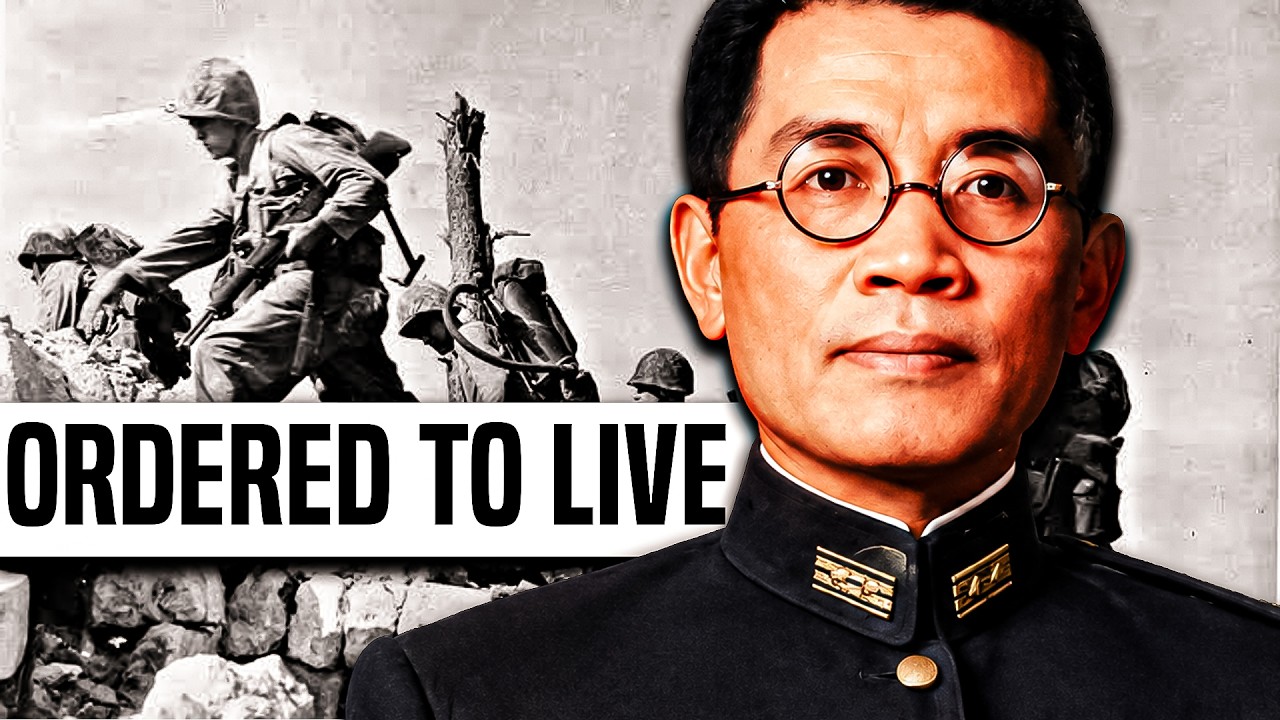
Yahara argued for the southern option, the chief of staff agreed, and Lieutenant General Mitsuru Ushijima adopted it without comment. The new order went out to units on 26 November 1944. It looked like a routine organizational decision, but it was not. Imperial General Headquarters had spent a year building a doctrine that treated the Ryukyu Islands as a chain of linked air bases, with the ground forces tasked to protect those airfields for the planes.
The southern option abandoned the airfields entirely. It also overturned the older army belief that a defending force should seek out the attacker and settle matters in close combat. What replaced both was a war of attrition, known as “jikushin,” in which nothing would be decided and the Americans would simply be made to pay for the land. The plan was nearly broken before the invasion began.
In November 1944, a telegram from Tokyo ordered the Thirty-Second Army to name its best formation for transfer to the Philippines, and the staff chose the Ninth Division. It never went to the Philippines. It went to Taiwan instead, and Okinawa’s staff was still protesting that loss on the morning the Americans landed. The remaining troops had to cover far more ground than standard military calculations allowed.
Japanese doctrine assigned a division roughly six miles of front, but the Thirty-Second Army had two and a half divisions and 36 miles of coastline to defend, 24 of which had to be defended seriously. The staff calculated that each American division had five or six times their firepower, making the balance of power on the ground 12-to-1 before a single naval shell was fired. The army counted more than 100,000 men on Okinawa when the invasion came. The actual fighting strength was about 77,000, half frontline infantry and combat units, half artillery, engineers, and service troops, with another 20,000 Okinawan home guards behind them to carry ammunition.
Yahara had been teaching strategy at the Army War College in Tokyo when the assignment came on 16 March 1944, six days before the Thirty-Second Army headquarters was established. He toured the lines in January and disliked what he saw. The solution was to shorten the front again by pulling one brigade south. The dispositions set on 15 January 1945 were the ones that held when the invasion began.
By then, the Thirty-Second Army was defending only the southern eighth of Okinawa and had abandoned Yontan and Kadena airfields entirely. Before any of that could work, the island itself had to be dug out, so Yahara wrote a pamphlet. It was called “The Certain Victory Road,” and its message was that fortifications could overcome numbers and machinery, and that an army which slept underground and fought from holes could not be crushed from above. It was aimed at the troops rather than the command, and it worked.
Units began digging with something close to enthusiasm, and a slogan spread through the positions that confidence in victory would come from strong fortifications. For the first time in the Pacific War, every artillery unit on the island except the divisional guns came under a single command, the Fifth Artillery Command, with 3,200 men, most of whom had been with their units for three or four years and were considered among the best gunners in the Japanese army. Concentrated fire was the only advantage the calculations allowed, and they were positioned to use it. They had almost no digging equipment.
The entire army had only two bulldozers and one grader for airfield work, and no machinery at all for tunneling. Chief of Staff Isamu Cho requested rock-cutting equipment so frequently that “Cho’s rock cutters” became a running joke in the halls of Imperial General Headquarters. None was ever sent. Using hand tools, shovels, and baskets, the Thirty-Second Army carved 60 miles of underground works into the coral and limestone of northern Okinawa, completing most of it in the 100 days before the landings.
The original instructions had been more ambitious. Every unit was to dig caves large enough for three times its strength, so troops could be moved anywhere on the island while staying underground, but that idea was abandoned in November when the redeployments drained the work days. The payoff came on 24 March 1945, when American ships rained 13,000 heavy shells on the island. The bombardment had no specific targets.
American planes had flown over Okinawa daily for weeks, yet the artillerymen still did not know where the Thirty-Second Army was, because it was not anywhere they could see. On Easter Sunday, 1 April, the Americans came ashore at Hagushi. Nothing happened. The Japanese guns stayed silent.
Both airfields were captured before dark, along with a 15,000-yard beachhead, and 60,000 troops had landed by dusk. American officers found the silence more unsettling than shellfire, because on Iwo Jima the beaches had been bombarded. Here they were not. That silence was proof the plan was working.
What happened next was the plan being attacked from inside its own headquarters, three times, by men who had spent 30 years trained to believe that holding in place was a form of surrender. The first attempt came on the night of 3 April. Cho gathered the staff and said the American positions were still fragile, proposing the army advance immediately using night infiltration and close-quarters fighting, the kind of operation the Japanese army believed suited it. Yahara opposed the idea fiercely.
He told the young officers they were treating it like an exam-room exercise, that they knew nothing about the ground they meant to attack across, and that the idea of catching the Americans unprepared was pure fantasy. Moving in the open under their guns would destroy the army within days and waste every yard of tunnel they had dug. Cho let him speak to the end without interruption. Then he stood and announced that the general sentiment of the meeting leaned toward going forward.
He gave them only 30 minutes. The officers reconvened in Ushijima’s office in full uniform and decorations, and listened to their commander call for a general offensive by the army’s main force against Yontan and Kadena. The attack plan was written in six paragraphs, set for 6 April, just three days later, the time Yahara had just told them would make the Americans more organized than they were that night. Cho had two reasons for pushing the attack, only one of them tactical.
A radio message from Taiwan encouraged the offensive, and he believed Ushijima’s name would suffer if the army sat still while the Americans wandered around his airfields. The attack never took place. On the night of 4 April, an air unit reported an American task force of three carriers and 50 transports 90 miles south of Naha, and Yahara took the signal straight to Cho and explained what would happen if those ships landed troops behind the lines while the army was in the open. Cho cancelled the attack.
The second attempt came from above them. Command in Taiwan heard of the cancellation and sent a specific order to attack on 8 April instead, which Ushijima converted into an order of his own with wording very close to the one he had just withdrawn. Then, on 7 April, another American naval group was spotted off Naha. The general offensive shrank to two companies going out in front of the positions after dark and then returning.
The plan made sense on its own terms. But its own terms were that everyone who carried it out died on a schedule set by the army, not the enemy. The third attempt succeeded. On the night of 2 May, in a room 100 feet below Shuri Castle, supported by heavy wooden beams, Cho pressed again for a decisive strike.
The commander of the 62nd Division backed him, and most of the senior officers in the room had run out of patience with a battle that gave them nothing to achieve. Yahara’s opinion was overruled. Ushijima ordered a full-scale offensive for 4 May, using the 24th Division, which was still nearly at full strength. On 4 May, for the first time in the campaign, full batteries of Japanese artillery rose above ground.
American counter-battery fire destroyed 19 guns that day and 40 more over the next two days. The remaining guns went back into their caves and mostly stayed there. There was one tangible American result, easy to overlook. As the Japanese bombardment faded, combat fatigue cases among American soldiers also declined.
After losing the argument, Yahara cut the number of battalions involved from six to four without giving reasons, one explanation for why the operation was as limited as it was. By midnight on 5 May, Ushijima realized the attack had failed. The Thirty-Second Army had exhausted its best infantry and a large part of its artillery in four days, achieving nothing but temporary control around Tanabaru. Sources place the cost of those four days at about 5,000 dead, with other sources running as high as nearly 7,000.
Both totals concern the same operation, and nothing in either the American or Japanese accounts reconciles them. Ushijima later made a tearful promise to Yahara that the army would follow his opinion from then on. Yahara’s personal assessment, written much later, was that this disaster was the decisive act of the campaign. What followed was a return to the original plan, and it worked as intended.
Shuri was abandoned on the night of 23 May, and the army fell back to the Kiyamu Peninsula in the far south, fighting at every ridge along the way. On 19 June, Ushijima dissolved his staff and ordered the survivors to continue fighting as guerrillas. Organized resistance ended on the 21st of the month. The American casualty bill for 82 days was 12,520 dead or missing and 36,531 wounded, the heaviest of any campaign against Japan.
The Tenth Army commander himself was among the dead. Then came the final belief among the three, and this one broke an order rather than an argument. After the generals died, Yahara and several other staff officers sealed the mouth of a small cave with stones and waited. They could hear Americans digging in the rock above them, so they moved to another cave and dispersed.
Yahara put on civilian clothes and walked down from Mabuni Hill. He picked up two soldiers along the way, and the three joined about 50 civilians sheltering in a cave. American forces found that cave, launched an air strike, and then persuaded those inside to come out. Yahara came out with them and was recorded in the rolls as a Japanese schoolteacher.
No officers walked into American lines on Okinawa during the first 70 days of the battle. The Tenth Army’s POW average was fewer than four men per day. Only at the end, after weeks of loudspeakers and leaflets, did the numbers move. With 977 captured in a single day, the final count was 7,401 men, including just over 200 officers.
Yahara had visited the United States before. In 1933, the army sent him as an exchange officer, and he traveled to Wilmington, Boston, and Washington, spending six months attached to the 8th Infantry Regiment at Fort Moultrie, South Carolina. He entered a detention camp, moved to a house on the Chinen Peninsula with 30 other refugees, then joined a work detail. On 15 July 1945, the Americans identified him.
Accounts differ on how. One says he revealed himself during interrogation. Another says a Japanese soldier working for the Americans recognized him. No interrogation file settles the matter.
As the third-highest-ranking officer on the island, he was taken to Tenth Army headquarters and treated according to his rank. Then they asked him about Kyushu. The interrogation was filed under “US Tenth Army POW Interrogation Report No. 28,” dated 6 August 1945.
The Americans reviewed Okinawa with him: the defensive positions, the tunnels, the disagreements, the April infiltration plan, and what it was supposed to achieve. But the weight of the questions was directed at the future, not the past, because the Tenth Army in August 1945 was studying an invasion of the Japanese home islands, and the man before them had just spent 11 weeks proving what an army could do underground with hand tools and no air cover. One officer in the room was a young Navy language specialist named Frank Gibney, who would edit Yahara’s book for English publication 50 years later. The date on the report was the day Hiroshima was bombed.
The stated reason Ushijima gave for keeping his operations officer alive was the need for someone capable of telling Tokyo the truth about the battle. The truth reached Tokyo in 1973, when Yahara published his account in Japanese, 28 years after the event, despite a strong feeling in Japan that a staff officer who returned alive from Okinawa had brought shame on himself. The Tenth Army, however, knew it on 6 August 1945. It is still cited when the American military writes about the Thirty-Second Army’s intentions for the infiltration attack of 12 and 13 April.
The footnote below the text cites no Japanese document. It cites Interrogation Report No. 28, which the footnote condensed to two words: “Yahara Interrogation. ”
Ushijima gave the order so that his own side would have a record of events.
But the side that received it, archived it, and has cited it ever since was the side that captured the island. Records show roughly 110,000 Japanese dead against 12,520 Americans, with 7,401 men surviving, one of whom carried the story.