Steven Spielberg acquired the rights to Thomas Keneally’s novel in 1982, yet he repeatedly stepped back from the project, privately admitting he was not emotionally prepared to take on a story of that weight. He even offered the director’s chair to others, with Roman Polanski, Martin Scorsese, and Billy Wilder all considered at various points. Polanski, a Holocaust survivor, ultimately felt too close to the material, while Scorsese suggested Spielberg was the right person for it all along. What finally shifted was urgency.
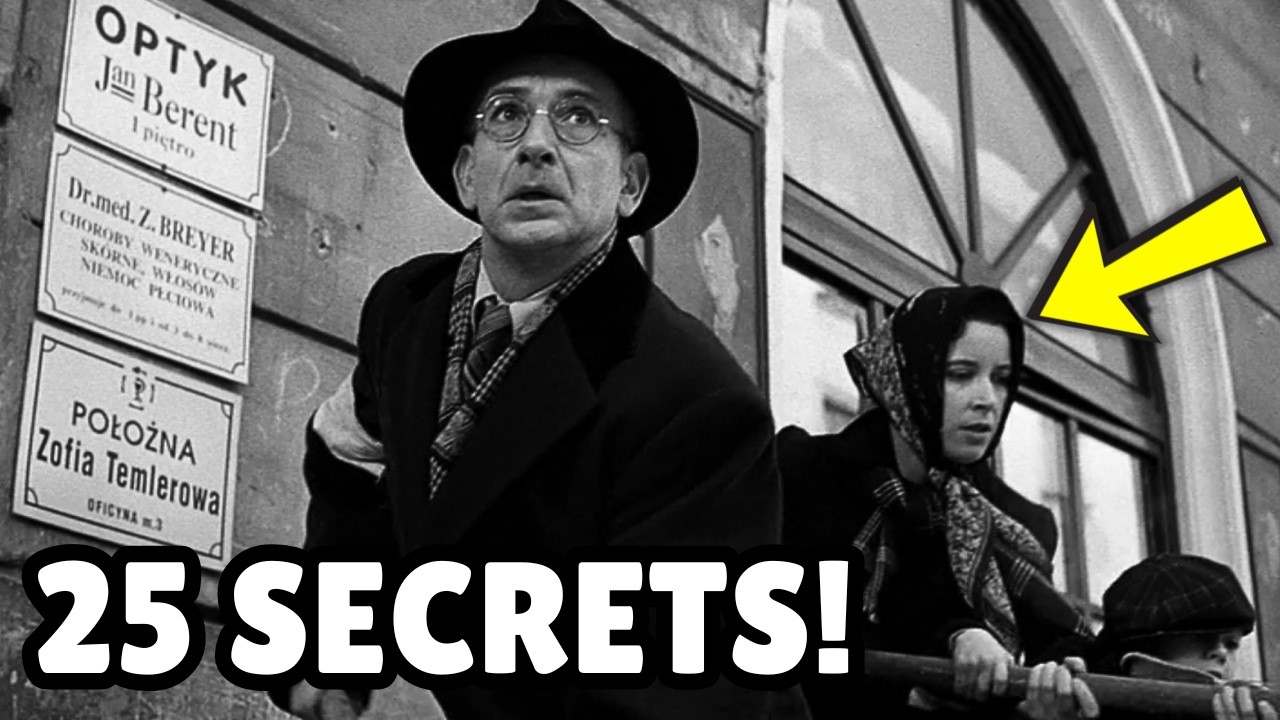
As Holocaust denial gained disturbing traction in public discourse during the late 1980s and early 1990s, the moral weight became impossible to ignore. Spielberg later described arriving on the Krakow set as one of the most overwhelming experiences of his career. Universal Pictures moved to secure the rights to the novel shortly after its 1982 publication. An older claim connected to MGM had to be resolved, the result of a shelved 1960s attempt to bring the Schindler story to the screen.
That earlier project never moved forward, but the legal threat it left behind had to be untangled before Universal could fully proceed. In the spring of 1993, Spielberg was directing two wildly different productions almost simultaneously. Schindler’s List was shooting in Poland while Jurassic Park was deep in post-production in the United States. Using satellite communication, he reviewed visual effects footage for Jurassic Park between shooting days in Poland, sending notes to his team in California from a set that could hardly have felt more different.
Spielberg later recalled that after particularly brutal shooting days in Poland, he could not bring himself to watch dinosaurs on a screen. The tonal whiplash was simply too great, and he has since spoken openly about Schindler’s List as the film that made him confront his own identity as a Jewish man. For this project, Spielberg deliberately threw away his usual meticulous preparation and storyboards. He felt that his standard approach would create distance between the camera and the reality he was trying to capture.
Instead, he gave cinematographer Janusz Kaminski the freedom to move fluidly, often shooting handheld and finding angles instinctively. The rawness came from discipline and restraint. Spielberg resisted the instinct to compose beautiful images or let drama build to grand visual crescendos. He wanted the camera to behave like a witness, not a narrator.
Large sections of Krakow had survived the Second World War with their pre-war architecture largely intact. Production designer Allan Starski worked closely with the location team to identify streets, courtyards, and buildings that required minimal alteration. The Jewish Quarter of Kazimierz provided an extraordinary backdrop, its narrow lanes and aging facades needing little dressing to feel authentic to the early 1940s. The original Plaszow campsite on the outskirts of Krakow had been partially built over and reclaimed by nature.
The production team decided to build a full-scale replica of the camp on a nearby hillside. Construction drew heavily on historical records, photographs, and survivor testimonies to ensure accuracy in layout, materials, and atmosphere. Robin Williams, a close friend, took it upon himself to call Spielberg every week throughout the production. The calls were filled with improvised comedy and free-flowing humor, a deliberate effort to give Spielberg something to laugh about when the weight of the material threatened to become unbearable.
Spielberg has credited those calls as genuinely sustaining. Color was never seriously considered. From the earliest stages, the decision to shoot in black and white was central to Spielberg’s vision, not as a stylistic flourish but as a moral and artistic commitment. He believed that rendering this story in full color would risk making it visually seductive.
Black and white also connected the film to the visual grammar of history, since documentary footage and archival images from the era existed almost entirely in monochrome. Universal Pictures was not initially enthusiastic. Studio executives expressed concern that audiences in the early 1990s would resist a black and white drama of this length and subject matter. Spielberg held firm.
The production had one source of authenticity that couldn’t be found in any archive: producer Branko Lustig, who had survived both Auschwitz and Bergen-Belsen as a child. Lustig walked the sets and spoke quietly about what felt right and what didn’t. He later won the Academy Award for Best Picture alongside Spielberg, and his acceptance speech dedicated the award to his parents, who did not survive. The decision not to film inside Auschwitz wasn’t logistical.
It was moral. Spielberg and the production team concluded that using the actual site as a film set would be ethically indefensible. Instead, scenes referencing the camp were recreated at carefully constructed sets elsewhere. Liam Neeson was well regarded in theater but was not a household name in 1992.
That was precisely the point. Spielberg wanted someone the audience would meet fresh, someone they could watch become Schindler rather than simply recognize. Neeson brought a physical presence and emotional restraint that served the role remarkably well. The performance earned him an Academy Award nomination.
The ring presented to Schindler in the film was based on an actual gift presented to the real Oskar Schindler by the survivors he had protected. The inscription carries a line from the Talmud: “Whoever saves one life saves the world entire. ” What makes the scene devastating is Schindler’s recognition that he could have done more. The character of Itzhak Stern was constructed as a composite, drawing on the lives of several real people who worked alongside Schindler during the war.
Screenwriter Steven Zaillian made these decisions carefully, compressing without distorting. There was no single definitive list in history. Multiple versions were drawn up over time, with names added, removed, and renegotiated under extreme pressure. The process of getting a name onto the list involved Schindler’s persistence, strategic maneuvering, bribery, and the cooperation of administrators.
Ralph Fiennes gained significant weight for the role of Amon Goeth and studied historical footage and accounts. Survivors who saw the finished film reportedly described Fiennes’ portrayal as deeply accurate. The performance earned him an Academy Award nomination. Costume designer Anna B.
Sheppard worked closely with Kaminski to understand how fabrics and tones would register on monochrome film. Certain colors that appear visually distinct can photograph as nearly identical shades of gray, so every garment and surface had to be tested and adjusted. Spielberg provided Neeson with specific research materials to help shape the character’s outward manner and social presence. Neeson studied the way Schindler moved through rooms and used personal magnetism as a practical tool.
The final sequence of the film shifts registers in a way almost no other fiction film does. Real survivors of the Schindler transport appear on screen alongside the actors who portrayed them, each placing a stone on Schindler’s grave. Spielberg has spoken about the sequence as the moment the film stops being a film. The film opens with a Jewish family lighting Shabbat candles.
Spielberg conceived the opening as a threshold, a transition from the living present of Jewish tradition into the historical past. By opening with a moment of observance rather than persecution, the film insists that what was lost was a living world. John Williams told Spielberg directly that the film deserved a better composer, that he was not equal to the task. Spielberg’s response was characteristic: if Williams couldn’t do it, nobody could.
Williams chose Israeli violinist Itzhak Perlman to perform the solo violin melody that became the film’s emotional signature. The score won Williams his fifth Academy Award. The red coat in the film represents the moment of recognition that comes too late. Schindler watches the liquidation of the Krakow Ghetto from a hillside, and the child in red is the one figure his eye can follow.
The child was played by Oliwia Dąbrowska, who was just three years old during filming. On the night of February 23, 1997, NBC aired the film in its entirety, uncut, uninterrupted by commercials. Ford Motor Company agreed to sponsor the broadcast solely in exchange for brief acknowledgements at the beginning and end. The broadcast drew an estimated audience of 65 million viewers.
Educational outreach began almost immediately after release. The Spielberg Foundation worked with educational organizations to fund free screenings for students and teachers. Study guides were developed, and survivor speakers were paired with screenings where possible. The red coat scenes required some of the most technically demanding work in the production.
Isolating the red of the coat while converting everything else to monochrome required a laborious process of rotoscoping, hand tracing the shape of the coat frame by frame. In the years following the film’s release, Spielberg established the USC Shoah Foundation, dedicated to recording and preserving the testimony of Holocaust survivors. The archive now numbers over 55,000 testimonies in more than 40 languages.
What Spielberg built addresses something no film can fully accomplish on its own: the irreplaceable specificity of a human being describing their own experience in their own words.