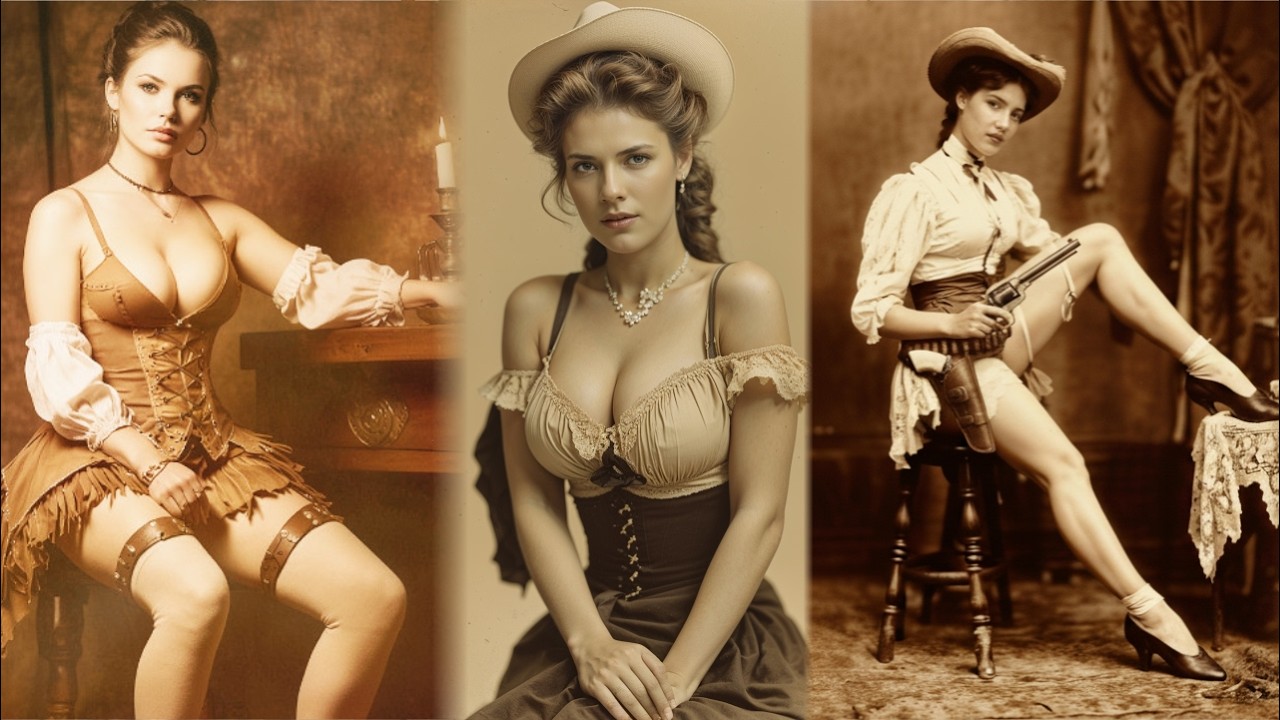
Hollywood built its version of the Wild West woman as decorative, vulnerable, and waiting to be rescued. The documented record tells a different story. The women below did not wait to be saved. They were the danger, and every one of them was real.
Mary Fields, known as Stagecoach Mary, was born into slavery in Tennessee around 1832. In her sixties, she arrived in Cascade, Montana, to compete against a group of men for the mail delivery contract. The test was simple: whoever hitched six horses to the stagecoach fastest got the job. Mary Fields won.
In 1895 she took over the route, becoming the second woman and the first Black woman to carry US mail on a star route. She stood nearly five foot eleven, smoked cigars, carried a revolver under her apron, and kept a shotgun on the seat. The route crossed mountains, knee-deep snow, and wolf country.
When a blizzard stranded the wagon, she put the mail bags on her back and walked all night. In about eight years, she never missed a delivery. The mayor made an exception just for her, and she was the only woman allowed to drink in the town saloon.
Pearl Hart was born in Canada. On May 30, 1899, in Arizona, a woman in men's clothes with short hair pointed a gun at a stagecoach near Cane Springs Canyon. With a partner named Joe Boot, she took about $450 from the passengers and gave each of them a dollar back so they could eat along the way.
It was one of the last recorded stagecoach robberies in the country. Police caught both of them within days. At the trial in Florence, the jury heard that her mother was sick and she needed the money for the fare. She was acquitted.
The judge refused to accept the verdict, had her arrested again for stealing the driver's revolver, and this time she was convicted. She received five years in Yuma. Joe Boot got thirty years, escaped from prison, and was never seen again.
Pearl served three years and was released in 1902 with reporters waiting outside. She understood the game. She posed with a rifle for photographers and became a stage attraction.
Lozen fought alongside Geronimo and disappeared from the treaties. Her name does not appear in any treaty signed with the United States, but it does appear in the US Army's own combat reports. She was the sister of Victorio, chief of the Chiricahua Apache.
Her brother said in front of everyone that she was a shield for his people. Within the tribe she was also respected as a spiritual leader. The warriors said she could tell which direction the enemy was coming from.
When the cavalry closed in, she was the one who crossed the Rio Grande with women and children escaping the troops. After Victorio was killed in 1880, Lozen stayed with Geronimo until the 1886 surrender at Skeleton Canyon.
The end came far from the desert. Taken as a prisoner of war to Alabama, she died of tuberculosis around 1889 at the Mount Vernon barracks. She was buried there in an unmarked grave.
Calamity Jane was born Martha Jane Canary in Missouri and became an orphan before she turned fifteen. To survive, she took whatever work she could find: cooking, handling mules, driving wagons. In the 1870s she showed up alongside army troops during campaigns against native people, dressed like a man with a rifle in hand.
She said she was a scout. The records show something simpler: she was there in the middle of the dust where almost no women were. In 1876 she arrived in Deadwood and met Wild Bill Hickok. Weeks later, he was shot in the back at a poker table.
Two years later, when smallpox hit the camp, Jane cared for the sick in an isolated cabin with no doctor and no training. She told her own life story with plenty of exaggeration, drank too much, and died poor in 1903. She is buried next to Hickok. She invented the legend, and everything else was true.
Big Nose Kate was born Mary Katherine Horony, a Hungarian woman who went by Kate Fisher in Texas. In 1877 in Fort Griffin, Doc Holliday killed a man in a poker fight. The town had no real jail, so they locked him in a hotel room with a guard at the door while a crowd gathered in the street to hang him before sunrise.
Kate did not look for a lawyer or a sheriff. She set fire to a stable out back. When everyone ran to put out the flames, she entered the hotel with two pistols, pointed one at the guard, and handed the other to Doc. The two slipped out the back and rode all night to Dodge City.
No other woman in the Wild West has a rescue like that on record, and the local sheriff never wanted to comment on the case. Kate and Doc fought, split up, and got back together for years. He died in 1887. She buried him, moved on with her life, and did not die until 1940 in Arizona, fifty-three years after him.
Belle Starr, the queen of the bandits, was worth more for her brains than her gun. Her name was Myra Maybelle Shirley, born in Missouri in 1848. In Indian Territory, now Oklahoma, she did not make a living trading gunfire. She made a living organizing.
She hid fugitives on her property, planned escape routes, knew who was after whom, and charged for it. Armed men were everywhere in that region, but people who knew how to plan were rare. In 1883 she was tried in Judge Isaac Parker's federal court in Fort Smith for horse theft and got nine months in Detroit.
She served her sentence and went back to the same place doing the same thing. On February 3, 1889, while riding home, she was shot in the back with a shotgun. She died two days before her forty-first birthday. No one was ever convicted, and the strongest suspect was her own son. After her death she became a legend in cheap newsstand magazines. While she was alive, she already was.
Charley Parkhurst drove stagecoaches as a man for thirty years and voted fifty-two years before the Nineteenth Amendment. In Gold Rush California, anyone who needed to cross the mountains with a strongbox full of gold wanted one name holding the reins. Short, strong, wearing an eye patch after being kicked by a horse, with a cigar in his mouth and a flannel shirt, he faced down highwaymen and never lost a passenger.
The owners of the California Stage Company trusted him completely. In October 1867, Charley registered to vote in Soquel, Santa Cruz County. The following year, during the presidential election, his name was right there on the list, and no one asked any questions.
Charley died in December 1879 in a cabin near Watsonville. When his friends went to prepare the body, they discovered that the man who had shared whiskey and the road with them for decades had been born Charlotte Parkhurst in New Hampshire. The vote had already been counted eleven years earlier.
Laura Bullion was the only woman convicted as an official member of the Hole in the Wall Gang. In November 1901, St. Louis police arrested a woman carrying a suitcase full of banknotes. It was Laura Bullion, partner of Ben Kilpatrick, the tall Texan. The money came from the Great Northern train robbery in Wagner, Montana, carried out by Butch Cassidy's Wild Bunch.
She was sentenced to five years and served about three and a half. When she got out, she simply disappeared. She changed her name to Frieda Lincoln, moved to Memphis, and spent decades sewing curtains and dresses. To her neighbors she was just a quiet widow who paid her bills on time.
She died in 1961 at age eighty-five, the last documented surviving member of the Wild Bunch. She never gave an interview, never wrote a book, and never told anyone anything. Silence was what kept her alive and free.
Rose of Cimarron was fifteen when she crossed a gunfight to help her outlaw boyfriend. On September 1, 1893, in Ingalls, Oklahoma, federal marshals surrounded the Doolin-Dalton gang on a Saturday morning. The gunfight lasted for hours and left three marshals dead in the street.
In the middle of it all, according to the story that stuck, a girl named Rose Dunn carried a rifle and ammunition out to George "Bittercreek" Newcomb, who was wounded and cornered. She was fifteen years old. What almost no one talks about came next.
In 1895, Rose's own brothers killed Newcomb to collect the government reward. Rose was never charged, and no marshal was killed by one of her bullets. In 1897 she married Charles Noble, a businessman and well-known figure in the area, and spent the rest of her life away from guns.
She died in 1955 at age seventy-six without a criminal record. Historians still debate whether she was actually on that street. The nickname Rose of Cimarron stayed with her until the end.
Flora Quick was the "Tom King" of Oklahoma Territory. In the 1890s, sheriffs were hunting a horse thief named Tom King. Thin, quiet, with sunburned skin, no one suspected that Tom King was Flora Quick, a young woman from Missouri.
Flora was orphaned at fifteen and inherited land and money. She married Ora Mundis, who blew through all of it and disappeared. Left with nothing, she cut her hair, dressed like a man, and started taking horses tied up outside stores in Guthrie. She changed the brands and resold them.
She was arrested more than once and escaped. One time, she sawed through the bars and dug through the brick wall of the Oklahoma City jail. Her disguise fell apart in an ordinary way. Sheriff McCleary looked at the suspect, told him to take off his hat, and understood right away.

In 1894 she was convicted of horse theft and got out without spending a single day behind bars. The court did not know what to do with a woman who had fooled the entire territory.
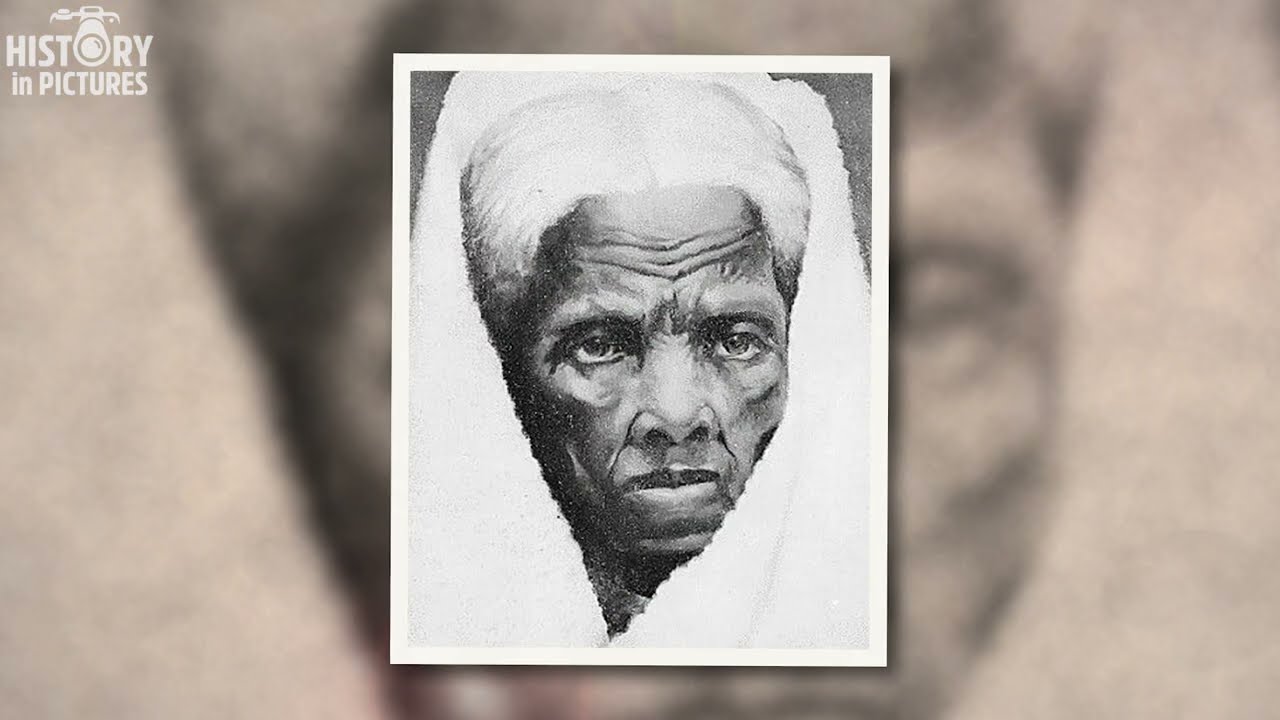
Harriet Tubman was born into slavery in Maryland around 1822 under the name Araminta Ross. When she was still a girl, an overseer struck her in the head, and she lived with pain and fainting spells for the rest of her life. In 1849 she escaped alone to Philadelphia.
She could have stayed. She went back thirteen times. Between 1850 and 1860, she led about seventy people out of slavery through the Underground Railroad. She traveled at night during the winter when fewer people were on the roads.
She carried a revolver and had one rule: once someone joined the group, they could not turn back halfway. A man who went back could give away the entire route. She never had to fire it. During the Civil War, she served the Union Army as a nurse, scout, and spy.
In June 1863, she guided three steamboats along the Combahee River in South Carolina, steering around the mines. More than seven hundred people were freed that night. She was the first woman to lead an armed operation in that war. She died free in 1913 in Auburn, New York.
Mary Ellen Pleasant cooked and did laundry for San Francisco's wealthy families, and no one imagined where her money was going. She arrived in California in 1852 during the Gold Rush. While working in the homes and boarding houses of the city's businessmen, she listened to conversations about business deals and invested alongside them.
Within a few years she owned laundries, real estate, and mining stocks. In 1858 she gave about $30,000 to John Brown, the abolitionist who was planning to seize the federal arsenal at Harpers Ferry. The raid failed the following year, and Brown was hanged. In his pocket was a note signed only with initials. The authorities never found out who it belonged to.
In 1866 she was thrown off a streetcar for being Black. She sued the company, took the case all the way to the California Supreme Court, and won. The ruling ended segregation on San Francisco's public transportation. She died in 1904. She asked for a single sentence to be engraved on her tombstone: she was a friend of John Brown.
Mother Jones was the woman the US government called the most dangerous woman in the country. In 1867, a yellow fever epidemic in Memphis killed Mary Harris Jones' husband and four children within a few weeks. Four years later, the Great Chicago Fire destroyed the dressmaking shop she had opened to start over. That was when her story truly began.
Mary became a labor organizer. She went from mine to mine, slept in miners' shacks, and called the workers "my boys." They called her Mother Jones. A prosecutor introduced her to a jury as the most dangerous woman in America, and she loved the nickname.
In 1903 she gathered children who had been maimed by textile factory machines and marched a hundred miles with them to President Theodore Roosevelt's summer home. He refused to meet with her, but the newspapers covered the whole story. Ten years later in West Virginia, a military court sentenced her to twenty years in prison. She kept organizing strikes until she was ninety-three.
Gregoria Manshaka took up arms against the Texas Rangers. In South Texas after 1848, having the deed to your land did not mean much. Mexican families who had lived there since before the United States even existed began watching their ranches get transferred into strangers' names. All it took was a poorly translated document, a forged signature, or a lawyer in a hurry.
When the owner resisted, the second part came: the Texas Rangers with an eviction order in hand. That was when Gregoria Manshaka did what almost no one else did. Instead of leaving, she organized the neighbors. Armed men and women stood at the entrance to the property waiting for the dust from the horses to appear on the horizon.
Texas court records preserve her name as the leader of a group that refused to accept the authorities' power. She was never charged, and no state prosecutor ever moved the case forward. Even so, the land was lost.
Sarah Bowman was known as the Great Western. In May 1846, the US Army was surrounded at Fort Texas on the Mexican border and spent seven days under bombardment. In the middle of it all, a cook named Sarah Bowman kept serving coffee and food to the soldiers. One bullet went through her hat and another punched through the bread tray she was carrying. She did not stop.
Sarah was over six feet tall. The soldiers nicknamed her the Great Western after the largest steamship of the time. She also carried wounded men out of the line of fire and, according to reports, knew how to use a rifle.
After the war ended, she headed to the Southwest and opened hotels and boarding houses in El Paso and later near Fort Yuma. Some of those places also operated as brothels. She died in 1866 after being bitten by a spider. The army buried her with military honors, something rare for a civilian. There is no record of anyone ever claiming they beat her in a fight.
Lola Montez was born in Ireland as Eliza Gilbert, but the world knew her as Lola Montez. In her twenties she became the mistress of King Ludwig I of Bavaria. He gave her the title of Countess. She began weighing in on politics, and in 1848 the unrest in the streets became so intense that the king lost his throne. A dancer had brought down a government.
In 1853 she arrived in California in the middle of the Gold Rush. She moved to Grass Valley with a pet bear tied up in the backyard. On stage she performed the spider dance, shaking her skirts while looking for rubber spiders. Half the audience thought it was scandalous. The other half paid to see it again.
No one in the camp had ever seen anything like it. She decided who entered her home and when. When Henry Shipley, editor of the local newspaper, wrote that the act was indecent, Lola went to the newsroom with a whip in her hand and demanded an explanation in front of everyone. In Grass Valley, it became clear who was in charge.
Madam Mustache was Eleonore Dumont. In 1854, a Frenchwoman stepped off a stagecoach in Nevada City, California, with $1,000 in her pocket. Eleonore Dumont opened the town's first respectable gambling house. No swearing, no drunks at the table, and she dealt the blackjack games herself. Miners lined up to lose money to her. Before long she opened a second place.
Then came the downfall. She bought a cattle ranch near Carson City and married a man named Jack McKnight. He sold the herd, disappeared with the money, and left the debts in her name. They say she went after him. McKnight turned up dead on the road, shot with a shotgun. No one was ever charged.
She went back to dealing cards and spent twenty years traveling across the West from Montana to Deadwood. As she got older, the dark hair on her upper lip earned her the nickname Madam Mustache. In September 1879, she was found dead on a road near Bodie, California. Morphine overdose. The coroner ruled it a suicide.
Cynthia Ann Parker was nine years old in May 1836 when a group of Comanches arrived at the Parker family's fort in Texas. When the dust settled, the girl disappeared over the horizon. Her uncle, James Parker, spent years searching the plains for her. He never found her.
But the girl was not suffering. She became Naduah, learned the language, married Peta Nocona, a respected leader, and had three children. One of them, Quanah Parker, would become the last great chief of the Comanches, and no one knew his mother was white.
Twenty-four years later, the Texas Rangers attacked a camp on the Pease River. They saw a blue-eyed woman and thought they were rescuing someone. They took her back to her white family. She did not want to go. She spent the rest of her life trying to return. She ran away more than once. She refused to speak English. When Topsannah, her young daughter, died from an illness, she stopped eating. She died in 1870, far from the only world she recognized as her own.
Cattle Annie was Anna McDoulett, fifteen years old, with a horse and a revolver, serving as the eyes and ears of the Doolin-Dalton gang. Imagine a fifteen-year-old girl knowing more about the federal marshal's movements than the outlaws themselves. That was how Anna McDoulett worked in Oklahoma Territory in the early 1890s.
She and her friend Jenny Stephens rode around small towns, listened to conversations in bars and general stores, and carried the information back to Bill Doolin's gang. They also delivered supplies and messages. Without them, many ambushes would have succeeded.
The tables turned in 1895. Marshals Bill Tilghman and Steve Burke went after the two of them. A horseback chase followed, and Annie did not give up easily. She fought to the very end. Tilghman later said that subduing that girl was harder than arresting a grown outlaw.
She was sent to a reform school in Massachusetts. After she got out, she married, lived an ordinary life, and did not die until 1978. No one around her knew about her past.
Mary Elizabeth Lease was the woman Kansas tried to silence. In 1890, she would climb onto a wooden crate at cattle fairs and speak for two hours without a single note in her hand. Farmers buried in debt would leave their plows to listen. The line that became tied to her, "Raise less corn and more hell," was something she denied saying for the rest of her life. But that was exactly the message.
Lease became a lawyer in Kansas in 1885 when almost no women could. During that campaign year, she gave more than 150 speeches across the state. The result showed up at the ballot box. The People's Party took control of the State House from the Republicans. The press started calling her Mary Yellin, the Mary who yelled. She embraced the nickname.
When she began attacking her own allies, Governor Lewelling tried to remove her from the public office she held. Lease went to court and got it back.
Twenty women, and not one of them needed to be saved. And maybe that is why Hollywood never told these stories.