Jacqueline Lee Bouvier was born on July 28, 1929, into a wealthy New York family, but her early life unfolded inside a deeply troubled marriage. Her father, John Vernou Bouvier III, known as Black Jack, was a stockbroker who drank heavily, gambled, and carried on numerous affairs. Her mother, Janet Lee, was a practical woman who demanded strict social order and financial security, and she would not tolerate her husband's public misbehavior.
By 1936 the marriage had collapsed. Janet wanted a divorce on her own terms, which required hard evidence of infidelity. She hired a Scandinavian woman to seduce her husband, engineering a trap to obtain the proof she needed. The divorce that followed was widely publicized and bitter.
At eleven years old, Jackie responded to her family's breakup with total silence. She showed no emotion and withdrew into herself, learning immediately that displaying feelings made her vulnerable. She spent her time reading and riding horses. Equestrianism became her primary way of coping, demanding physical control, strict discipline, and a face emptied of expression whether she won a medal or fell from the horse. She learned to control the animal, a skill that carried over into controlling her public image.
In 1942 her mother made a strategic move, marrying Hugh Dudley Auchincloss Jr., heir to a Standard Oil fortune. The marriage provided enormous financial stability. Janet moved Jackie and her younger sister Caroline Lee to the vast Auchincloss estates, Merrywood in Virginia and Hammersmith Farm in Rhode Island. The girls were forced to blend in with his four children from previous marriages. Jackie rejected the new arrangement. At thirteen, she refused to attend her mother's wedding. She moved onto the property and accepted the financial advantages, but kept a severe emotional distance from her stepfather and her mother's new life.
Despite his absence, Black Jack remained the dominant psychological force in Jackie's life. He manipulated both daughters but clearly favored Jackie, who resembled him with her dark features. He constantly told her she was the most beautiful daughter a man could have, and made sure her sister Lee heard it. This blatant favoritism created a permanent rift between the sisters. Lee, three and a half years younger, was forced to compete for the smallest attention. They fought constantly over money, acceptance, and men, a rivalry their father engineered.
The hostility became public in August 1947 at Jackie's debutante ball in Newport, an event meant to introduce her to society and cement her standing. Lee responded to the spotlight on her sister by attending in a strapless pink dress studded with rhinestones. It was a gown designed for an older woman, worn specifically to draw photographers and guests away from Jackie. Jackie publicly ignored the provocation, keeping her polished composure, but the event established a pattern of sabotage that would define their relationship for the rest of their lives.
Jackie was highly educated. She attended Vassar College, spent a year in Paris at the Sorbonne, and finished her studies at George Washington University. She was intelligent, but she understood that men in her social circle saw outspoken women as a threat. She learned to hide her intelligence behind a soft, gentle voice and passive behavior.
In 1951 she entered a Vogue magazine contest before a Paris fashion show. She competed against hundreds of women and won a yearlong junior editor position split between Paris and New York, a direct path to an independent career. She resigned on her first day. Her mother convinced her that accepting a demanding job, especially one that would take her to Paris, would destroy her chances of finding a wealthy husband. Jackie chose social security over an editorial job and left the magazine immediately.
She did not stay idle. She used her connections to get a job at the Washington Times-Herald as a photographer. The work required roaming the streets of Washington, D.C., talking to strangers and politicians, taking their pictures, and asking them direct questions about politics, money, and relationships. She interviewed Richard Nixon and covered the coronation of Queen Elizabeth II. The job taught her how to handle powerful figures, how to ask direct questions, and how to work in journalism.
During this period, Jacqueline Bouvier became engaged to John Husted, a Wall Street stockbroker. He was the man her mother hoped she would marry: respectable, steadily employed, and socially acceptable. But Jacqueline broke the engagement after three months. She looked at Husted's income, his expected career, and his personality and decided he was entirely unsuitable. She described him bluntly as immature and boring. She realized she did not want a quiet suburban life with an ordinary broker. She aspired to power and was willing to wait until she found a man who could offer her a wider platform.
In May 1952, Jacqueline Bouvier attended a small dinner party in Georgetown hosted by journalist Charles Bartlett. Bartlett had a specific goal: to introduce Jacqueline to John F. Kennedy, the young, wealthy, and intensely ambitious Democratic congressman from Massachusetts who was preparing to run for the Senate. There was no romance, no sudden spark, no love at first sight. Jackie approached the introduction with the same cold, analytical eye she applied to the politicians she interviewed for her column. Kennedy was charming, but Jackie was not impressed. Later that night she wrote a blunt assessment in her private diary, noting his thin body and slender legs. She saw the truth of him: a man relentlessly focused on his own rise, accustomed to getting whatever he wanted through wealth and force of personality.
When John Kennedy finally proposed, Jackie did not agree immediately. She made him wait a full month. She packed her bags, traveled to London to cover the coronation of Queen Elizabeth II for the Washington Times-Herald, and deliberately left him waiting for her answer. She wanted to establish her independence before agreeing to merge her life with a man who clearly expected women to revolve around him.
The marriage was, at its core, a high-stakes business merger. John Kennedy was not the architect of the alliance; his father, Joseph P. Kennedy Sr., was. Joe Sr. was a self-made man of enormous wealth who aspired to major political success for his sons. But he understood his family had a problem. The American establishment viewed the Kennedys as wealthy Catholics of recent Irish descent, loud, fiercely competitive, and ruthless in politics. To reach the White House, Joe Sr. knew his son needed a stabilizing force. He needed a woman with old social pedigree, elite education, and impeccable aristocratic style. Jackie Bouvier, with her French family name, refined schooling, and Newport background, was the ideal political choice.
Jackie's mother, Janet Lee, approved the marriage for entirely different reasons. She saw the Kennedy fortune as an impenetrable financial fortress for her daughter. Both families viewed the marriage as a deal serving their interests. The timing of the engagement also carried the bitterness of sibling rivalry. In April 1953, Jackie's younger sister Lee married Michael Canfield, heir to a publishing house. Lee beat Jackie to the altar, securing a wealthy husband and entering the spotlight. Two months later, in June 1953, Jackie formally announced her engagement to the newly elected Senator Kennedy.
The wedding took place on September 12, 1953, in Newport, Rhode Island. It was not an intimate celebration for a young couple but a massive, tightly organized political convention. Joseph Kennedy Sr. controlled the guest list, inviting prominent politicians, media magnates, and Hollywood elite. St. Mary's Church packed in more than 700 people, and 120 guests attended the lavish reception at Hammersmith Farm. The spotlight completely overshadowed Jackie at her own wedding; she was mere decoration in the Kennedys' calculated plan.
Jackie was shocked by the reality of the marriage immediately, and it was painfully familiar. John Kennedy was a carbon copy of her father, Black Jack Bouvier. Both men had an urgent need for affirmation from women, and both viewed women as mere conquests. John Kennedy loved the thrill of the chase, but once he won a woman he grew bored instantly. He engaged in repeated affairs, openly pursuing secretaries, actresses, and society women. He used these relationships to prove his masculinity. When Jackie responded coldly, he resented her and blamed her for his urges.
Jackie had been raised to look the other way at the indecent behavior of wealthy men. Her mother taught her that financial security came at the expense of personal dignity. But the sheer volume of John Kennedy's infidelity and its exposure pushed her to the edge of psychological collapse. The marriage deteriorated rapidly, and Jackie became isolated, depressed, and increasingly aware that she was trapped in an arrangement that required her total submission.
The situation grew so volatile that Joseph Kennedy Sr. had to intervene to protect his investment. Joe Sr. understood that divorce would instantly destroy his son's chances of reaching the presidency in the conservative political climate of the 1950s. According to an unpublished biography written by one of his close associates, Joe Sr. sat down with his daughter-in-law and offered her a harsh financial ultimatum. He offered Jackie one million dollars in cash simply to stay in the marriage and tolerate John Kennedy's repeated infidelity without causing a public scandal. Then he added a chilling condition: the amount would rise to 20 million dollars if John Kennedy transmitted a sexually transmitted disease to her. It was a stark confirmation of her reality. She was not a wife; she was an employee with a hazardous salary.
The psychological shock of her husband's infidelities was compounded by severe physical trauma. Jackie's attempts to bear a Kennedy heir failed repeatedly. She became pregnant five times during the marriage, but only two children survived. In 1955 she suffered a painful miscarriage. A year later, in August 1956, the cruelty of her marriage became public. Jackie was in her third trimester, resting in Newport. John Kennedy was attending the Democratic National Convention, where he narrowly lost the vice presidential nomination. Exhausted and frustrated by political defeat, Kennedy decided he needed a vacation. He boarded a yacht and sailed the Mediterranean with a group of friends and several young women.
While her husband celebrated off the coast of Europe, Jackie suffered severe bleeding. She was rushed to the hospital and underwent emergency surgery, delivering a stillborn daughter they named Arabella. Jackie woke from anesthesia without her child and without her husband. When Kennedy was finally reached by radio aboard the yacht and told that his wife had nearly died and his daughter was dead, he refused to cut his trip short. He planned to continue his vacation. John Kennedy only grasped the seriousness of the situation when a political friend told him bluntly that abandoning his grieving wife would be seen as despicable and would destroy his political career forever. Only then did he reluctantly board a plane back to the United States.
Arabella's stillbirth and Kennedy's abandonment nearly ended their marriage. Jackie was fully prepared to file for divorce, and the Kennedy family went on high alert, using every resource to stop her from leaving. Joe Sr. intervened with financial guarantees, while Kennedy's sisters were sent to soothe her, convincing her that divorce would destroy everything they had built. Jackie stayed, but the incident hardened her heart forever, and she had no more illusions about the man she had married.
By 1960, Kennedy officially launched his presidential campaign, and Jackie was pregnant again. Despite her intense hatred of crowds, her innate shyness, and her physical exhaustion, the Kennedy campaign considered her its strongest weapon. Whenever Jackie appeared at a rally, attendance doubled. Voters were fascinated by her youth, her poise, and her obvious lack of the usual political aggression. She used her broad education to outshine the older, more experienced politicians' wives. She addressed crowds fluently in French, Spanish, and Italian, securing crucial immigrant votes in key swing states. When her pregnancy forced her to stay in bed, she did not retreat. She picked up a pen and began writing a weekly newspaper column titled "Campaign Wife." The column was brilliant propaganda. She wrote charming, touching tales about her husband and their family life, painting an ideal picture of a happy, cohesive family that contrasted sharply with the bleak reality of their private lives.
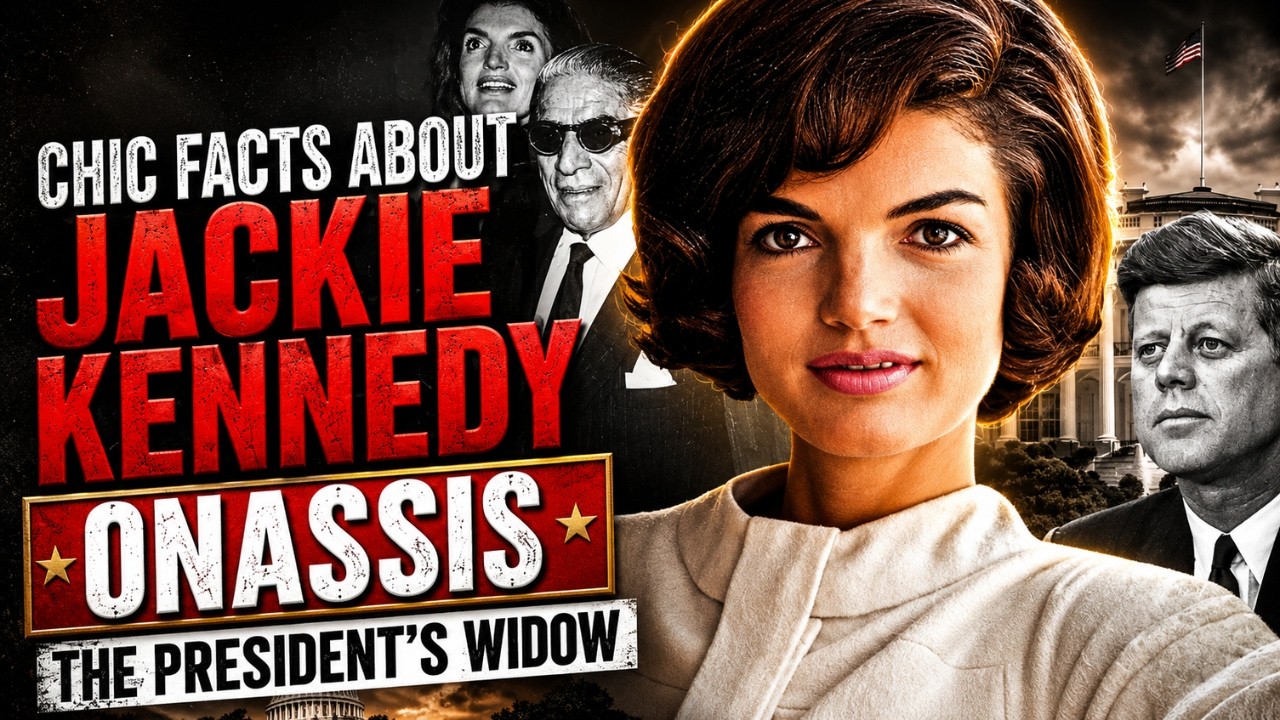
On November 8, 1960, John F. Kennedy narrowly won the presidential election, defeating Richard Nixon. Jackie had delivered exactly what Joe Kennedy Sr. paid for. She provided the visual proof of the ideal American family, helping John F. Kennedy win. Just two and a half weeks later, on November 25, 1960, the effects of the campaign began to show. Jackie went into early labor, and John F. Kennedy Jr. was born three weeks premature. The birth was a dangerous medical emergency, with the infant struggling to survive because his lungs were not fully developed. Doctors had to manually pump air into the newborn's lungs to keep him alive. While the country celebrated the dawn of a bright new political era, Jackie lay in a hospital bed, fighting for her son's life and preparing to enter the White House with a man she never fully trusted.
In January 1961, John F. Kennedy took office as the 35th President of the United States, and Jacqueline Kennedy became First Lady at just 31 years old. To the American people, the transfer of power looked like the dawn of a vibrant, flawless new era. The press quickly dubbed his administration "Camelot," a mythical kingdom of ideals, youth, and pure glamour. But Camelot was only a brilliantly manufactured illusion. The White House was not a fantasy castle but a high-stakes stage, and Jackie was its chief engineer.
When she moved into the presidential residence, Jackie was shocked by its condition. It looked like a gloomy, neglected hotel, furnished with cheap reproductions and used department store pieces. She realized immediately that the White House was the ultimate material embodiment of American power and needed to display undeniable cultural superiority, especially at the height of the Cold War. She did not merely redecorate; she launched a massive, rigorous, and highly organized historical restoration project. She formed a fine arts committee, pressured wealthy donors to return stolen or sold presidential artifacts, and researched museum archives. She treated the White House as a diplomatic weapon. In 1962 she hosted a televised tour of the restored mansion for CBS. Eighty million people watched. She won a special Emmy Award for the broadcast. She single-handedly transformed the role of First Lady from a silent hostess into an influential cultural force, ultimately helping lay the groundwork for the National Endowment for the Arts and the National Endowment for the Humanities.
The media was utterly captivated by her. During a heavily covered state visit to Paris in 1961, John Kennedy introduced himself to reporters as "the man who accompanied Jacqueline Kennedy to Paris." Time magazine officially dubbed her the First Lady of Fashion. Yet behind the perfect public relations strategy, the private truth was unfolding.
Tension between Jackie and her sister Lee Radziwill reached its peak. The great irony of Jackie's status as a global fashion icon was her heavy reliance on Lee's expertise. Lee, who lived in London and was immersed in high European society, served as Jackie's secret fashion coordinator. Lee coordinated with Hubert de Givenchy and selected the chic, modern designs that would define Jackie's look. Lee did the work, but Jackie received all the global admiration.
The resentment between the sisters intensified and turned into public humiliation during a heavily covered semi-official tour of India and Pakistan in 1962. Lee accompanied Jackie on the trip. Everywhere they went, massive crowds, estimated in the hundreds of thousands, gathered around their motorcade, but the crowds chanted only one name. They threw flowers only for Jackie. Lee was forced to sit in the background, a silent, marginalized figure in her sister's coronation. The humiliation was unbearable for Lee, and Jackie knew it. Jackie possessed a quiet vindictive streak and knew exactly how to punish her sister for past slights.
Later that year, Lee, in a desperate attempt to escape Jackie's shadow, tried to launch an acting career. She won the starring role in the play "A Story of Philadelphia" in Chicago. It was a defining moment for Lee's ego. Jackie deliberately and firmly refused to attend the premiere. She left her sister to face the biting theater critics alone. The message was clear: Jackie controlled the spotlight and would not share it with anyone.
Inside the White House, the Kennedys maintained an iron grip on their public image. Jackie appointed a dedicated press secretary, Pamela Turnure, to manage the media forcefully and silence any unfavorable news. This absolute control of the press was necessary because the reality of the Kennedys' daily lives descended into severe chemical dependency and reckless moral dissolution. The image of youthful vitality projected by the President and First Lady was a medical fabrication.
John Kennedy suffered from agonizing back pain and Addison's disease. Jackie was exhausted, dealing with the enormous pressures of her role and severe postpartum depression after John Jr.'s difficult birth, to maintain their grueling schedules. They turned to Dr. Max Jacobson, known in high society as "Dr. Feelgood." Jacobson did not practice traditional medicine; he gave highly addictive, powerful injections known as "special intravenous solutions." These shots were loaded with a terrifying mix of methamphetamine, animal hormones, steroids, human placenta, and high doses of vitamins. John Kennedy introduced Jackie to these treatments to help her overcome her depression and prepare for the grueling 1961 Paris summit.
The results were immediate. Methamphetamine provided a massive boost of artificial energy, intense focus, and a feeling of invincibility. It allowed them to project the enormous energy the public expected, but the side effects were catastrophic. Heavy reliance on amphetamines led to severe mood swings, delusions of grandeur, and manic episodes. The chemical addiction reached a terrifying peak in 1962. According to Secret Service details and insider accounts, John Kennedy suffered an acute psychotic reaction to one of Jacobson's injections, leading to an incident in which the President of the United States was seen running completely naked and agitated through the corridors of the Carlyle Hotel in New York. The administration panicked in secret. By the end of 1962, the Secret Service and the White House physician forced Jacobson to leave and barred him from treating the President. But the damage to their physical and psychological health was already done.
The drugs only fueled Kennedy's worst tendencies. His repeated infidelities accelerated, which Jackie expected to happen under the watch of the presidency. The White House, heavily guarded and isolated from the public, became his private playground. The affairs were not only political but deeply cruel. The harshest blow came from within her own family. According to writers Gore Vidal and Michael Canfield, Lee Radziwill's first husband, Lee publicly bragged about her emotional and physical relationship with John Kennedy before he was elected president. It is debated whether Jackie was fully aware of the details of this betrayal at the time, but she was fully aware of the dangerous nature of the relationship between her husband and her sister inside the White House.
Kennedy's behavior was brazen and reckless. In the summer of 1962, a 19-year-old college student named Mimi Alford arrived at the White House for an internship in the press office. Just four days after her arrival, Kennedy invited her to a private poolside party, took her on a tour of the house, and then led her to Jackie's bedroom. There, he took her virginity on the First Lady's bed. The relationship lasted 18 months. Kennedy did not treat Alford as an emotional partner but as a submissive victim. The encounters were deeply humiliating. On one occasion, Kennedy pressured Alford to use amyl nitrite, a popular nightclub drug known as "poppers" that causes sudden dizziness and muscle relaxation during their encounter. In another incident, Kennedy strongly urged her to perform oral sex on his close friend and aide, Dave Powers, while Kennedy watched.
Jackie was not oblivious. She knew exactly what was happening in the West Wing and the private quarters. Her defense mechanism was total compartmentalization and the use of cold sarcasm as a weapon. She refused to gratify her husband with a loud fight. Instead, she made clear to him that she saw everything. While passing the desk of White House secretary Priscilla Wear, another known mistress, Jackie turned to a French journalist and translated smoothly: "This is the girl who is supposed to be having an affair with my husband."
There was only one woman who truly frightened Jackie, and it was not because Kennedy loved her but because she was completely unpredictable. Marilyn Monroe was a major source of disruption. Monroe suffered from severe psychological disorder, took large doses of medication, and was utterly convinced the President would leave his wife for her. Monroe's delusion peaked when she managed to bypass the White House switchboard and call the private residence directly. Jackie answered the phone. Monroe told the First Lady rudely that John Kennedy had promised to marry her and that she would move in with him. Jackie did not scream. She did not hang up. She used the precise, terrifying coldness she had learned from her mother. "Marilyn, that's wonderful," Jackie replied calmly. "You'll marry Jack and move into the White House and take on the responsibilities of the First Lady, and I'll leave and you'll face all the problems." It was a psychological knockout blow. Monroe did not know how to respond to a woman who did not view the presidency as a love story but as a grueling job at a large corporation.
Despite the toxicity of their relationship, the outward appearance held together until tragedy struck again. In August 1963, Jackie was resting at Otis Air Force Base in Massachusetts. She went into early labor five weeks before her due date and gave birth to a son named Patrick Bouvier Kennedy. The baby suffered from hyaline membrane disease, an acute respiratory distress syndrome common among premature infants. Over 39 agonizing hours, the American public followed the doctors' strenuous efforts to save the child, but to no avail. Patrick died. The loss shattered Jackie completely. The hard armor she had worn since she was eleven, when her parents divorced, collapsed. She fell into a severe, paralyzing depression. She could no longer do anything and could not smile for the cameras. She was a mother mourning her third child, trapped in a marriage marked by substance abuse and constant infidelity.
In a desperate attempt to get her out of the White House and away from the suffocating grief, her sister Lee intervened and suggested she take a vacation to recover. The invitation came from Lee's current lover, the fabulously wealthy Greek shipping magnate Aristotle Onassis. Onassis offered Jackie his luxurious private yacht, the Christina, for a four-week cruise in the Aegean Sea. Jackie accepted.
The political situation was disastrous. The press harshly criticized the First Lady for taking a lavish vacation with a foreign billionaire while the American people mourned her newborn. But Jackie no longer cared about appearances. She felt suffocated. The trip on Onassis's yacht was a pivotal moment. The previous summer, while Jackie was seven months pregnant with Patrick, Lee had taken on the duties of First Lady and accompanied John Kennedy on a diplomatic trip to Europe. Now Jackie was boarding the yacht of the man her sister intended to marry. The tangled web of loyalty, jealousy, and power between the Bouvier sisters and the Kennedy machine was collapsing irreparably.
Jackie returned from the yacht in mid-November 1963. She had rested a little but was still extremely fragile. She agreed to accompany her husband on a vital political trip to Texas to help heal the Democratic Party's rift before the upcoming election. She packed her bags, including a striking pink Chanel suit, completely unaware that the illusion of Camelot was about to be violently and irrevocably shattered in the streets of Dallas.
The political landscape in late 1963 was volatile. John F. Kennedy was looking ahead to the 1964 election but faced a major problem in the South. The Democratic Party in Texas was deeply divided between its liberal and conservative wings. To win a second term, Kennedy had to unite them, and he knew exactly what weapon he would use. His wife, Jacqueline Kennedy, had barely recovered from the loss of their infant son, Patrick, just three months earlier. She was emotionally fragile and physically exhausted. Yet she understood the utilitarian nature of her position. She agreed to accompany her husband on a two-day tour of Texas. It would be her first extended domestic political trip since the 1960 campaign.
On the morning of November 22, 1963, in Fort Worth, Texas, the strategy was working perfectly. The crowds were wildly enthusiastic. John Kennedy was delighted and turned to his aides praising Jackie's ability to draw everyone's attention. She wore a bright pink suit with a dark blue collar and a matching pillbox hat. Although history remembers it as a Chanel design, it was actually a replica by the New York fashion house Chez Ninon. It was a deliberate choice to avoid political criticism for wearing designs by a foreign designer. It served as her protective armor.
They traveled a short distance to Dallas and landed at Love Field. More than 200,000 people lined the motorcade route into downtown. The glass roof of the presidential Lincoln Continental limousine was removed to allow the President and First Lady to interact directly with the public. It was a beautiful autumn day, unsettlingly warm. As the motorcade turned slowly past the Texas School Book Depository and entered Dealey Plaza, the illusion of American invincibility vanished within seconds.
The first shot sounded like a motorcycle backfire. Then came the second and third. When the final bullet struck the President's head, the scene was not cinematic. It was a catastrophic explosion of blood. Bone and brain tissue splattered across the interior of the car and drenched the First Lady. In that moment, Jackie Kennedy did not act out of bravery or calculated heroism. She acted out of uncontrollable primal shock. Driven by instinct, she rose from her seat and crawled onto the flat rear trunk of the moving, swaying car. She was not trying to escape. She was reaching for a piece of her husband's skull that had scattered onto the metal. Secret Service agent Clint Hill ran to the back of the car, grabbed her, and forced her back into her seat as the car sped toward Parkland Memorial Hospital. Later, Jackie could not remember the moment she crawled onto the trunk. Her brain had completely blocked it out to preserve her sanity.

At Parkland Hospital, chaos reigned. Doctors and nurses rushed John Kennedy into Trauma Room 1. Protocol called for keeping family members out of the resuscitation room, but Jackie stood firm. When medical staff tried to force her out, she looked directly at the President's personal physician, Dr. George Burkley, and said a sentence with a terrifying tone of authority: "I want to be there when he dies." They let her stay. She stood quietly in the corner of the blood-stained room, watching doctors perform desperate, futile compressions on her husband's chest and perform a tracheotomy. She saw the extent of the injury. She knew he was gone long before his death was officially announced at 10 p.m.
The events immediately following the assassination were a masterclass in psychological warfare and public image manipulation. Just hours after watching her husband's head explode, Jackie was taken aboard Air Force One to return to Washington. The political machine was already moving. Vice President Lyndon Johnson had to be sworn in immediately to ensure government continuity, and he knew he needed Jackie beside him to legitimize the chaotic transfer of power. Jackie was covered in her husband's blood. Her face was smeared with it. Her pink suit was stained dark red down to the skirt. Her stockings were soaked with blood. Lady Bird Johnson, the new First Lady, approached her gently and offered to find her a clean dress to change into before the swearing-in photo. The aides around them desperately wanted to hide the blood from view. Jackie refused. She stood, her face completely expressionless, and delivered a sentence that would echo through American history. She said, "No. Let them see what they've done." She stood beside Lyndon Johnson as he took the oath of office, making sure the camera captured the bloodstains on her sleeve. She refused to wash her face until she returned to the White House. She used her shock, turning her blood-stained clothes into permanent, irrefutable evidence of the political violence that killed her husband.
She did not let the ruling establishment look away from the horrific scene. Returning to Washington, the 34-year-old widow immediately took complete control of her husband's legacy. She would not let politicians define how John Kennedy would be memorialized. Still in shock, unable to sleep, she stayed up late reading history books. She designed Kennedy's funeral modeled on the official funeral of Abraham Lincoln. She demanded a closed casket, refusing to let the public see the destruction. She requested a riderless horse, with boots placed backward in the stirrups. She determined the motorcade route. She ordered the family to walk behind the coffin instead of riding in armored cars, showing the world an imperial image of fearlessness. She taught her three-year-old son, John Jr., how to salute his father's coffin on his birthday. With iron will, she arranged a majestic, flawless farewell and united a terrified nation.
The world watched in awe as the First Widow stood covered in a black veil, a steadfast pillar of resilience. But the smartest, most cunning move of her life happened exactly one week after the assassination. Jackie realized that a presidency cut short at a thousand days could easily be viewed by history as a failure, a brief, incomplete administration plagued by the Bay of Pigs disaster and escalating tensions in Vietnam. She was determined to rewrite that narrative. On November 29, she summoned Theodore H. White, the esteemed political journalist for Life magazine, to the Kennedy compound in Hyannis Port. She set the terms of the interview. She spoke for hours in her quiet, halting voice, likening the John F. Kennedy administration to the legendary court of King Arthur. She told White, "Don't forget that there was once a brief shining moment known as Camelot. There will be great presidents again, but there will never be another Camelot." White published the article exactly as she framed it. With that single interview, Jackie Kennedy cemented the eternal, flawless Kennedy legend. She blinded historians. She erased the drug use, the marital infidelity, and the political mistakes, replacing them with a permanent, glowing myth.
Once the myth was established, the public stopped paying attention. That was when Jackie finally collapsed. Behind the doors of her new apartment at 1045 Fifth Avenue in New York City, the iron widow fell apart. Her distance from Washington did not erase the ghosts of the past. The reality of 1964 and 1965 centered on severe, undiagnosed post-traumatic stress disorder. She became addicted to alcohol, suffered from exhausting insomnia, and wept uncontrollably when alone. Her grief was compounded by a deep, violent crisis of faith. Jackie had been raised a strict Catholic, but Dallas destroyed her belief in a merciful God. In her extreme despair, she began secret correspondence with Father Richard McSorley, a Jesuit priest. Her letters to him were blunt and violent, completely devoid of the polished elegance the public knew. She confessed her intense anger, questioning why a sniper's bullet struck a vibrant president while sparing a dictator. Most alarmingly, she repeatedly confessed to suicidal thoughts. She wrote that the only reason she did not kill herself to join Jack was the realization that it would destroy her children's lives.
In her darkest psychological moments, she turned to her family for support. What she received was a practical lesson in the cruelty of high society. Her mother, Janet Auchincloss, found Jackie's intense grief boring and socially inappropriate. American aristocrats did not dwell on pain; they buried it and moved on. Just eight months after the assassination, Janet looked at her severely depressed daughter and told her bluntly that she needed to get over it. There was no sympathy, only a demand for compliance. Jackie felt alienated from her mother and, unable to shatter her perfect public image, turned to isolation for comfort. She needed an anchor.
But her status as a prominent figure in American society made normal dating impossible. Any man seen with her would be relentlessly compared to the late President. She found a quiet, intensely private romantic relationship with John Carl Warnecke. Warnecke was a prominent architect, the man she had personally chosen to design the eternal flame at John Kennedy's grave in Arlington National Cemetery. Their relationship deepened through blueprints and grief. Warnecke was among the few who saw the troubled, broken woman behind the veil. They spent hours walking the empty grounds of Arlington at night, discussing the design while trying to move past her trauma. Their relationship deepened into a true, emotional love story. Warnecke wanted to marry her, but pressure from the Kennedy family and the public's dominance over her image formed an insurmountable barrier. Moreover, Warnecke suffered from massive financial debts. Jackie, who understood exactly how quickly money could vanish, knew she could not tie herself to financial instability, no matter how she felt about him. She quietly ended the romantic side of the relationship, though his devotion was so deep that he continued to send her a Valentine's card every year for the rest of his life.
She also received a serious marriage proposal from David Ormsby-Gore, Lord Harlech, the former British ambassador to the United States and a close friend of John Kennedy. They traveled together to Cambodia in 1967. Lord Harlech was brilliant and aristocratic and deeply in love with her. He offered her a dignified, secure life in the English countryside, but Jackie refused him. She wrote him a poignant letter explaining her refusal. She told him she loved him as a brother, but marrying him meant living in the shadow of the past, surrounded by the same people and the same memories of Jack. She needed to sever her connection to the Kennedy world entirely in order to survive.
By late 1967, a dark sense of foreboding began to consume her. The civil rights movement, Vietnam War protests, and escalating political violence were tearing the United States apart. Robert F. Kennedy, John F. Kennedy's brother, had become her closest confidant, her protector, and a surrogate father to her children. Their relationship was so close that it blurred the lines between family and emotional dependency. But as Robert Kennedy prepared to enter the 1968 presidential race, Jacqueline watched the crowds surging around him with an unsettling sense of repetition. She saw the same insecurity, the same intense admiration, the same terrifying danger that had killed her husband. The shock of Dallas was no longer just a memory; it became a living, terrifying threat. She began to realize that she and her children would not be safe as long as they carried the Kennedy name. She needed an impenetrable fortress, and she was preparing to make a deal with the devil to get it.
The year 1968 tore the United States apart and permanently severed Jacqueline Kennedy's remaining ties to the American political establishment. Since Dallas, her survival had depended heavily on her brother-in-law, Robert F. Kennedy. Robert Kennedy filled the void Jacqueline left, becoming her confidant, her protector, and a surrogate father to her two traumatized children, John and Caroline. Their relationship was close, forged in the furnace of shared grief. But when Robert Kennedy announced his presidential candidacy, Jackie watched the scene with growing horror. She saw the massive, chaotic crowds gathering around him. She recognized the same vulnerability that had killed her husband.
On June 5, 1968, inside the kitchen of the Ambassador Hotel in Los Angeles, her nightmare repeated itself. Bobby Kennedy was assassinated. When Robert Kennedy died, something essential in Jackie collapsed. Her composure, maintained for five years, evaporated, replaced by absolute cold terror. It was no longer a tragic coincidence; it had become a recurring pattern. She looked at her two young children and realized their name represented a target. She whispered to her inner circle: "If they're killing Kennedys, then my children are targets. I want to get out of this country." She no longer cared about protecting the Camelot myth; her focus was on physical survival. She needed an impenetrable fortress, an exit from the United States, and she knew exactly who could provide it.
Aristotle Onassis was a Greek shipping magnate, one of the richest men in the world. He embodied everything the Kennedys hated; he was short, crude, and ran his business empire with a pirate's mentality. John Kennedy despised him, and Robert Kennedy hated him even more, having declared before his death that Jackie would only marry Onassis over his dead body. But Onassis offered what the American government could no longer provide: a private, mobile empire. He owned airlines, islands, and a massive private yacht equipped with a highly trained security force. There was, however, a serious problem. Aristotle Onassis was the lover and fiancé of Jackie's younger sister, Lee Radziwill.
For years, Lee had suffered the shame of living in Jackie's shadow. Her relationship with Onassis was supposed to be her final victory. The Greek billionaire was her ticket to a life of obscene wealth and global influence that would rival her sister's status. Jackie knew this, and yet she accepted him. Her decision to marry Onassis was a stark example of ruthless pragmatism. It was not a love story but a cold, calculated deal. Jackie was buying a private army and a global refuge for her children. In return, Onassis got the perfect wife. He was buying the most famous, most admired woman in the world, confirming his ego on a global scale. But beneath the surface of this deal lay a hidden current of sibling revenge. By choosing Onassis, Jackie struck a fatal psychological blow against her sister. It was the culmination of a rivalry that began in their childhood. Jackie destroyed Lee's future completely, proving once and for all that she could take what she wanted and would.
On October 20, 1968, just four months after Bobby Kennedy's assassination, Jacqueline Kennedy, 39, married Aristotle Onassis, 62, on his heavily guarded private island, Skorpios. The global reaction was violent and immediate. The American people felt utterly betrayed. They had honored her as the virtuous, grieving widow of their late President. Seeing her marry a foreign billionaire much older than her, a man viewed as vulgar and corrupt, shattered the illusion she had carefully built. Headlines screamed around the world: "Jackie, how could you?" and "The end of Camelot." The Kennedy family was disgusted, viewing the marriage as an insult to Jack's memory. The Catholic Church publicly threatened to excommunicate her because Onassis was a divorced man whose first wife was still alive. Even her mother, Janet, horrified by the social ramifications, begged Jackie to cancel the wedding just hours before it took place. Jackie ignored everything completely. By marrying Onassis, she formally forfeited her right to American Secret Service protection, but she no longer needed it. She had successfully traded public admiration for private protection. She let the press scream. She was finally safe.
But the reality of the marriage was quickly exposed as a barren business deal. Before the wedding, lawyers drafted the terms of their union in an extremely detailed prenuptial agreement. The agreement was devoid of any romance. They were to keep separate bedrooms. Jackie was explicitly exempted from any obligation to bear his children. The financial terms revealed the true nature of the deal. Jackie was granted a personal allowance of $10,000 a month. She received an additional $10,000 designated for clothing. She was allocated $7,000 a month for medical and cosmetic expenses, and $5 for the care of each of her children.
Things quickly soured. Once the glow of the initial infatuation faded, Onassis realized his new wife would not play the role of the submissive, loving Greek wife. Jackie spent his money with terrifying efficiency, kept her own schedule, traveled extensively, and showed no interest in his business affairs or cultural background. She did not treat him as a husband but as a source of income and a personal bodyguard. Onassis, a man unaccustomed to being used, grew furious and began referring to her behind her back as a "witch." He retaliated in the only way he knew: public humiliation. He deliberately and openly resumed his long-standing affair with the legendary opera singer Maria Callas, making sure Jackie knew about it. But for Jackie, the harsh coping mechanism formed during her father's scandals remained firmly in place. Onassis's dalliances did not threaten her financial or physical security, so she regarded them with terrifying indifference.
This indifference enraged Onassis further. He decided to strike at her weakest point: the public image she so fiercely protected. In November 1972, Jackie was vacationing on the island of Skorpios. Believing she was completely safe on her husband's private island, she went to a secluded beach and lay sunbathing nude. She did not know that her husband had orchestrated a violation of her privacy. Frustrated by her coldness and seeking a bizarre form of revenge, Onassis personally alerted a team of paparazzi. He provided them with a boat and maps of the island and told them the time she would be alone on the beach. Armed with military telephoto lenses, the photographers took a series of explicit, highly intrusive photos of the former First Lady nude. Onassis allowed the photos to leak to the European press. But the greater humiliation came in August 1975, when American pornographer Larry Flynt bought the photos for $18,000. Flynt published them in an issue of Hustler magazine. The publication was a global scandal. The woman who had been a symbol of American elegance was displayed in a pornographic magazine. The psychological impact on her children was devastating. John Jr. and Caroline were severely bullied and harassed by their schoolmates.
Throughout this ordeal, Jackie maintained her composure. She issued no statement. She did not cry publicly. She endured the utmost public defamation without letting the world see her break. She had no idea that the man sleeping in the bedroom down the hall had orchestrated the entire attack.
By 1973, the Onassis empire began to crumble under the weight of real tragedy. Alexander Onassis, Aristotle's only son and the heir to his vast shipping fortune, was killed in a plane crash in Athens. The death destroyed Aristotle Onassis. He aged decades in weeks. His daughter, Christina Onassis, was also shattered, but her grief immediately turned into a weapon aimed directly at Jackie. Christina had hated Jackie from the moment her father married her. She viewed the American woman as a gold digger who had stolen her father's attention. But after Alexander's death, Christina's hatred turned into a dark, superstitious paranoia. She publicly and loudly blamed Jackie for the accident. Christina claimed Jackie had brought the Kennedy curse into their family, describing her as a jinx and a tragedy. She demanded her father divorce her immediately. Aristotle Onassis, burdened by grief and influenced by his daughter's manipulation, agreed and ordered his lawyers to secretly begin drafting divorce papers. He wanted to use the private investigator files he had gathered on Jackie's spending and movements to force her out with a meager settlement, but his body betrayed him before his lawyers could act.
In early 1975, Aristotle Onassis's health deteriorated rapidly. He was flown to a hospital in Paris suffering from acute respiratory failure caused by myasthenia gravis. When he died on March 15, 1975, Jackie was thousands of miles away in New York. The divorce had not been finalized, and she remained legally his wife. Christina Onassis rushed to seize the family fortune, blocking Jackie from accessing Onassis properties and preparing for a fierce legal battle, determined to deprive her hated stepmother of everything. But Christina underestimated her opponent. Jackie had survived Black Jack Bouvier, the Kennedy political machine, and the shock of Dallas. She would not be intimidated by days of mourning.
Jackie assembled a powerful legal team, launched a broad counterattack in Greek courts, and systematically thwarted Christina's attempts to exclude her. The legal battle was ugly, heavily covered by the media, and fought ruthlessly. But Jackie held the superior legal position. Realizing that a prolonged court fight would expose much of the family's dark financial secrets to the global press, Christina eventually relented. In a quiet court settlement, Jacqueline Bouvier Kennedy Onassis emerged from the collapse of her second marriage with a settlement of 26 million dollars. At 45, she was a widow for the second time. She had endured assassination, public humiliation, and vicious family conflicts. But as the ink dried on the Onassis settlement, a radical transformation occurred. For the first time in her life, she possessed vast, independent wealth unconnected to a husband's behavior or demands. She was completely free.
The 26 million dollar settlement from the Onassis estate was not merely wealth; it was a declaration of liberation. In the spring of 1975, Jacqueline Bouvier Kennedy Onassis returned to New York City. For the first time in her 46 years, she was completely free. She was no longer a tool in Black Jack Bouvier's hands, no longer a political weapon for the Kennedy family, and no longer a foreign trophy for the Greek billionaire. The psychological armor she had worn for decades, her quiet voice, her faint smile, and her calculated submission to powerful men, gradually dissolved. She retreated to her spacious 15-room apartment at 1045 Fifth Avenue overlooking Central Park. But unlike upper-class widows who secluded themselves in quiet charity work and casual relationships, Jackie made a radical change that stunned American public opinion. She decided to get a job in New York's elite circles.

A former First Lady entering the traditional job market was unthinkable. It was viewed as a bizarre diminishment of her status. But Jackie understood something others did not. True power lies not just in having money but in having a purpose no one can take away. In September 1975, she accepted a position as a consulting editor at Viking Press. Her salary was only 200 dollars a week. The publishing industry assumed her hiring was a cheap publicity stunt orchestrated by Viking's president, Thomas Guinzburg. They expected her to be a figurehead who appeared occasionally at lavish lunches. They vastly underestimated her work ethic. Jackie arrived at the office, sat at an ordinary desk, and began working. She pitched ideas, pursued hard-to-reach authors, and coordinated manuscripts with meticulous precision.
Her choice of this profession was no coincidence. Throughout her life, her narrative had been heavily manipulated by politicians, press officials, paparazzi, and hostile family members. She had been written about, analyzed, and consumed by the global public. Her work as an editor was a perfect psychological restoration. By working in publishing, she was finally in a different position. She was the one shaping narratives, controlling texts, and deciding which stories deserved to be told. Yet she maintained strict, non-negotiable boundaries regarding her personal trauma.
In 1977, Viking Press acquired the rights to a thriller titled "Shall We Tell the President?" by British author Jeffrey Archer. The novel revolves around a fictional assassination attempt on Senator Ted Kennedy, who is elected president in the story. When Jackie discovered her employer was preparing to profit from a fictional assassination of her brother-in-law, exploiting the real blood that had stained her clothes in Dallas and Los Angeles, her reaction was swift and decisive. She did not make a scene or request a meeting to express her feelings. She simply wrote a cold, precise letter of resignation and walked out the door. She stated clearly: "I resigned because I believe publishing such a book is despicable." She cut ties with Thomas Guinzburg, who had been a close personal friend, without hesitation. She immediately moved to Doubleday, where she worked as a senior editor for the rest of her life, achieving enormous commercial success and critically acclaimed historical volumes. She proved her dignity was not for sale, even to her friends, while cementing her professional standing.
Her personal life underwent a radical transformation. She had spent her youth drawn to men with charismatic, dangerous personalities, men who thrived on chaos and control. But in her late forties, she finally broke the pattern. She met Maurice Tempelsman. Tempelsman was a Belgian-born industrialist and a highly successful diamond merchant. He was wealthy, but his wealth was quiet, steady, and discreet. He had none of John F. Kennedy's swaggering arrogance or Aristotle Onassis's crude volatility. He was intellectual, calm, and deeply respectful of her boundaries. Their relationship evolved slowly from a friendship rooted in shared intellectual interests into a deep romantic partnership. Tempelsman offered her something she had never experienced: a safe haven. He did not want to exploit her image to win elections, and he did not want to display her on a yacht to intimidate his rivals. He simply wanted her company.
There was, however, one condition that would have caused a resounding scandal in her earlier life. Tempelsman was married, and his wife, an Orthodox Jewish woman, adamantly refused to grant him a divorce. Decades earlier, Jackie would have fled a relationship lacking the legal and social legitimacy of marriage. But in her fifties, she no longer cared about the rules of the aristocracy or the moral judgments of the press. She invited Tempelsman to live with her at 1045 Fifth Avenue. They lived together openly. They strolled with her dogs in Central Park. They dined in quiet restaurants and spent evenings reading in the same room. It was the most stable, loving, and honest relationship of her life, precisely because it was entirely on her own terms, outside the bounds of law.
After signing the contract, she regained her joy. The heavy aura of sadness that had hung over the grieving widow dissipated. In 1991, at the age of 62, she attended an event at the Metropolitan Opera. She arrived accompanied by the famous young Hollywood actor Alec Baldwin. She looked radiant, relaxed, and effortlessly charming. She was in complete control of her presence.
But the ghosts of her childhood were not finished with her. In the late 1980s, her mother, Janet Auchincloss, began suffering from severe dementia and Alzheimer's disease. As Janet's mental state deteriorated, the polished high-society facade she had maintained all her life collapsed, leaving only her primal instincts. Jackie emerged as a beautiful daughter. Despite a life full of emotional distance and the harsh realism her mother had always shown her, Jackie took over her mother's medical care, visited her constantly, and ensured her comfort. Lee was living a turbulent life in Europe, largely absent. Yet even in the fog of Alzheimer's, Janet's underlying psychological dynamics remained violently intact. The toxic favoritism that had poisoned the Bouvier sisters' childhood resurfaced to deliver one final blow.
During one of her periods of lucidity near the end of her life, Janet made a significant financial decision. She arranged to secretly transfer a huge sum of money, 750,000 dollars, to Lee Radziwill. When the transfer was discovered, the reason behind it was a harsh slap in Jackie's face. Janet, or the lawyers acting on her explicit wishes, indicated that the money was given to Lee specifically to compensate for past favoritism toward Jackie. For Jackie, the sting was deep. It was not about the money. She was far richer than her mother. It was about the realization that her mother's love had always been a record of compromises. It was a harsh reminder that the family's dysfunction, the constant assessment of value, the sowing of discord between sisters, and the manipulative distribution of affection had never healed. Even on her deathbed, Janet was still playing the game, still dividing her two daughters, still feeding the lifelong rivalry. Janet Auchincloss died in 1989. Jackie buried her mother with due dignity, but the emotional wound left by that final financial gesture calcified. It was a grim reminder of how resentful Lee was toward her, and how their mother had allowed that toxic resentment to persist until her last breaths.
A few years later, the final chapter of Jackie's life began with a quiet, terrifying presentation. In late 1993, she fell from a horse during a hunting trip in Virginia. She was bruised, but the persistent pain in her thigh would not subside. In December, she developed a persistent cough and swelling in the lymph nodes in her neck. Her doctors initially misdiagnosed it as an infection, but a biopsy in January 1994 settled the matter: non-Hodgkin's lymphoma. Cancer is a disease that ravages the body. Control. But Jackie refused to be a passive victim. She faced her mortality with the same steely, analytical pragmatism she had applied to the White House restoration and her publishing career. She continued working at Doubleday, carrying manuscripts to chemotherapy sessions. Maurice Tempelsman never left her side. He converted a room in her apartment into a medical suite. He oversaw her doctors, monitored her medications, and fiercely protected her privacy. He was the protector she had always deserved, arriving at exactly the right time to accompany her to the end.
By early May 1994, the cancer had spread aggressively, reaching her brain and spinal cord. Doctors told her the disease was no longer responding to treatment. For the American medical establishment in the 1990s, the default protocol was to fight to the bitter end to keep a patient alive on machines for as long as possible. But Jackie possessed an innate aristocratic dignity. She had watched her first husband die in a chaotic, blood-soaked emergency room under harsh lights. She was determined to manage her own departure. When told the treatments were futile, she issued one decisive order: stop everything. She refused any further chemotherapy. She refused to be transferred to a hospital to die hooked up to machines. She demanded to return home. She signed the papers, closed the door on the outside world, and prepared to issue her final judgment.
When Jacqueline Kennedy Onassis ordered her doctors to stop all medical interventions in May 1994, she was not surrendering. She was simply controlling the final variable. She had lived her entire adult life under the harsh spotlight of public scrutiny and historical expectations. She was determined that her death would happen entirely in the shadows, on her own terms. She returned to her apartment at 1045 Fifth Avenue. The place was a fortress she had curated over decades, filled with rare books, antiques, and the quiet devotion of her partner, Maurice Tempelsman. Outside the building, a massive crowd of journalists, television crews, and ordinary citizens gathered, standing on the sidewalks of Central Park. The world waited for the inevitable. But inside the apartment, the atmosphere was tightly controlled. There was no hysteria. No politicians were allowed in to pay respects. The guest list for her final days was limited to the bare essentials: her two children, John and Caroline, and her closest friends and members of her temple.
On the evening of May 19, 1994, at 10:15 p.m., Jacqueline Kennedy Onassis died. She was 64 years old. The next morning, John F. Kennedy Jr. stepped out of the apartment building to address the massive press crowd waiting in the street. He did not deliver a long, emotional eulogy. He spoke with the same calm, practical composure his mother had dedicated her life to mastering. John Jr. told the cameras: "My mother passed on. She was surrounded by her friends and her family and her books, and the people and the things that she loved. And she did it in her own way, and on her own terms, and we all feel lucky for that."
Her funeral was a deliberate, firm rejection of the massive state-sponsored theater she had organized for her first husband 31 years earlier. When John Kennedy died, Jackie had asked the entire nation to watch the riderless horse and the massive procession. She used that funeral to craft a political myth. But her funeral was private. The service was held at St. Ignatius Loyola Church, the same Roman Catholic church on Park Avenue where she had been baptized. Television cameras were not allowed inside. The guest list was extremely limited. Maurice Tempelsman stood at the altar and read the poem "Ithaka" by C.P. Cavafy, a quiet nod to her love of literature and her turbulent journey. Her body was then flown to Arlington National Cemetery. She was buried beside John F. Kennedy and their two deceased infant children, Arabella and Patrick. The eternal flame she had ordered lit decades earlier illuminated the grave site.
With her burial complete, the public assumed a story Jacqueline Kennedy Onassis had concluded. They were wrong. There was one final, devastating act to come. The true climax of Jackie's life was not her funeral but in a Manhattan lawyer's office, when her last will and testament was formally revealed and entered into probate. A will is essentially a legal document, but for a woman who had spent her life communicating through calculated gestures, strategic silence, and visual armor, her will was the ultimate psychological statement. It was her last chance to settle scores, establish permanent boundaries, and distribute her vast fortune exactly as she saw fit, without any fear of retaliation.
At her death, her estate was valued at between 150 million and 200 million dollars. It was an empire built from the Onassis settlement, her smart real estate investments, and decades of accumulated financial growth managed by her advisors. The document was extremely precise. She left substantial cash gifts to her personal staff, ensuring the financial security of the people who had already helped protect her privacy. She left 250,000 dollars to her personal secretary, Nancy Tuckerman. She distributed valuable historical artifacts to her close friends. She established massive, tightly sealed trusts for John and Caroline, ensuring that the Kennedy children would not be financially dependent on the Kennedy family trust. She also established a trust of 500,000 dollars for each of her sister Lee Radziwill's two children, Anthony and Tina.
Then the document delivered its final blow to her only sister, Caroline Lee Bouvier Radziwill. Jackie included a highly insulting clause in her will. The will stated: "I have not made any provision in this will for my sister, Lee B. Radziwill, to whom I have already made provisions during my lifetime." Lee Radziwill was completely disinherited. She received nothing, not a piece of jewelry, not a painting, not even a written letter. She was legally and permanently erased from the inheritance.
At first glance, the wording seemed polite, almost bureaucratic. The excuse Jackie had previously given Lee was that she had saved her sister from some financial trouble in the past. But in the harsh, coded language of the American aristocracy, the meaning was unmistakable. It was a psychological execution. If Jackie had merely wanted to save money, she could have left Lee a symbolic amount, 50,000 dollars or a piece of furniture, just to maintain the appearance of sisterly affection. But by explicitly omitting Lee from the will while naming her at the same time, Jackie was announcing it publicly. Once probated, a will becomes a public historical document. Jackie knew exactly what she was doing. She was ensuring that history would record her final judgment on her sister. It was the culmination of a toxic war that began in their childhood nursery. It was the final revenge for Black Jack Bouvier's favoritism. It was the punishment for Lee attending Jackie's debutante ball in a rhinestone dress to steal the spotlight. It was the punishment for Lee's lifelong jealousy. And most cruelly, it was the inevitable revenge for her alleged relationship with John F. Kennedy, and for their mother Janet giving Lee 750,000 dollars on her deathbed to compensate for Jackie's success. Jackie had previously taken Lee's fiancé, Aristotle Onassis. Now, from beyond the grave, Jackie robbed her of what Lee craved most: recognition. By giving half a million dollars to Lee's children while giving Lee nothing, Jackie asserted her absolute control. She sent a clear message: "I will take care of your children because you are incapable of doing so, and I owe you nothing at all."
Lee Radziwill was forced to endure the humiliation publicly. When news of the disinheritance leaked to the press, it became a massive global story. Lee could not respond. She could not argue with a dead woman. Jackie had settled the matter in her favor and carved it in stone. It was a cold, precisely calculated revenge carried out by a woman who had survived a lifetime of betrayal and had forgotten none of it.
Her death sparked a strange, unprecedented cultural phenomenon that proved the extent of her charismatic hold on the American public. In her will, Jackie instructed her children to sell whatever of her possessions they did not wish to keep to cover the steep estate taxes. In April 1996, John and Caroline collaborated with Sotheby's auction house in New York to sell a portion of their mother's belongings. Sotheby's organizers expected great success for the auction, estimating returns of about 4.6 million dollars. But they vastly underestimated the public's wild obsession with Jacqueline Kennedy's possessions. The Sotheby's auction turned into a global frenzy. Participants were not only wealthy collectors but also ordinary citizens eager to own a physical piece of the legend. People did not view the items as ordinary objects but as sacred relics. Prices soared insanely and irrationally. A set of Jackie's fake pearls, costume jewelry valued at about 200 dollars in ordinary antique stores, sold for 21,500 dollars. Arnold Schwarzenegger bought a set of John Kennedy's McGregor golf clubs, valued at 900 dollars, for 772,500 dollars. A small, faded silver tape measure sold for 48,875 dollars. Even the worn upholstered footstools from her living room sparked fierce bidding. Over four days, the auction generated a staggering 34.5 million dollars.
The Sotheby's auction was definitive proof of the illusion Jackie had built. The public was spending millions of dollars to buy her used cigarette cases and fake jewelry. Because they still believed in the fantasy of Camelot, they wanted elegance, tragedy, and proximity to power. They were buying the armor she had left behind, completely oblivious to the tough, ruthless woman who had actually worn it.
Jacqueline Kennedy Onassis's legacy is often reduced to a caricature of fashion and silent suffering. Textbooks remember her pillbox hats, her White House restoration, and the horrific images of Dallas. She is frequently categorized as the ultimate victim of the 20th century, a woman who lost one husband to an assassin's bullet, another to disease, and buried three children. But viewing her as a victim is a fundamental misunderstanding of her character. She was a brilliant political strategist with a high degree of adaptability. She realized that in an age dominated by media, whoever controls the image controls the power. When the toxic, aggressive behavior of the men in her life, from her father to her husbands, surrounded her, she did not break. She compartmentalized. She learned their weaknesses, used their resources, and built her own impenetrable empire.
She understood that the American political establishment would happily exploit her shock for its own purposes. So she weaponized that shock at first. She refused to change her blood-stained suit to punish the men who had failed to protect her husband. She imposed her terms on John Kennedy's historical memory by promoting the Camelot myth to a compliant journalist. And when the Kennedy name became a danger to her children, she executed a perfect, emotionless corporate merger with Aristotle Onassis to buy her way out of the line of fire. She was not a saint and not a fairy-tale queen. She was a woman born in a gilded cage who realized early on that the only way to survive the formidable American power machine was to outsmart it.
She endured public humiliation, profound grief, and vicious family conflicts, and emerged with her sanity intact, her wealth secured, and her independence absolute. In the end, she abandoned the titles. She was no longer the First Lady, and no longer Mrs. Onassis. She was simply an editor living in New York, controlling her life, imposing her terms, and deciding who would pay for the mistakes of the past. She survived the 20th century not by relying on the men who claimed to love her, but by relying entirely on the sharp, cold intelligence she had hidden behind her smile since childhood.